
Stanford’s Robert Weisberg on the Indictment of NYC Mayor Eric Adams
On Thursday, September 26, New York City Mayor Eric Adams was indicted on charges that include wire fraud, bribery, and soliciting campaign money from a foreign national. A former NYPD officer, Adams rose through the ranks of New York politics and is in his first term as mayor. He pled not guilty at an arraignment today. Here, Stanford Law Professor Robert Weisberg, a criminal law expert, explains the charges and what might happen next.

What are the main charges against Mayor Adams?
First, as Brooklyn Borough President and then candidate for Mayor (and even as Mayor), Adams allegedly took campaign contributions from a foreign government (Turkey) and foreign businesspeople (all from Turkey), concealing them through so-called “strawmen”—U.S. identities. This violates 52 U.S.C. 30121, which covers state and local as well as federal campaigns. Second, he allegedly received great financial benefits from these parties in exchange for promises to perform various governmental actions. There, the charge is under 18 USC 666, which illegalizes bribe-taking by local officials who have authority over local governments or agencies receiving large federal funds. There’s also a wire fraud charge under 18 USC 1343 related to an NYC-specific law whereby if a candidate raises a certain amount of money in small donations, they’re entitled to an 8-1 match from public funds. So, in effect, he defrauded NYC taxpayers by listing as small local donations what were in fact large foreign ones. And of course, we see the almost-inevitable conspiracy charges, added to encompass the wide cast of characters here.
How strong a case is Damian Williams, the U.S. attorney in Manhattan, making?
Pretty strong. The detail is encyclopedic. Here is an example: There is endless documentation of bookings on the government-owned Turkish Airlines where someone working for Adams buys a cheap economy seat for him that gets magically upgraded to business class. Indeed, Adams used this airline even when he was going to places nowhere near Turkey, and with inconvenient transfers, just to get the free good seats. Also, the indictment includes an aesthetic innovation in the form of photos of the grandly luxurious hotel rooms Adams stayed in, including one of a Roman emperor-scale bathroom.
One alleged political favor that might especially bother a jury: The Turkish government was in a hurry to set up a new consulate in a Manhattan building where occupancy was delayed because of problems in its fire alarm system. Adams allegedly personally leaned hard on the Fire Department to expedite the occupancy certificate despite the deficiencies.
Several members of the Adams administration have resigned recently including the former police commissioner Edward Caban, whose devices were collected by federal authorities for examination, and Adams’ campaign worker Brianna Suggs, whose home was searched. What do you make of that?
Several of Adams’ staff who have left their jobs are presumably cooperating with the government. Notably the U.S. Attorney used subpoenas and search warrants to get text messages among the various parties, some of which are incredibly naïve in what they risked saying in digitizable form. One example is where an Adams aide is trying to arrange a hotel room for him in Istanbul. In effect it goes like this: The Turkish travel agent suggests the Four Seasons; the staffer says, “wow that’s too expensive,” and the agent replies, “Why should Adams care—he’s not paying for it.”
Are these serious charges? If guilty, what kind of sentence might the mayor face?
With all these charges you could imagine, theoretically, very large sentences. But to make a rough guess of how they’ll all be synthesized, I could imagine at least 5 years in federal prison.
The mayor has claimed he’s innocent. What do you expect to happen next in this Manhattan legal saga?
Adams is claiming total innocence. He is likely to argue that whatever was done on his behalf was beyond his actual knowledge or awareness, and also that some of the favors he allegedly delivered were not official acts that violated his official responsibilities, but rather just small networking favors of the sort that all politicians engage in.
Meanwhile, the pressure on him to resign is mounting along with pressure on the Governor to use her legal power to remove him.
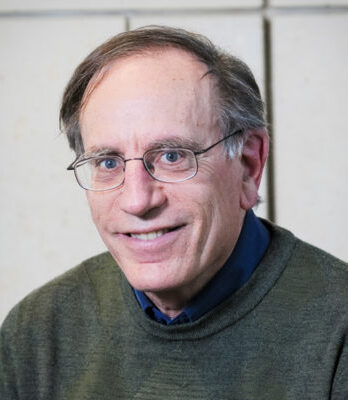
Robert Weisberg, JD ’79, is the Edwin E. Huddleson, Jr. Professor of Law at Stanford Law School. He works primarily in the field of criminal justice, writing and teaching in the areas of criminal law, criminal procedure, white collar crime, and sentencing policy. He also founded and now serves as faculty co-director of the Stanford Criminal Justice Center (SCJC), which promotes and coordinates research and public policy programs on criminal law and the criminal justice system, including institutional examination of the police and correctional systems.