
Stanford’s Bill Gould on Trump Labor Board Firings and Upheaval at the NLRB
Workers’ rights in the United States have long been challenged. But the National Labor Relations Board (NLRB), established after Congress passed the National Labor Relations Act in 1935, has been a constant force for labor protection and conflict resolution.
In January, President Trump dismissed NLRB board member and chairman Gwynne Wilcox, a Biden appointee, and Jennifer Abruzzo, its general counsel. Wilcox sued and was reinstated last week by Judge Beryl Howell of the U.S. District Court for the District of Columbia, who wrote that the “President does not have the authority to terminate members of the National Labor Relations Board at will, and his attempt to fire plaintiff from her position on the Board was a blatant violation of the law.” But with the recent firings, more than personnel changes may be at issue.
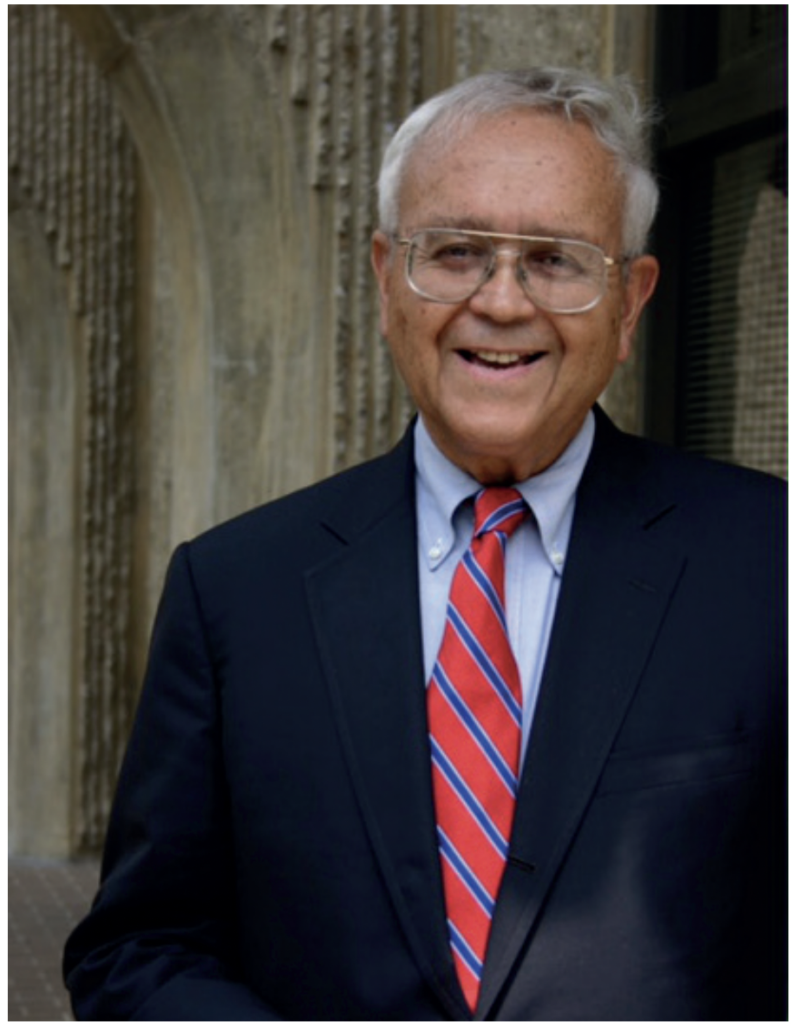
Here, labor law expert William Gould IV, a professor of law emeritus and former NLRB chairman, discusses the case—and how it sets the stage for a Supreme Court argument, which could challenge the constitutionality of the NLRB and the Act itself. This case could upend a system that, Gould says, “stands as an impartial beacon where both labor and management can have confidence and respect for integrity and well-reasoned decision making.”
Why was NLRB member Gwynne Wilcox’s firing significant?
The firing of board member and Chairman Gwynne Wilcox was significant because her position is quasi-judicial with a specific term of office. When Congress enacted the 1935 National Labor Relations Act it did so, in part, because of its deep dissatisfaction with the performance of courts of general jurisdiction and their poor handling of labor-management relationships. It wished to substitute an agency, like the Board, which would possess expertise and independence, characteristics frequently associated with the judicial process.
Would the firing have changed the balance on the board?
The firing of Wilcox reduced the Board to two members, so below a quorum. It could not issue decisions without a quorum. Basically, for the most part, the Board was out of business after the firing.
What about Abruzzo’s firing, which wasn’t contested?
The firing of Jennifer Abruzzo as NLRB general counsel was perfectly appropriate as she held a prosecutorial position at the Board and was no different from any other executive appointee who can be dismissed at will by the President. Abruzzo hasn’t been reinstated because her dismissal isn’t in question.
What was Howell’s reasoning in finding the Wilcox firing unlawful?
Judge Howell found the firing unlawful, first, because Congress stated in the Labor Relations Act that the President is only authorized to dismiss a board member “upon notice and hearing, for neglect of duty or malfeasance in office, but for no other cause,” and no hearing involving Ms. Wilcox had been held and no cause found other than President Trump’s pronouncement that Ms. Wilcox’s views were different from his. Second, no board member has ever been dismissed in the 90-year history of the Act.
Third, the Supreme Court held 90 years ago that Congress could constitutionally restrict the President’s executive authority to dismiss NLRB members, notwithstanding the fact that he had appointed them, and that the NLRB performs quasi-judicial functions like those of the Federal Trade Commission Commissioners, whose protection was deemed constitutional by the Supreme Court because they didn’t perform executive tasks, which would bring them within the direct authority of the President. So, as I stated earlier, the general counsel’s firing was different from board members because of her role as a prosecutor. And fourth, the Supreme Court has adhered to its precedent involving removal for 90 years under a politically balanced statute, reflecting competing interests and thus stare decisis mandates reversal of presidential authority in these circumstances.
You’ve said that members of this administration have asserted that the 90-year-old National Labor Relations Act and the independent agency it established are unconstitutional. Would that claim find support with the current Supreme Court?
Yes, this case and/or others will likely go to the Supreme Court. While the imperial power beloved by the incumbent president is reflected in the position taken by Trump, since the Wilcox dismissal, he has dismissed two FTC members. The “unitary executive theory,” which denies the constitutionality of an independent “headless” fourth branch of government, is widely cherished by conservative lawyers and this attitude has manifested itself in a number of the SCOTUS opinions, particularly in this century, by a number of the Republican appointees.
This view finds support in the language of four or five of the Court members, even the Chief Justice who, along with Justice Barrett, have been the “swing members” of the Court. The world knows that this is an activist Court, unafraid to reverse precedent.
Is this an existential case that goes to the heart of labor rights—about the continuation of the NLRB and the lawfulness of the Act?
If Wilcox loses, then the Act and the rule of law will be impaired. The Act was designed, in part, to free the law from disrepute. Trump’s triumph would rip those gains away.
What legal recourse would the union movement have?
The fundamental recourse that it has—self-help, strikes, boycotts, organizing, and agitation for better laws. I think states, such as New York, California, and Michigan will legislate if the law becomes moribund or defunct.
Finally, why is the NLRB important, particularly today?
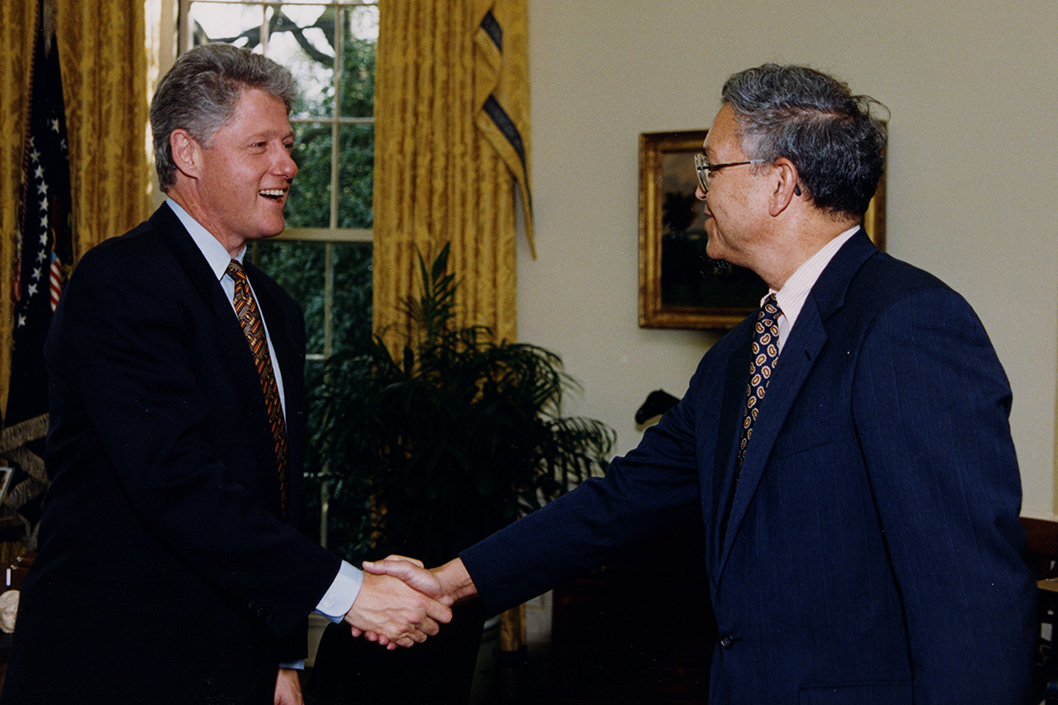
The NLRB is the only game in town for many, indeed most, workers. It’s generally the way through which workers can bargain for better wages, conditions, and establish a measure of democracy in the workplace. I like to think that the Clinton years were one of the best examples. The NLRB stands as an impartial beacon where both labor and management can have confidence and respect for integrity and well-reasoned decision making.
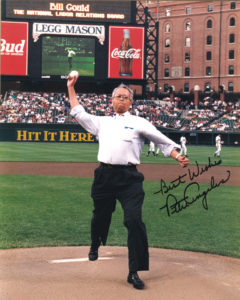
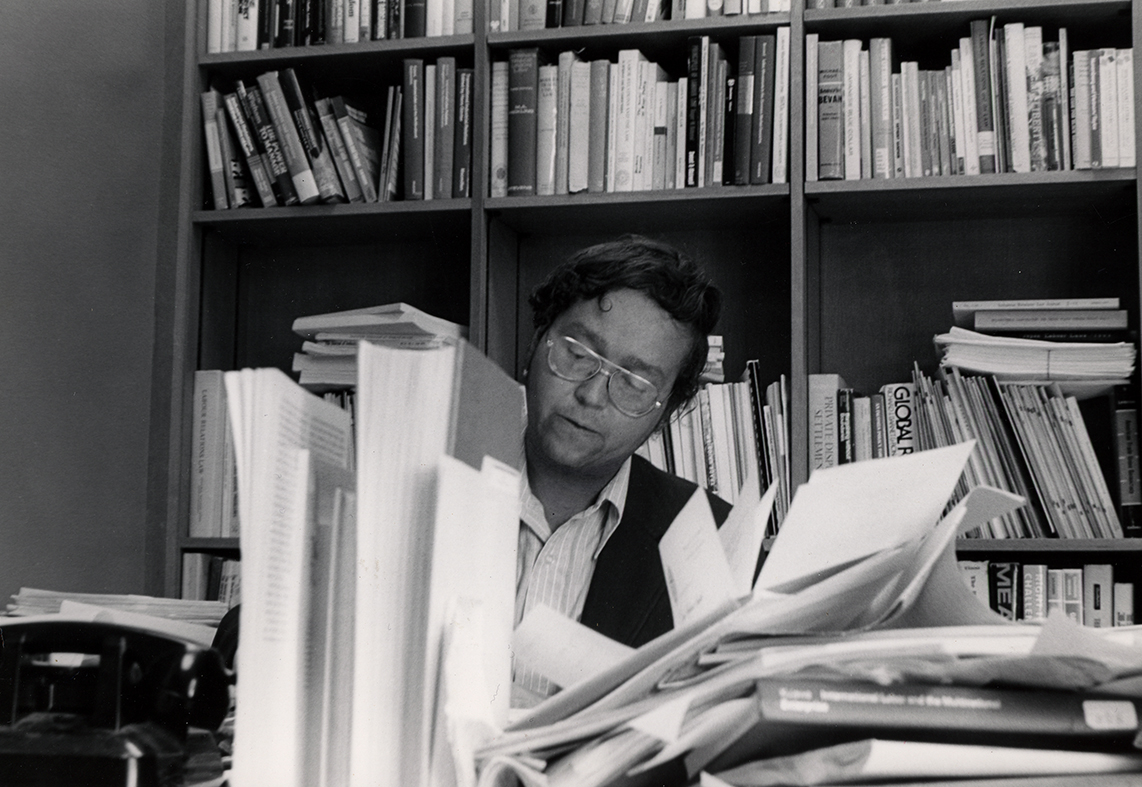
William B. Gould IV is the Charles A. Beardsley Professor of Law, emeritus, at Stanford Law School. A prolific scholar of labor and discrimination law, Gould has been an influential voice in worker–management relations for more than fifty years and served as Chairman of the National Labor Relations Board (NLRB, 1994–98) and subsequently Chairman of the California Agricultural Labor Relations Board (2014-2017). He has been a member of the National Academy of Arbitrators since 1970. As NLRB Chairman, he played a critical role in bringing the 1994–95 baseball strike to its conclusion and has arbitrated and mediated more than three hundred labor disputes, including the 1992 and 1993 salary disputes between the Major League Baseball Players Association and the Major League Baseball Player Relations Committee. Shortly after the passage of Title VII of the Civil Rights Act of 1964, he served as a consultant to the Equal Employment Opportunity Commission (1966-67) providing recommendations on seniority disputes and conciliation procedures and in 1967 he was a member of the very first Fact Finding Board established under the New York Taylor Law. Gould also served as Special Advisor to the U.S. Department of Housing and Urban Development on project labor agreements (2011–12) and as Independent Reviewer on Equal Employment Opportunity for the Mayor of San Francisco (2020-21). A critically acclaimed author of 11 books and more than sixty law review articles. His most recent book is For Labor to Build Upon: Wars, Depression and Pandemic (Cambridge University Press, Spring 2022). His memoir, “Those Who Travail and Are Heavy Laden: Memoir of a Labor Lawyer,” will be published this spring.