
Trump’s Immigration Crackdown: Stanford’s Jennifer Chacón on Forced Deportations, Due Process, and Campus Fear
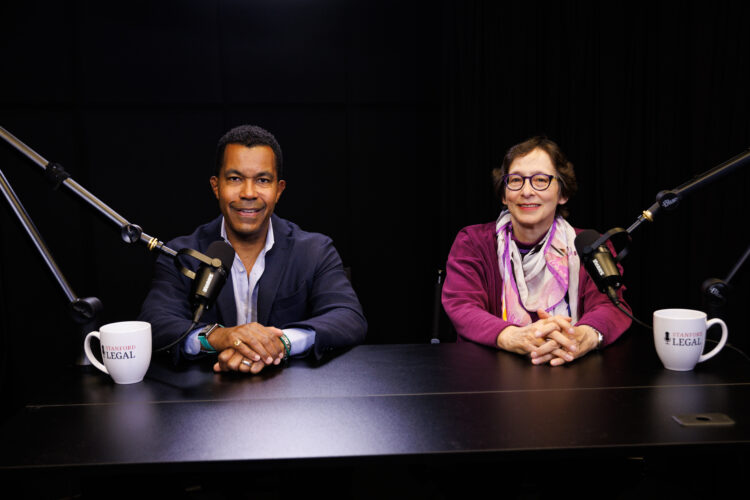
What rights do asylum seekers in the U.S. have? Can the government forcibly deport immigrants to a prison in El Salvador without due process? What about Green Card holders attending college? Since taking office, President Trump has focused on legal and undocumented immigrants alike, from alleged Venezuelan gang members to visa- and green card-holding college students—invoking the Alien Enemies Act to deport some. On a recent episode of Stanford Legal, Stanford Law Professor and immigration law expert Jennifer Chacón joined host Rich Ford for a discussion of these unprecedented actions, including the broader implications for human rights and the U.S.’s role as a refuge for the persecuted.
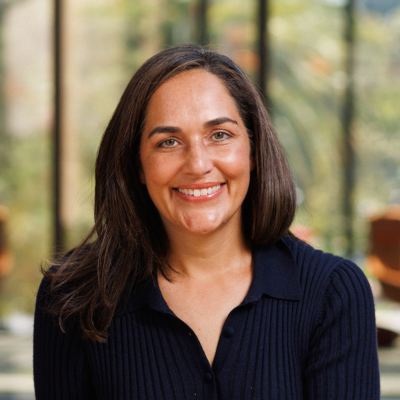
Chacón, co-author of the immigration law textbook Immigration Law and Social Justice and the recently published book Legal Phantoms, outlines how some actions echo past practices–while many signal an alarming break from legal norms. Chacón emphasizes the role of courts, lawyers, and civic engagement in holding government actions accountable, noting that a lack of response may allow controversial practices to become entrenched.
The following is an edited and shortened version of the full podcast, which can be found here.
Can you walk us through how recent events involving the Trump administration are unprecedented and how much of this is just business as usual?
As your question signals, there are lots of things that happen in the world of immigration law that might surprise people, but that are not unprecedented. And then there are ways that this administration is operating that seems to take us into new or unprecedented domains. I want to distinguish between those two.
We’ve seen past administrations use the rhetoric of national security to justify the aggressive use of immigration enforcement and immigration detention. We can think back to the period following the attacks on the United States on September 11th, 2001, as a moment when a prior administration did that. We have seen, in the past, transfers of detainees from jurisdictions with more favorable laws to those with fewer protections. That is unfortunately something that is somewhat common in the world of immigration detention, and although some administrations have made gestures to minimizing or regulating these transfers, there’s no law prohibiting it, and it does happen.
We have seen in the past the targeting of non-citizens, including lawful permanent residents, for unpopular speech or on ideological grounds. It’s not new. But it’s important to say here there are legal protections for all immigrants, and for lawful permanent residents in particular.
The rendition of non-citizens to third countries with no legal process, and outside of the context of a declared war, is new. And it should be of concern to everyone regardless of their stance on immigration. So I think that’s something we should drill down on.
And then the announcement of an executive order that’s explicitly targeting immigration lawyers and others who challenge administration policies is new and really has scary authoritarian dimensions. And we’ve seen other aspects of this with a widely reported assault on law firms and their pro bono activities.
The administration’s willingness to act in apparent defiance of the order of Judge Boasberg to halt the removals of people who were ultimately sent to El Salvador anyway—that too seems like it’s a new legal line that this administration has been willing to cross.
Listen to the Stanford Legal Podcast with Jennifer Chacon
Let’s talk about the removal of the Venezuelan deportees to foreign countries and how that is a departure from past practice and some of the concerns it raises.
What we know from reporting from the Washington Post and other news outlets is that the administration removed about 150 Venezuelan nationals from the United States. [More recent reports reveal that the number is higher, and that at least one person was a citizen of El Salvador, not Venezuela.] The purported basis for this was the administration’s assertion that these individuals were members of the transnational gang, Tren de Aragua. They say these people pose a security threat to the United States and therefore they need to be removed. The justification for doing this in a really streamlined way, without removal hearings, seems to be twofold: The administration is invoking its power under the Alien Enemies Act of 1798, a law that allows the president to detain or deport foreign nationals from hostile nations during wartime. It’s only been used three times, always during, or relating to, an actual declared war. Trump is arguing that members of Tren de Aragua are elements of an invading country, saying that this gang is acting in concert with the foreign nation and invading the country, and he’s invoking the power against a country and actor with which we are not at war. The second basis that he seems to be using is simply broad executive authority under Article II. The result has been that about 150[+] Venezuelans have been taken from the United States and flown to a prison in El Salvador, where conditions appear to be extremely troubling. This obviously is not the normal process by which people are removed from the United States.

Can you walk us through what this should look like? What’s the clearly lawful way to go about dealing with people in the United States who may be a national security threat?
The processes could look different depending on the legal status of the individual involved. But these are individuals who are on U.S. soil and, at a minimum, are entitled to due process under the Constitution, and there’s a statutory framework for removal. Generally, individuals would have an evidentiary hearing before an immigration judge. These are administrative, not Article III judges, but the process allows individuals to contest the evidence against them and the administration would have some obligation to bring evidence that demonstrates that these individuals are subject to removal.
One of the things that’s striking about the people who have been removed in this case is that it’s come to light that a number of them don’t have any criminal record at all. It’s not clear whether a number of them are members of Tren de Aragua at all. And these are the kinds of questions that it might be important to drill down on in a hearing, but we haven’t had hearings here. We’re just going on the administration’s assertion that these individuals pose some sort of a threat, criminal or national security, and that the administration has the power to just remove them.
Leaving aside the procedural problems, how unusual is this type of removal of individuals to a prison in El Salvador?
This too is very unusual. We’re outside of the context of any real wartime authority. And there are procedures in the statute, in some cases, where an individual can be removed to a country that is not their country of nationality. But there is a checklist of processes that have to happen before an individual is so removed. None of that has happened in this case. How long will they be detained there? Under what conditions? What judge, if any, has the authority to review the nature of those conditions? Who can make determinations as to whether these individuals were or were not, in fact, members of the gang that they are alleged to be members of? All of those questions are just unanswered.
There are related issues that are part of a shift in the way the United States is treating people from other countries, including people with Green Cards, who have been either deported or detained. Are these situations unprecedented or is this a case of business as usual?
There are elements that have precedent and elements that perhaps signal a troubling new set of developments. It is true that at various points of foreign policy tensions, people with student visas often become chips on a playing board. We’ve seen this before, for example, in the late 1970s when tensions escalated between the United States and Iran.
But the attacks on lawful permanent residents signal an escalation and some troubling new developments, even over and above the “entry bans” of the first Trump administration. Lawful permanent residents have a host of both constitutional and statutory rights and privileges that attach by virtue of their lawful permanent resident status. What we saw with the situation of Mahmoud Khalil was a targeting of someone who had participated in pro-Palestinian protest on the Columbia University campus and ICE picked him up and put him in detention and was treating him very much worse than they might treat a student visa holder or someone with a lesser form of protection, when he was in fact a lawful permanent resident with a citizen wife who is eight months pregnant. National security is often used to ban entry of people, but it is seldom invoked this way. This is a new and troubling willingness to use a very broad, open-ended and Ill-defined deportation provision to target individuals who have engaged in speech that the administration doesn’t like.
Sometimes it’s hard to tell whether the administration is deliberately exceeding its lawful authority or whether they’re just acting now and figuring out later whether it’s legal.
Judge Boasberg told the administration that they could not let the Venezuelan nationals leave the country and also said—in an oral portion of his order—that if the planes had taken off, that they needed to be turned around. And that didn’t happen. The planes made it to El Salvador and the individuals who were on that plane are still in a Salvadoran in prison. There have been a lot of questions about whether this was an overt defiance of Judge Boasberg’s order, or whether it was more that there was a lack of clarity about Judge Boasberg’s order: the notion of turning the planes around was given orally, it wasn’t a written order. The administration is trying to push back on whether in fact that was part of the order and whether they were not compliant. And then there are also arguments they’re trying to raise about whether the judge had the authority to to impose the order if individuals were already in El Salvador or in international airspace.
So there are ways that they’re trying to suggest that it’s not overt defiance, but questions of legal technicalities. But in some ways, the fact that they’ve been willing to walk so close to this line and really push the envelope is in itself troubling.
One of the other developments that is a bit of a head scratcher involves people who have been detained trying to enter the United States who don’t seem to fit any of the categories of people Trump would dislike. A German tourist who was detained at the U.S. Mexico border, a Canadian student that was detained at the US Mexico border for a long period of time. An English punk band that was denied entry. What do you make of these cases?
The administration has articulated a broadly aggressive stance toward incoming immigrants and has signaled to the agents that enforce immigration law at the borders that they should be aggressive in the way that they’re both screening and detaining people who are seeking to enter the United States. Once that signal is sent from the top, the idea that this would roll down onto people who might seem surprising to us as targets of enforcement is more understandable. When the gloves are off on all fronts, then you’re more likely to see more expansive use of detention and more aggressive questioning and searching and denial of entry at the borders.
Also, the Trump administration has signaled plans to shut down the internal watchdog agencies in immigration enforcement agencies. This signals that the cost of error by individual agents is quite low. So if they make a mistake, detain somebody too long, violate individuals’ rights, etc., the redress for those harms will be harder to obtain. The administration is saying it will tolerate mistakes on the part of agents in the field, and in fact encourage mistakes on the part of agents in the field, in the service of aggressive immigration policies.
Who’s pushing back against some of these developments?
We’ve obviously seen litigation in a lot of these cases, so individual lawyers who are representing people, including some of the people who have been removed to El Salvador. Some of the Venezuelan nationals have lawyers who have been pretty active in speaking with the press and making their clients’ situation known. Organizations like the National Immigration Law Center [litigating new registry requirements], the ACLU, and others that have taken on pieces of this and are litigating. One of the truly disturbing recent responses of the administration has been to issue an executive order that really puts in their sights lawyers who are engaging in advocacy against the administration on these policies, and the executive order specifically singles out immigration attorneys and attorneys who are litigating in immigration matters. And this is a new frontier. Immigration lawyers broadly have been singled out.
And then there are the attacks on universities that have large numbers of foreign students, suggesting that’s somehow inappropriate. Any thoughts about that?
The United States has such a revered university system that attracts talented people from all around the world to be educated and to do research. We see there’s a link between the closed-borders approach that the president is advocating on the immigration front and the closed-borders approach that he seems to want university officials to implement on their own campuses.
Even with past administrations that have been fairly aggressive in terms of immigration policy, that kind of chilling effect is not something that I remember in the past.
I don’t think we’ve seen this direct focus on the universities as institutions, and a direct effort to curb campus speech and a direct effort to curb the speech of their members. You noted that the administration may be deterring people from coming to the border seeking asylum, and they count this as success. And I suppose if you measure success in terms of the number of people who are arriving at the southern border declining, then it is successful. But if you think about that as people who are being persecuted in their country of nationality on the basis of protected characteristics under international law, not feeling like they can come and not feeling like they can leave their countries, then success feels very different.
But what are the measures of a successful, vibrant country? Part of what made United States great as an initial matter, in the ways that it was great, was building an asylum system that was protective and allowed people to claim refuge here when they were the targets of of persecution, and having a university system that was open and broadly tolerant of a range of ideas and a range of people from a range of countries. And the administration’s actions really are challenging greatness on both of those fronts.
Any thoughts about things that we should be on the lookout for in the future?
We have never been perfect at any of the things that we’ve talked about, either universities being broadly inclusive and speech friendly, or having borders that are protective of the most vulnerable populations. But it’s always been a goal, and I think it’s one that we should hope to strive toward, and hopefully we will. People need to make their displeasure known to their elected officials when things are not going the way they think they should.
Sometimes it’s easy to ignore the bad things that happen to non-citizens on the theory that they can’t happen to citizens, but they often do. I do think, as of now, that we live in a country where our elected officials still care about what we think, and it’s really important to make sure that they’re aware of the concerns that we have about the direction that we seem to be heading.
Jennifer M. Chacón researches issues that arise at the nexus of immigration law, constitutional law, and criminal law and procedure. Her writings elucidate how legal frameworks on immigration and law enforcement shape individual and collective understandings of racial and ethnic identity, citizenship, civic engagement, and social belonging. She is the co-author of the immigration law textbook Immigration Law and Social Justice, now in its second edition, and the co-author of Legal Phantoms (Stanford University Press, 2024), which explores how the past decade’s shifting immigration policies have shaped, and been shaped by, immigrant communities and organizations in Southern California. She has written dozens of articles, book chapters, and essays on immigration, criminal law, constitutional law, and citizenship issues.