
Stanford’s Robert Weisberg on the DOJ’s Arrest of Milwaukee Judge
On April 25, the Department of Justice arrested Milwaukee County Circuit Judge Hannah Dugan—handcuffing her at the courthouse—on charges of obstructing an immigration arrest operation. FBI Director Kash Patel accused the judge of “intentionally misdirecting” federal agents who were there to detain Eduardo Flores-Ruiz, a Mexican national, who was at the courthouse for a hearing on misdemeanor state battery charges. Flores-Ruiz was later arrested. Judge Dugan denies any wrongdoing. Here, Stanford Law Professor Robert Weisberg, a criminal law expert, discusses the charges and likely next steps for the case, noting that given the judge’s high-profile defense team, which includes former U.S. Solicitor General Paul Clement, it “is going to be very newsworthy.” The Wisconsin Supreme Court suspended Judge Dugan late on April 30, while this case proceeds.
What is the charge against Milwaukee County Circuit Judge Hannah Dugan?
The federal charges fall under 18 U.S.C. § 1505, covering obstruction of an official proceeding or investigation, and 18 U.S.C. § 1071, covering interference with an arrest. The gist is that ICE agents were executing a warrant on Flores-Ruiz. Learning that the agents were there, the judge allegedly took affirmative steps to move him in order to make it harder for the agents to carry out the arrest. By policy, principle, and implicit agreement by the government, ICE should only be able to enter public areas in a courthouse, not the courtroom or other nonpublic rooms. State officials can’t be forced to assist in federal actions like this, but it can be a crime for them to affirmatively thwart the federal efforts.
There have been reports that the timing of delivery and type of warrant seemed to have been an issue for Judge Dugan as she was about to hear the case of Flores-Ruiz. Were her concerns valid?
She demanded to see a judicial warrant for the arrest, but she was wrong, because an administrative warrant from ICE was sufficient. It would be odd for a judge to make a mistake of law claim here, but maybe she could argue that she sincerely believed the warrant was no good, and that shows her motive was not to obstruct a legitimate arrest. (That would be hard to pull off.)
As for timing, maybe she will say that she fully intended to ultimately make him available for arrest but needed to be able to complete the hearing for him first—that will be hard too.
I’ve read accounts that the subject of the ICE arrest was observed by agents in a public hallway and elevator before he tried to run—and that they didn’t try to make the arrest. The charge against Judge Hannah Dugan involves obstruction. What do you make of this?
It does appear that she directed the defendant out of the courtroom toward a protected room. But the facts are muddy because, as he was moving at her direction, at some point he was in the public hallway and the elevator, and the agents did not try to make the arrest at that time. They did eventually arrest him, of course, but if that means her effort to obstruction failed, no matter —that is no defense on an obstruction case. On the other hand, if the agents did not take a clear opportunity to seize him when he was in a public place, that makes it look like they were cynically staging things. A jury might accept her argument that this was a little too manipulative and disingenuous on the part of the feds.
Does the DOJ have a strong case against the judge? And what are the next steps?
The DOJ has a pretty strong case on the facts. Her best hope at trial would first be to question the accuracy of witness observations because the scene was somewhat chaotic. She may also raise a mental state defense, suggesting that she was sincerely concerned with making sure the hearing could take place without interference, and it was not her goal to ultimately prevent an arrest.
So, while the facts may somewhat favor the government, other factors could persuade jurors in her favor. They may see her as sympathetic or even heroic as a civil disobedient (although people engaging in civil disobedience are supposed to accept the penalty).
Presumably this will now go to a grand jury, which is likely to indict, but it will gather more facts. Those facts can’t be immediately made public because grand juries are secret, but more will come out eventually. She will no doubt move to dismiss the indictment if the DOJ persists. She probably will not achieve that dismissal, but this will set things up for a very interesting contest at a jury trial.
Was it unusual for charges like these to be brought against a sitting judge—and for the DOJ to make a public arrest like this? It was quite a public display.
Extremely unusual—close to unheard of—maybe a couple of instances in the nation in recent years. The public arrest idea is interesting because we know that very often a suspect, especially in a celebrity political case, tries to avoid arrest by volunteering to surrender. But the FBI and prosecutor sometimes insist on an arrest for the optics, making him or her do a so-called perp walk.
Can you say something about her defense?
We just learned that the judge has engaged very powerful defense lawyers, including the famed conservative Supreme Court litigator Paul Clement and Steven Biskupic, a former U.S. attorney for the Eastern District of Wisconsin, a George W. Bush appointee. People of that level do not enter a case to quibble about details. They take it on because it looks to be a big battle of values, federalism, integrity of courtrooms, etc. This is going to be very newsworthy.
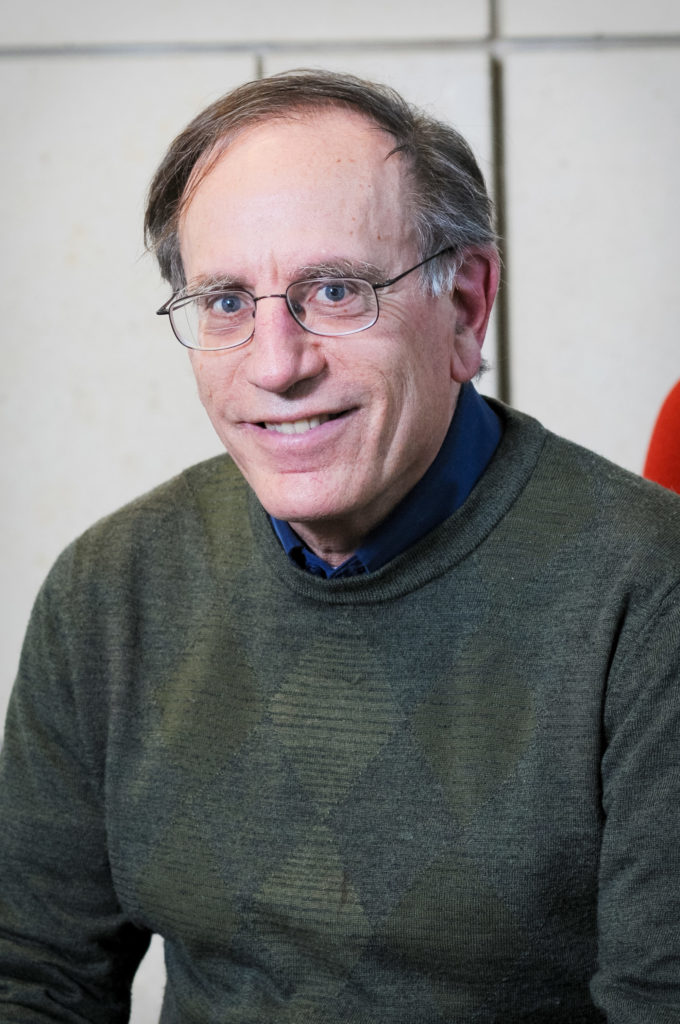
Robert Weisberg, JD ’79, is the Edwin E. Huddleson, Jr. Professor of Law at Stanford Law School. He works primarily in the field of criminal justice, writing and teaching in the areas of criminal law, criminal procedure, white collar crime, and sentencing policy. He also founded and now serves as faculty co-director of the Stanford Criminal Justice Center (SCJC), which promotes and coordinates research and public policy programs on criminal law and the criminal justice system, including institutional examination of the police and correctional systems.