
Science Under Siege
Stanford Law’s Lisa Ouellette discusses the twin challenges of defending U.S. research from political interference and ensuring drug development meets real-world health needs
The Trump administration has slashed scientific funding, paused grant awards, and frozen university research support—actions that Professor Lisa Larrimore Ouellette says are undermining scientific inquiry and jeopardizing America’s longstanding global leadership in medicine and innovation. She made these observations in a recent conversation with Professor Pamela Karlan, host of the podcast Stanford Legal.
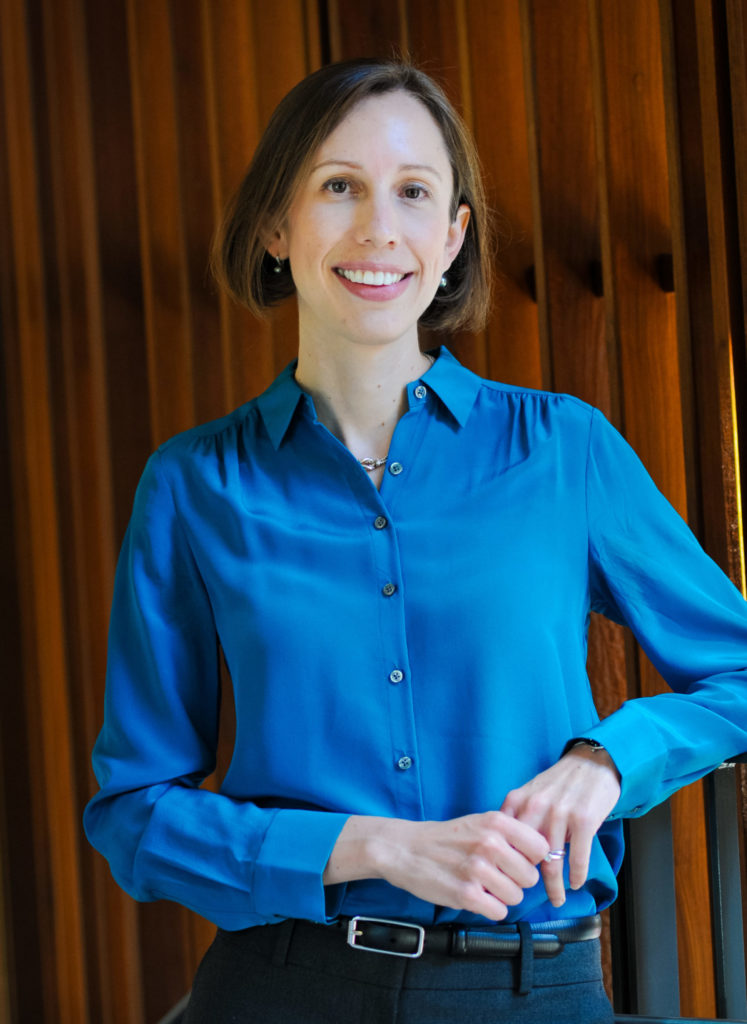
Drawing on an essay she penned for Just Security, Ouellette explains how decades of bipartisan support for federally funded science—an engine of American innovation since World War II—is now at risk. From canceling grants already approved through peer review, to capping essential “indirect cost” reimbursements, she details how these moves threaten not just labs and universities but also patients, whose clinical trials are being abruptly halted.
Ouellette also talked about a second front in her current scholarship: how drug development policy can be better aligned with public health needs. As a member of a National Academies committee, she recently co-authored a report showing that both private investment and federal funding often fail to prioritize diseases causing the greatest suffering.
The following is an edited and shortened version of the full podcast transcript, which can be found here.
Pam Karlan: In your Just Security piece, you make a point about fundamental changes lately to how the federal government has been treating research. How did things operate before the current Trump administration?
Lisa Larrimore Ouellette: The traditional structure has been in place since World War II, when Vannevar Bush and other scientists convinced FDR to fund a lot of science research that might be relevant for the war effort. That was the first time the federal government provided substantial external funding to researchers at universities and firms, and it led to all sorts of key technologies—not just the atomic bomb, but also medical breakthroughs like penicillin and malaria treatments, plus radar and early computing. The success was so obvious that after the war, there was bipartisan agreements to keep it going, which is how we got the National Science Foundation, a much bigger National Institutes of Health, and the basic model that we use today where the government funds a lot of competitive research at universities, while giving professors the freedom to see where that research leads.
The amount of money we’re talking about is enormous. Today the federal government’s total annual research budget is around $200 billion. A lot of that is for research at government labs, but over $50 billion of those funds go to universities, largely for basic research.
Pam Karlan: What does “basic research” mean?
Lisa Larrimore Ouellette: It means research where it’s not clear exactly what we’re going to get out of it. We’re not trying to make a particular widget. It’s more about trying to understand the fundamental mechanisms of how the world works. In the medical context, it might be understanding basic cell biology or the mechanisms behind the disease, which maybe will lead to breakthroughs like a particular drug. Or understanding things like basic physics, which has led to all kinds of technologies and modern computing and things we use today.
Pam Karlan: How are the funds handed out for this type of research?
Lisa Larrimore Ouellette: Congress appropriates money to the federal funding agencies, which define priorities such as general areas of research. The NIH might say, for example, that it wants to study issues related to cancer, and then scientists at universities will submit grant proposals for specific projects. That pool of grants is then evaluated by peer experts who rank proposals based on their scientific merit and potential impact.
Pam Karlan: As I understand, when a researcher gets one of these grants, there’s money for the basic research and then there’s something called “indirect costs” that comes on top of that. Can you illuminate?
Lisa Larrimore Ouellette: Indirect costs fund all the things that aren’t specific to a single project, such as the lab space, utilities, or support for regulatory compliance. And for over 60 years, the NIH and other grant-making agencies have reimbursed universities for these indirect costs. These are based on the actual negotiated costs based on audits of what the university’s costs are, and that averages now over 50%.
Pam Karlan: Universities in the United States have been the envy of universities everywhere in the world and the number of inventions and discoveries coming out of U.S. universities has been noteworthy to say the least. But now times have changed.
Lisa Larrimore Ouellette: Funding is being cut for a variety of reasons, including to target “blacklisted” research topics that the administration doesn’t like. A lot of the canceled grants have been related to DEI, vaccine hesitancy, misinformation, or climate research. And the grants that have been targeted have been found through over-inclusive searches for words like “diversity” or “equity” in the grant proposal. These are grants that have already gone through this rigorous peer review process we’ve talked about and been approved for funding. But now they’re being canceled because of the viewpoint of what the grant is about, which unsurprisingly has led to the legal challenges to these cancellations.
Pam Karlan: Clearly the government has the right to say, “We want you to do cancer research with this money rather than doing acne research with this money,” or “We want you to look at climate change rather than at economic inequality.” But then there’s what is sometimes referred to as viewpoint discrimination, which is: should the government be deciding things such as whether we research the cancers that disproportionately strike men, or disproportionately strike Caucasians. What’s going on here is the government is taking a side in scientific disputes.
Lisa Larrimore Ouellette: Yes, I think it’s more than simply setting broad research priorities. And obviously, as you just indicated, it’s a tricky line between when the government is setting an overall goal and defining the scope of a program versus discriminating based on viewpoint and people who are applying for that program.
Pam Karlan: In the Southern District of New York case State of New York et al. v. National Science Foundation, U.S. District Judge John P. Cronan, a Trump-appointed judge, recently declined to issue a preliminary injunction restoring research grant payments. He cited potential jurisdictional issues, suggesting that the proper venue for monetary claims over NSF’s actions might be the U.S. Court of Federal Claims. Does this procedural steer make it more difficult—and slower—to evaluate whether the government must honor its funding commitments?
Lisa Larrimore Ouellette: I think that will make it harder if there are more courts that follow. And the Supreme Court may be sympathetic to the argument that some of these suits that are being filed against the grant-making agencies really belong in the Court of Federal Claims. But if everyone who has received a grant has to go to the Court of Federal Claims to ask for their money, that’s not really remedying the underlying concern that the government is engaged in viewpoint discrimination in these cases, or engaged in violations of the Administrative Procedure Act.
Pam Karlan: What is the effect on the researchers not getting the money that was promised?
Lisa Larrimore Ouellette: It’s enormous. There are clinical trials that have been stopped. If someone has cancer and they’re in a trial that’s giving them a drug that may be helping them, this is a devastating consequence.
Pam Karlan: Let’s turn again to the indirect cost controversy and what’s happened there.
Lisa Larrimore Ouellette: This has gotten less media attention, but it could be truly devastating. We’ve already talked about how indirect costs cover non-project specific costs, like keeping the lights on in the lab or covering other people involved in lab administration, and how these have been for 60 years based on negotiated rates, currently averaging over 50%. This spring, a number of the grant-making agencies—the National Institute of Health, the National Science Foundation, the Department of Energy, Department of Defense—all announced that they are capping indirect costs at just 15%, which doesn’t even come close to covering the real cost of doing research. And so far, the courts have blocked this.
I worked with some of the leading economists on this—Dan Gross, Bhaven Sampat, and Pierre Azoulay—to file an amicus brief in the pending appeal in the First Circuit.
Pam Karlan: Do you think the government’s theory is that the universities will just eat this cost, or are they trying to use this as a way of stopping research they don’t like?
Lisa Larrimore Ouellette: It’s probably some of both. I think some of what’s been going on is general leverage over universities. We’ve seen the administration trying to use federal funding as leverage for other things that are not really related to the cancelled grant at all.
Pam Karlan: It seems odd to take away hundreds of millions of dollars of medical school funding because the administration doesn’t like what the department of Mid-East Studies is teaching. What do you have to say about the administration attacking not just universities, but the government’s own institutions?
Lisa Larrimore Ouellette: There are a bunch of things you can put under this bucket. The proposed budget cuts for all the grant-making agencies are just staggering, like 40% for the National Institute of Health and 57% for the National Science Foundation, and they want to completely zero out climate research at the National Oceanic and Atmospheric Administration. But there are also a lot of attacks on agencies that aren’t giving out grants, but that are deeply involved in research, like USAID. Collectively, all of this has been blow after blow for the U.S. research enterprise.
Pam Karlan: What does this mean for the future of research in the United States?
Lisa Larrimore Ouellette: I think it’s unclear. In my post, I go through a lot of the lawsuits over this, and many of the plaintiffs have been successful in stopping some of these short-term things, but we will see what happens on appeal. The Supreme Court might be receptive to arguments that some of these cases belong in the Court of Federal Claims. But more importantly, all of this fighting over existing grants and short-term funding may not matter much in the long term if Congress simply appropriates much less funding for research in the future.
This is why it is essential for universities and researchers to not just be challenging the illegal actions in court, but also to lobby to preserve long-term federal investment. I saw at the end of July, the Senate Appropriations Committee voted for a $400 million increase in the NIH budget, even though Trump had asked for an $18 billion decrease, and they rejected the White House’s proposals for eliminating some of the NIH institutes and kept the statutory language on preventing the administration from changing how it pays for indirect costs.
So it is possible that some of these impacts may not be as severe as what Trump is asking for, but there’s still a real risk to our long-term welfare as a country. And some changes will be hard to undo, especially if we lose a cohort of young scientists who look at this funding environment and decide to either choose other careers or choose other countries to do their work in.
Pam Karlan: Let’s turn to the recent report, on which you were a co-author, about aligning investment in therapeutic development with therapeutic need. Can you tell us a about that?
Lisa Larrimore Ouellette: This report gets to a fundamental problem that existed even before the current crisis, which is that while our drug development system has produced a lot of amazing discoveries, it could be doing even better because it’s not systematically prioritizing the diseases where we have the biggest unmet needs. The National Academies committee I was a part of found that both public and private funders have a lot of considerations that pull them away from focusing on what would actually help the most people. Some of these problems are scientific, like not having enough research on the kind of basic science biological mechanisms underlying certain diseases, and some of the problems are about the market forces not aligning with public health needs. So, you end up with gaps where important diseases don’t get the research attention they deserve while other areas might be overinvested in relative to their actual impact on health.
Pam Karlan: Can you give some examples?
Lisa Larrimore Ouellette: The report is not about identifying which diseases get under- or over-investments. That’s for two reasons: One, the ultimate judgment there requires some ethical value judgments about how to prioritize different health gains. But I think more importantly, there’s just a shocking lack of good data here, and that’s why one of the key recommendations of the report is creating a better data infrastructure to systematically track unmet therapeutic needs and compare that against current investments.

We don’t do a good job of tracking either disease burden or where money is going. We have a good sense of where money is going through public funding mechanisms, and there the report does some work at comparing NIH investment with disease burden, and that isn’t always aligned. Congress allocates money to different NIH Institutes, which is partly based on lobbying and political considerations. Then researchers apply for grants based on their expertise and interests. Grants are selected for funding, primarily based on their scientific significance and rigor. And nowhere in that process is there thinking about under- or over-investment in certain areas. Those aren’t explicitly part of the process now.
One of the key recommendations of the report is that this process of allocating funding should explicitly consider unmet need and social significance in addition to scientific merit.
Pam Karlan: It is fair to say that one of the biggest wins of the first Trump administration was Operation Warp Speed, which got us from a complete shutdown of the country to COVID now being endemic, but not catastrophic. And what made that possible was the fact that we had all of these researchers who’d been doing all of this basic research for years, and we had a huge amount of government funding that went into it. And now what we’re seeing is the Trump administration returns to office and seems to want to spit on the thing that was its largest triumph the first time around.
Lisa Larrimore Ouellette: Yes, that was an enormous success that I wish Trump would take credit for and celebrate going forward. The fact that we got those vaccines developed in that amount of time was a miracle. No one thought that was going to be possible, but it illustrates what you can do when the government’s putting sufficient resources behind something and building on that foundation.
Lisa Larrimore Ouellette is the Deane F. Johnson Professor of Law and a Senior Fellow at the Stanford Institute for Economic Policy Research. Her research focuses on intellectual property law and innovation policy. She leverages her training in physics to explore policy issues such as how scientific expertise might improve patent examination, the value of information disclosed in patents, patenting publicly funded research under the Bayh–Dole Act, equity in patent inventorship, and the integration of IP with other levers of innovation policy. She has applied these ideas to biomedical innovation challenges including the opioid epidemic, COVID-19, vaccines, and pharmaceutical prices. She has also written about doctrinal puzzles in patent and trademark law, the effect of AI on patent practice, and the potential for different standards of review to create “deference mistakes” in numerous areas of law.
She coauthored a free patent law casebook, Patent Law: Cases, Problems, and Materials, which has been adopted at over 70 law schools, and she has designed and led pedagogy training for other Stanford Law faculty. In 2018, she received Stanford’s John Bingham Hurlbut Award for Excellence in Teaching.