
Local Eighth-Grader and the Youth and Education Law Project Successfully Put End to School Application Requirement that Discriminated against Students with Disabilities

Each year, eager incoming freshman apply to top college preparatory public high schools around the country. C.H. was one of the many top students applying for the 2025-26 school year. C.H. is a 14-year-old Mexican-American student who is a life-long lover of learning and reading. He applied to early college public high schools to be immersed in a challenging academic environment. By the end of the application process, C.H. succeeded in something much more than his admittances: he stopped one local public school from using a policy that discriminated against students with disabilities.
As he applied to one particular early college public high school, C.H. noticed a problem. He had met the general admissions requirements—application, SSAT Exam, and in-person interview. Yet, he was being asked to clear another hurdle—a hurdle that was placed between him and admission solely because he happened to have a disability. C.H. qualifies for special education under the Speech and Language Impairment category of the IDEA. At the time he applied, this early college public school required students with documented disabilities like C.H. to submit additional materials: information about their diagnosis and accommodations, as well as approval from current teachers and other school district representatives.
C.H. “saw just how discriminatory [the policy] was . . . just unfair,” and knew that he had to do something about it. It wasn’t personal inconvenience that made C.H. challenge the discriminatory requirement. To the contrary, C.H. “felt like it was kind of my duty” to bring attention to the discrimination and was thinking of his community: “my friends who have special needs . . . and some of my neighbors, they would have to face this.” C.H. felt he had the “privilege” and “responsibility” to challenge this school’s policy.
C.H. and his father Jose contacted the Youth and Education Law Project (YELP). Together, C.H., Jose, and Bill Koski and Abigail Trillin of YELP, worked to draft a demand letter that challenged the policy as unlawful disability discrimination. They explained how the current policy requiring students with disabilities to take extra steps was discriminatory.
After the letter was sent, C.H. recalls being pleasantly surprised by how quickly the school “agreed completely” that the process was
discriminatory. C.H. believes the school had simply “never faced a real challenge” to the policy before—and so, once the issue was finally brought to their attention, the school quickly took action to remedy the harm. Within days, they removed the requirement and extended the application deadline so that students with disabilities previously held back by the additional hurdle could still apply.
But when C.H. attended an admitted students day at the school, he realized that the problem had not been solved entirely. A presentation during the event informed students with disabilities that their IEP team must determine that the school is an appropriate placement for the student – despite the fact that the student had already been admitted.
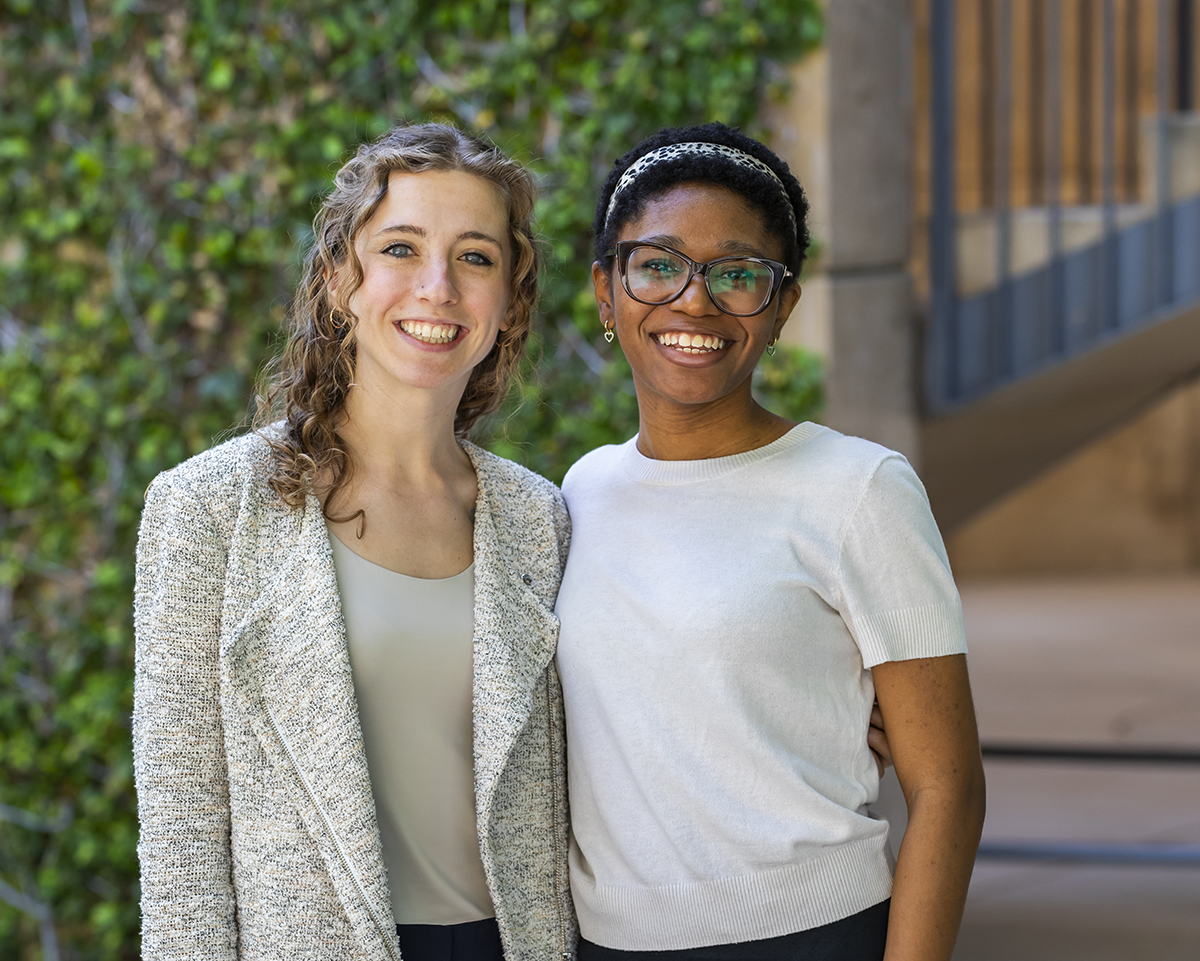
C.H., Jose, and Spring 2025 YELP students Sarah Nelson (JD ’26) and Abigail Wolfe (JD ’25) worked together again to explain to the school that while a transition IEP for an incoming student can be helpful to determine accommodations and services for the student, excluding students who have already been admitted solely based on their disability would constitute unlawful discrimination. The school again agreed and changed the language to make it clear to all students with disabilities that they would not be denied enrollment due to their disability.
C.H.’s willingness to potentially sacrifice his own application to do what was right led to a more equitable system for students with disabilities—and this is just the beginning of his advocacy. Down the line, C.H. hopes to go to law school to do public service work, such as being a “public defender or congressman.” Regardless of where he decides to spend the next four years, C.H. will be doing what he can to help others and advocate for what is just.