
Stanford Law’s Michelle Mello Discusses How Sweeping Changes in Federal Health Policy Are Reshaping Public Health
What happens when the nation’s top health agency loses its experts, sidelines its scientific advisors, and rewrites longstanding rules for vaccines, research, and federal grants—all in a matter of months?
On a recent episode of Stanford Legal, host Professor Pam Karlan interviewed Stanford health law Professor Michelle Mello about her take on the recent upheaval inside the Department of Health and Human Services. Their conversation traces the consequences: a rapid hollowing out of career staff, vaccine recommendations thrown into flux, states stepping in to fill gaps left by federal retreat, and researchers abruptly cut off from funding they had already secured.
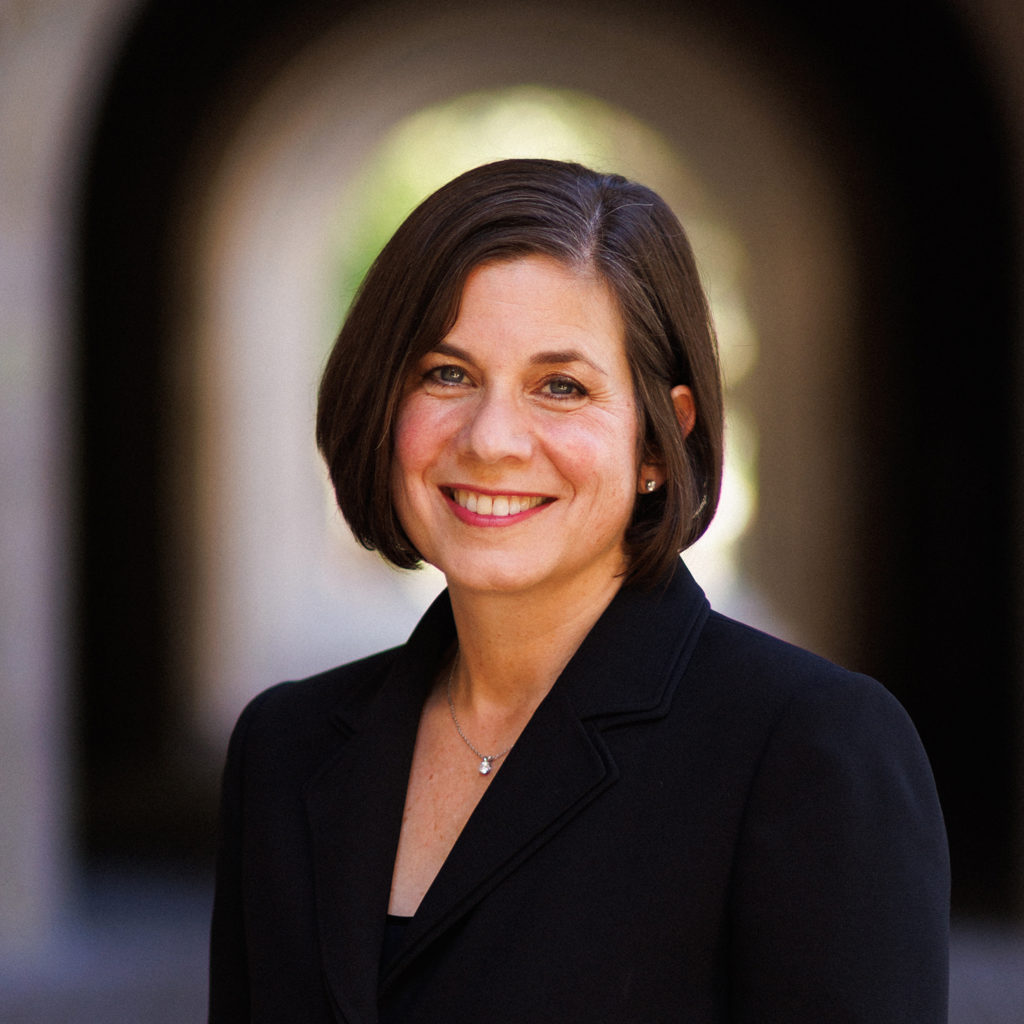
Mello (BA ’93) is a leading empirical health law scholar whose research is focused on understanding the effects of law and regulation on health care delivery and population health outcomes. She holds a joint appointment at the Stanford University School of Medicine in the Department of Health Policy.
The following is a shortened and edited version of the full podcast transcript, which can be found here.
Pam Karlan: We have had a lot of Secretaries of Health and Human Services over the course of that department since it split from the old Health, Education, and Welfare Department, but I don’t think we’ve ever had one quite like our current secretary Robert F. Kennedy Jr. Can you give us a little bit of a sense of just how seismic the changes have been here?
Michelle Mello: It is early days, so it’s hard to say where we’re going to land, but the amount of chaos that has been introduced into the federal health policy landscape by the secretary in the first several months is unprecedented both in the types of things, substantively, that have been done, and in the way they have been done.
Pam Karlan: Sometimes it is said that “personnel is policy,” and here we’ve seen some really huge changes in personnel, not just political appointees like the secretary or the deputy secretary, or the various people who are presidential appointees, but also changes in personnel in at the career level as well. Can you give us a sense of what you’re seeing there?
Michelle Mello: Yes, this is one of the things that really makes me the saddest, when I think about what has changed in health policy over the last nine or ten months. The enormous well of expertise that has led the federal health response for decades in the civil service has been hollowed out. These are career scientists, from the hard sciences as well as the social sciences. Folks who have deep subject matter expertise in really technical health policy issues like reimbursement for the Medicare program, or the way in which people layer on different kinds of subsidies to buy their health insurance, or the ways in which vaccines are procured and supplied to states—gone.
The remaining personnel are deeply demoralized. And when you think about the amount of expertise that is required to run these health programs efficiently and without waste, it makes me fairly despondent.
Pam Karlan: We’re seeing this across the government. I see it obviously from the Department of Justice angle. There were people who were experts on all sorts of statutes you’ve never heard of, but they understood how the Federal Tort Claims Act worked or how the Vacancies Act worked or the like. Some of these people are being fired and others are resigning or taking these fork-in-the-road early retirements or the like. Do you have a sense of how much of the issue is the result of people leaving because they can’t do the work anymore that they came to do?
Michelle Mello: I think it is primarily people being laid off or fired, or told that their services are no longer required. And that goes for external experts like the professors and others who serve on the Advisory Committee on Immunization Practices, for example, as well as civil servants.
Pam Karlan: Can you explain why it matters what the vaccine committee says about which vaccines certain people can get, and the relationship to people’s insurance?
Michelle Mello: This is an independent advisory committee. It is advisory to the Centers for Disease Control and Prevention, the CDC, and it is composed of volunteers who historically have been deeply respected scientific experts, primarily from academia. They give very generously of their time to evaluate issues about which vaccines and vaccinations should be recommended for children and adults in the United States. That’s always been somewhat controversial work because there has always been a segment of the U.S. population, albeit a small one, that has resisted having vaccines required. But of course, during COVID, their work became very much more in the public eye and the subject of much resistance because they made decisions about who would have access to the COVID vaccine.
They don’t make decisions about vaccination mandates, but many states use their recommendations as the basis for the mandate decisions that they make. What’s really important from an access perspective is that vaccines recommended by the Advisory Committee on Immunization Practices must, as a condition of the Affordable Care Act, be covered by insurers without a copayment. So, at the point of care, the patient is not billed for the vaccine. During COVID, that was not such a big deal because COVID vaccines were subsidized by a separate line of funding. But for childhood vaccines, which can get very expensive, it is really critical that insurance coverage be maintained.
The concern was that once ACIP changed its recommendations, insurance companies would start changing their coverage. Thankfully, if there is a silver lining to the fact that the new members of ACIP are widely considered to be not particularly well qualified, it is that the insurers have rejected the opportunity to stop covering vaccines based on that group’s new set of recommendations.
Pam Karlan: You’ve written recently that with all this chaos in Washington, and the falloff of professional expertise at HHS, state public health departments are going to have to step up if we’re going to continue to protect Americans’ health.
Michelle Mello: Yes, and vaccines are just one example of that. The way that it’s playing out now for vaccines is that we have this new ACIP whose findings, I think is fair to say, are not respected or regarded as evidence-based by people who know—by experts. And one thing that has been called into question is whether the CDC itself will continue to base its recommendations on the advice of this committee as it historically, nearly always has.
That question was what led to the firing of Dr. Susan Monarez. In a little over a month on the job, she managed to go from being eminently well qualified, in the view of the secretary, to untrustworthy. One issue is whether the CDC will do what ACIP says, but then a separate issue is: will others follow the advice of the CDC?
Both during the Biden administration and during the first Trump administration, there were many in the United States who felt that they could no longer trust the advice of the CDC because it didn’t align with their own perceptions of what the right thing to do was, and they felt that the agency, under whatever leadership it was under, was untrustworthy. So there had already been a destabilization of public trust in CDC. We have survey data that bear that out.
What does this all mean for states? It means that there is a wellspring of a demand for guidance from outside of Washington and Atlanta. And states, to some extent, are starting to fill that gap. Many of the western states have come together in an alliance to make their own recommendations about vaccinations, as essentially a shadow CDC. They’re going to do what the CDC no longer seems to be able to do, which is to follow the evidence and make recommendations. Then, on the other hand, we have certain states going very much in the other direction and just saying: “Vaccines, no thank you.”

Pam Karlan: There are reports that some states are going to get rid of vaccine mandates for kids in schools. And I would assume that will be followed relatively quickly with an outbreak of measles or chicken pox or whatever the kids aren’t being vaccinated against.
Michelle Mello: Yes, we will see. What has happened is that the Florida Surgeon General has said that Florida will be ditching requirements for school entry vaccines. He doesn’t have the authority to do that. It’s done through a process. But assuming that that process follows, then vaccines effectively become optional. It’s important to remember that, even in Florida, most parents understand that getting your kids vaccinated is a good idea. Even those who object to being required to do so may well come forward and do so. So I don’t think we’re going to see plummeting rates of school entry vaccination. But the difficulty is with regard to some of these very highly infectious diseases. Vaccination rates don’t need to plummet; they just need to dip a little bit before we lose herd immunity. There has to be a certain percentage of the population that has immunity, either through having been infected with the disease or through vaccination. And for measles, because it is so infectious, that number is very high, around 95%.
Pam Karlan: Across huge parts of society that used to have a great deal of respect for scientific and medical expertise, are seeing a drop off. What accounts for that?
Michelle Mello: We’re still trying to understand that fully, but the narrative that makes sense to me when I look at the polling data has to do with a misapprehension of the way scientific knowledge evolves and changes over time, coupled some degree of hubris on the part of Biden-era health officials about their own confidence in their pronouncements.
The way science works, of course, is through learning—the accretion of evidence, the study of evidence—which often leads us to change our conclusions about things like: How does a pathogen spread in the population? How dangerous is it? That is science working well, but particularly during an emergency like a pandemic, that is not really what people want to hear. They want to hear that somebody is taking care of things, knows what to do, and is doing it. Perhaps that is why pandemic-era health officials were very confident in their pronouncements about things like the efficacy of the COVID vaccine in preventing infection, or whether we did or did not need to mask. That made it difficult for them to later amend their recommendations when we learned more about the efficacy of the vaccines, what vaccines were really good for, and what they were less good at, and how we should think about risk/benefit overall. As well as things about transmissibility, which changed recommendations around masking, around social distancing and lots of other things.
But again, when you have come out hot, with a lot of confidence in your pronouncements in response to the public’s demand that it looks like somebody’s taking care of things, it’s hard to backtrack. I think this anger and fear around recommendations changing, permeates out into science generally, into a feeling that it can’t be trusted. It all serves to undercut the whole basis through which evidence-based policy is made, which is that you’re supposed to have this openness to learning that you were wrong.
Pam Karlan: I think people’s scientific literacy has not been a focus of K-12 education in the last 20 years. The “teaching to the tests” of reading and just basic math has perhaps led people not to understand scientific methods?
Michelle Mello: That’s an interesting hypothesis. I think even if you did get that kind of messaging when you were 16, it may be hard to remember that. Particularly when you’re being bombarded with very different messaging from certain mainstream media outlets or from social media, which is very condemnatory of moves to change one’s mind about scientific matters.
Pam Karlan: Do you think this is a moment of any kind of opportunity, or is this just a moment of threat?
Michelle Mello: It’s hard to work in this field and see it as much more than a moment of threat for so many reasons, including reasons we haven’t talked about around, funding of science, but I think with this shift in leadership in public health, from the federal to state level, does come certain interesting opportunities around learning. This famous judicial quote about the states as “laboratories” really comes to mind when we see, for example, now states moving in very different directions with vaccination policy or other things. From a public health perspective that is bad, as we think we know a few things about what is good for public health, and states are going in very different directions with respect to these things. From a research perspective, it’s great because what you want is a lot of variation in policy. That gives you things that you can statistically exploit for learning.
So, when we see things trending in Florida in a very different way than in California, we will have a good hypothesis that it has something to do with vaccination policy. We’ll have much better data with which to study it.
Pam Karlan: There also have been a series of funding cutoffs to various universities, either targeting particular universities, or targeting particular kinds of science, particularly science that seems from the Trump administration’s perspective, to be too much about diversity, equity, and inclusion. How much of a long-term effect will we likely see from what the administration’s doing now?
Michelle Mello: I think it’s going to have a very long-term effect in particular areas. So, areas where research has essentially been shut down, like mRNA vaccine research, or any research that has to do with differences in health outcomes among people of different races and ethnicities. I think it takes a long time to rebuild that. In talking about how he would like to have “pause” for eight years from certain lines of scientific research, the secretary seems to envision that you can just walk out of a science lab, turn the lights out, and come back eight years later, dust the machines off and boot everything back up. But of course, science doesn’t work that way. We will lose the talent, both our young trainees who would otherwise be coming to train here, in part because they could no longer get visas, even if they did have the funding. And we will lose faculty talent as well. For people who were in those lines of business, they will have to be in other lines of business, and they will continue to stay in those lines of business, or they may leave the country altogether.
In other areas I think it’s more of a temporary dent. The research community is resilient. We are used to peaks and troughs in the availability of funding in different areas, and fortunately, there are other alternative funders that have stepped forward in certain areas to fill gaps. There is also the possibility of reconceiving or reframing research in ways that match the administration’s current priorities. But overall, it is a very bleak landscape.

Pam Karlan: I feel for the people who are trying to figure out how to challenge cutoffs of funds that were already given to researchers. That is, we’re not even talking about next year’s grants yet. We’re still talking about the grants that were already made and where people had every reason to expect that the money they’d been awarded was going to flow to them.
Michelle Mello: Yes, it does feel a little bit like trying to nail Jell-O to the wall. And that is honestly what it has felt like to come to work in a medical school for the last nine months. That is, every day seems to be some new twist on the previous day’s disappointment or horror.
I will say, though, I do have optimism about the courts here. I don’t share the cynicism of some that judges can’t see the difference between legal and illegal conduct if they have a certain political valence. And I actually think that many of the signs from the lower courts are very encouraging and even reassuring as to how these battles will end up in the long run. The trouble is that universities are hemorrhaging money every day right now, and so waiting for that day to come is very painful.
Pam Karlan: As we start thinking about the next round of grants and how they’ll be awarded, what should we make of these proposed university “compacts,” which presumably give preference to schools agreeing to a set of pretty political commitments? That’s not something we’ve seen in federal grant-making before.
Michelle Mello: It’s hard to think of an analog. The government has long had quite a bit of latitude to award grants as it sees fit, subject to certain statutory criteria. What has protected the scientific community is that NIH and other agencies have long relied heavily on the judgments of what we call “study sections,” groups of volunteer scientists who are asked to read proposals and prioritize them for funding. The agencies and institutes don’t have to follow these recommendations, but they typically have. One of the important changes that we’ve seen in the last few months, quite independent of the compact, is the announcement that the heads of these institutes that are responsible for reviewing these recommendations will be replaced by political appointees who will be presumably using criteria other than scientific merit to make award decisions. And that upends a lot of settled understandings about the relationship between the merit of a proposal and the likelihood of funding.
Michelle Mello (BA ’93) holds a joint appointment at the Stanford University School of Medicine in the Department of Health Policy. She is the author of more than 270 articles on medical liability, public health law, the public health response to COVID-19, pharmaceuticals and vaccines, artificial intelligence, data ethics and privacy, biomedical research ethics and governance, and other topics. Her publications appear in medical, health policy, and law journals, and she serves on the Editorial Boards of JAMA Health Forum and the Journal of Health Politics, Policy and Law.
In 2013, Mello was elected to the National Academy of Medicine, one of the highest honors in the fields of health and medicine, in recognition of outstanding professional achievement and commitment to service. Mello’s work has also garnered the Alice S. Hersh New Investigator Award from AcademyHealth, the leading professional organization for health services and health policy research in the U.S.; a Greenwall Faculty Scholars Award in Bioethics; a Robert Wood Johnson Foundation Investigator Award in Health Policy Research; an Open Science Champion Prize; and the John A. Benson Jr., MD Professionalism Article Prize.