
Flexing U.S. Power in Venezuela
Stanford Law’s Allen Weiner Explores the Maduro Operation and Its Implications under Domestic and International Law
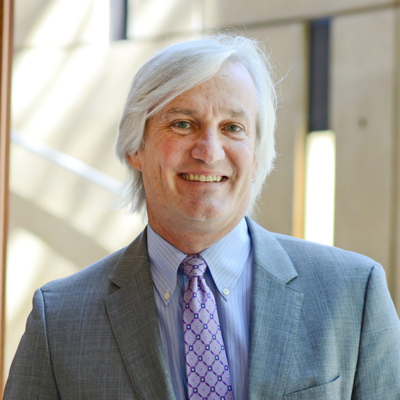
Can the United States arrest a foreign head of state by sending FBI agents—and military troops—into another country? On a recent episode of Stanford Legal, Professor Pam Karlan sat down with international law expert and Stanford Law lecturer Allen Weiner, JD ’89, to discuss the extraction of Venezuela’s Nicolás Maduro to the United States to face trial and the profound legal and diplomatic consequences that have followed. The wide-ranging conversation focused on the uneasy space where U.S. law collides with the constraints of international law.
Weiner, a former attorney in the Office of the Legal Adviser in the U.S. State Department, now directs several international law and humanitarian-focused programs at Stanford Law School, including the Stanford Program on International and Comparative Law. He explained how domestic legal theories advanced to justify Operation Absolute Resolve diverge from the UN Charter’s ban on the use of force, and situates the episode in a longer arc of U.S. efforts to reconcile military action with international legal limits, including earlier debates over Kosovo and Libya.
As important as the domestic and international law considerations are, Weiner noted that the larger stakes might lie in precedent and norms: how U.S. actions are read by other states and what they signal to rivals such as Russia and China.
The following is an edited and shortened version of the full podcast transcript, which can be found here.
Pam Karlan: The United States went into Venezuela to arrest Nicolas Maduro and his wife. FBI agents were sent on the theory that we can arrest people who violated U.S. law wherever we find them in the world. But in order for those FBI agents to be able to actually effectuate the arrest, we had to send in military troops as well. Is that correct?
Allen Weiner: That is the basic theory. We have to think about this in terms of both domestic law and international law. What you have described is the domestic law basis.
In terms of domestic law, we have an indictment against Maduro. The FBI, according to an Office of Legal Counsel opinion from back in 1989, issued by Bill Barr, who later became the Attorney General in the Trump I administration, concluded that the FBI can arrest people internationally without regard to whether that’s a violation of international law. When they go to do that, they need protection from the military. That’s the theory. Then there are separate questions about the division of authority for the use of force internationally as between the Congress and the president. There are some constitutional questions there as well, but those don’t really address the international law question.
Whatever theory we might have about whether it’s permissible under U.S. law for the FBI to go to Venezuela to arrest the president, and for us to send along a military escort, international law does not recognize that at all. Under international law standards, this is simply a use of force by the United States against Venezuela which is categorically prohibited by Article 2(4) of the UN Charter.
Pam Karlan: This administration seems to rely much less than previous ones on the Office of Legal Counsel, on legal advisors in the State Department, and on legal advisors to the military, particularly the Judge Advocates General. Is that correct?
Allen Weiner:I think that’s true, though it’s not entirely novel. Similar questions arose during the Obama administration, particularly around the use of force in Libya, when the United States intervened to protect civilians from atrocities by the Gaddafi regime. At that time, there was a serious question about whether the War Powers Resolution applied. The Office of Legal Counsel took the position that U.S. forces had been introduced into hostilities and that the War Powers Resolution did apply.In response, the president—who was himself a lawyer—decided to take a different path and relied on other guidance, some of which did come from lawyers in the State Department.
I don’t think we have an especially robust legal defense in the Venezuela situation. I think that legal justification may continue to evolve as the administration is pressed to explain its use of force. But so far, we haven’t seen much demand for a public accounting of the legal basis for certain actions, including the U.S. strikes against Iran late last year. From an international law standpoint, that was a deeply problematic use of force, and we have not seen the kind of articulated legal theory that previous administrations typically offered to justify such actions.
Listen to the Podcast with Allen Weiner
Pam Karlan: Maduro himself would likely have no personal claim, correct? Under the Ker–Frisbie doctrine, the fact that a defendant was forcibly brought into a jurisdiction—even through kidnapping—does not deprive a court of jurisdiction over a criminal case.
Allen Weiner: That’s right. As for whether Venezuela’s rights were violated—whether Venezuela was the victim of an unlawful act of aggression by the United States—that question highlights how differently international law operates compared to even a well-functioning domestic legal system.
International law lacks many of the features we take for granted domestically. There are no courts with compulsory jurisdiction over all disputes, and there is no global police force to enforce the law. In fact, states tend to like it that way—especially powerful states—because it preserves sovereign discretion and the freedom to act.
As a result, most international law is enforced horizontally, through self-help measures, rather than through centralized enforcement. The response to Russia’s invasion of Ukraine is a good example: sanctions, asset freezes, and diplomatic isolation. But if you’re a powerful country like Russia, you can withstand those pressures. And there is certainly no realistic prospect of horizontal enforcement that would meaningfully constrain U.S. conduct.
There is, however, an interesting wrinkle that hasn’t received much attention. Venezuela is a party to the Rome Statute of the International Criminal Court. That means the ICC has jurisdiction over acts of aggression carried out on Venezuelan territory. It will be interesting to see whether the ICC opens an investigation into this situation.
Of course, the ICC is well aware that doing so would amount to declaring war—politically, at least—on the United States, which is already deeply hostile to the Court, particularly in light of its investigations of Israeli officials related to the war in Gaza.

Karlan: So there’s at least the theoretical possibility of enforcement against individuals, right? In other words, the ICC could bring charges against specific actors—say, an FBI agent—for kidnapping?
Allen Weiner: They could charge Donald Trump with the crime of aggression.
Pam Karlan: Right. But the likelihood of actually arresting him and bringing him before the Court would be much lower than with many other heads of state who’ve faced ICC charges.
Allen Weiner: That’s exactly right. And it’s instructive to look at what’s happened with Vladimir Putin. He’s been indicted by the ICC, and that has clearly affected his travel. He recently traveled to Mongolia, which is an ICC state party, but only after receiving assurances that he would not be arrested. By contrast, when the G20 summit was held in South Africa last year, Putin didn’t attend—likely because South Africa could not guarantee that it would not be legally obligated to arrest him.
An indictment of Donald Trump would put European allies who strongly support the ICC in an extraordinarily difficult position. If Trump were to attend a NATO summit in Brussels, for example, would Belgian authorities actually arrest him and surrender him to the ICC? It’s a mind-boggling question. And for that reason, I think the ICC would be extremely cautious about proceeding against Trump, because it would risk triggering an existential confrontation with the United States.
Pam Karlan: Let’s turn to the international law question. This is about the unlawful use of force against the state of Venezuela under international law—not against Maduro personally. Is that right?
Allen Weiner: That’s correct. The relevant obligations come from the United Nations Charter, which broadly prohibits states from using force in their international relations. That body of law governs the rights and obligations of states vis-à-vis one another.
There are, however, related legal questions. If Venezuela’s sovereignty was violated, does that generate any rights that Maduro himself could invoke in U.S. courts? Under U.S. law, an illegal arrest within the United States can deprive a court of jurisdiction under the Fourth Amendment. But as you’ve noted, that doctrine does not apply when someone is illegally abducted from abroad.
There is a narrow exception. Under the Toscanino standard, a court may decline, on prudential grounds, to assert jurisdiction if the circumstances of the defendant’s transfer to U.S. custody are so egregious that they “shock the conscience.”
There’s also a separate legal issue that could affect Maduro’s status as an individual: whether he enjoys immunity from U.S. courts as a head of state. Under international law, there is a general understanding that sitting heads of state—and also foreign ministers and sometimes defense ministers—are not subject to the jurisdiction of other states’ courts.
The complication here is that, at least since 2019, the United States has not recognized Maduro as Venezuela’s head of state. And U.S. courts typically do not make independent determinations about who qualifies as a foreign head of state; they defer to the executive branch’s recognition decisions.
For that reason, I think it’s unlikely that Maduro could successfully invoke international law immunity doctrines as a defense in U.S. courts. Venezuela could attempt to rely on horizontal enforcement mechanisms—mobilizing international pressure against the United States—but I think the United States would likely be able to withstand that pressure.
So once again, we’re confronted with what I often describe to my students as the “underdeveloped” or “immature” nature of international law: it simply does not operate in the same way as a well-developed domestic legal system.
Pam Karlan: Looking ahead, does international law have anything to say about how the United States should deal with Venezuela? We’re hearing mixed signals from the administration. On the one hand, the president has made statements suggesting direct control—“we’re going to go run Venezuela.” On the other, officials like Secretary of State Rubio seem to be pointing toward economic pressure and inducement, with the idea that Venezuelans themselves will bring about change. Does international law speak to those kinds of approaches?
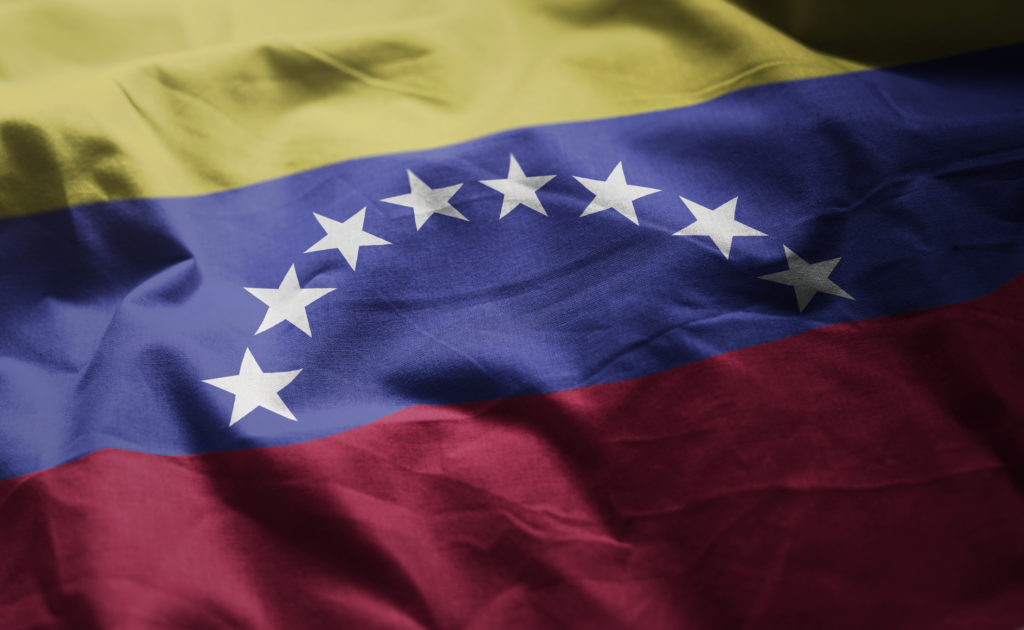
Allen Weiner: It does. If a state wages war against another country and intends to run it, international law has a well-settled framework for that: the law of occupation. After World War II, for example, the United States occupied and governed both Germany and Japan. We established civilian governing authorities and security apparatuses in those countries.
Pam Karlan: And that was consistent with international law?
Allen Weiner: Yes. International law has recognized the law of occupation at least since the 1907 Hague Convention, and the 1949 Geneva Conventions set out detailed rules governing what an occupying power may and may not do. But to qualify as an occupying power, a state must exercise de facto control over the territory. That is plainly not the case here.
President Trump has talked about putting boots on the ground, but occupying Venezuela would require the deployment of something like a hundred thousand troops. So we are clearly talking about something else.
What exactly that is remains unclear. We’ve heard statements suggesting that Venezuela’s vice president, Delcy Rodríguez, will be expected to cooperate with the United States—and that if she doesn’t, things will be worse. That is plainly a threat. And international law prohibits not only the use of force, but also the threat of force – at least if the circumstances in which a state is threatening to use force would be unlawful. President Trump’s comments about how he will treat Venezuela’s interim president sounds like an impermissible threat of force.
Such coercion could also cross the line into what would be considered unlawful intervention in the internal affairs of another state.
Pam Karlan: So are the only real constraints on President Trump here political?
Allen Weiner: There may also be some international response, though we’ll have to see how robust it is. The president has, in my view, managed to intimidate a number of world leaders. If any other country had engaged in conduct like this, the condemnation from European states would likely have been loud, emphatic, and unequivocal.
I recently spoke with a journalist from Deutsche Welle who told me that the German chancellor had described the legal issues here as “quite complicated.” And my reaction was: they’re really not. From an international law perspective, this is actually quite straightforward. It’s an unlawful use of force against Venezuela.
The first potential constraint would be international political and diplomatic pressure. But there are real limits on how far other countries are willing to go in confronting the United States.
Ultimately, especially in a democracy, the second and most significant constraint is domestic political accountability—exactly as you suggested. The question is whether the American public will say: “We don’t like Nicolás Maduro. He’s a dictator. He stole an election. He committed serious human rights abuses. But we still don’t believe it’s appropriate for the United States to invade other countries simply in pursuit of its national interests.”
What I find striking is that the administration has not leaned more heavily on a human rights justification for its actions.
Pam Karlan: That’s striking to me as well. If the claim is that the United States had to intervene because Nicolás Maduro is a dictator engaged in narcotics trafficking and conspiracy, and because of the harm his actions allegedly cause the United States and his own people, you would expect to hear much more about that. Instead, we hear a lot about sending U.S. oil companies in to rebuild Venezuela’s oil infrastructure and generate profits for shareholders.
Allen Weiner: I agree. There is a doctrine in international law—often described as humanitarian intervention—that has been proposed but largely rejected. This arises against the backdrop of the general rule that states are prohibited from using force in their international relations. There are two clear exceptions. First, a state may use force in self-defense if it suffers an armed attack, and possibly if there is an imminent threat of attack. Second, force may be used if it is authorized by the U.N. Security Council.
Some have argued for a further exception: a right of humanitarian intervention, allowing states to use force to prevent governments from committing atrocities against their own populations. The United States has generally resisted adopting that doctrine as a legal justification, largely out of concern that it would invite error and abuse. Vladimir Putin, for example, has invoked humanitarian intervention arguments to justify Russia’s invasion of Ukraine, claiming—falsely—that it was necessary to prevent atrocities against Russian-speaking Ukrainians.
At the same time, the United States has invoked humanitarian motivations for using forcein the past. We used force in Kosovo in 1999, which led to a 78-day bombing campaign,to halt Serbian atrocities against Kosovars. And in 2013 – with Security Council authorization, which is significant in legal terms –we used force in Libya to protect civilians from abuses by the Gaddafi regime, a campaign that ultimately resulted in Gaddafi’s overthrow. Historically, claims about rescuing people, saving lives, and preventing atrocities have been powerful moral and political justifications for the use of force.That’s why I share your incredulity that the administration seems to think a justification along the lines of “making Venezuela safe for Exxon” will resonate with the American public.
We’ll see how this plays out. There is often an initial “rally around the flag” effect when force is used. And I will say that, from everything I can tell, the military executed this operation in an extraordinarily sophisticated and impressive way—it was a technical tour de force. But over the longer term, I wonder how this will sit both with people on the right, who have more isolationist instincts and were promised an end to “forever wars,” and with people on the left, who are skeptical of projecting American force abroad.
So yes, the real enforcement mechanism, ultimately, is domestic political response.
Pam Karlan: And based on statements from both the president and Secretary Rubio, it seems they don’t view this as ending with Venezuela. There appear to be other countries on their list as well—most notably Cuba.
Allen Weiner: Yes—Cuba is on the list. Colombia is on the list as well, largely because its president, who is a leftist, has been openly critical of President Trump and has alienated him. And of course, Greenland has also been placed in the crosshairs.
What worries me is that if the president views this operation as a success—and he has now carried out two military operations back-to-back, against Iran and Venezuela, which he may judge tactically successful—that could embolden him to pursue similar actions elsewhere.
The broader concern is systemic. International law, as we have discussed, lacks a police force to enforce it. Nevertheless, as Harold Koh has observed, “international law is almost never enforced, but almost always obeyed.” And Lou Henkin famously put it this way: “Almost all nations obey almost all of their international legal obligations almost all of the time.”
That’s not because of coercive enforcement, but because states choose to bind themselves. I’m a voluntarist; I’m a positivist. I believe states are bound under international law only by the rules they accept. We agree to limit our sovereignty and freedom of action in order to receive the reciprocal benefit of other states accepting similar restraints on their conduct. But the foundations of this legal regime are undermined when states, especially powerful ones, violate the commitments they have made.
Pam Karlan: That brings me to what President Trump has described as the so-called “Donroe Doctrine.” The original Monroe Doctrine, of course, was an early 19th-century principle asserting that European powers should not interfere in the Western Hemisphere—that the Americas were, in effect, for the Americas, with the United States playing a dominant role. If the United States now claims broad authority to act throughout the Caribbean—through military operations, including actions like the bombing campaigns against alleged narcotics vessels—what signal does that send to other major powers? What does it tell China about its claimed entitlements with respect to Taiwan, or Russia about its claims in Ukraine and potentially elsewhere in the former Soviet Union?
Allen Weiner: That’s exactly my concern. We can think about U.S. interests in two different ways. One is systemic: an interest in maintaining stability in the international system. The other is transactional: asking whether a particular outcome serves our immediate interests. If the question is whether it’s in our interest for Nicolás Maduro no longer to be president of Venezuela, let me stipulate that the answer, in terms of our transactional interests, may well be yes.
But there’s also a systemic interest in preserving a rule that the United States itself helped enshrine in the U.N. Charter: that states are prohibited from using force in their international relations. Under the legal framework that prevailed before World War II—and certainly the legal framework that applied before World War I—states routinely resolved disputes through force.
If we now say that powerful states may use force whenever they believe their short-term transactional interests demand it, or that they have unfettered authority within their own “spheres of influence,” it becomes very difficult to explain our objections to other uses of force. Why, then, do we object to Russia’s invasion of Ukraine—or to potential future Russian actions in Georgia or Moldova?
The same problem arises with China. Consider China’s nine-dash line and its sweeping territorial claims in the South China Sea. We’ve objected to those claims in part because they violate international law. But if China responds by saying, “This is our region, we’re powerful, and we can control these seas,” it’s not clear what answer we have if our own conduct suggests that this is how we believe the international system works.
Allen S. Weiner, JD ’89, is the director of the Stanford Program in International and Comparative Law, director of the Stanford Humanitarian Program, and director of the Stanford Center on International Conflict and Negotiation. He is an international legal scholar whose research and teaching focus primarily on the fields of international security and international conflict resolution. He also studies the challenges of online misinformation and disinformation. In the international security realm, his work spans such issues as international law and the response to contemporary security threats; the relationship between international and domestic law in the context of armed conflict; the law of war (international humanitarian law); just war theory, and international criminal law (including transitional justice). In the realm of international conflict resolution, his highly multidisciplinary work analyzes the barriers to resolving intractable political conflicts, with a particular focus on the Israeli-Palestinian conflict. He practiced international law in the U.S. Department of State for more than a decade advising government policymakers, negotiating international agreements, and representing the United States in litigation before the International Criminal Tribunal for the former Yugoslavia, the International Court of Justice, and the Iran-United States Claims Tribunal.