
Can ICE Agents Be Prosecuted? Stanford Law’s Robert Weisberg Explains Federal Shootings and Constitutional Limits
The Trump administration’s Department of Homeland Security launched “Operation Metro Surge” in December 2025, targeting the Twin Cities for large-scale immigration enforcement—bringing thousands of ICE and border control agents to Minneapolis and St. Paul and sparking widespread protests. And clashes. Already this month, federal agents have shot three and killed two American citizens, Renee Good on January 7 and Alex Pretti on January 24, and thousands of immigrants and protesters have been detained.
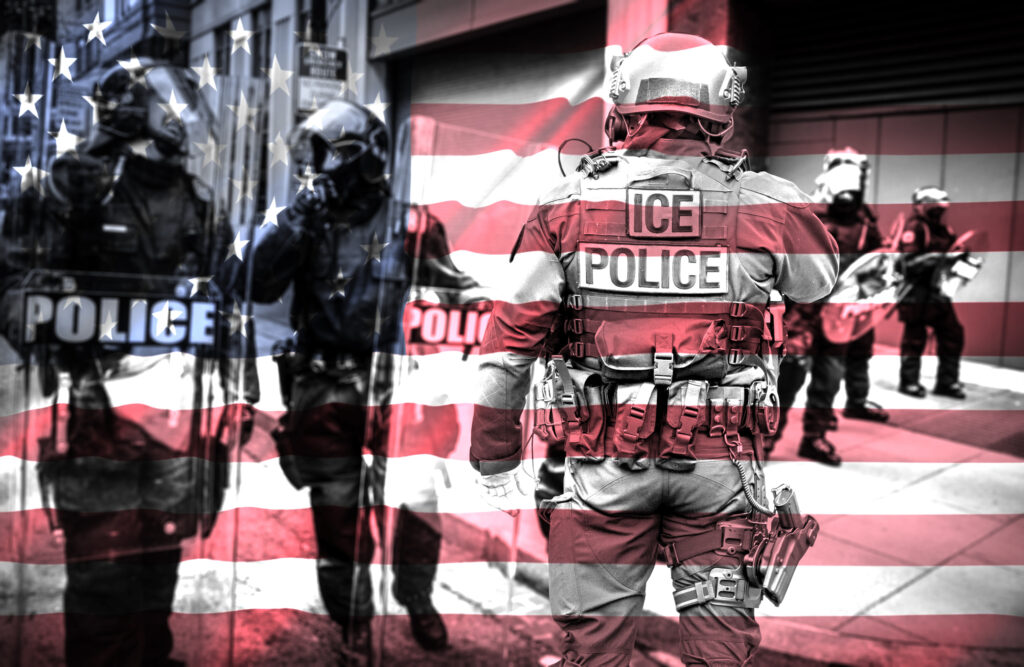
These shootings raise important legal questions about the jurisdiction and power of ICE and border control agents, decisions about investigations and who will conduct them, and consequences for officers if wrongdoing is established. Here, criminal law expert Robert Weisberg, Edwin E. Huddleson, Jr. Professor of Law, discusses some of the more pressing issues.
Minneapolis has been targeted and thousands of federal immigration and border agents are on that city’s streets—often clashing with protesters and immigrants. How do constitutional protections such as the Fourth and Fourteenth Amendments apply to ICE and border agents, and how does their authority differ from that of local police?
ICE agents are certainly subject to Fourth Amendment restrictions. It’s a matter of how those restrictions are interpreted in this context and what the remedies would be for violations. ICE can’t detain a person without reasonable cause or suspicion that the person is in the U.S. illegally, but that’s a lower standard than probable cause for a crime. As a corollary, under controversial use of so-called administrative warrants—ones issued by an ICE or DHS official rather than a judge—ICE agents are not just acting on reasonable cause about a particular person, but rather, in effect, stopping anyone they see in urban areas, who they say, show some sign of being illegally in the U.S. Such “roving patrols” used to be permitted near the border, but now they are everywhere.
Technically speaking this is not criminal law enforcement, but administrative enforcement of federal immigration laws that would normally lead to deportation—not true imprisonment. And the courts give the federal government a uniquely wide berth in any matter involving the borders and national security. Also, what ICE calls a detention turns out to be much more intrusive than the conventional notion of a temporary investigative “stop” by regular police. These stops often lead to long-time incarceration while the individual who can’t make bail waits for a deportation decision. Again, this is something that in regular law enforcement would require probable cause.
Recently ICE claimed an even more Fourth Amendment-stretching power—to forcibly enter homes without arrest or search warrants from a judge. Courts quickly objected, and ICE has now backed off.
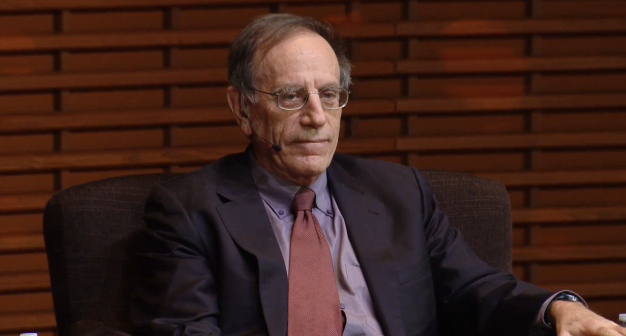
Can you say something about the Supreme Court’s September ruling in Noem v. Vasquez-Perdomo, which lifted lower court restrictions, allowing ICE agents to resume “roving patrols” and use factors such as language, location, and appearance as grounds for immigration stops in Los Angeles. Can you talk about that?
The Vasquez-Perdomo case is not a final ruling of the Court. It was a decision on the now-famous shadow docket, staying a lower court injunction against ICE. The lower court had granted the injunction on the grounds that ICE was demonstrably engaging in, among other things, racial and ethnic profiling. The official Court opinion says nothing about the details, but in a concurrence, Justice Kavanaugh took pains to insist that race and ethnicity could not be the sole basis for a detention, but merely one of the many possible relevant factors. He has recently walked that back somewhat.
Investigations into the two fatal shootings seem fraught, to say the least. How would a typical police shooting be investigated? Who would oversee it?
We all know from TV shows and movies that “Internal Affairs” come in to investigate possible police misconduct and need for discipline—they are supposed to be independent of the regular law-enforcement function to ensure objectivity. When it comes to possible criminal prosecution at the state level, a district attorney would oversee the investigation, which, in these cases, of course involves extensive examination of forensic evidence and videos. But in recent years in many states, the investigative power over local police has been handed to the state Attorney General on the theory that that office is more objective than local prosecutors. So, the parallel on the federal side is that the investigation of ICE agents should be done by DOJ on the theory that it is independent and more objective than DHS in investigating its own agents. I need not tell you that there is a lot of skepticism out there about whether DOJ will exercise any independent judgment here, especially after we have people in the White House and the U.S. Attorney General pre-judging these killings as thoroughly justified actions against so-called domestic terrorists.
Would you describe the investigations into the two shootings by federal agents typical? Can a state investigation run concurrently with the federal one?
Both the federal government and the state or county have the power to investigate as a predicate to possible prosecutions. There are logistical problems when both parties want to examine the same evidence, especially when there are time-sensitive concerns about preserving the evidence. These problems can be overcome by cooperation between the U.S. and the state to coordinate the investigations.
But the state is worried that the feds will manipulate or hide or destroy evidence, and now a federal judge, in a remarkable decision, has very vigorously chastised federal officials and ordered them to be accountable to him for preservation of the evidence.
Can a federal immigration officer be sued in a wrongful death action for his conduct while in the line of duty?
Had the officers here been state or local, then representatives of the decedent could sue under 42 U.S.C. § 1983 for damages for violations of the Constitution. But the well-known and controversial principle of qualified immunity makes it very difficult for plaintiffs to win these cases so long as the officer, even if he concedes that his actions went beyond Fourth Amendment guard rails, can put on a vaguely plausible argument that he acted reasonably, if mistakenly, given the state of the law at the time.
When it’s a federal official, a tort suit is even harder to bring. Section 1983 only applies against state or local officials. In the case of a federal officer, there is a judicially created right of action called a Bivens suit that in theory parallels section 1983. But it has been read so restrictively against plaintiffs in recent years that there really isn’t very much left of it.
What about criminal prosecution of the officers?
A United States Attorney or DOJ could bring a charge under 18 U.S.C. § 242 for culpable violation of the victim’s constitutional rights. But there seems no inclination to do so right now.
In theory nothing stops state prosecutors from bringing homicide charges under regular state criminal law against the officers. But a doctrine of Supremacy Clause immunity would intervene, namely the officers could escape liability by showing that however bad the consequences, they acted reasonably, if mistakenly, within the scope of their duties. In addition, a federal law says that if the state brings criminal charges, the officer defendant can move the case from state to federal court, presumably on the theory that the federal courts are more objective. Oddly enough in that federal court, the prosecutor will still be the state prosecutor and the law applied will be state homicide law. But the chances of conviction there may be affected if the jury pool in a federal district encompasses a different demographic than the county pool.
There are reports of strong disagreement about the investigations by various agencies. State investigators were blocked from participating in the investigation into both shootings, and there have been reports that federal prosecutors in Minnesota resigned, in part, because they were told to investigate the actions of Good and her wife, rather than ICE officer Jonathan Ross. And it has been reported that the acting FBI supervisor of the Public Corruption Squad in the Minneapolis field office, Tracee Mergen, resigned last week in part over the investigation of the fatal shooting of Renee Good by an Immigration and Customs Enforcement officer earlier this month. Additionally, there have been reports that Minneapolis city and Minnesota state police are not happy with how federal agents are handling their mission, with off-duty officers of color being profiled and pulled over by ICE. How do you see this situation getting resolved?
There are some strange bedfellows in this case—one is that the very conservative and usually Trump-friendly National Rifle Association is attacking ICE because it views Pretti, who had a permitted gun holstered at the time of the tragic encounter with federal officers, as a citizen exercising Second Amendment rights. And this just in—Senator Ted Cruz has denounced what ICE is doing. But now we also see law enforcement criticizing law enforcement. Local police think that ICE has caused them problems by provoking protests that lead to concerns about public disorder that the local police must handle. And obviously this is grievously exacerbated by local officers themselves being the subjects of ICE detentions.
Already in the last few days we’ve seen the Trump administration backing off to some extent with some at least arguable negotiations between the White House and Minnesota officials. Trump has pulled DHS Secretary Noem and the local ICE head official, Greg Bovino, out of Minneapolis, so if there is a solution, it will be largely political.
Robert Weisberg, the Edwin E. Huddleson, Jr. Professor of Law, works primarily in the field of criminal justice, writing and teaching in the areas of criminal law, criminal procedure, white collar crime, and sentencing policy. He also founded and now serves as faculty co-director of the Stanford Criminal Justice Center (SCJC), which promotes and coordinates research and public policy programs on criminal law and the criminal justice system, including institutional examination of the police and correctional systems.