
Shadowboxing in Sacramento: Potential Wildfire Legislation—and the Evidence Legislators Should See First
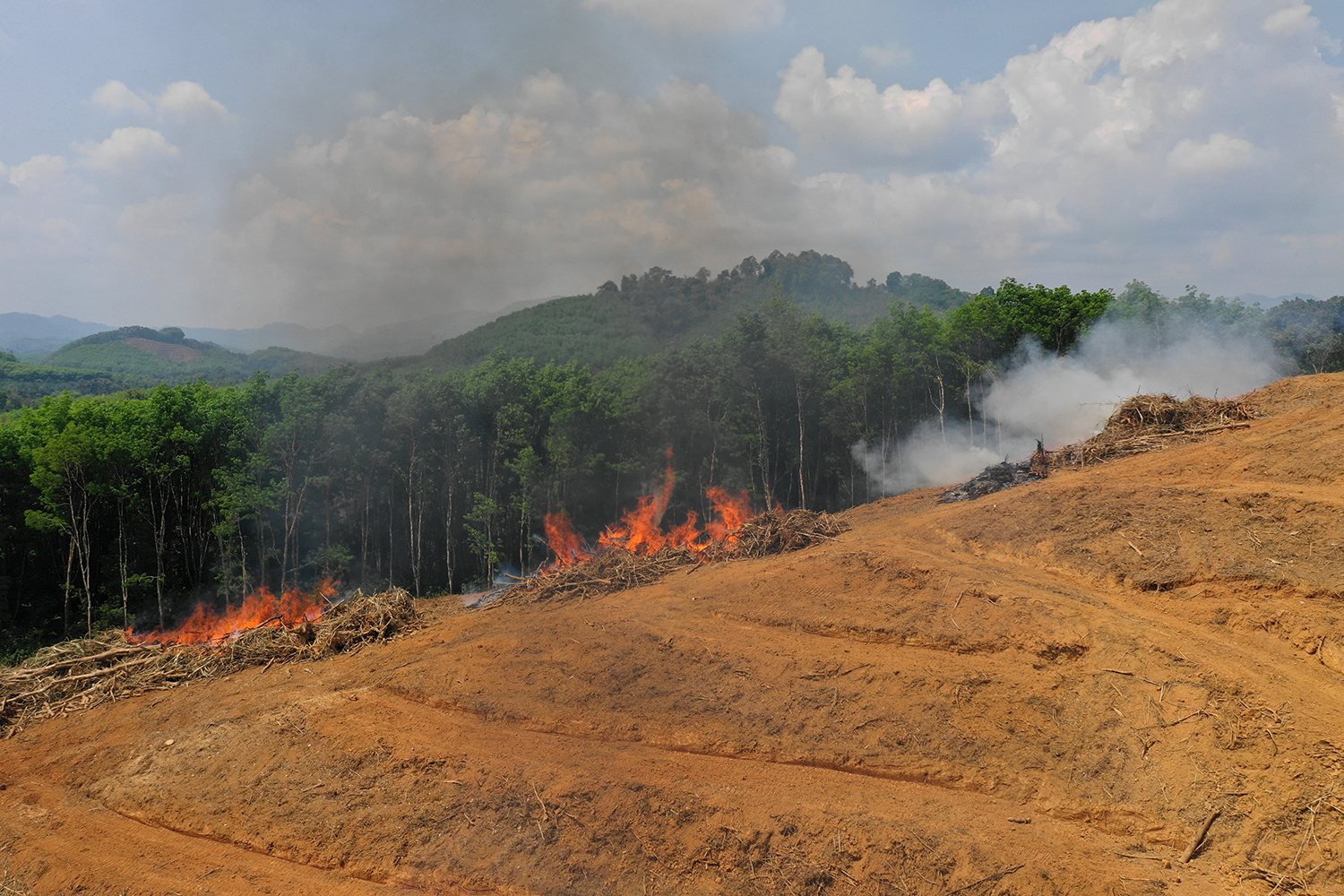
As wildfires have continued to rage in California, lawmakers have repeatedly offered proposals to contain their cost. One proposal, though, has consumer groups, victims’ rights organizations, the NAACP, and even the insurance industry sounding the alarm, even though no formal legislation has been introduced. Here, Stanford Law School professor Nora Freeman Engstrom explains.
There is no legislation on the table yet, but opponents are already organizing. Can you explain how something that isn’t written is generating such concern?
Yes, it’s odd! In California, there’s a process colloquially called “gut and amend” whereby lawmakers “gut” an existing bill by deleting its content and “amend” it by replacing the deleted text with new (sometimes wholly unrelated) material. Legislators use this shortcut for lots of reasons, including to advance controversial measures that would face long odds if they were considered pursuant to ordinary legislative processes.
Folks are so worried because last year, in the final days of the legislative session, legislative leaders used just this mechanism. They gutted a bill intended to protect wildfire victims and replaced it with a 231-page bill that many say tips the scales in favor of utility companies—a move some have described as essentially a last-minute “bailout.” It all happened so fast that some legislators admitted that they didn’t know what they were voting on.
Is there a worry that legislators are poised to use this maneuver to advance legislation related to wildfire victims’ ability to seek redress?
Yes. It’s understandably hard to evaluate—much less oppose—something that doesn’t exist. It’s hard to hit a target nobody has drawn. But there have been persistent reports that, sometime in the next few weeks (before the legislative session wraps up on August 31st), lawmakers will again use the “gut and amend” process, this time to change the rules that govern compensation for wildfire victims.
What specific kinds of changes appear to be under consideration?
According to consumer groups, possible legislation would make numerous changes to the litigation landscape. As a scholar who studies tort law and access to justice, I find two of the measures particularly concerning. The legislation seems likely to: (1) curtail fire victims’ noneconomic damages, and (2) cap contingency fees.
Why weigh in now?
If legislation does materialize, any ensuing debate will be accelerated and abbreviated. So, I decided to look ahead, to ask a simple question: If this legislation does emerge, what are its likely consequences?
Fortunately, when it comes to noneconomic damage restrictions and contingency-fee caps, we don’t have to speculate about likely effects. I, alongside other researchers, have been studying these mechanisms for decades. Obviously, California legislators, if asked to pass judgment on any such reform, should have the benefit of that research.
Digging in, let’s consider a possible restriction on fire victims’ noneconomic damages, which is to say, fire victims’ ability to recover for their pain, suffering, emotional distress, fear, grief, and loss of society and companionship. What would that reform look like? What effect might it have?
Noneconomic damage caps actually got their start in California, back in 1975, when the California legislature passed a measure called MICRA (the Medical Injury Compensation Reform Act) which, among other things, capped noneconomic damages in medical malpractice claims at $250,000 (a sum that, initially, wasn’t adjusted for inflation). Since then, noneconomic damage caps have become a darling of the tort reform movement. They have been enacted, in one form or another, in the majority of states.
Arguments for noneconomic damage caps are straightforward: They reduce liability exposure and make litigation and insurance more predictable and, proponents hope, less expensive.
But they also have very clear—and I think overwhelming—drawbacks.
The first problem is deterrence. One reason we impose civil liability is to deter wrongdoing by making individuals and corporations internalize the full costs of their actions. By fixing liability at an artificial ceiling, damage caps dilute that deterrent effect.
Given that, one would predict that damage caps would lead to an uptick in tortiously inflicted injury. And indeed, numerous studies support this common-sense idea. In the medical malpractice realm, for instance, researchers have found that, after states adopted noneconomic damage caps, adverse patient safety events rose compared to states without such limits. It follows, then, that by capping wildfire damages, California would reduce utilities’ incentive to engage in sensible wildfire prevention, whether by managing vegetation, replacing outdated equipment, or de-energizing lines in high-risk areas.
A second problem is distributional. Damage caps disproportionately affect those who suffer the most devastating injuries. Tort law seeks to make victims whole by matching compensation to the scale of harm. But a fixed ceiling severs that link. For wildfire victims facing profound disability, a statutory limit guarantees that much of their loss goes uncompensated. Or, as one judge has put it: “The caps operate on a perverse irony—those with relatively minor injuries are permitted full recovery, while the most severely injured among us are denied.”
A third problem is access. Similar to contingency fee caps (discussed below), caps on noneconomic damages fall hardest on those with little or no income: children, the elderly, and stay-at-home parents. Because their lost wages are modest or nonexistent, these individuals’ claims depend heavily on noneconomic recovery. Quantifying the effect: One study found that California’s cap on noneconomic damages in medical malpractice cases slashed women’s median recovery relative to men’s—from 95% of men’s, down to 58.6%.
What about a contingency fee cap? Is that a good idea?
Well, contingency fee caps sound good. Who could oppose a measure to give wildfire victims a greater share of their ultimate recovery? Yet, when you get beyond the bumper sticker and think harder about this mechanism, several clear drawbacks emerge.
For one thing, as Brianne Holland-Stergar and I have written, contingency fee caps are, at bottom, price controls, and decades of economic research show that price controls generally distort incentives, skew the allocation of resources, artificially limit production, and, ultimately, lead to shortages. We’ve seen this time and again: below-market rent controls trigger housing shortages, below-market interest controls trigger credit shortages, and below-market price controls on gasoline trigger fuel shortages.
Nor is the personal injury marketplace immune to these effects. Most notably, in 2009, RAND researchers surveyed nearly 3,000 personal injury lawyers from forty-two states to probe lawyers’ stated willingness to take certain hypothetical cases under particular fee arrangements. The researchers found that fee caps reduced attorneys’ expressed willingness to take particular claims.
Are particular individuals especially affected?
Yes. Research indicates that fee caps have an outsized impact on groups that already struggle to find legal representation. As the ABA has highlighted: “[S]ignificant constraints on contingent fees would make legal assistance available only to those injured persons who are wealthy. The poor, the retired, African Americans, and women especially will suffer.”
Why would that be? If a cap applies across the board, why would its effect fall on some people more than others?
The answer lies in what damages contain and the way they’re calculated.
Imagine two neighbors who sustain identical injuries in the same fire. One is a 45-year-old contractor whose claim comes to $100,000, $40,000 of which is lost income. The other is a 70-year-old retiree with equal medical bills—but no wages to lose. Her claim totals only $60,000. At a standard 33% fee, the retiree’s case generates $19,800 for her lawyer, as against the contractor’s $33,000. Now cap the fee at, say, 15%. The contractor’s claim may still attract counsel, but the cap renders the retiree’s case a losing proposition.
This matters because, like our hypothetical retiree, certain Californians—women, persons of color, children, and the elderly—tend to have comparatively low (or nonexistent) lost wages. (Children and the elderly tend not to work at all, while women and Black workers continue, on average, to earn substantially less than their white male counterparts.) Given these disparities, in personal injury suits, these individuals’ total damages tend to be smaller. Because their damages are smaller, these individuals’ cases tend to be less attractive to lawyers—such that, when fees are capped, it’s their cases that tend to get left on the cutting-room floor.
If fire victims’ contingency fees and noneconomic damages were both capped, does the effect multiply?
Yes. And this is often overlooked because each reform tends to be debated in isolation. But these reforms don’t work in isolation; they work in tandem. Noneconomic damage caps shrink the recovery. Contingency fee caps then shrink the lawyer’s share of whatever remains. Neither cut alone might be enough to make a case uneconomical to bring. Together, they can be.
So, what’s the ultimate takeaway?
I’ll end where I started. It seems premature and maybe a little presumptuous to analyze legislation that doesn’t exist. But persistent reports suggest that a bill is coming down the pike that would affect wildfire litigation, including by restricting noneconomic damages and capping contingency fees. And with the August 31st deadline looming, if this legislation is introduced, it seems that there will be little time for robust debate.
The California legislature shouldn’t move hastily when it comes to something this important. Before California rewrites the rules for wildfire victims, legislators should insist on doing something surprisingly simple: assessing the evidence. Decades of research tell us a great deal about what these reforms would actually do—and on whom their burdens would disproportionately fall.