
Pressure Testing Proposed Infrastructure Permitting Reforms: Part II
Shortly before a bipartisan group of U.S. Senators released their bipartisan infrastructure permitting reform legislation—the Bipartisan American Affordability and Jobs Act (BAAJA)—I posted a background paper that chronicled the substantial progress that the federal government has made in recent years in improving the environmental review process for major infrastructure projects. In addition to focusing on NEPA reforms, the backgrounder, entitled “Pressure Testing Proposed Infrastructure Permitting Reforms: Part I,” also identified key non-NEPA-related factors that are slowing down infrastructure projects and demand attention, and offered suggestions for targeted reforms.
Now that the bipartisan bill is out, it is appropriate to conduct a fresh “pressure test” of the bipartisan bill’s proposed reforms against the historic perspective laid out in my prior post.
I have three primary takeaways.
First, I was surprised that BAAJA gives short shrift to the nuts-and-bolts process for conducting effective environmental reviews for major projects including, in particular, how to get a gaggle of federal agencies to coordinate reviews and issue simultaneous permits and approvals for big infrastructure projects.
My backgrounder recounted how successive Administrations have leaned on cabinet and sub-cabinet officials to take a hands-on approach to resolve the inter- and intra-agency misunderstandings, disagreements, and resource constraints that have historically been a primary cause of permitting delays for major infrastructure projects. Congress endorsed and codified a formal role for these agency leaders when, in the 2015 FAST-41 Act, it created a high-level “Permitting Council” made up of Deputy Secretaries and Chief Operating Officers (typically one and the same), operating under the aegis of the White House.
It was a brilliant move. Deputy Secretaries and cabinet department COO’s are members of the long-standing President’s Management Council and know how to troubleshoot, elevate, and resolve the type of sticky permitting issues that arise within and among the cabinet agencies. Congress reinforced the key role played by the Permitting Council when, in the 2021 Bipartisan Infrastructure Law, it removed FAST-41’s sunset clause and generously funded the Council’s operation.
Because of the important role that Permitting Council leadership has played in improving and accelerating federal infrastructure permitting, my backgrounder recommended expanding its reach from select, voluntarily opted-in infrastructure projects to all major infrastructure projects that require Environmental Impact Statements (EISs) or Environmental Assessments (EAs). The backgrounder also suggested that future Presidents appoint a high level White House official with proven management and problem-solving chops as Director of the Permitting Council.
Inexplicably, and despite its statutory roots, positive track record, and opportunity to expand its reach, BAAJA makes no mention of the Permitting Council. Instead, BAAJA leans entirely on the Council for Environmental Quality (CEQ)—a long-standing White House unit that the original NEPA statute created to oversee and advance NEPA policy—to also take on the responsibility for implementing permitting processes that extend deep into agencies—a more natural role for Deputy Secretary members of the Permitting Council who have the expertise, legal authority, resources, and head-knocking capabilities to successfully keep contentious permitting processes on track.
Perhaps BAAJA’s drafters intend for the Permitting Council to continue functioning under the unrepealed FAST-41 Act. Realistically, however, it appears that the Permitting Council’s role is, at the least, being downgraded—if it continues at all.
If this was an oversight, it can and should be corrected. If the omission was intentional, it is misguided and should be revisited.
My second take-away is that BAAJA’s limits on NEPA litigation are directionally sound and in line with my prior endorsement of “put[ting] sensible constraints on post-permitting litigation.” For example, shortening the deadline to file lawsuits from the current six years (pursuant to the Administrative Procedure Act) to FAST-41’s two years makes perfect sense. And perhaps an even shorter deadline can be justified for EIS and EA processes that have been publicly noticed and commented upon.
However, changing standing requirements and injunction standards for NEPA as BAAJA proposes to do—when courts almost never enjoin construction activities due to NEPA violations—threatens more conflict and litigation, not less. And while “vacatur” (that is, vacating a permit and requiring a NEPA re-do) can be a harsh result when NEPA violations are found, courts have been reluctant to apply this remedy and BAAJA’s proposed elimination of the remedy may be an overreaction. As suggested in the backgrounder, it might make more sense to confine its use to particularly serious NEPA violations.
My third take-away is that, in line with my backgrounder, BAAJA’s bipartisan drafters have appropriately recognized that a large number of energy projects are being delayed by factors that have nothing whatsoever to do with NEPA. I drew specific attention to the large and growing number of energy projects whose construction is being delayed by transmission and grid capacity constraints. To its credit, BAAJA addresses these serious bottlenecking problems head-on and proposes an impressive slate of actions to shore up grid inadequacies. It also anticipates future hold-ups by requiring that approvals of new data centers be conditioned on reducing ratepayer costs and building more flexibility into the U.S.’s existing grid.
Striking at other non-NEPA causes of permitting delays also has prompted the draft BAAJA bill to propose amendments to other federal laws that have had a history of triggering infrastructure permitting delays–with a primary focus on the Clean Water Act, the Endangered Species Act, and the National Historic Preservation Act.
This is appropriate. There is little question that the absence of deadlines for state action under Section 401 of the Clean Water Act and the failure to develop timelines for completing consultations under the ESA and the NHPA that are synchronized with environmental reviews have led to permitting delays. BAAJA identifies some common sense fixes for this. Controversy lurks, however, when BAAJA starts coloring outside permitting-delay lines. For example, the bill’s proposal to move ESA consultations and decision-making from the U.S. Fish & Wildlife Service (FWS) to states—despite FWS’s track record of efficiently completing ESA consultations—raises a dust storm of potential problems. Insisting that FWS continue meeting permitting timelines would seem to be a better strategy than inviting multiple states to review and apply federal ESA standards, potentially in conflicting and materially different ways.
Senators Capito, Heinrich, Lee, and Whitehouse have done a great service in developing a bipartisan package of infrastructure permitting reforms. Now, job #1 is to consider the type of positive, balanced adjustments recommended here and push hard to get the legislation enacted into law.
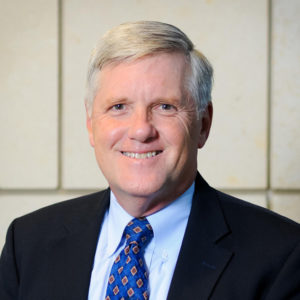
David J. Hayes has focused his career on energy, environmental and natural resources matters. He most recently served in the White House as Special Assistant to the President for Climate Policy. Prior to working for President Biden, Hayes was Executive Director of the State Energy & Environmental Impact Center at the NYU School of Law, where he worked with state attorneys general on climate, environment and clean energy initiatives. Hayes is a former Distinguished Visiting Lecturer at the Stanford Law School; a former Fellow at Stanford University’s Precourt Institute for Energy and Woods Institute for the Environment; the Senate-confirmed Deputy Secretary and Chief Operating Officer at the U.S. Department of the Interior for Presidents Barack Obama and Bill Clinton; and Chairman of the Board of the Environmental Law Institute. Between his stints in government, he was a partner and Global Chair of the Environment, Land and Resources Department at Latham & Watkins. Hayes is a graduate of the University of Notre Dame and Stanford Law School.