
Three Strikes: Out But Not Forgotten
Grasping the sheer enormity of the task that the Three Strikes Project has taken on is a challenge. Co-founded in 2006 by Lawrence C. Marshall and Michael Romano ’03 as the main focus of the Criminal Defense Clinic, the Three Strikes Project is the only legal organization in the country devoted primarily to representing individuals facing life imprisonment for nonviolent offenses under California’s “three strikes” law, a voter-approved initiative that was enacted in 1994. And the numbers behind the initiative tell an interesting story: Approximately 4,000 prisoners in California are serving life sentences under three strikes for minor, nonviolent third crimes—each at a cost of about $48,000 per year, excluding medical care. And the clinic has been inundated with requests for help from three strikes prisoners—with more than 1,000 logged so far. Yet a small group of approximately 15 students each quarter is chipping away at these numbers under the careful supervision of attorneys Romano and Galit Lipa. So far, they have successfully represented seven clients whose sentences were reduced, and all are now out of prison. But with 17 cases in various stages of litigation and hundreds or perhaps thousands more worthy of attention, this clinic is just touching the tip of the three strikes iceberg.
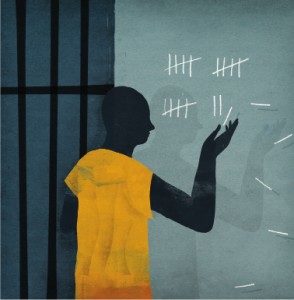
“The part of three strikes that allows life imprisonment for nonviolent, petty conduct is probably the largest unaddressed problem in our criminal justice system,” says Romano, a lecturer at the law school. He explains that clients represented by the clinic have been sentenced to life in prison for such third offenses as stealing a pair of socks, taking a dollar in change, and possession of trace amounts of drugs.
“Between 2001 and 2009 the three strikes population of lifetime prisoners has grown from 7,000 to about 8,500,” says Lipa, a clinical lecturer and former public defender. “The fact is that California laws were already quite severe for violent crimes—those criminals were, by and large, going away for a long time regardless of three strikes. So now we have a growing population of nonviolent, mostly drug-addicted offenders caught up in three strikes.”
Lipa explains that the clinic is a last resort for these prisoners.
“Inmates do not have a right to free legal representation after their first appeal. So that is when we step in,” she says.
The clinic also tries to get information about their cases out to the public as part of its advocacy efforts on behalf of clients. And they’ve had great success this year with articles and opinion pieces appearing in The Economist, The New York Times, Los Angeles Times, and elsewhere. But given the number of non-violent three strikes lifers in prison, the clinic is also adding a public policy component to the program to explore ways to advocate relief for its clients on a legislative level.
Students taking the clinic are thrown into the deep end—immediately taking the lead on cases and learning how to be defense lawyers.
“In addition to the immense value this program provides its clients, it also serves as a wonderful vehicle for educating students about the practice of law in a variety of settings and about the power that lawyers have to transform individual clients’ lives and public policy,” says Marshall, the David and Stephanie Mills Director of Clinical Education, and associate dean for public interest and clinical education.
Real Legal Practice
Working in groups of two, the students are in charge of all client work including managing the clinic relationship with the client, his or her family, and all witnesses. They travel throughout the state to conduct interviews and carry out investigative work. They write briefs, file pleadings in court, and represent their client in court when a case does come to hearing.
“Most of our students will not become public defenders—they will work in a firm specializing in any number of areas. But the skills they learn in this clinic are invaluable to any aspect of the law. And we’re finding that our graduates want to continue with public defense work in their pro bono practice, which is tremendously important,” says Romano.
“It was incredible to dive in, to do this very thorough case and social research, and also to file a cert petition to the U.S. Supreme Court,” says Ashley M. Simonsen ’10, whose case is still in the appeal process. And while she plans to focus on securities and antitrust law, she’s sure the skills she honed in the clinic will help her “more than anything I’ve done in law school.”
While thorough research is a key component of building their cases, the first step for the students is typically a visit to prison to meet their client.
“I was a bit nervous before our first visit with our client, Norman Williams, at Folsom State Prison. I’d never been to a prison before,” says Mark Melahn ’09, who is currently clerking for Judge Richard Clifton on the Ninth Circuit in Honolulu and plans to join Morrison & Foerster as a litigation associate next year. “And when it became clear that we were the only visitors he’d had in about ten years, it was pretty emotional.”
But starting with a prison visit sets the tone for the work ahead.
“I think it’s good that students are aware of how much responsibility a lawyer has, how any mistakes you make fall on your clients. You get to go home—but the stakes are very high for them,” says Lipa.
Over the course of two semesters, Melahn and his clinic partner Jesse Goodman ’08 conducted a thorough social history of their client and discovered that his prior offenses were all for nonviolent residential burglaries and that his third strike was for petty theft of a few tools from the back of an unattended tow truck.
“The experience woke me up to the importance of that ground work. Most cases rise or fall on the facts and how they are presented,” says Melahn.
His Day in Court
They also discovered that Williams had a substantial history of family neglect, mental illness, and drug addiction—none of which had been presented in early trials. Melahn and Goodman built their brief as well as a rapport with their client. The case was resolved the following year with Kathleen M. Fox ’10 seeing it through and preparing a rehabilitation plan. Fox and Romano first met with the Los Angeles DA and the judge on the case to agree on the rehabilitation plan. They then joined Williams at the superior court in L.A. Fox was well prepared for the resentencing hearing, and the judge very quickly granted habeas relief—agreeing to strike one of the prior convictions. So after more than 12 years served, Williams was ordered released from prison on the very day of the hearing—though the actual release took another few weeks to wind its way through prison bureaucracy.
“I don’t think he dared to imagine that his day would come. He’d been in prison for so long,” says Fox, who plans to join Latham & Watkins in San Francisco after graduation.
Then Fox and Romano had the opportunity to perform one of the most rewarding clinic jobs: escorting their client out of prison.
Watch an interview with “3 strikes” clinic supervising attorney Galit Lipa.
Janet Gemberling, '66, '83
I do a fair number of 3-strikes appeals in Washington State; my practice is almost exclusively criminal appeals in state courts. We provide services for indigent defendants under a contract with the State. I realize our laws are different, but we have few ideas left and have had very few successes. There is really no continuing education available for criminal appellate/habeas practice. Is there a way us old grads could have access to the strategies the clinic is developing?
Brandon Bragg
I have a cousin that has been lockup since 96’He was given 3 strikes on a drug charge.He has no kids. He may knot have been a saint in the past,but life in prison for that is just wrong.I would very much love if someone in your office could contact me please!I need help trying to save my cousins life,HE NEEDS YOUR HELP!!!! Thank you….
Henry Salazar
I have recently found your site and am very pleased to see there is an organization like yours. I have a brother who was recently sentenced under the 3 stikes law in CA. When he was 16 he was sentenced to 9 yrs in prison with two felony convictions on the same case. He served his 9 yrs, was paroled in 2004, never recommitted for parole violation and moved on with his life. He obtained a productive job in society. In 2007 he was charged with murder, went through two trial on a theory based case with no witnesses or evidence linking him to a crime. However on the second trial the DA changed his strategy knowing his case was weak and decided to present his case to also include a weapons charge for guns found in the residence he was staying in, knowing that if they didn’t get a murder conviction they would get a 3 strikes convictions for the gun charge. In September 2010 my brothers second trial was completed, another mis-trial on murder charges, a NOT guilty on gang enhancement and a guilty on a felon in posession of weapons charge. Now my brother is going to serve 25 to life… This 3 strikes law needs to be ammended to only affect those who are guilty of violent felonies…..
aletta
My brother was sentenced under the 3x’s law in california, however the judge had stuck a strike and he got 33 to life!
He’s no angel by far, yet this is unusual and cruel punishment. The D.A. had used scared tactics by ingnorance to them being
Young and ignorant that they willl go to jail if they refused to testify. They were coarsed into there testimony by tactical threats.
Also, the (Victim) pointed someone else out in court as the perp. The (Victim) also recanted his tesimony by letter to the court
Saying that he was under duress by the D.A, due to the fact that he had outstanding warrents and would do some time if he refused
To say that it was my brother. Also, the so callled weapon in the police report was noted that there wasn’t any blood or hair folicals
On it that the (Victim) hadsaid to be hit with. (Flashlight)!. I’m not a lawyer or anyone with a high I.Q, yet this doesn’t add up. I feel
That he had a vindictive prosecution due to the fact of his record and that he would not take a plea bargan of 4 years. He
Needs someone, who is willing and has the means to help him. I know he and 10,000 other people need help, but I’m reaching out for him because he’s my brother and I love him….please someone…anyone even with advise. Sincerely a.h