
Miles L. Rubin, JD ’52 (BA ’50)
When Thelton Henderson was brought on as an assistant dean at Stanford Law School in 1968 to help diversify the student body, he met with many donors over the nearly 10 years he worked on campus, before he went on to become a federal judge in San Francisco.
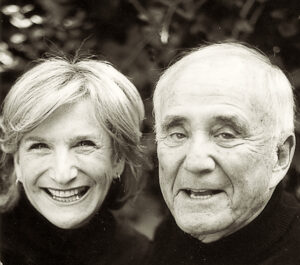
But Miles L. Rubin, JD ’52 (BA ’50), stood out. Rubin helped fund the school’s efforts during that time to recruit and provide scholarships to students of color.
“It was his genuineness,” says Henderson, who met Rubin on a visit to Malibu, California, where Rubin lived at the time. “Miles was results-oriented. He wanted to make sure the money was going where it was supposed to.”
Rubin’s generosity to Stanford Law School—and his commitment to social justice and addressing inequality—spanned decades. In addition to his support of diversity efforts, Rubin and his wife, Nancy Hirsch Rubin, helped fund the school’s then-nascent Loan Repayment Assistance Program (LRAP) in 1987 for students who choose to work in public interest law. The LRAP program was eventually named in their honor.
Frank F. Brucato, Stanford Law’s senior associate dean for administration, worked on establishing and growing LRAP after the gift from the Rubins.
“We were able to expand the benefits of the program pretty significantly thanks to their initial gift,” Brucato says. “It became the model for law schools, and we couldn’t have done that without Miles and Nancy.”
Rubin, a successful entrepreneur, longtime Democratic donor, and philanthropist, died on May 22. He was 96.
Stanford Law School Professor Emeritus Paul Brest, who served as dean from 1987 to 1999, describes Rubin as a “pioneer” for his role in helping launch the LRAP program.
“While many donors only want to support sure things,” says Brest, “Miles’ business background led him to understand that well-thought-out but untested strategies can have great rewards.”
Even in an all-star Stanford Law School class—Rubin’s classmates included future U.S. Supreme Court Justices William Rehnquist, LLB ’52 (BA/MA ’48), and Sandra Day O’Connor, LLB ’52 (BA ’50)—Miles drew attention for his impressive grades, charismatic personality, and clever escapades.
Nancy Hirsch Rubin says she recalls O’Connor—one of Rubin’s close friends—talking about how “brilliant and imaginative” Rubin was.
“He was smart, clever, fun, charming, and had initiative,” Nancy says.
After Stanford, Rubin went on to have a wide-ranging business career. He ran several companies, including Detroit Iron & Steel, Reliance Manufacturing (where he negotiated exclusive rights to produce Beatles apparel during their first U.S. tour and helped integrate the company’s plants), Puritan Fashions, and Pioneer Aerodynamics Systems. And, later in life, he delayed retirement to create a joint venture that developed an electric car—the Miles ZX40.
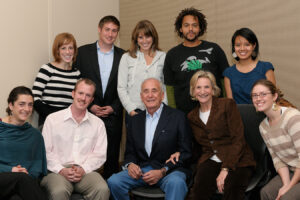
Eric Rothfeld, JD ’77, who worked with Rubin in most of his ventures from 1980 to 1997, says he found him “captivating and fascinating” from the moment they met.
“He was a bold, daring, passionate entrepreneur,” Rothfeld says. “He saw opportunities that others didn’t necessarily see.”
At Stanford Law School, where Rubin’s family also created the Miles L. Rubin Public Interest Award in 2009, Rubin was a regular presence, meeting often with students to discuss the importance of public service.
“He was an inspiring role model as someone who wasn’t necessarily in public service full time but who embraced having an impact on the larger community and using his talents and resources to move the ball forward in a meaningful way,” says Anna Wang, associate dean for public service and public interest law, who worked closely with Rubin over many years. “The students found him very relatable. You could tell his advice was grounded in lived experiences.”
Nancy, Rubin’s wife of 58 years, says her husband’s “education and his contributions to society are a product of his youthful development at Stanford.”
“He was a student who felt propelled by the energy and intellect that surrounded him on campus,” she says. “He always felt he could and should be a part of a future that reflected progress and social justice.” SL