
With Cameras Rolling, Three Stanford Law Alums Team Up on a Winning Supreme Court Case
Being followed by a documentary film crew was only part of a remarkable year in front of the High Court for one of the trio
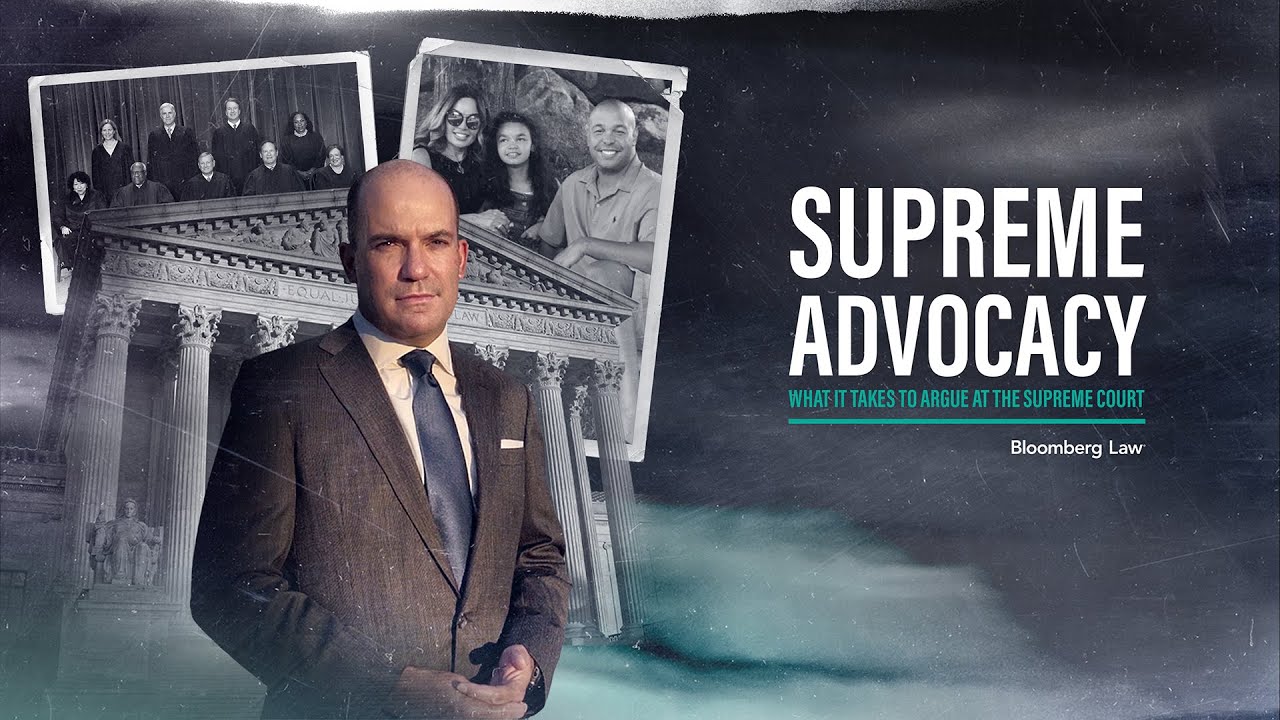
Supreme Court cases don’t usually come with a film crew. But last year, Bloomberg Law cameras tracked three Stanford Law School alumni at Latham & Watkins as they worked side by side on a pro bono disability rights case, drawing on lessons from their law school clinic days.
Associates Nicholas Rosellini, JD ’16, and Peter Prindiville, JD ’21, along with law clerk Graham Ambrose, JD ’24, appear in Supreme Advocacy, a 40-minute Bloomberg Law documentary that follows the case on its journey through the High Court.
Spoiler alert: it ended in a unanimous decision for their young disabled client.

The documentary focuses on lead partner Roman Martinez, head of Latham’s Supreme Court and Appellate Practice. With help from his Stanford Law dream team (and others at Latham), he secured the win in A.J.T. v. Osseo Area Schools, resolving a circuit split and rejecting a heightened legal standard that had made it harder for K–12 students with disabilities to challenge inadequate educational accommodations.
Among other responsibilities, the Stanford Law alumni trio drafted the opening brief that framed the legal questions the justices ultimately agreed to hear. And for Rosellini, the case was just one chapter in a big year in front of the High Court. Later in 2025—after first returning to Stanford Law’s Supreme Court Litigation Clinic for mooting and feedback on his arguments—he went back to the Supreme Court to argue a separate pro bono case—this time from the podium.
Prindiville, who gained what he describes as “fantastic” appellate experience in Stanford Law’s Religious Liberty Clinic, admits he was initially skeptical that a documentary chronicling their work would be especially compelling.
“The documentary team spent a lot of time shooting B-roll footage of me reading cases and working on the brief,” says Prindiville, a member of Latham’s Supreme Court & Appellate Practice in its Washington, DC office. “At one point, the director asked, “Do you do anything else?” I responded, “Not much!” But I thought the documentary did a great job providing a real-world look at what it’s like to be an appellate lawyer through all the stages of a case.”
Watch Supreme Advocacy:
Alumni Camaraderie
For Rosellini, working on A.J.T. alongside two fellow Stanford Law alumni was a highlight in itself. Now practicing in Latham’s San Francisco office, he brought deep Supreme Court experience to the team, including a clerkship with Justice Stephen G. Breyer and formative training in Stanford Law’s Supreme Court Litigation Clinic.
“Getting to work on a Supreme Court case with two other Stanford Law alums was a dream come true,” Rosellini says. “We could decompress in stressful moments by swapping stories from law school, but we also shared a real sense of mission.”
That mission-driven focus, he says, was instilled through the Supreme Court Litigation Clinic, which emphasized not only doctrinal rigor but meticulous preparation.
“I’ll never forget struggling alongside Professor Jeff Fisher and my clinic teammates just to pronounce the full name of the opposing party in one of our merits cases,” Rosellini recalls. “It was the state-owned Austrian railway system—Österreichische Bundesbahnen Personenverkehr.”
Once a Clinic Student, Always a Clinic Student
While working on A.J.T.—and being followed by Bloomberg Law’s cameras—Rosellini was also preparing to argue a separate pro bono asylum case before the Supreme Court, this time as the advocate at the podium. The argument, held on December 1, 2025, marked the first time a Latham associate argued before the High Court.
To prepare, Rosellini returned to the Supreme Court Litigation Clinic for rigorous moots and candid feedback from faculty and students.
“Nick was a terrific clinic student, and it’s been inspiring and gratifying to watch his growth as a Supreme Court advocate,” says Jeff Fisher, co-director of the Supreme Court Litigation Clinic. “Having him return to the clinic to prepare for his own Supreme Court argument was a wonderful example of how our students’ connections to Stanford and their clinics don’t end at graduation.”
Although no documentary cameras followed Rosellini into his asylum argument, he says the experience of being filmed during A.J.T. reshaped how he viewed the pressures of Supreme Court practice.
“When you’re under the crush of a looming briefing deadline, it’s easy to get lost in the stress,” he says. “But having a film crew around serves as a reminder of how lucky you are to be doing this work. Being interviewed about the stakes for your client—and others in similar positions—adds fuel to your fire. And seeing the finished documentary was a real treat. It’s a powerful way to help the public understand how Supreme Court litigation actually works.”