
Dismantling Environmental Law
Deborah Sivas discusses the recent rollback of environmental laws, calls to streamline environmental review to speed up development, and the role communities should play in decisions about what gets built.
As the push to build more infrastructure gains attention, so does debate over the role of environmental protections and public participation. How can communities have a voice in development while still allowing needed projects to move forward?
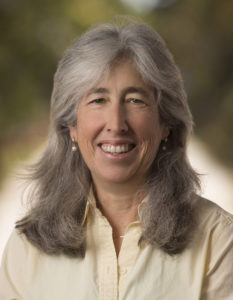
Stanford’s Deborah Sivas, JD ’87, environmental law expert and co-director of the Environmental Law Clinic at Stanford Law School, joins Pam Karlan to discuss the “climate abundance” movement and its implications for environmental law. Sivas examines whether changes to environmental permitting would address the challenges of building new infrastructure and how communities can have a meaningful say in those decisions. “It’s not durable if you don’t have a population to support it,” she says. “If people can see it as a win-win coming into their communities in a way that benefits them as well as larger policy goals, to me, that’s the right way forward—not disenfranchising them.”
Sivas and Karlan discuss how environmental law is evolving amid new policy and legal developments, including the current administration’s push for expanded fossil fuel development, changes to the National Environmental Policy Act (NEPA), and a proposal to open some of Alaska’s last old-growth forests to logging.
This episode originally aired on October 1, 2026.
Pam Karlan: How would we achieve both a more responsive environmental policy and a better environmental policy, while also dealing with the need to build a lot of new infrastructure, provide housing for people, and support all of these data centers for the AI that’s going to become your therapist, your best friend, and do all your work?
Deborah Sivas: I don’t know if you remember, but when we were growing up, we thought we’d be moving toward a 15-hour workweek because all the technology was going to take care of us.
Pam Karlan: The 15-hour workweek doesn’t bother me as much as the prospect of the zero-hour workweek—in which all of our jobs disappear.
This is Stanford Legal, where we look at the cases, questions, conflicts, and legal stories that affect us all every day. I’m Pam Karlan. Please subscribe or follow this feed on your favorite podcast app. That way, you’ll have access to all our new episodes as soon as they’re available.
This has been quite a summer for the environment in a number of ways, ranging from the wildfires in Canada to the hurricane in Hawaii, to the explosion of a volcano, to a heat wave in Europe that has killed thousands of people.
And who better to have on the show to talk about the environment—both the actual physical environment and the legal environment surrounding it—than my colleague Debbie Sivas. Debbie is the Luke Cole Professor of Environmental Law here at Stanford Law School, and she’s the professor of environmental social sciences at the Stanford Doerr School of Sustainability.
Welcome back to the show, Debbie.
Deborah Sivas: Thanks Pam, very happy to be back here.
Pam Karlan: Yes, so I think where I want to start is with an article that you’ve been working on that tries to capture a number of different aspects of where we find ourselves in environmental law right now. It’s an article that you entitled Climate Abundance or Environmental Democracy: A Concrete Proposal For Achieving Both.
I think it really taps into a kind of odd combination of conservative and liberal thought about the environment. So maybe the place to start is with the idea of climate abundance. Where did you get that idea from, and what does it mean?
Deborah Sivas: Sure. It’s an idea that’s been bubbling up for some time now in both the academic literature and, more recently, in the popular media. I think it’s probably best illustrated by Ezra Klein, who co-wrote a book with Derek Thompson called Abundance.
The vision there is that certain folks on the liberal side of the aisle have come to the conclusion that we’re not investing enough in building the future infrastructure for the 21st century, and in particular around the things that we need to address—climate change, sustainability, environmental issues, housing and some other things.
But there’s a big focus on the climate part of it. It’s become known as climate abundance. If we could only get these obstacles out of the way, we would be able to really create a more abundant supply of the things that we want, including more electrification and getting rid of fossil fuels.
So that’s the notion. It’s been bubbling around for a while. It aligns with the more conservative side of the aisle, which is always talking about deregulation and has been for decades. So those kinds of forces have come together. But ironically, the book by Ezra Klein and Derek Thompson came out right at the time that President Trump was taking office. Over the last 18 months or so, we’ve seen lots of deregulation, getting rid of obstacles like paperwork and permitting requirements, and really rolling back a lot of our environmental laws.
But not in the service of getting more electrification—actually, in the service of getting more fossil fuel development like the “drill, baby, drill” thing. So it’s really this strange alignment of factors.
Pam Karlan: Yes, it does seem like a kind of strange alignment of factors because the idea behind a lot of it is, as I understand it from reading your paper, that it’s the paperwork or the regulations that have prevented us from moving towards sustainable energy or the like. Is that an accurate accusation?
Deborah Sivas: So I would say not, but with some nuance there. Obviously, over the last 40 to 50 years, we’ve put more process in place, and partly that was a backlash to what was happening post-World War II in the ’50s and ’60s, where there was a lot of unconstrained development and a lot of environmental implications from that.
So when we ushered in the kind of environmental movement in the late ’60s and into the ’70s, there were processes then put in place, including our bedrock law, the National Environmental Policy Act, that really was designed to make government decisions more sensitive to environmental impacts and to really inform those decisions.
Over the years, those cases have been litigated in the courts. Some of them sometimes slow or even block projects, although not very many. But that has become the mantra. Oh, these are the things that are in the way of building out renewable energy and getting our electricity grid modernized, that the paperwork and public processes are really impeding that.
There have been some recent efforts by academics to really try to look at the empirical data, and I would say the evidence is that those are really not the problem. Well, occasionally, you get a project slowed down. That’s not really collectively what the problem is. And it’s…
Pam Karlan: No, so what is collectively the problem?
There was an article in The New York Times earlier this week that suggested that the American electrical grid could go down in various ways. It’s vulnerable, and it could be down for years if it went down.
Deborah Sivas: Hopefully we won’t see that, right? But we are having issues trying to build out the grid or modernize it.
Because we were in a long period of pretty stagnant energy use, but we’ve come out of that. Obviously, data centers are a big piece of it, but we’re also trying to decarbonize and move from natural gas to electricity for cars and kitchens and all of that. We’re going to need more transmission capacity, and there are lots of factors that go into that.
And in part, I would say we’re not used to doing this building. The electricity grid was built out decades ago, and we really don’t have the institutional capacity to really make it happen. So there are lots of factors that go into it, but environmental permitting is a little piece of the puzzle, and it’s become the whipping boy for the whole thing.
So we could get rid of our environmental laws today, but I’m pretty sure that won’t solve our problem in getting…
Pam Karlan: Yes, I was going to say that it sounds like it has to be a kind of massive investment, like rural electrification in the ’30s. I think one of the best single pieces of writing I’ve ever read is Robert Caro’s description in his Lyndon Johnson biography of what it was like to live in the Texas Hill Country before rural electrification, and that was a massive amount of government investment.
Deborah Sivas: Yes absolutely.
Pam Karlan: Get that done. It seems to me that if the government’s not willing to spend the money or figure out some inducement for private enterprise to spend that money, I think you’re right. No matter how little regulation you had, you still have to…It’s not the regulation that’s building the actual transmission sites.
And the president has stopped a bunch of wind projects.
Deborah Sivas: Yes, absolutely. Right. He has basically bought out wind projects to the tune of billions of dollars. Stuff that was poised to move forward and increase wind production has suddenly become anathema to the current administration. So they’re buying out leases and different authorizations to do wind, and trying to plow that money back into fossil fuel development.
Pam Karlan: Why are they so obsessed with fossil fuels?
Deborah Sivas: I don’t know, because our president grew up in the ’40s and ’50s. I think there’s a perception among the folks in the administration today that somehow renewable energy is not a real thing. It’s a kind of lefty thing. It’s not real.
But we know that actually it’s now cost-competitive, or even more cost-effective, when you’re building new energy facilities to do, for example, solar. It’s more cost-effective than building a new natural gas plant. That’s the reality of today. But that administration is about 50 years behind.
Pam Karlan: Yes. So, on that side, you’ve got the kind of ideological desire to get rid of regulation on the theory that… Is it a libertarian theory? Is it a corporate preservation theory? What’s driving that?
Deborah Sivas: Yes. I don’t feel like this administration’s being driven by libertarianism as we know it. It’s not so much that they don’t want regulations generally. They want to direct the development in a certain way.
They’re happy to give plenty of subsidies to the fossil fuel industry and help them along. But when it comes to renewable energy, they want to put a lot of roadblocks, so they actually put roadblocks in the way of that development.
Pam Karlan: Yes, and that would be a critique that the abundance people would bring against the current administration.
One of the other things that you’ve written and talked about, including here before, is that NEPA is a procedural rule. It doesn’t actually at the end of the day tell you whether you should approve some particular project or not. It just tells you kind of the things you’re supposed to look at along the way.
You’ve raised some concern that some of the Supreme Court’s environmental decisions, which weren’t actually about NEPA at all, might affect how NEPA gets applied going forward.
Deborah Sivas: Yes, absolutely. The Supreme Court seems quite interested in the last few years in environmental laws, like the substance of environmental laws. As is the case with the politicians, the court seems to see NEPA as kind of the whipping boy for “let’s go after NEPA.”
I think the larger effort is to try to roll back, for instance, the role of citizen suits where you have a project that has a lot of adverse impacts on the environment and the agency just rolls forward with the project anyway.
You get these citizen suits. That’s what the abundance movement is talking about. “They’re in the way.” But I think what the courts…
Pam Karlan: By citizen suits, you mean individuals or environmental groups come in and say, “You haven’t followed the processes that you were supposed to follow.”
Deborah Sivas: Yes, absolutely.
Although citizen suits can also be and are sometimes used by competitive industries. We don’t like that renewable project, and we, the fossil fuel industry, are going to use the citizen suits to try to defeat that project. But in general, the courts have been, as you know, the ones who have said, under Loper Bright and other decisions, that they’re the ones who make these decisions about what the law actually means.
In fact, in the environmental realm, so much of the law is like NEPA, for instance, which is a pretty open-ended law. And so really what the courts are now saying with the Seven County Infrastructure decision and others is that we want to give free rein to the agencies to interpret and apply those requirements of the law.
So what’s happened is the Trump administration has taken this to heart and has now rolled back all of the NEPA regulations and said there’ll be very little, if any, public process for most projects. So the court has given the current administration the go-ahead on that.
Pam Karlan: We’re in this kind of weird dynamic right now because on the one hand, as you say, they’re rolling back NEPA’s protections. On the other hand, a major doctrine of administrative law came out of environmental cases, out of the Clean Power Plan rules, which is the major questions doctrine.
It seems to suggest that we should wait for Congress to fix everything, that we should no longer rely on expert agencies to do this, because if Congress wanted us to be dealing with climate change, Congress should have passed a climate change statute. And then at the same time, the court seems to be saying in cases like Loper Bright, “But if administrative agencies think this is what the law means,” “No, no, we decide what the law means.”
It seems like they’re moving almost everything into the courts, which are probably not the best place to figure out the science and the policy.
Deborah Sivas: No, I think that’s absolutely right. So it’s a little bit of whiplash, and it does feel a little outcome-driven sometimes in these cases. But yes, the courts obviously don’t have the expertise to deal with this.
The agencies do, but on the other hand, we kind of have to have agencies that are willing to take feedback from the larger public. And that’s the other thing that’s happening here: the administration just doesn’t want to hear from local communities at all, even conservative communities. They just don’t want to hear. It’s like we’re going to make these decisions by fiat and with very little participation.
Pam Karlan: Yes, and the most recent one of these is the announcement earlier this week about logging in Alaska in some of the last large old-growth forests that the United States has.
Deborah Sivas: Yes.
Pam Karlan: Can you give me a sense of why we would want to allow this logging? Is there some rationale for allowing this logging, or is this just another kind of “let people do whatever they want”?
Deborah Sivas: Yes, I think it’s that. This administration is very pro development and exploitation of natural resources.
The logging, especially in Alaska but across many of our national forests—but quite vociferously in Alaska—has been the subject of years, like decades, of litigation. I have a colleague from law school who spent his entire career litigating around the Tongass National Forest. And now the administration is proposing to open up the last of what they call roadless areas. That’s where we haven’t done a lot of human development or encroachment. And those are the prime remaining areas for sort of ecosystem and wildlife because humans aren’t really there.
Pam Karlan: Yes, and if I understand it correctly, once you build these roads through the areas, there’s less carbon capture, which is what these forests do a lot of. There’s more likelihood of wildfires, both because more people are in there.
I think I read somewhere that 80-something percent of wildfires are clearly caused by individual human action.
Deborah Sivas: Yes.
Pam Karlan: Right. Where you have a skid in your car and sparks fly off, and where grasslands come up next to the roads, that makes it more likely.
Deborah Sivas: Yes.
Pam Karlan: So at a time when we’re seeing more and more of these wildfires, it just seems like a really bad idea to be building roads in places that right now are doing at least a little bit to keep the temperature down and make it much less likely that there’s going to be a wildfire.
At a time when we’re seeing more and more of these wildfires, it just seems like a really bad idea to be building roads in places that, right now, are at least helping to keep the temperature down and making it much less likely that there’s going to be a wildfire.
Deborah Sivas: Yes, I think that’s right, and we have so few of those areas left. One of the reasons Alaska has been such a fight is that it’s a big state, obviously, and there’s some really nice areas of unroaded habitat. But this administration just seems intent on really opening those up.
There was a proposal during the Biden administration to actually formalize the protection of these areas. They call them old-growth and mature forests, and then it was not finalized before that administration left office. Now the current administration is just going for it.
It is part of the general philosophy that those resources are there for us to use, and humans ought to use them, and they don’t seem very concerned about climate impacts at all. I’m not sure most of them even believe that climate change is happening.
Pam Karlan: Yes, this summer makes it much harder to think that climate change isn’t happening.
The graphs of Europe and the parts of Europe that are 20 degrees warmer on average than usual for this time of year just seem to drive this home in a way, with the combination of that and the Canadian wildfires.
Deborah Sivas: Yes.
Pam Karlan: Just really seems to drive that home, and yet there seems to be no interest at the national political level among either Congress or the White House to do anything about this.
Deborah Sivas: Yes. No, it’s shocking. I think the science of attribution, where scientists can more and more attribute individual weather events to a broader change in the climate, is getting quite sophisticated. So we’re seeing this with the wildfires, the increase in both the number and intensity of hurricanes and storms, and the heat waves.
Pam Karlan: Well, we’re going to have another major El Niño this year, right?
Deborah Sivas: Yes, a major one. El Niño is a phenomenon that happens on a cyclic basis, but I think what the scientists are saying this year is that climate change is making this one potentially the biggest we’ve ever recorded.
Pam Karlan: Wow. Maybe we’re not seeing any solution right now from the political branches, but you have what you call a concrete proposal for achieving both, and what is that proposal?
How would we achieve both a more responsive environmental policy and a better environmental policy, while also dealing with the need to build a lot of new infrastructure, provide housing for people, and support all of these data centers for the AI that’s going to become your therapist, your best friend, do all your work, and God knows what else?
Deborah Sivas: I don’t know if you remember, but when we were growing up, we thought we’d be moving toward a 15-hour workweek because all the technology was going to take care of us.
Pam Karlan: The 15-hour workweek doesn’t bother me as much as the prospect of the zero-hour workweek—in which all of our jobs disappear.
Deborah Sivas: Right. Yes, and what got me thinking about this is that as we started out the abundance movement on the left, we’ve always had development interests and conservatives saying we need to deregulate. But now we have some really vocal folks on the left saying, basically in alignment, that we need to get rid of some of this paperwork and the ability in some cases to challenge things in court.
In my view, what that does is really centralize things. So it’s great if you think you have a benevolent leadership that’s going to want to build a lot of good stuff. Or it could be used, as it is currently, by an administration that wants to “drill, baby, drill.”
In thinking about all this, to me, the remedy is not to just do away with the instruments of democracy. It’s actually, Pam, as you mentioned with rural electrification, to go back to that notion of how do you involve communities?
I kind of brought in the social science, which my colleagues over at the Doerr School, is really thinking about: how do you bring communities? We live in an age of lots of disinformation, but really bring communities to the point where they are participants and really understand how things could benefit their community?
That’s the thinking that kind of went into this: we shouldn’t be doing less democracy. In a way, we should be doing more, where developers don’t just come in and say, “Here’s your data center. We’re going to put it here. We’re going to affect your electricity rates, your water,” and all of that. Instead, they should actually have to work with communities.
There was some of that starting under the last administration, where if you got money, for instance, to do a wind project, you had to actually engage in negotiating community benefits and really deal with the community, as opposed to a kind of top-down override.
So that’s my thinking: we should have more democracy, in a sense, not less. And because we haven’t, our policy hasn’t been durable. Pretty much everything that the Biden administration did on climate is being rolled back.
So it’s not durable if you don’t have a population to support it. If people can see it as a win-win coming into their communities in a way that benefits them as well as larger policy goals, to me, that’s the right way forward—not disenfranchising them.
Pam Karlan: So this raises a question for me, which is: when it comes to individual projects, I could see ways of doing that democracy by having state law that requires consultation and the like.
Deborah Sivas: Yes.
Pam Karlan: The problem is that we also have this kind of collective action problem at the national, indeed, at the global level.
So at least for me, that’s what’s kind of hard to get my mind around. The concrete suggestion that you’ve got seems great and could be implemented tomorrow by localities or by states. California has its own set of rules and the like. But the national one just seems…And until we get a national one, we’re not going to have international solutions to this at all. And that just seems so daunting right now.
Deborah Sivas: Yes. Well, it is very daunting, and I think you’re right to say that not only this current administration but Congress has not really manifested the urgency of this problem. I will say that in the current Congress, the proposals to do something are, like, to roll back regulations so that we can do more oil drilling.
That’s what is being proposed. Partly, we need a wholesale change in Congress to really get serious about this. But you know, some of this abundance idea has infected even really blue states like California, where there has been some cutting back on community participation.
So I think it could work at the local level. You have to really buy into the paradigm that you don’t want to just override what a community wants. You actually want to work with the community.
That’s the notion behind a statute like NEPA in the first place: to inform the discussion and inform how you might design a project. We’ve really gotten away from that in terms of generating lots of paper but not having a lot of close collaboration with the community.
Pam Karlan: So, Debbie, one of the things we’ve seen with this administration is that they are using a lot of legal tools in ways that they were never used before. They’re using statutes that were never used before. The most obvious examples are the president using IEEPA, which is the Emergency Economic Powers Act, to impose a bunch of tariffs that have nothing to do with an emergency. Or the president using the Alien Enemies Act from the late 18th century in ways that have never been used before to claim that people are alien enemies, even though we’re not at war with any country or the like.
Are we seeing the same kind of thing going on in the environmental area?
Deborah Sivas: I’m writing a brief right now. It’s on the use of the Defense Production Act. One of the things that they did in March was to start pumping oil off of Santa Barbara, where there was that big spill about 10 years ago.
The state was saying, “We have… you have to demonstrate that, if you want to restart the pipeline, you’ve satisfactorily met safety requirements.” And the company that bought the lease rights didn’t want to do that, so they went straight to the Trump administration and used the Defense Production Act to say, “We’re overriding all state and local laws,” and a federal consent decree that gave the state, not the feds, the authority to reopen the pipeline.
It’s on state park lands, that part of the pipeline. And they’re just like, “No, no.” So anyway, I could see it because now they’re looking for the tools, just like in the immigration and tariff realm. They’re looking for the tools, and if they get the go-ahead on this, all they have to say is national security and energy security, and they can just open up anything.
Pam Karlan: Debbie, earlier, you were talking about citizen suits and how important those are. Citizen suits have a kind of Achilles’ heel to them, and we’re seeing a little bit of this in a lawsuit that’s going on in Mississippi that involves Elon Musk and data centers.
Could you tell us a little bit about that?
Deborah Sivas: This is outrageous to me. So, xAI, or whatever his company is, operates in Mississippi. They built and opened a data center, and they have more than two dozen gas-powered generators that are running it. One of the big debates is…
Pam Karlan: Yes.
Deborah Sivas: Right. They did not try to get any Clean Air Act permits. You have to get these Title V permits for those sources, and they didn’t do it. They just didn’t do it, so they got sued by the NAACP in a citizen suit, like, “You need to get a permit. You’re violating the Clean Air Act.”
In June, the Justice Department, I think it’s ENRD, came in and moved to intervene. So, the administrations have done this before, where they maybe want to do a sweetheart deal or something, so they come in and overfile over the citizen suit.
Citizens have filed. They say, “We’re going to get involved in the case, and we’re going to…” They move to intervene so it’s kind of overfiling. Then their motion says, “Once we get in, we have the right to intervene, and then we’re going to move to dismiss the case.” The court has to dismiss the case because we’ve exercised our prosecutorial discretion not to enforce the Clean Air Act. Therefore, no citizen can try to enforce it under the Clean Air Act.” That is their theory.
Pam Karlan: I want to turn, in the time that we have remaining, to looking forward in a way. You had said earlier on in our conversation, when we were young, we thought we’d be moving to the 15-hour week and everything.
There seems to be some generational shifts here. Younger people seem much more interested in climate change issues than older folks. They seem much more interested in living in communities that are more dense in ways that make for a better environment. If you live right next to the Caltrain station, it’s much easier for you not to have a car and to bike where you need to go and the like.
One of the things that you do, in your many, many hats, is you run an environmental law clinic here at the law school. How do you think about inspiring the next generation of environmental lawyers to think differently, perhaps, than our generation or the generation before us thought?
Deborah Sivas: Yes, that’s a really good question.
You’re also involved in the clinical program. I think it does feel to me like the students who are moving—the cohort that’s moving through now—does have a different view of the world. I would say the work that we’re doing has changed over time, from kind of more traditional environmental litigation to really thinking about how we can work on issues that kind of inspire the students and the next generation.
I really think that what we’re going to need to do is rebuild some of our institutional structures, lots of them being torn down right now. But if we really want to go to that future that people see in a constructive way. I am always telling students there’s going to be a ton of work to do when you get out because we have to really rethink these institutions for the 21st century.
They had their place in the 20th century, but how do we think about them going forward? These are some of the tough challenges in the environmental field, at least. You’ve got conflicts. You could say that in the old days, “It’s just big bad corporations, polluters, sue them.”
Here you’ve got conflicts about what is the right policy going forward. How do you involve the community without a veto on things? That’s a lot of what we’re talking about in our clinic right now.
Pam Karlan: Yes, so maybe we could end by having you just share with our listeners one of the projects that your clinic’s working on that you think is most exciting for the prospect of making real change.
Deborah Sivas: Yes. So generally, we represent NGOs, sometimes local governments, and then tribes. One of our more recent engagements with tribes is with the Northern Chumash Tribal Council down on the central coast of California. It’s really been very fun for the students because they have a whole vision of how to steward going forward.
They want to involve cultural aspects too as part of their heritage, to bring that back to California, where the tribes have been pretty poorly treated. They also want to think about going forward: how do we steward land and the environment going forward in a way that’s really built for the 21st century?
So that’s been really fun, because it’s not so much the traditional litigation. It’s really trying to think creatively about how do you involve tribes and communities in stewardship, long-term stewardship of the lands and waters that we have remaining that haven’t been developed. So that’s a fun set of projects that’s taken us all far afield from the traditional litigation.
Pam Karlan: Well, that’s great to think about the fact, as you say, that the land and the water that we haven’t already developed or, in some cases, ruined are declining resources, but they’re precious resources.
Deborah Sivas: Absolutely. It’s not to say that you just gate them off or fence them off and don’t touch them, but how do you make even working landscapes sustainable?
You’re working in those areas. People are living there and things are happening there. It’s not just a museum, but it’s about preserving them for future generations.
Pam Karlan: Well, I hope that we will have future generations that get to use these lands and waters. I want to thank our guest today, Debbie Sivas.
This is Stanford Legal. If you’re enjoying the show, please tell a friend and leave us a rating or a review on your favorite podcast app. Your feedback improves the show, and it helps new listeners to discover us. I’m Pam Karlan. See you next time.