
Robert Weisberg

- Edwin E. Huddleson, Jr. Professor of Law
- Faculty Co-Director, Stanford Criminal Justice Center
- Room N221, Neukom Building
Expertise
- Access to Justice
- Constitutional Criminal Procedure
- Criminal Law
- Criminal Prosecution
- Criminology/Criminal Law Policymaking
- Internet & Cyberlaw
- Plea Bargaining & Juries
- Policing & Gun Policy
- Privacy Law
- Prosecutorial Ethics
- Punishment & Death Penalty
- Race & the Criminal Justice System
- Sentencing & Corrections
- White Collar Crime
Biography
Faculty Co-Director, Stanford Criminal Justice Center
Robert Weisberg, JD ’79, works primarily in the field of criminal justice, writing and teaching in the areas of criminal law, criminal procedure, white collar crime, and sentencing policy. He also founded and now serves as faculty co-director of the Stanford Criminal Justice Center (SCJC), which promotes and coordinates research and public policy programs on criminal law and the criminal justice system, including institutional examination of the police and correctional systems. In 1979, Professor Weisberg received his JD from Stanford Law School, where he served as President of the Stanford Law Review. He then served as a law clerk to Chief Judge J. Skelly Wright of the U.S. Court of Appeals for the District of Columbia Circuit and Justice Potter Stewart of the U.S. Supreme Court. After joining the Stanford law faculty, he served as a consulting attorney for the NAACP Legal Defense Fund and the California Appellate Project on death penalty cases, and he continues to consult on criminal appeals in the state and federal courts. Professor Weisberg is a three-time winner of the law school’s John Bingham Hurlbut Award for Excellence in Teaching.
Before entering the field of law, Professor Weisberg received a PhD in English at Harvard and was a tenured English professor at Skidmore College. Drawing on that background, he is one of the nation’s leading scholars on the intersection of law and literature and co-author of the highly praised book, Literary Criticisms of Law.
Education
- BA City College of New York 1966
- MA 1967; PhD (English) 1971 Harvard University Graduate School of Arts and Sciences
- JD Stanford Law School 1979
Related Organizations
Courses
- Criminal Law
- Criminal Procedure: Adjudication
- Directed Research
- Externship, Special Circumstances
- Federal Sentencing Law
- Policy Practicum: Fair Compensation of Prison Labor in the U.S.
- Policy Practicum: Governing the Use of Artificial Intelligence in Federal Criminal Justice
- Policy Practicum: Regilla Project: Women Incarcerated for Killing their Abusers
- Policy Practicum: Who Serves? The Selection of Jurors
- S-Term: Comparative German-American Criminal Law
- SPILS Masters Thesis
- TGR: Dissertation
Affiliations & Honors
- Affiliated Faculty, Program in Modern Thought and Literature
- Recipient, John Bingham Hurlbut Award for Excellence in Teaching, Stanford, 1985, 2005
Policy Practicums









Key Works
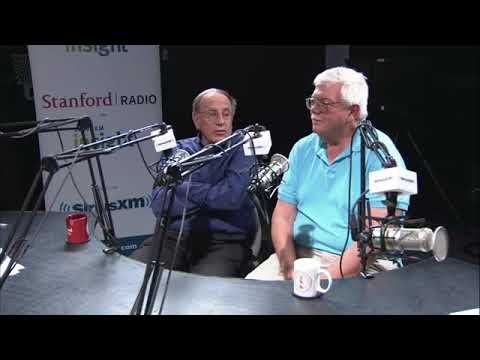
Stanford Legal on SiriusXM: Evidence, Law, and Technology with Hank Greely and Robert Weisberg

News
DOJ moves to recruit Aileen Cannon in ‘unprecedented’ effort to jail Trump foe
Raw Story
Stanford Law School professor Robert Weisberg said prosecutors could ask Cannon to review Brennan's testimony privately, decide on her own that it wouldn't incriminate him and order him to answer questions. Weisberg questioned the government's approach. “What the government is doing is rather strange and makes me think: Either they…
Read More : DOJ moves to recruit Aileen Cannon in ‘unprecedented’ effort to jail Trump foe