
The Bright Award
The Bright Award was created by a gift from Raymond E. Bright, Jr., JD ’59 in 2007 on behalf of his late wife, Marcelle, and himself. Mr. Bright died in 2011. Under the terms of his gift, the Bright Award is given annually to an “individual who has made significant contributions in the environmental preservation and sustainability area” and is awarded to an individual from one of ten rotating regions.
The nomination committee is led by Barton H. Thompson, Jr., Robert E. Paradise Professor in Natural Resources Law, Stanford Law School, and former Perry L. McCarty Director & Senior Fellow, Stanford Woods Institute for the Environment. The nomination committee is comprised of Stanford Law School faculty members, law students and others on campus, with assistance from consultants focused on designated regions of the world, and will recommend potential candidates each year. The Dean of Stanford Law School will select the final award recipient. An Advisory Committee, consisting of Shay Bright, George Bright, and Alan Markle, helps oversee the Bright Award and also provides guidance in the selection of the recipient. The award winner delivers a public lecture at Stanford University. 2013 was the inaugural year of the award.
2025 Bright Award Winner
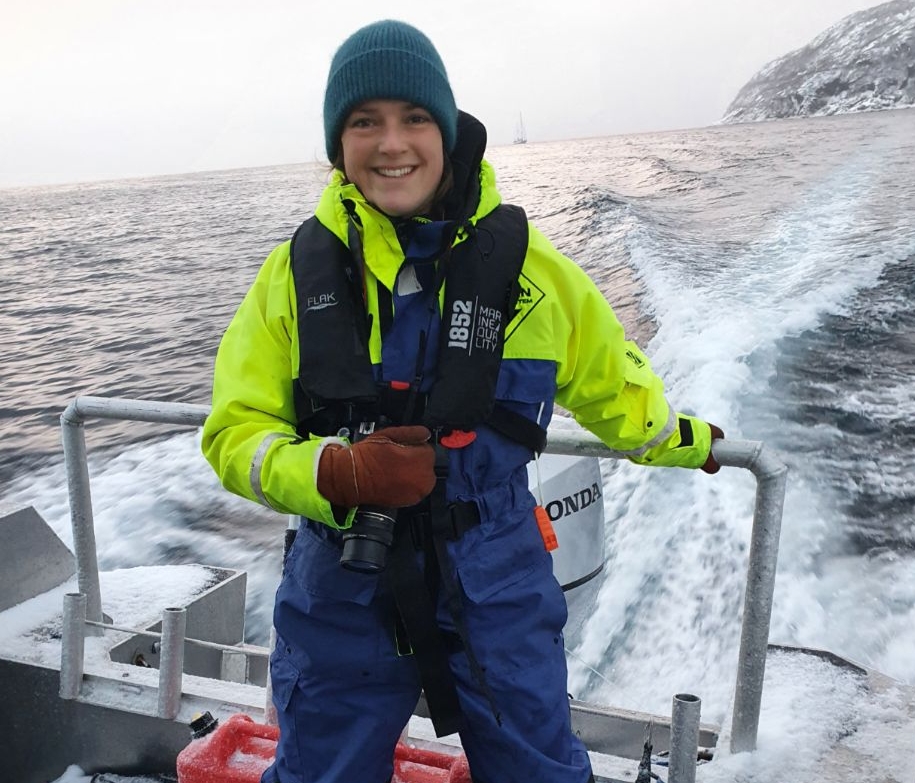
Emilie Reuchlin
Marine biologist, co-founder and director of the Doggerland Foundation (the Netherlands)
In recognition of her advocacy for the North Sea, Emilie Reuchlin was selected as the 2025 winner of the Bright Award for Environmental Sustainability.
Reuchlin is a longtime advocate for the North Sea, most recently through the Doggerland Foundation, which she co-founded to restore biodiversity in the North Sea region, especially the Dogger Bank, a nutrient-rich submerged sandbank called “the ecological heart of the North Sea.” This vital habitat and marine life spawning ground lies at the center of one of Europe’s most industrialized and overexploited marine regions.
For Reuchlin, reimagining humans’ relationship with the natural world means more than preserving what’s left – it means actively restoring what’s been lost, holding governments accountable to the laws they’ve made, and ensuring that the “voices of ecosystems” are considered in the decisions that shape their future.
“The North Sea has been treated like an industrial wasteland,” Reuchlin says. “We’re supposed to have protections, but in reality, we’ve been fighting for years just to enforce the bare minimum.”

The Stanford Bright Award Celebrates 10 Years

Previous Bright Award Winners
The Bright Idea Podcast
The Bright Idea is a Stanford Law School podcast that highlights some of the most promising and inspirational work around the world in sustainability and conservation. Professor Buzz Thompson begins this series by talking to some of the past winners of Stanford Law School’s Bright Award. The Bright Award is an annual environmental award given to individuals who have dedicated their careers to improving sustainability and conservation. It is the only award like it in the world, and it is the highest environmental prize given by Stanford University. Stanford Law School Alumnus, Ray Bright, established the Bright Award with the goal of recognizing the winners’ prior sustainability work and supporting and extending that work into the future.

Nomination Criteria
- The primary criterion of the Bright Award is the contribution that the individual has made to environmental preservation and global sustainability.
- The emphasis of the award is on environmental sustainability. Although the work of the award recipient can address broad issues of sustainability (including economic and social sustainability), the work must also speak to the importance of environmental preservation as part of overall sustainability.
- Although the primary criterion speaks of “global sustainability,” the work of the award recipient can focus on local or regional issues; the recipient need not have worked at the global level. However, it is important that the work of the recipient provide a model for addressing, or otherwise speak to, issues of global importance.
- The recipient of the award need not be broadly known for his or her work. Indeed, the selection committee encourages the nomination of “hidden heroes” of environmental sustainability.
- Ideally, the publicity and funding that will accompany the Bright Award will help the recipient to continue and expand his or her work on behalf of environmental preservation and sustainability. As a result, we have a preference that the recipient be an individual who is still actively engaged in the pursuit of environmental preservation and sustainability and whose work therefore is likely to benefit from receipt of the award. This is merely a preference, and not a requirement, however.
- The 2026 award winner must come from Africa.
Note: Do not use this form to submit High Risk Data.
2026 Bright Award Nomination
The Bright Award for Environmental Sustainability recognizes an individual who has made a significant contribution to environmental preservation and global sustainability. For 2026, the nominees must come from Africa.
Please use the form below to submit a nominee for the Bright Award.
* indicates required fields