

2021–2022 Clinic Updates
2021–2022 Year in Review
The Stanford Environmental Law Clinic has had an impactful year, winding up many complex and multi-year battles with victories for imperiled species and human and environmental health.
Read more below about our students’ amazing work and regulatory and judicial wins.
Native Bumblebees Become First Insects Protected Under the California Endangered Species Act
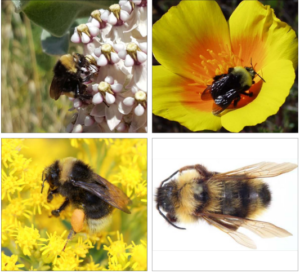
In a major win for Stanford Environmental Law Clinic clients, biodiverse ecosystems, and everyone who eats food, a California Court of Appeal has ruled that the state can protect bumblebees under the California Endangered Species Act (CESA). In a unanimous published opinion, the Court of Appeal explained that CESA’s protections for fish can include insects because the California Legislature defined the term “fish” as “a wild fish, mollusk, crustacean, invertebrate, amphibian, or part, spawn, or ovum of any of those animals.” Thus, CESA’s definition of “fish” is a legal term of art that extends beyond the commonly understood meaning of “fish.” In reaching its conclusions, the Court cited examples of other land-based invertebrate species that are protected under CESA, vast legislative history, controlling case law applying the definition of “fish” to CESA, and courts’ obligation to give liberal meaning to the terms of protective statutes like CESA.
Sam Joyce (JD ’23) helped argue the case, building on the work of many Clinic students throughout the trial court proceedings and appeal, including Jules Ross (JD ’22), Jim Santel (JD ’22), Caroline Zhang (JD ’22), and Joe Ingrao (JD ’21).
The court’s ruling comes at a critical time: over one-third of California’s food production requires an animal pollinator, but many pollinator populations are plunging. The Fish and Game Commission can now move forward with protecting the four bumblebee species and other pollinators before it is too late. Read more herehere18.
ELC Win Compels Federal Government to Reconsider Endangered Species Act Protections for the Bi-State Sage Grouse
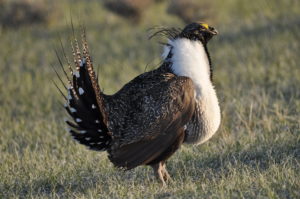
After a several-year battle, Environmental Law Clinic students have shown that bi-state sage grouse – large, striking birds known for their distinctive mating dance – warrant reconsideration for federal protection as a threatened species.
The bi-state sage grouse’s habitat has been decimated by mining, grazing, and other development, leading the U.S. Fish & Wildlife Service to conclude in 2013 that the species should be listed as threatened under the federal Endangered Species Act. But two years later, in an abrupt about-face, the government withdrew the listing proposal. ELC and the Center for Biological Diversity, on behalf of a coalition of conservation groups, sued the federal government challenging the Service’s withdrawal decision.
The U.S. District Court for the Northern District of California held that the Service failed to rely on the best available science, as the Act requires, in concluding that that the sage grouse’s population is above the minimum threshold for viability. The Fish & Wildlife Service must now go back to the drawing board and issue a new final listing decision.
Clinic students Daniel Ahrens (JD ’23) and Zach Rego (JD ’23), building on the work of Chris Meyer (JD ’22) and Mikaela Pyatt (JD ‘22), co-wrote the summary judgment briefing and presented oral argument in federal court. Read more herehere19.
ELC Reaches Settlement to Protect Endangered Coho Salmon

The Clinic, on behalf of clients Salmon Protection and Watershed Network (SPAWN) and Center for Biological Diversity, has agreed in principle to a settlement with Marin County to ensure adequate protections for imperiled salmon and steelhead in the San Geronimo Valley under Marin County’s countywide development plan. The settlement spells out important terms of an ordinance that would regulate streamside development in sensitive riparian corridors and provides for other measures to protect essential salmonid habitat, like County-provided inspections. If it is finalized, the settlement will be the culmination of the Clinic’s decade-long effort on behalf of clients to advocate for urgently needed habitat restoration and stronger regulation of future development in areas that are key to the survival of these species.
Many students have worked on this matter, including most recently Leehi Yona (JD ’23) and Mariah Mastrodimos (JD ’23), who negotiated the terms of the settlement this spring. Marin County’s Planning Commission and Board of Supervisors will consider the settlement at public hearings this summer. Read more herehere20.
ELC Students Work to Change Racist California Water Policy

Stanford Environmental Law Clinic is supporting efforts by Tribes and environmental justice advocates to reframe California water rights. Clinic students Alison Cooney (JD ’22) and Sydney Speizman (JD ’22) filed an amicus brief in the California Court of Appeal on behalf of the Winnemem Wintu Tribe, Shingle Springs Band of Miwok Indians, Little Manila Rising, and Restore the Delta calling for reforming the water rights system to more effectively and equitably control the state’s water resources. The coalition‘s amicus brief argues that exempting pre-1914 water rights from state regulation and enforcement fails to grapple with the historical context of these water rights, which are rooted in systematic discrimination, exclusion, and violence against Indigenous peoples and communities of color.
The Clinic also submitted a Petition for Rulemaking to the State Water Resources Control Board to Review and Revise Bay-Delta Water Quality Standards. The San Francisco Bay/Sacramento-San Joaquin Delta drains nearly half the surface water in California, covering a watershed that stretches from the Cascade Range to the North to the Tehachapi Mountains to the south. The Petition requests that the State Water Resources Control Board immediately begin a comprehensive review of water quality standards governing the Bay-Delta and revise those standards in consultation tribes and environmental justice communities to ensure protection of beneficial uses and public trust resources. Read more herehere21.
Local Oil Well Ban Goes to CA Supreme Court

In response to concerns about the safety and environmental impacts of certain oil and gas industry practices in Monterey County, Clinic client Protect Monterey County successfully galvanized the community into action. The result was Measure Z, a 2016 ballot initiative that bans new fracking, prohibits new oil wells, and phases out oil-industry wastewater disposal. The trial and appellate courts upheld the fracking ban, but struck down the ban on new oil and gas wells and wastewater disposal, finding that these portions are preempted by state and federal law. In an exciting development, though, the Clinic’s Petition for Review to the California Supreme Court was accepted on the key preemption argument. Read more here22.
EPA taking steps to regulate leaded aviation fuel

Clinic students Ada Statler (JD ’22), Mat Simkovits (JD ’23), and Rachel Bowanko (JD ’22) have been representing the County of Santa Clara alongside environmental and community groups represented by Earthjustice in efforts to obtain a federal ban on leaded aviation fuel. Leaded aviation fuel is the last remaining leaded transportation fuel and accounts for 70% of the country’s airborne lead pollution. Clinic students drafted a comment letter to the Environmental Protection Agency (EPA), signed onto a petition for rulemaking that aims to eliminate lead pollution from aircraft nationwide under the Clean Air Act, and submitted a letter of support for the petition to the EPA on behalf of a coalition of public agencies. The EPA announced this winter that it will grant the petition for rulemaking, with plans to finalize what’s known as an “endangerment finding” for leaded aviation fuel in 2023. Read more herehere23.
ELC Works to Halt Logging of Pacific Fisher Habitat

Last spring, the Clinic filed suit on behalf of client Unite the Parks to protect the Pacific fisher, a geographically isolated and endangered mammal with critical habitat in the Southern Sierra Nevada. The Pacific fisher faces an uphill battle as their already diminished habitat gets destroyed by wildfire and logging. The Clinic sought a preliminary injunction to temporarily halt 31 logging projects and to compel the US Forest Service to take a hard look at how logging will impact the fishers’ dwindling population in light of new wildfire impacts in the region. The Northern District denied the motion, but after oral argument by JD ’22 students Sidni Frederick and Christopher Meyer, the Ninth Circuit reversed in part this spring, giving the Clinic another chance to halt logging of Pacific fisher habitat. Read more herehere24.
We look forward to another productive year in 2022–2023!