Is History Precedent?

- This event has passed.
It has been just over three years since the Supreme Court instructed lower courts to evaluate Second Amendment challenges by examining history and tradition. And it is no secret that the courts have struggled. Overwhelmed by the task of evaluating historical claims, lower courts instead are turning to other judges as authorities on history. They are using what Larsen calls in this article “historical precedents”—meaning language about history from an older decision that the subsequent judge then treats as authority, not as part of the legal rule but as truth of the matter asserted. This practice presents a very interesting puzzle: once the Supreme Court blesses a historical source or a historical narrative, does that conclusion—in and of itself—bind other courts to the same answer about what happened in the past? The question is more than just an academic head scratcher. It creates significant practical concerns. The Supreme Court is not designed to be a factfinding institution, nor are the Justices trained historians. They can make mistakes, or our understanding of the history can change, and in any event some language that recites historical claims—particularly when appearing in separate opinions—is not contemplated with the kind of spotlight and scrutiny that comes when a legal rule is debated. These realities make entrenching historical precedents throughout the judicial hierarchy a risky endeavor.
|
|
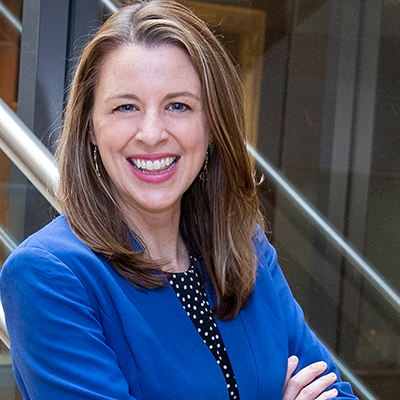
Allison Orr Larsen is the Alfred Wilson & Mary I.W. Lee Professor of Law at William & Mary where she also directs the Institute for the Bill of Rights Law. Professor Larsen teaches courses in constitutional law, administrative law, and statutory interpretation. Since joining the William & Mary law faculty in 2010, Larsen has received many awards honoring her teaching and scholarship including: the university’s Alumni Fellowship Award, the Walter L. Williams Jr. Memorial Teaching Award, the 1L Professor of the Year Award, two university-wide Plumeri Awards, the inaugural McGlothlin Teaching Award and the state-wide Outstanding Faculty Award in the “Rising Star” category (the latter is Virginia’s highest faculty honor, awarded by the State Council of Higher Education for Virginia). Professor Larsen is a scholar of constitutional law and legal institutions, with a focus on how information dynamics affect both. Larsen has published in the nation’s top law reviews, and her work has been cited by four different U.S. Courts of Appeals. Professor Larsen received her B.A. from William & Mary in 1999 and her law degree in 2004 from the University of Virginia where she graduated first in her class. After law school, Professor Larsen clerked for Judge J. Harvie Wilkinson on the U.S. Court of Appeals for the Fourth Circuit and for Justice David Souter on the U.S. Supreme Court. Prior to joining the William & Mary faculty, Professor Larsen was an associate in the appellate practice group at O’Melveny and Myers in Washington DC. |