
Stanford Law Professor Mariano-Florentino Cuéllar to be appointed by President Barack Obama to the Council of the Administrative Conference of the United States
Details
- Publish Date:
- July 9, 2010
- Source:
- Stanford Law School
- Related Person(s):
Summary
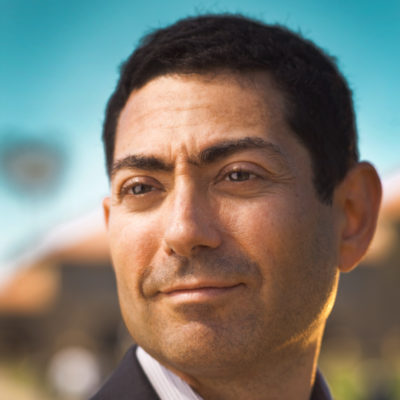
STANFORD, Calif., July 9, 2010—President Barack Obama announced his intent to appoint Stanford Law Professor Mariano-Florentino Cuéllar, an expert on federal regulatory policy, public safety, and international security, to the Council of the Administrative Conference of the United States (ACUS), an independent agency of the United States government charged with improving the efficiency and fairness of federal agencies.
Professor Cuéllar, who is the Deane F. Johnson Faculty Scholar, has been on the faculty at Stanford Law School since 2001. He recently returned from a leave of absence he took in early 2009 to serve as Special Assistant to the President for Justice and Regulatory Policy at the White House Domestic Policy Council. Among other issues, Cuéllar worked on improving food safety and public health policy, expanding support to state and local law enforcement, enhancing transparency in the regulatory process, and strengthening border coordination and immigrant integration. He negotiated key provisions of the Family Smoking Prevention and Tobacco Control Act and represented the Domestic Policy Council in the development of the first-ever Quadrennial Homeland Security Review. Earlier, Cuéllar co-chaired the Obama Transition’s Immigration Policy Committee and served as a Treasury official in the Clinton Administration.
As part of the ACUS Council, Cuéllar will join leading lawyers such as former U.S. Court of Appeals Judge Patricia Wald and former Solicitor General Ted Olson in overseeing the work of ACUS and setting its priorities. With the appointment to the ACUS Council, Cuéllar will draw upon his scholarly expertise in how institutions manage complex regulatory challenges as well as his experience in government.
“At a time when our country faces such enormous challenges, it is especially important for agencies to safeguard the rights of the public, cut waste, and deliver value to the American people,” said Mariano-Florentino Cuéllar. “I am honored by this appointment and by the chance to work on these critical issues.”
Established by statute in 1964, the Administrative Conference of the United States has played an important role in promoting improvements in the efficiency and fairness in the way federal agencies conduct regulatory programs. ACUS has been on hiatus for the past 14 years, but has been revived by Congress with support from a broad range of lawyers, scholars, and judges, including Supreme Court Justices Antonin Scalia and Stephen Breyer.
“There is no better expert for this strategic oversight and problem-solving role than Mariano-Florentino Cuéllar,” said Larry Kramer, dean of Stanford Law School. “Tino’s expertise in streamlining domestic regulatory policy and his added expertise in security policy will make an important contribution to our nation at a critical time.”
Stanford Law School is a leading center of scholarship and teaching in the field of law and public policy. Much of the research and scholarship undertaken by Stanford Law faculty members has real public policy impact, and many faculty members have worked in government or been involved in policy advocacy. Our faculty includes pioneers, like Professor Cuéllar, working on some of today’s most compelling policy problems. In addition, through Stanford University’s new interdisciplinary graduate program in public policy, we are reinvigorating the role of law as a major instrument of public policy and educating tomorrow’s leaders. Whether through our joint degree program in public policy or through interdisciplinary study, Stanford law students can gain the skills and knowledge to develop, advocate for, and implement policy that shapes the lives of people everywhere.
About Stanford Law SchoolStanford Law School is one of the nation’s leading institutions for legal scholarship and education. Its alumni are among the most influential decision makers in law, politics, business, and high technology. Faculty members argue before the Supreme Court, testify before Congress, and write books and articles for academic audiences, as well as the popular press. Along with offering traditional law school classes, the school has embraced new subjects and new ways of teaching.
—30—
EDITORIAL CONTACT
Judith Romero
Associate Director of Media Relations
Stanford Law School
Office: 650 723.2232
COMMENT
Mariano-Florentino Cuéllar
Professor and Deane Johnson Faculty Scholar
Stanford Law School
tcuellar@stanford.edu
Office: 650.723.9216