
Stanford Law School Mourns the Loss of Professor Emeritus John Barton ’68
Details
- Publish Date:
- August 4, 2009
- Source:
- Stanford Law School
- Related Person(s):
Summary
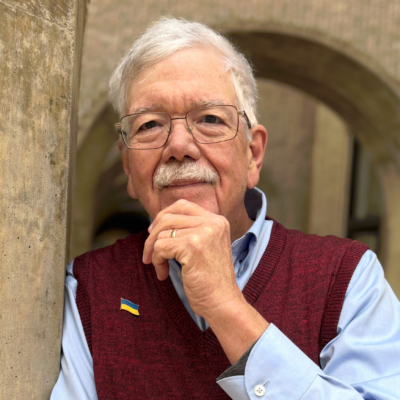
STANFORD, Calif., August 4, 2009—John H. Barton, George E. Osborne Professor of Law, Emeritus at Stanford Law School, died August 3 at Stanford Hospital. He was 72; the cause was injury to the brain as a result of a bicycle accident. Professor Barton earned his undergraduate degree (BS) at Marquette University in 1958. He graduated with a JD from Stanford Law School in 1968. A member of the Stanford Law School faculty since 1969, Professor Barton was actively involved in the Stanford University community for more than 40 years.
John Barton devoted his academic career to the examination of questions at the intersection of science and the law. A fellow of the American Association for the Advancement of Science, Professor Barton’s scholarship focused on international law concerns ranging from national defense, to the distribution of intellectual property rights across the developed and undeveloped world, to improving the health of billions of the world’s poorest people. He provided calm and reasoned advice to many institutions involved in making global policies. He helped arbitrate international debates on contentious issues and was known for his ability to marshal consensus through the careful examination of empirical evidence. For example he recommended a balanced approach to the adoption of uniform standards for the world’s patents and copyrights based on historical analysis that revealed a rigid global standard hinders technology growth in the Third World. His recent work involved the transfer of technologies in the healthcare and climate change sectors, and the development of a political theory of international organization and globalization.
“John Barton was far ahead of his time in seeing the significance of and for the law of the new global economy and the development of new technology,” said Larry Kramer, Richard E. Lang Professor of Law and Dean. “He was a pioneer and intellectual leader in some of today’s most important fields such as healthcare, intellectual property, and the environment. He was also a wonderful teacher, colleague and friend, and he will be sorely missed.”
Professor Barton chaired or had been a member of more than a dozen academic and international advisory commissions, most recently chairing the International Commission on Intellectual Property Rights, an independent task force created by the British government.
“John was a wonderful colleague,” said Hank Greely of the Stanford Law School faculty. “He had a rigorous scientific mind that he applied to all kinds of problems, scholarly and otherwise. He loved figuring out how new technologies and old societies would affect each other, but he was always driven not just to understand, but to make the world a better place–safer from nuclear war, safer from the ravages of disease. His too early death is truly a tragedy.”
Professor Barton was also a Senior Fellow (by courtesy) at the Freeman Spogli Institute (FSI) for International Studies and a founder of what is now called the Center for International Security and Cooperation (CISAC) at Stanford, a program that pioneered university teaching and research in this field. He co-authored International Arms Control, which became the standard textbook on the subject for undergraduates in the United States and abroad.
“When I came to Stanford in 1968, John was already teaching a law school course on arms control and disarmament,” said John Lewis, the William Haas Professor of Chinese Politics, Emeritus, a CISAC faculty member, and FSI Senior Fellow, by courtesy. “Throughout my years working with him, John Barton was my friend and inspiration. He will truly be missed.”
After his graduation from Marquette, Professor Barton served for three years in the U.S. Navy. He then worked as an engineer with Sylvania Electronic Defense Laboratories before and during his years as a law student. He worked as an associate for one year after his law school graduation with the Washington D.C. law firm then known as Wilmer, Cutler, and Pickering, before joining the Stanford Law faculty in 1969.
Professor Barton is survived by his wife of 50 years, Julie, and their five children John, David, Robert, Thomas and Anne. A memorial service is scheduled for August 16 at 4:00 p.m. at Immanuel Lutheran Church in Los Altos. An event to celebrate his life will be held at Stanford Law School this fall.
—30—
Editorial Contact for Stanford Law School:
Judith Romero
Associate Director of Media Relations
Stanford Law School
650 723.2232
judith.romero@stanford.edu