
What does the Trump Administration Statement on Dismantling the ICC Really Mean?
Details
- Publish Date:
- July 14, 2026
- Author(s):
-
- Security, Just
- Source:
- Just Security
- Related Person(s):
Summary
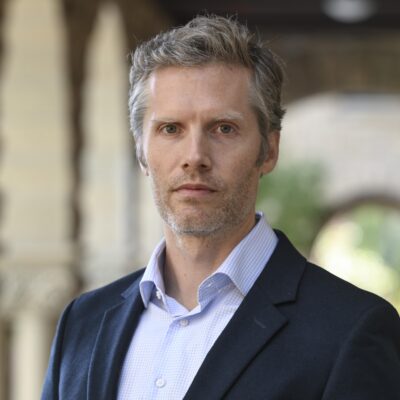
Tom Dannenbaum, Member of the Just Security Editorial Board and Professor of Law at Stanford Law School:
The new U.S. posture regarding the International Criminal Court continues the administration’s pattern of not merely violating international law, but assaulting the framework of international law as such. It entails a dangerous escalation that demands a clear and coordinated response.
At the same time, Secretary Rubio’s op-ed and the associated State Department press release serve two useful functions. First, they indicate that despite the crisis in international law generally, and international criminal law specifically, the ICC remains highly politically relevant, even to the most powerful states in the world. It would be almost impossible for the Court to secure the arrest and transfer of a U.S. official. One could imagine, therefore, a world in which a U.S. government hostile to the notion of international accountability would simply ignore the Court. Instead, the mere prospect of an ICC investigation carries implications for international legitimacy and standing that are apparently sufficient to activate a preemptive and severe political backlash, including in the form of an agenda that will demand significant diplomatic maneuvering. This itself evinces the importance of continuing to invoke the principles that Rubio seeks to disparage and to use them as focal points around which to mobilize in response to criminality and abuse by even the most powerful.
Second, Rubio’s Op-Ed offers an opportune moment to reflect on the crimes in which the administration is currently involved. He notes both the deportations to El Salvador and the strikes against boats and crews in the Caribbean and Pacific. These plausibly implicate international crimes and ICC jurisdiction, given that El Salvador, Colombia, Trinidad & Tobago, Ecuador, the Dominican Republic, and Venezuela are ICC States Parties and the crimes may well have occurred at least in part on one or more of these states’ territory (including their territorial sea or on vessels flagged to their state). He further notes, correctly, albeit highly unrealistically, that Iran could accept ICC jurisdiction under Article 12(3), thereby generating ICC jurisdiction over potential U.S. war crimes committed on Iranian territory (in addition, of course, to alleged Iranian crimes at home and abroad—a fact that Rubio deliberately omits and that guarantees that no such Iranian engagement with the ICC will take place under current political conditions). That there are plausible discussions regarding direct U.S. engagement in international crimes across these situations is damning and deserving of reflection, mobilization, and pressure.
Of course, even if the Court were operating in the best of institutional health, the political reality is that the Office of the Prosecutor has always been unlikely to seek arrest warrants for U.S. officials. In the only active investigation potentially implicating U.S. officials (the Afghanistan investigation), the Prosecutor deprioritized alleged U.S. war crimes to focus on alleged Taliban and IS-K crimes. Action on the former has seemed very unlikely, notwithstanding judicial admonitions to investigate crimes on their own terms, without reference to the affiliations of the perpetrators. In that sense, this latest move to attack the Court may be designed primarily to benefit Israeli officials, who, unlike their U.S. counterparts, are the subject of existing arrest warrants (and likely applications for more). Notably, however, in contrast to earlier rounds of sanctions, the goal of protecting Israeli officials plays no overt role in Rubio’s arguments or the State Department press release.
In many respects, the depiction of the ICC, the hysterical characterization of it threatening the “death of the U.S. as a sovereign and independent nation,” and the call to aggressive preemptive action to quash that threat amount to a tired reprise of John Bolton’s arguments of a quarter-century ago. The substance barely warrants response. The reality is that (absent Security Council authorization, over which the U.S. exercises a veto), when the Court exercises jurisdiction over nationals of states that have not ratified or acceded to the Court’s Statute, it does so on the basis of their actions implicating war crimes, crimes against humanity, or genocide on the territory of a State Party or a state that has otherwise accepted ICC jurisdiction. It is, in that sense, an affirmation and protection of the latter’s sovereignty and the most basic rights of its people, rather than an attack on the sovereignty of the state whose officials are, by definition, acting extraterritorially in one sense or another. The United States does not cede its criminal jurisdiction over foreign nationals when they commit crimes in the United States. It has no standing to suggest that its sovereignty precludes others from doing the same. Of course, state officials ordinarily have functional immunity for their official acts, even while acting abroad. However, such immunities are widely understood to be inapplicable in relation to international crimes. Although the United States has contested that point, it has also seen fitto set aside such immunities in cases involving crimes against U.S. persons. Even when the ICC has jurisdiction, it will defer to the investigative and judicial processes of a state that undertakes investigations or prosecutions consistent with a genuine willingness and ability to bring perpetrators to account. That deference holds equally for states not party to the Court’s Statute as for States Parties. And it applies even if the domestic state declines to prosecute the individual(s) in question, as long as the process was genuine.
None of this is news to Marco Rubio. In March of 2022, he co-sponsored S.Res.546, which: (i) described the ICC as “an international tribunal that seeks to uphold the rule of law, especially in areas where no rule of law exists, by investigating and trying individuals charged ‘with the gravest crimes of concern to the international community: genocide, war crimes, crimes against humanity and the crime of aggression’,” (ii) noted that “Ukraine has twice submitted to the jurisdiction of the ICC for the purposes of investigating alleged war crimes and crimes against humanity committed within its territory related to the Russian occupation of Ukraine” (Russia being a non-party to the ICC), and (iii) sought to encourage “member states to petition the ICC or other appropriate international tribunal to take any appropriate steps to investigate war crimes and crimes against humanity committed by the Russian Armed Forces and their proxies and President Putin’s military commanders, at the direction of President Vladimir Putin.” The contradictions speak for themselves.
Ultimately, there is a real prospect that Rubio’s Op-Ed and the State Department announcement, which identifies items for consideration rather than firm policies, amount to little more than rhetoric, designed primarily for domestic political consumption, rather than international action. However, the actions listed as under consideration would pose a serious threat to the Court. Their mere articulation may inspire other states that are contemplating withdrawal or hostile action against the Court. The immediate impact would be on war crimes, crimes against humanity, and genocide investigations in Sudan, the trial of Rodrigo Duterte, and efforts to secure the arrest of Taliban leaders.
The institutional threat is starkest in relation to proposals to sanction the Court itself, a move that could bring the institution to a standstill. Such action would entail further U.S. offenses against the administration of justice and would demand a robust and coordinated response by ICC States Parties, if the Court is to have any chance of survival. The proposals to pursue diplomatic pressure through encouraging States Parties to withdraw and non-parties to join the U.S. in its attack on the Court are dangerous in different ways. Their impact will turn on how much leverage the United States seeks to invoke and whether other states are willing and able to band together in response. It is long past time for States Parties to stand up for the Court and act collectively in its defense.
Read More