
And Religious Liberty for All
Students in the Religious Liberty Clinic Defend People of All Faiths Against Discrimination
When Siena Marcelle, JD ’24, started work on the appellate brief in a long-running case involving a person who sought to use natural anointing oils as part of his religious faith while incarcerated, she approached Professor James A. Sonne, director of the Religious Liberty Clinic, with a bold argument.
The district court had ruled against the prisoner, who had represented himself for nearly two decades before Marcelle took his case through the Religious Liberty Clinic, which Sonne directs. Marcelle felt “strongly, not just that the district court decision was wrong, but that it was so fundamentally wrong that the client should have won and was right on the law” even though the typical request in situations like this was to ask the higher court for a reversal that sends the case back for further consideration.

Sonne asked Marcelle what her legal theory was.
“The fact that it’s been 17 years,” Marcelle recalls replying.
As she and her clinic partner, Nathan Weiser JD ’24 (BA ’18), drafted the brief, they kept returning to the idea that the state had never explained how its prohibition on the oils met the high standard of scrutiny in cases involving the Religious Land Use and Institutionalized Persons Act, which protects religious people and organizations from discrimination.
To Marcelle and Weiser, it appeared that the state had failed to provide the necessary evidence on multiple opportunities. “Perhaps that means they can’t,” she remembers thinking.
She and Weiser were right. In 2024, another pair of clinic students argued the appeal before the Ninth Circuit and won: In Chernetsky v. State of Nevada, the court not only reversed the judgment in favor of the prison but also ordered that judgment be entered in favor of the clinic’s client. Marcelle watched the livestream of the argument with other clinic students during finals week.
Chernetsky is one of nearly a hundred projects the Religious Liberty Clinic has handled since it was founded in 2012—the first clinic of its kind in the country. Students in the full-time, quarter-long course, which is offered twice a year, regularly represent students, employees, and inmates who face obstacles in exercising their faith, as well as religious organizations challenging discriminatory zoning. The clinic is currently representing a Jewish musician whose concert was canceled after he posted a comment on Facebook in support of Israel, and a church seeking to participate in a city beautification program. Clinic students also recently secured two major wins in support of religious accommodation in the workplace—for a Jehovah’s Witness and a Christian Jew.
Sonne and Clinical Supervising Attorney Thomas Molloy “really do let the students sit in the driver’s seat,” says Marcelle, who recently completed a fellowship at the Becket Fund for Religious Liberty and will join King & Spalding’s appellate practice in October. “They take a deep interest in every student who comes into the clinic, and they foster discussion on hard issues.”
Students taking the lead
Simran Sandhu, JD ’26, agrees. During her time in the clinic, Sandhu helped secure successful settlements for two individuals: a member of the International Society for Krishna Consciousness who had been cited by police for sharing religious literature on a city sidewalk and a Muslim man whom a staffing agency declined to hire after he said he might need additional break time to attend a Friday prayer service. In both cases, Sandhu and her clinic partners met with opposing counsel and other interested parties to reach a resolution outside the court. Sandhu, who is currently clerking for a federal district judge in Los Angeles, says the negotiations were a highlight of her time in the clinic.
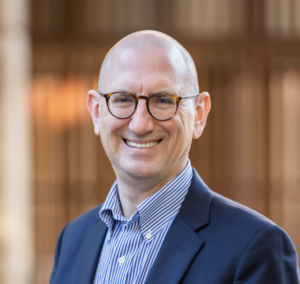
“I love seeing people face to face, working on problem-solving together,” she says. “It’s not just A versus B—there are so many different sides, and everyone has slightly different interests and motivations and objectives they’re trying to protect. It’s an amazing puzzle, and it’s fun and exciting.”
The clinic offers students opportunities to develop their legal skills in settlement discussions, at all levels of state and federal courts and before administrative agencies.
“From the students’ perspective, they are working on real cases under the supervision of real lawyers,” says Molloy, who joined the clinic in March. “They get a guided and practical educational opportunity that you just can’t get in a classroom.”
The clinic’s work is unusual—and unusually meaningful—because students of every faith, or no faith, represent clients and organizations of all faiths in highly complex and personal matters of religious liberty.
Marcelle recalls, after meeting her neo-pagan client in the maximum-security prison where he was incarcerated, how she came to understand in a powerful way the need, as an advocate, to understand and articulate for diverse—and perhaps skeptical—audiences a faith tradition outside the mainstream. Marcelle’s time in the clinic, she says, made her more sensitive to what people of minority or marginalized faiths experience.
“It gave me a sense of empathy for people who have to fight for their rights,” she says. “Religion is a fundamental right no matter what religion is being practiced.”
Sandhu agrees.
“Different faiths and practices might seem different on their face, but they are all based on the same need to be understood and respected,” she says. “The point of religious liberty in America is that it is for everyone.”
Sonne says that providing a space where students could learn and practice high-quality legal representation in service to clients of all faiths was part of his original mission.
“I saw the importance of keeping the focus on religious liberty as a universal value rooted in the dignity of the human person,” he says. “It’s something that belongs to everyone, not a narrow partisan tool.”
The clinic boasts an impressive success rate, across virtually every measure. According to Sonne, clinic students have about an 80 percent success rate on appeal and its alumni have secured more than 180 judicial clerkships, including nine at the U.S. Supreme Court. The model has inspired similar clinics at other top law schools, he adds.
“Bridge building is central to what we do,” Sonne says. “Students come into the clinic for all different reasons, and once they’re there they work with one another across differences, not just among clients but among themselves. It’s a remarkable educational
experience.” SL