

At Conference on the Copyright Act’s 50th Anniversary, Professor Paul Goldstein Looks to the AI Era
At a recent Stanford Law School conference marking the 50th anniversary of the Copyright Act of 1976, Professor Emeritus Paul Goldstein remarked, with a smile, that he has been teaching copyright law for so long that he remembers when the half-century-old statute was the “new act.”
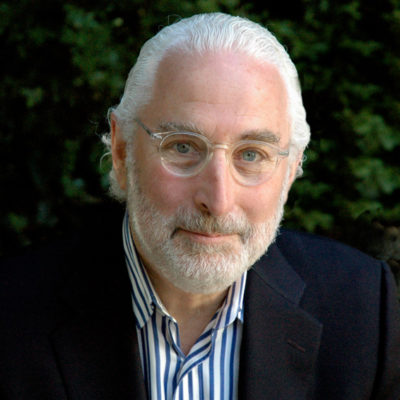
One of the country’s most influential copyright scholars, Goldstein spent the first part of his career teaching the Copyright Act of 1909. In his conference keynote, he used the anniversary of the 1976 Act to ask what copyright law should protect at a moment when AI, deepfakes, and endless digital reproduction are upending the economic assumptions that have long underpinned it.
As he put it, copyright once answered the need for a property rule that would, in economist Adam Smith’s words, be “an encouragement to the labours of learned men.” But if creative works can now be produced with a few prompts and modest editing, he asked, “what economic justification would Adam Smith find for copyright when the labor necessary to produce a literary work consists of no more than a few prompts and modest editing of the results or, for that matter, no human contribution at all?”
Goldstein, who joined the Stanford faculty in 1975, suggested that one of copyright’s oldest concerns, recognition of authorship, may matter more than ever. He argued that authors want attribution and that audiences want authenticity, and he cast those two desires as deeply connected. In a world crowded with synthetic culture, that bond between creator and audience, he suggested, is something the law should affirm more clearly.
Goldstein proposed replacing the current, limited moral-rights provision in Section 106A with a broader right for all authors to claim authorship and object to distortion or mutilation of their work, drawing on the Berne Convention’s language.
Goldstein cited, among others, Stanford Law’s Mark Lemley, William H. Neukom Professor of Law, who has written about how generative AI destabilizes one of copyright’s bedrock principles, the line between protected expression and unprotected ideas. In an AI collaboration, the human may contribute the concept, prompt, style, and creative direction, while the machine does much of the expressive work. That, as Lemley has put it, turns copyright law upside down.
Goldstein’s point was not that copyright disappears, but that it becomes harder to map onto creativity in the old way. Where human authorship lies mainly in framing and directing the work, protection may still be justified, but it would almost certainly have to be very narrow.
Goldstein’s keynote came during a daylong conference at Stanford Law School marking the 50th anniversary of the Copyright Act of 1976. Hosted by Stanford Law School and the Stanford Technology Law Review, the event examined whether a statute written in the era of vinyl and eight-track tapes, even with its many subsequent amendments, can still meet the moment.
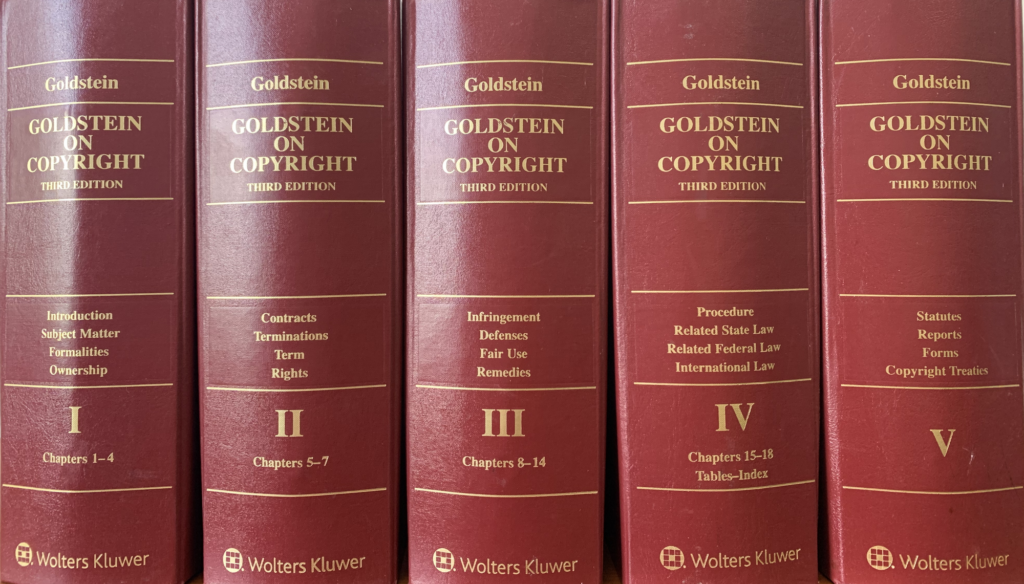
Other speakers pressed on the same question from different directions. The conference opened with remarks from U.S. Register of Copyrights and Director of the U.S. Copyright Office Shira Perlmutter, who spoke on the Act’s evolution and impact.
Her remarks suggested that the existing copyright framework may still be capable of adapting. She pointed to approaches such as extended collective licensing as a way to address market failures in AI training and said experience already developing in private licensing markets could help inform workable compensation systems.
Other speakers argued for a fresh start and a significant redraft, one that borrows from approaches around the world.
The Stanford Technology Law Review will publish papers from the conference in an upcoming edition.