
Bill Gould Reflects on his New Memoir and a Life Shaped by Labor Law, Learning, and Luck
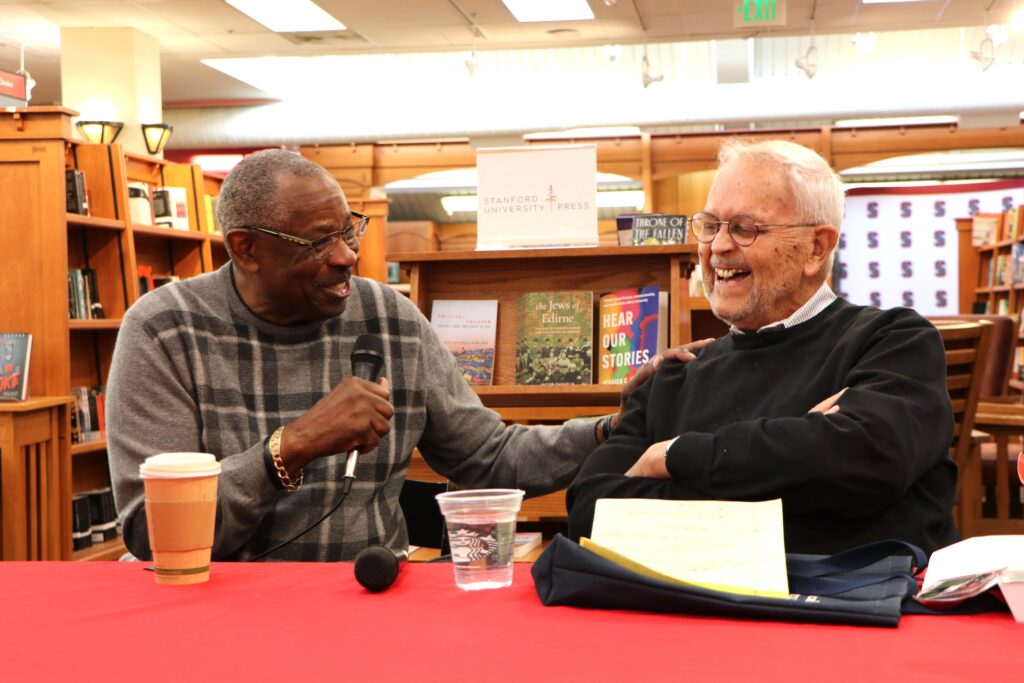
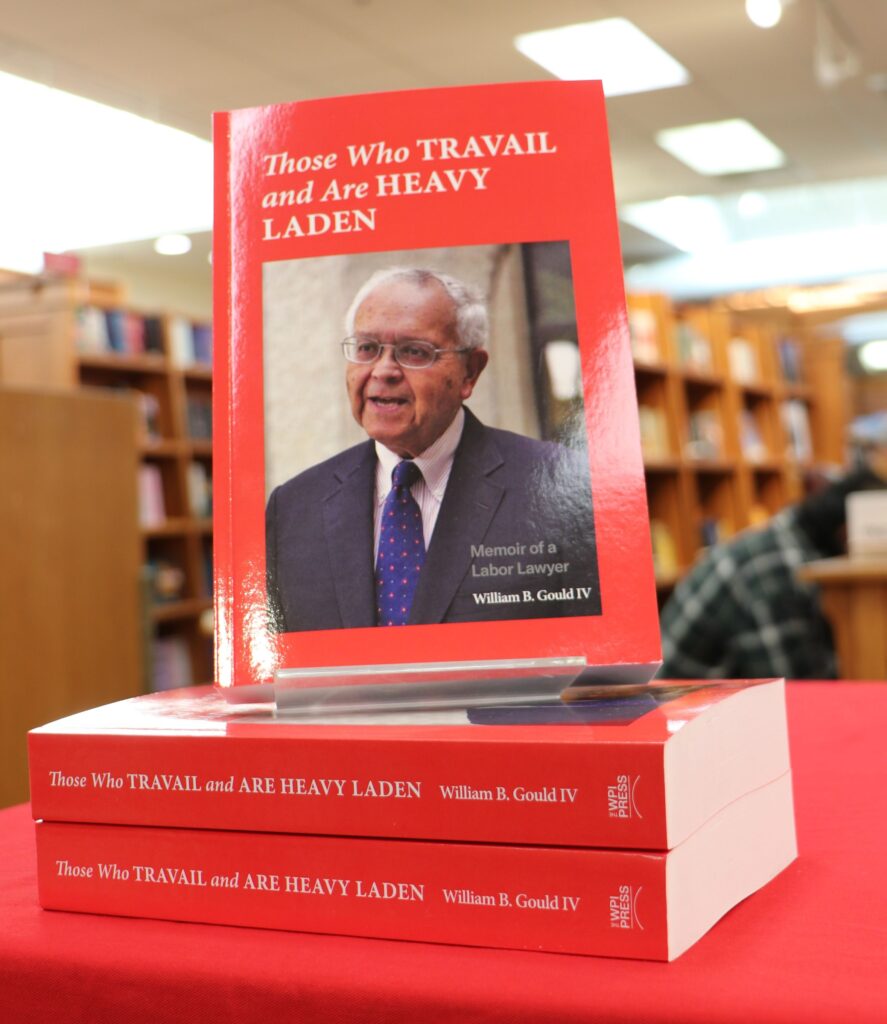
“My life has been filled with luck,” Professor William B. Gould IV told a full room of friends, colleagues, students, and admirers at the Stanford Bookstore on December 4. The legendary labor law scholar was there to discuss his new memoir, Those Who Travail and Are Heavy Laden: Memoir of a Labor Lawyer (Worcester Polytechnic Institute Press). Beside him was former baseball major leaguer and San Francisco Giants manager Dusty Baker, there to honor the longtime friend he calls “Dr. Bill.
The Charles A. Beardsley Professor of Law, Emeritus and a central figure at Stanford Law for 53 years, “Dr. Bill” touched on some of the stories that fill his memoir: his childhood, civil rights turning points, courtroom battles, and the moments of luck that shaped his life and career.
Almost every pivotal moment—from his first labor law job to his appointment as chair of the National Labor Relations Board—began with a door opened by someone else, he said. “What I’ve been able to accomplish is attributable to a lot of people who helped me over the years, starting with my parents,” said Gould, who joined the Stanford Law faculty in 1972 as the school’s first Black faculty member.
He grew up in Massachusetts in a family rooted there since before the Civil War, witnessing racial inequality and watching his father navigate an unequal world with dignity.
His memoir’s title comes from “The Comfortable Words,” Gould explained, a passage from St. Matthew’s Gospel that was part of the Episcopal liturgy when he was a choirboy in the 1940s. When the priest reached the line about those who work hard under heavy burdens, “my father would catch my eye and in that look was the message he never had to say out loud: This is why we are here in this church. This is why we are here on this Earth.”
The Road to Labor Law
Gould spoke of two watershed national events that shaped his sense of purpose: Brown v. Board of Education, which he described as “a day you could never forget,” and the McCarthy era, which showed him the power, and necessity, of legal advocacy.
When he arrived at Cornell for law school, he felt adrift and uninspired by the doctrinal courses, he said. A stroke of luck changed everything: a labor law professor who had worked for the United Auto Workers took interest in a paper Gould wrote on collective bargaining and racial discrimination. That paper led to a job at UAW headquarters in Detroit.
“As luck would have it,” he said, the position placed him in the center of some of the decade’s historic shifts. He met Walter Reuther, the powerful head of the United Auto Workers; crossed paths with the Kennedys; and watched fair employment laws take shape after the Civil Rights Act of 1964.
After moving into private practice, Gould began consulting for the Equal Employment Opportunity Commission. The EEOC sent him to the South, where workplace segregation remained entrenched. Not long after, a group of Black workers in Detroit approached him with claims that echoed what he had seen and studied. The resulting case, Stamps v. Detroit Edison, consumed 10 years and produced what was then the largest per-capita employment discrimination judgment in the country.
The Carter administration later sent him to apartheid-era South Africa to advise on the creation of fair employment systems. He met union organizers across the country, built relationships that spanned decades, and returned after Mandela’s release to meet the future president himself.
Baseball, Friendship, and a National Crisis
Baseball threaded its way through much of the discussion, as it does through his memoir. Gould talked about his lifelong Red Sox devotion and how the game has served as both escape and education.
He and Baker met when Baker was a batting coach for the Giants. Gould visited the clubhouse regularly and the relationship grew into a friendship marked by candid conversations about the game, labor relations, and leadership.
It was also a friendship that shaped a pivotal moment in Gould’s career. After President Clinton nominated him to chair the National Labor Relations Board, the confirmation stalled in the U.S. Senate. Baker quietly intervened, raising the matter with a team owner who had Senator Ted Kennedy’s ear. Within weeks, Gould was confirmed. “A lot of luck,” Gould said again, looking toward Baker.
As NLRB chair, Gould helped steer Major League Baseball through the 1994–95 strike, the longest and most bitter in the sport’s history.
Gould also reflected on his decades at Stanford Law School, where he developed the school’s first courses in Employment Discrimination Law and Sports Law. Baker recalled being a frequent guest in “Dr. Bill’s” classes, coming in to talk about the pressures and realities inside professional sports. “I love being around young people,” Baker said. “Their questions make you think, and I always left Stanford feeling like I’d learned something too.”
Gould told the audience that Stanford gave him freedom to write about and teach the issues he believed the public needed to understand. “I’ve been lucky to spend my life thinking about things that matter,” Gould said. “And Stanford gave me the room to do that.”