
Bridging Divides
The Gould Center marks 25 years of dialogue and dispute resolution
Twenty-five years ago, the Martin Daniel Gould Center for Conflict Resolution opened its doors as one of Stanford Law School’s earliest experiential learning programs. From the beginning, then-Director Maude Pervere (BA ’70) and her colleagues emphasized a life lesson that many high-achieving Stanford Law students previously hadn’t encountered: the value of failure.
The art of negotiation can be learned only through trial, error, and reflection, says Pervere, who led the center through its early years. “But accomplished students like those at Stanford are used to succeeding in virtually every aspect of their lives,” she says. “They often don’t understand the role that failure can play in learning, so it can be harder for them to take chances and try new things. Experiencing failure in a simulated negotiation can provide the kind of ‘aha moment’ that sticks with students when they encounter similar situations in real life. It can help them step back from an automatic response to see opportunities to refine their strategy, even find common ground and more mutually beneficial outcomes.”
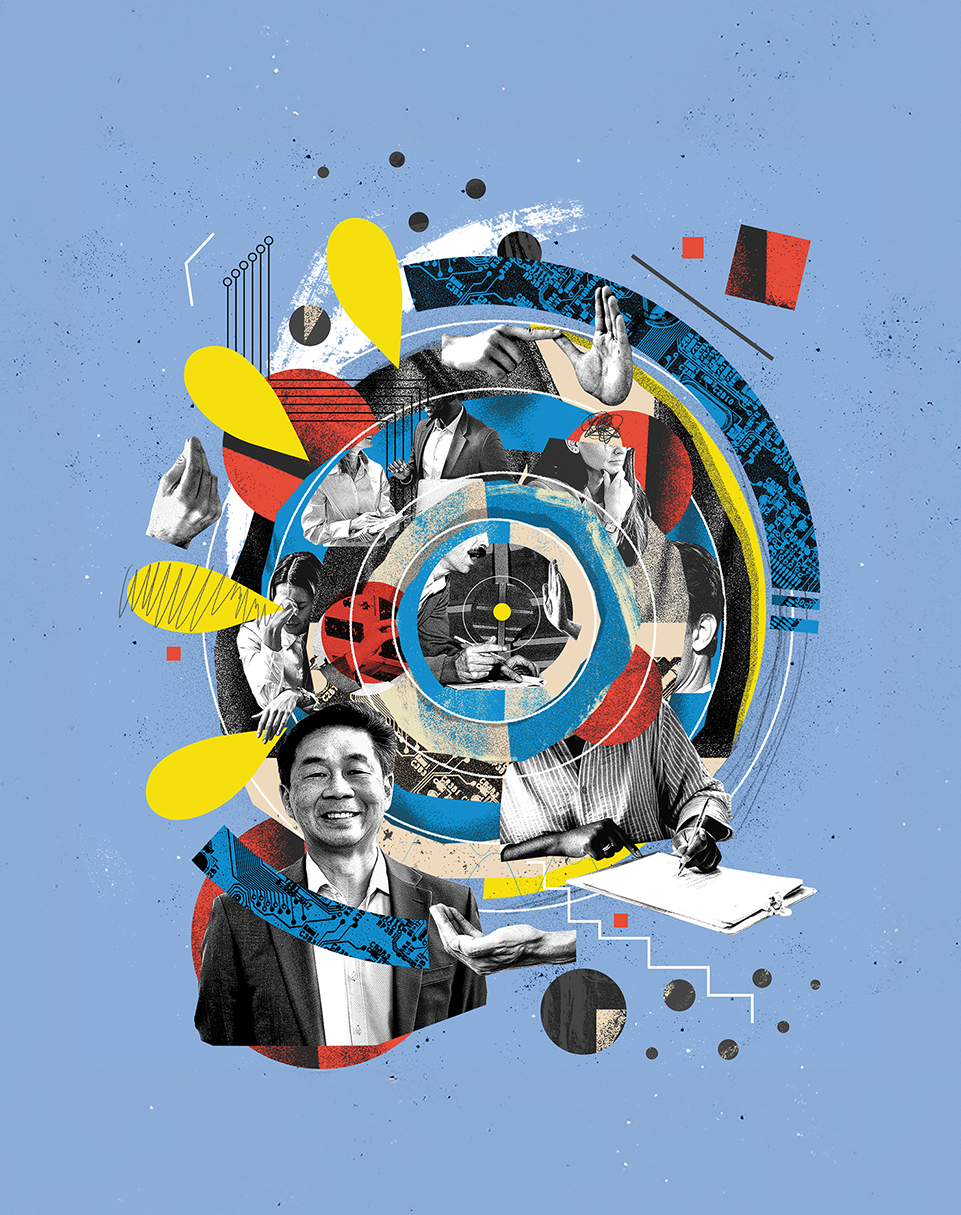
That philosophy—seeing conflict, failure, and challenges not as roadblocks, but as opportunities to build understanding—remains at the heart of the center’s mission as it celebrates its 25th anniversary. While the core values have stayed constant, the world around the center has shifted—shaped by digital echo chambers, emerging technologies like AI, and more polarized public discourse. And the center’s work is evolving to meet these new challenges.
Grande Lum, who joined Stanford Law two years ago as the center’s third director, is drawing on decades of bridge-building experience in the private and nonprofit sectors, government, and academia to instruct students and foster dialogue at Stanford and nationwide. Through initiatives like a national clearinghouse for materials relating to civil dialogue and the Community Academy for civic leaders, the center is building on its legacy as a resource for constructive engagement across education, law, and public life. It will also move into a new home at the law school this summer.
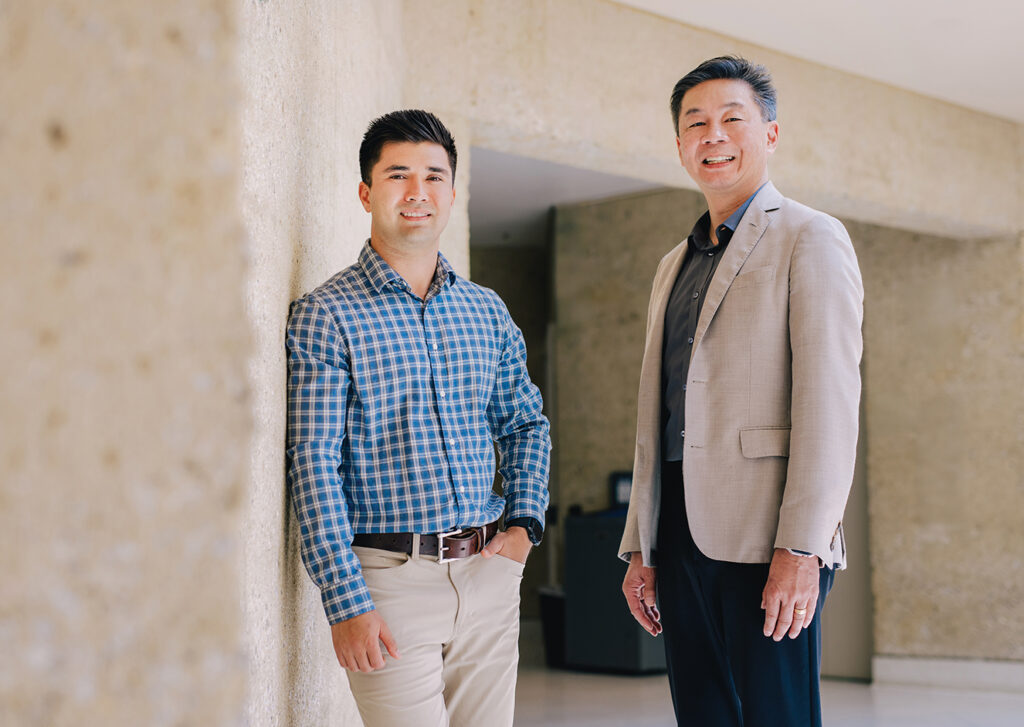
“It’s incredibly important to have dialogue now, rather than further division,” says Lum, who, among numerous other roles in mediation and peacemaking, served as director of the Department of Justice’s Community Relations Service during the Obama administration and helped build bipartisan collaboration on Capitol Hill at the Rebuild Congress Initiative. “We hear a lot these days about the idea that engaging across differences isn’t worthwhile, or is even discouraged. But that just makes what we are doing at Gould all the more important as constructive dialogue is needed more than ever.”
And Stanford students clearly see the value. Gould courses like International Business Negotiation, Dispute System Design, and Mediation Boot Camp regularly fill to capacity, with waitlists of students from all corners of the university. The small-group, interactive classes allow students to develop ethical judgment, sharpen techniques, and cultivate a personal negotiation style through simulation exercises.
As students fill these courses year after year, they carry forward a legacy that began decades earlier.
A 25-Year Foundation
The Gould center serves as an umbrella over the Gould Negotiation and Mediation Program, through which the center’s classes are offered, and the Gould Alternative Dispute Resolution Research Initiative, which promotes academic scholarship on the theory and practice of alternative dispute resolution (ADR).
Over the years, visiting scholars from around the world have contributed their expertise and Law and Policy Lab partnerships have generated reams of student-led research and policy guidance on conflict resolution and community engagement. Janet Martinez, who led the center for 20 years prior to Lum and helped pioneer the field of dispute system design, co-led a policy practicum in 2023 that engaged in a sweeping analysis of the history of Black disenfranchisement in San Francisco on behalf of their client, the San Francisco Human Rights Commission.
“Reaching out beyond Stanford, to the community, and the region, and the country, and helping to identify the factors that drive strife in our communities is an immensely important task, but something that does not happen by itself,” Martinez says. “Facilitation is needed, and that’s where the Gould Center excels.”
Lum hints that teaching today’s students the arts of constructive dialogue and active listening presents challenges that are different from those instructors had in the earlier years of the center. “The students we’re teaching today came of age during a pandemic, amid political turmoil and digital echo chambers,” Lum says. “They’re entering the legal profession with a different set of experiences—and a different set of challenges. Our job is to help them develop the human skills they’ll need to thrive: listening, persuading, disagreeing respectfully.”
Kaisa Goodman, JD ’26, was a student in Lum’s Negotiations class and has worked on Gould Center programs. She says the class has taught her how to be “intentional about how to approach criticism and failure.”
“One thing I loved about the class is that Grande encouraged us to try different negotiation strategies in different class scenarios,” says Goodman, who entered Stanford Law interested in a career in ADR, potentially focused on labor union work. “Putting ourselves out of our comfort zone—such as someone who is usually more reserved or compromising being more assertive and confident in a negotiation, or vice versa—often showed us a benefit of a negotiation style we were innately less comfortable with, allowed us to understand why people prefer a tactic, or demonstrated to ourselves why we wouldn’t use that approach again.”
“It’s incredibly important to have dialogue now, rather than further division.”
Grande Lum, Director of the Gould Center
Engaging Communities Beyond the Classroom
In addition to its academic programming, the center increasingly serves as a catalyst for real-world engagement on conflict resolution and community-building efforts nationwide.
One example is last fall’s Community Academy, supported by the American Arbitration Association’s Section on Dispute Resolution, the National Civic League, and the Divided Community Project at Ohio State University Moritz College of Law, which Lum helped found earlier in his career. “We brought in local leaders—mayors, city managers, police chiefs, community organizers—from three very different communities facing real challenges,” Lum says. “We combined design thinking with dispute resolution training, and it was powerful. There were moments of real tension, even apology and reconciliation. The feedback was overwhelmingly positive. For many of the participants, just coming to Stanford and being part of this kind of dialogue was incredibly meaningful. We didn’t just talk about conflict resolution. We saw it happen.”
This spring, the Gould Center also participated in a follow-up gathering at Ohio State, convening attorneys general, conflict resolution professionals, and community leaders from across the country. The focus: exploring how state-level efforts can fill the void left by the rollback of federal programs like the DOJ’s Community Relations Service.
Civil Dialogue Resource
Another ambitious effort underway at the Gould Center is the Clearinghouse on Civil Dialogue, a free, searchable database of teaching materials focused on constructive engagement across differences. Scheduled to launch this summer, the clearinghouse is being developed under the auspices of an American Bar Association task force, with contributions from universities, law schools, and other institutions nationwide.
Lum is spearheading the project alongside Norman Spaulding, JD ’97, Nelson Bowman Sweitzer and Marie B. Sweitzer Professor of Law and co-founder of ePluribus, a campus-wide initiative that began at Stanford Law to foster dialogue across ideological, cultural, and political divides. Their goal is to give educators practical tools for teaching students how to navigate difficult conversations in classrooms, courtrooms, and beyond.
“We’ve gathered syllabi, articles, teaching modules—everything from orientation programming to what’s being taught in criminal law or constitutional law when tough conversations come up,” Lum explains. “It’s a way to support faculty and deans who are trying to help students navigate disagreement in productive ways.”
A New Home
With many other projects in the pipeline, it is a fitting moment for the center to get a new space at the law school. This summer, it will take over a portion of the recently refurbished space on the garden level of the Crown building, something of a return to the early years at the Gould House, a building near the law school that the center occupied during its first decade.
“Of course the center continued to thrive and expand after we moved out of the Gould House and ‘into the fold’ in the Crown building about 15 years ago,” says Martinez. “But there’s something special about having that devoted space, where you can create a true atmosphere of support, teaching, and scholarship. Dispute resolution is not a stand-alone topic. It is an attitude. And having our own space helps define that attitude and deliberately integrates it with the legal and broader Stanford community.”
Technology for Tomorrow’s Toolkit
A vision for the future of dispute resolution and negotiation would not be complete, of course, without a plan for incorporating AI and other new technologies into Gould’s classes and programs. It was one of the priorities Lum identified when he joined the law school two years ago.
“We’re experimenting with how AI can support dispute resolution—not replace it, but enhance it,” Lum says. That includes using generative AI to simulate opposing parties in a negotiation exercise or offering real-time feedback on tone, content, and strategy. Lum is working with Julian Nyarko, Stanford Law professor and associate director of the Stanford Institute for Human-Centered AI, on developing a customized AI chatbot to provide coaching support for asynchronous negotiations.
Martinez agrees that the center has a profound mandate in this moment of technological transformation. “We need to think carefully about what it means to take a truly human-centered approach to AI—not just in theory, but in legal practice and education,” she says. “At some point, judgment, experience, and human connection still matter. That’s where the work is: making sure our students know how to use technology, yes, but also how to stay grounded in what it means to be human.” SL