By the Book
Ben Vagle was keen to start his legal studies.
But, after weeks spent assembling the back-of-the-book index for Command of Commerce: America’s Enduring Economic Power Advantage over China (Oxford University Press, 2025), a book he co-wrote just before coming to law school, he had a newfound appreciation for the time and mental energy the task required—and frustration over the lack of effective tools to aid in the process.
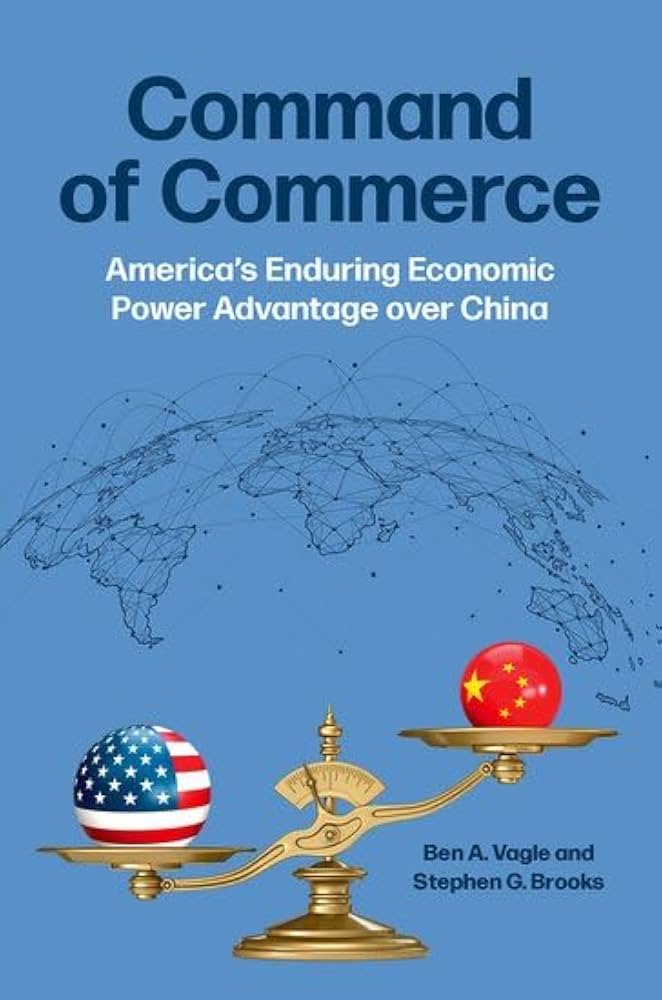
“It was really quite painful to prepare an index myself, particularly coming after writing and editing a book,” says Vagle, JD ’28, who worked in economic consulting and government prior to law school, most recently as an analyst at the Treasury Department for the Committee on Foreign Investment in the United States.
Unable to find an application that would make indexing easier for authors, Vagle explored building one using new AI tools.
Then kismet intervened when he met Will Dinneen, also JD ’28, at their 1L orientation. “We both grew up in Denver and had mutual friends, so we had heard of each other,” says Vagle.
“I saw Ben using Cursor to develop something, and I knew he had written a book,” says Dinneen, “so we started talking about the tool.” Dinneen, who had worked on the product team at Resultid.ai designing operational intelligence AI software, came to Stanford Law with a background in data science and computational social science.
Vagle showed him his prototype.
“I thought, ‘Wow, what a good idea,’” says Dinneen. The two decided to collaborate to turn Ben’s prototype into a product.
Soon after, they launched their company. Aptly named Indexia, it’s a software platform that uses artificial intelligence to index books. “We’ve broken down the process of indexing into a bunch of discrete steps, and at each step, we have an AI informed by indexing theory go through and extract concepts throughout the book, draw connections between them, and create an industry standard index, following the Chicago Manual of Style rules, so that authors can build an index without all the headache,” says Dinneen.
By December of their first year in law school, the two classmates found themselves fielding sales calls while balancing the rigors of coursework — rising at 5 or 6 in the morning to talk with publishers in Europe or India interested in the software.
As it turned out, studying law made the venture easier.
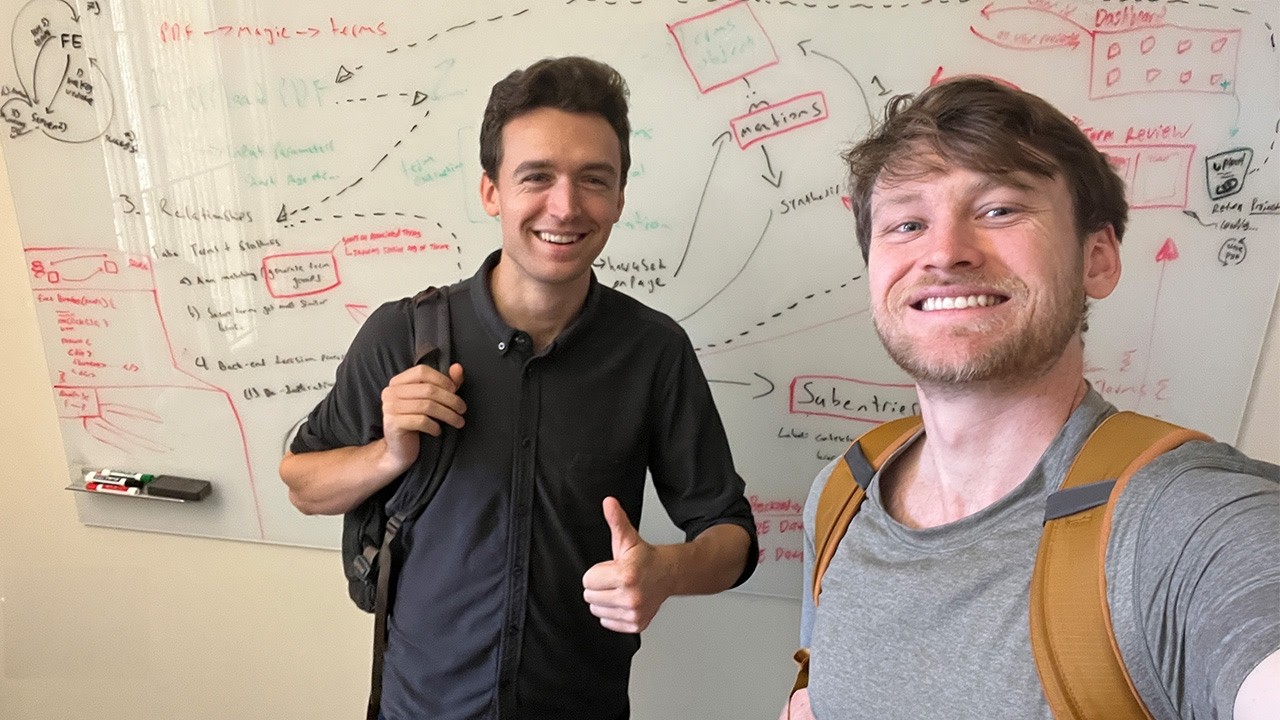
“We were starting to roll out our first contracts at about the same time that we were prepping for our Contracts class final exam,” says Vagle. “There definitely has been a real-time feedback loop of learning something in class and then applying it to this business.”
And the small, tight-knit community at Stanford has been invaluable.
“There’s a handful of us who are working on similar projects, so there’s a lot of support from fellow students,” says Dinneen.
They found a key sounding board in Beth Williams, associate dean of the Robert Crown Law Library and senior lecturer in law.
“Beth has given us advice on how to think about indexing, especially in the legal textbook space, and connecting us with people in the publishing industry,” says Dinneen.
By the end of their 1L year, Dinneen and Vagle had been accepted into StartX, an intensive startup accelerator for Stanford founders.
“StartX is such a great community of current students and alums. We’re learning a lot,” says Vagle.
They both also spent the first half of the summer working at the Institute for Law and AI in Washington, D.C. where they engaged in research focused on the legal implications of advanced AI systems.
As they begin their second year at Stanford Law, the two founders hope to keep improving Indexia.
“At this point, with help of AI, the company is nearly self-sufficient,” says Dinneen, “We’ve helped hundreds of users create indexes, and we want to continue making publishing less painful for authors.”
“I don’t think that at many other places it would have been the case that literally within a week of showing up on campus, I would meet someone like Will and immediately start developing a company,” says Vagle.