
Fred Smith, JD ’07
Constitutional Law Scholar Returns With a Pioneering New Class
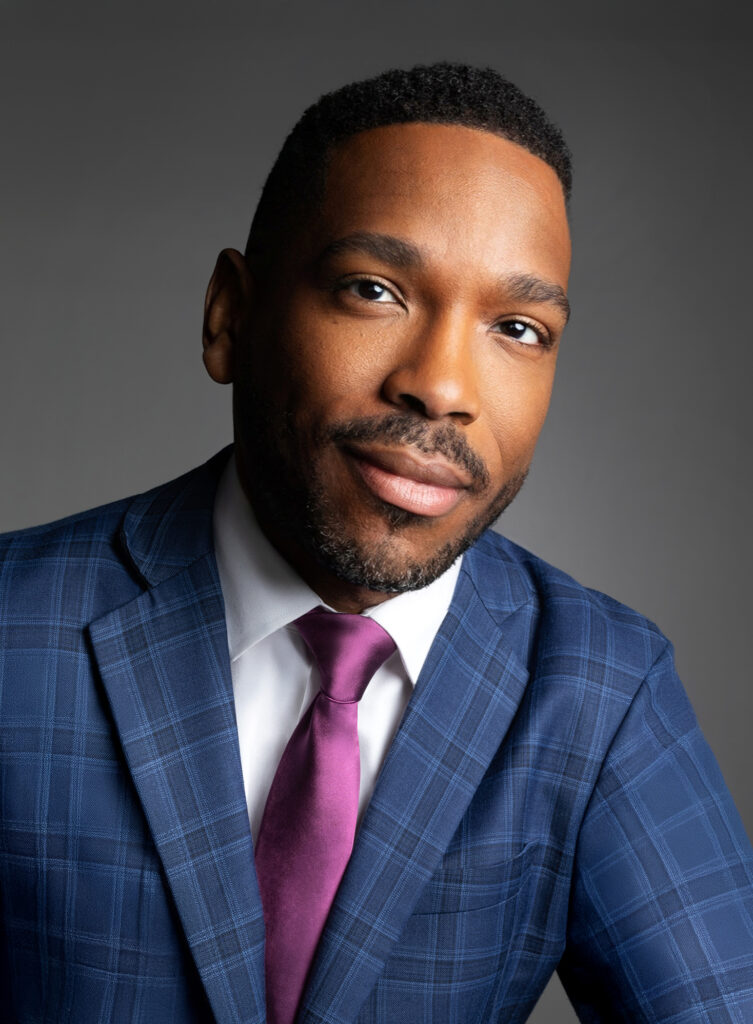
Even as a child, Fred O. Smith Jr. gravitated to the front of the classroom.
“My friends and I would play ‘school,’ and I always had to be the teacher,” he recalls with a smile. “That’s just who I was.”
He loved wrestling with difficult questions and testing ideas, passions that would define his work as a Supreme Court clerk; a scholar of constitutional law, the federal courts, and civil procedure; and now as a leading expert on how the law treats people’s rights and legacies after death.
It would appear that his childhood games were good preparation for life in front of a classroom. Smith, JD ’07, was named Outstanding Professor of the Year three times at Emory University School of Law, where he taught before returning to Stanford Law School as a member of the faculty in summer 2025.
After starting the year teaching Constitutional Law and Constitutional Litigation, Smith debuts a pioneering class this spring on posthumous legal interests. Rights After Death examines what happens to legal interests after a person dies and how the law reflects collective memory. Believed to be the first course of its kind at a U.S. law school, it brings a neglected dimension of law into focus: how we remember and whose memories the law protects.
“It was the process that hooked me”
Smith started to envision an academic career during his senior year at Harvard University. His honors thesis began as a casual query: Do male and female judges rule differently on gay rights cases? He began collecting data, running regressions, and found a striking pattern. Women judges were significantly more likely to rule in favor of gay plaintiffs in equal protection and due process cases between 1981 and 2002.
“It was the process that hooked me,” he says. “Being pushed, having to answer tough questions, controlling for variables—it felt like a conversation with the law itself.”
When he arrived at law school, Smith submitted his paper, “Gendered Justice,” to the Stanford Law Review, which published it during his 1L year—an extraordinary distinction. “From that point on,” he says, “there was no doubt I wanted to teach.”
Teaching Constitutional Litigation carries a certain symmetry—it’s a class Smith once took from one of his favorite professors. “When you become a professor, you think about who your favorite teachers were and what they did well,” he says. “Pam Karlan taught me both con law and Constitutional Litigation. Norm Spaulding, JD ’97, is a co-author [of Federal Courts in Context, 1st ed. (2023)]. Everywhere I look at Stanford Law, there’s someone who shaped me.”
Karlan, Kenneth and Harle Montgomery Professor of Public Interest Law, delights in the passing of the torch. “Fred was a star student, both in my con law class and in the Supreme Court Litigation Clinic. There’s nobody else to whom I’d so gladly cede teaching the Constitutional Litigation class. Fred is such a superb teacher, with an amazing command of both the doctrine and the stories behind it. Having him now as a colleague is a special treat.”
Smith followed graduation with several clerkships, ultimately landing with Justice Sonia Sotomayor at the U.S. Supreme Court. “She’s the most brilliant person I’ve ever worked for,” he says. “She had always read everything before I had and had already spotted the hardest issues. Working for her felt like family. She even officiated our wedding.”
Memory as a legal question
A decade ago, during a summer trip to Germany, Smith found himself drawn to Stolpersteine, the small brass plaques marking the homes of Holocaust victims, inscribed with names and dates and embedded in the sidewalk. “You can be walking to dinner and stumble across one,” he says. “Even if you don’t stop, some part of you remembers. They make history visible in everyday life.”
Around the same time, Smith’s father pushed the University of Georgia to investigate human remains uncovered during campus construction. Testing confirmed his father’s suspicion: The site was a burial ground for enslaved people linked to the university’s early history, forcing a public reckoning over who is remembered—and who isn’t.
At first, Smith didn’t see a connection between the plaques in Europe and the graves in Georgia. But over time, they converged into a single line of inquiry: how the law interacts with collective memory. “The law was the lens I had to think about these issues,” he says. “Law doesn’t only regulate behavior. It reflects what we value, how we mourn, and what we remember. That’s just one of the reasons I’m so intrigued with this notion of posthumous rights.”
“ Law doesn’t only regulate behavior. It reflects what we value, how we mourn, and what we remember. That’s just one of the reasons I’m so intrigued with this notion of posthumous rights.”
Professor Fred Smith, JD ’07
Posthumous rights touch nearly every area of the law—from torts and property to civil procedure and intellectual property—yet they’re seldom examined as a unified field, he says. “When a plaintiff dies mid-litigation, when families seek redress over remains, when we govern reputational or creative legacies—these are all posthumous legal interests,” he explains. “But we tend to treat them as scattered issues. Studying them together helps us understand both law and culture.”
Matters of memory and legacy aren’t just academic for Smith. They resonate deeply with his return to the place where his legal journey started.
“Being here again at Stanford Law carries a beautiful weight,” he says. “It’s the responsibility of knowing what this place gave me, and getting to shape how the next generation will think about the law.” SL