
From Policy Lab to Proposed Federal Legislation
Working with the Neukom Center for the Rule of Law, Stanford Law and Policy Lab students helped shape a new proposed law to curb politically motivated lawsuits by foreign governments
Stanford Law School students don’t just study the law. Sometimes they help draft it.
One recent example reached a major milestone in March 2026 when Democratic Senator Jeanne Shaheen and Republican Senator Bill Cassidy introduced the bipartisan Foreign Anti-SLAPP Act. The bill, if enacted, would create a mechanism to curb efforts by foreign authoritarian governments and their proxies (such as state-owned companies) to use American courts to harass or silence critics. The legislation reflects a proposal developed through a 2023-24 Law and Policy Lab at Stanford Law School, in collaboration with Senator Shaheen’s staff.
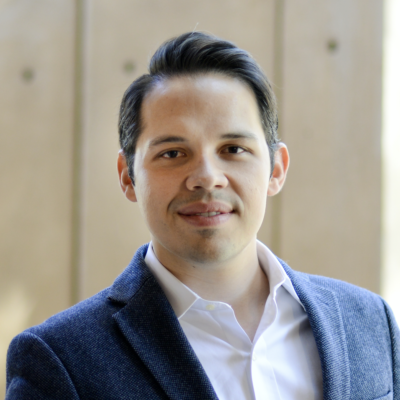
“We wanted to address a serious gap in U.S. law,” says Professor Diego Zambrano, faculty director of the Neukom Center for the Rule of Law and the instructor for the Law and Policy Lab course. Zambrano explored the issue of foreign authoritarian regimes exploiting U.S. civil litigation in a 2022 article titled “Foreign Dictators in U.S. Court.” He has also testified before Congress on the issue.
In one case Zambrano has highlighted, a Chinese dissident who fled to the United States was allegedly targeted through a lawsuit brought by a Chinese state-owned company in California. He has also pointed to Türkiye’s efforts to go after cleric Fethullah Gülen in Pennsylvania through ostensibly private plaintiffs backed by government lawyers.
“Authoritarian governments and their proxies can file meritless lawsuits in American courts, not necessarily because they expect to win, but because the process itself can punish journalists, dissidents, and critics,” Zambrano says. “The goal of the project was to think carefully about how Congress might stop that abuse without cutting off legitimate claims.”
The issues sit at the intersection of civil procedure, free speech, and transnational litigation. In domestic settings, these cases have traditionally been described as SLAPP suits—strategic lawsuits against public participation—filed less to prevail on the merits than to burden speakers with cost, stress, and delay. Zambrano has argued that foreign states and their allies can use the same tactic in U.S. courts, turning the courts into venues for political harassment.
Recent graduates and former Policy Lab students Will Moss, JD ’24, Leo Rassieur, JD ’25, and Remeny White, JD ’24, worked with Zambrano to draft the proposed legislation.
“They had to translate complex ideas into legislative text that could actually function in Congress and in the courts. That is a rare skill, and they rose to it. Now, the hope is that lawmakers will take the proposal seriously and move it through the legislative process so that U.S. courts are less vulnerable to this kind of abuse.”
– Professor Diego Zambrano
“People often think civil procedure is dry or abstract,” says White. “But once you see how a lawsuit can be used to silence somebody, the stakes become very concrete. Rules about pleading, dismissal, and cost can determine whether a person gets dragged through years of litigation just for speaking out.”
The students focused on how to create a mechanism for early dismissal when a foreign regime or its proxy brings a claim aimed at suppressing protected expression.
The team had to think through which plaintiffs should be covered, what kinds of speech or advocacy should trigger protection, and how to prevent a new statute from being misused. They looked to domestic anti-SLAPP laws as one model, but the foreign-sovereign context raised distinct questions of institutional design.
“It was a really interesting drafting puzzle,” says Rassieur. “Our goal was to target a specific abuse—using U.S. courts as a tool of transnational political repression—without drafting a statute so broad that it sweeps in meritorious claims. The hard part was finding narrow language that would still cover the problematic cases we identified in our research.”
That is part of what makes the Law & Policy Lab distinctive. Students are not only analyzing existing doctrine; they are working with clients on live policy problems and trying to build legal solutions from the ground up. In this case, the client was the Neukom Center, whose mission focuses on defending and renewing the rule of law in the United States and globally.
“One of the exciting things about the lab was watching students move from research into real lawmaking,” Zambrano says. “They had to translate complex ideas into legislative text that could actually function in Congress and in the courts. That is a rare skill, and they rose to it. Now, the hope is that lawmakers will take the proposal seriously and move it through the legislative process so that U.S. courts are less vulnerable to this kind of abuse.”
About Stanford’s Law and Policy Lab
Policy labs address problems for real clients, using analytic approaches that supplement traditional legal analysis. The clients may be local, state, or federal public agencies or officials, or private non-profit entities such as NGOs and foundations. Typically, policy labs assist clients through empirical evidence that scopes a policy problem and assesses options and courses of action. The methods may include comparative case studies, population surveys, stakeholder interviews, experimental methods, program evaluation or big data science, and a mix of qualitative and quantitative analysis. Learn more here.