
In a New Book, Justice Advocate Emily Galvin Almanza Lays Bare the Criminal Legal System
Former public defender Emily Galvin Almanza, JD ’10, has an urgent message for Americans about the country’s criminal legal system.
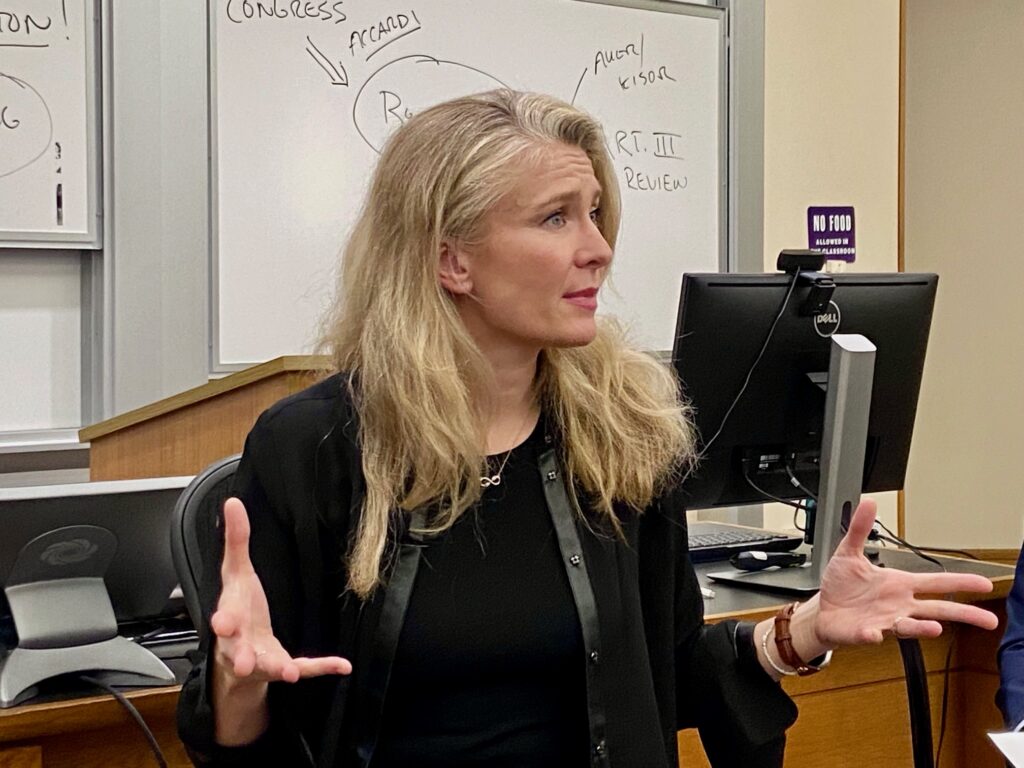
“It’s very hard at this point to argue that the status quo is working,” says Almanza, executive director of nonprofit Partners for Justice, which she co-founded to empower public defenders with social services tools. “We tell ourselves a story about what the criminal legal system does. But when you look at the outcomes—the recidivism rates, the collateral consequences, the lives that are derailed long after a case is closed—it doesn’t come close to delivering what people think it does.”
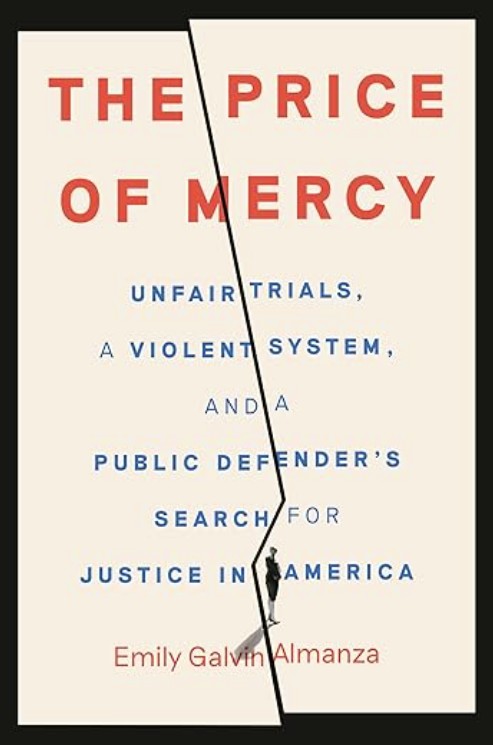
Almanza lays out the myriad problems she sees, along with the reforms she believes are necessary, in her new book, The Price of Mercy: Unfair Trials, a Violent System, and a Public Defender’s Search for Justice in America (Crown, 2026). The book has drawn praise from fellow Stanford Law alum Michelle Alexander, JD ’92, a New York Times columnist and author of The New Jim Crow: Mass Incarceration in the Age of Colorblindness.
The Price of Mercy is “a searing, compassionate, and utterly necessary book,” Alexander said in advance praise. “Emily pulls back the curtain on America’s criminal legal system with the clarity of a lawyer and the heart of someone who’s seen the system’s devastating consequences up close.”
Courtroom Stories and Systemic Analysis
Almanza’s book—her first—combines deeply personal stories from her years as a public defender with social science research, interviews, and policy analysis. She examines plea bargaining, prosecutorial incentives, police practices, and the collateral consequences of arrest. She interviews academics about barriers to transparency and recounts stories from clients whose cases extended far beyond the courtroom.
One such story involves a woman charged with insurance fraud after incorrectly noting the date her car was stolen, an error Almanza says illustrates how a broken system can result in years-long legal ordeals. “It’s not just a question of what happens in a courtroom on a certain day,” she said. “It’s about what happens to someone’s life after.”
“I have spent years explaining these issues to lawmakers,” she adds. “At some point, I thought: What if I just wrote it all down? Not just for legislators, but for regular people who are trying to decide what kind of system they want? This book is an attempt to tell people what I’ve learned.”
Her proposed remedies reflect a progressive vision of criminal justice reform: expanding public defense teams, increasing transparency around prosecutorial decision-making, and redirecting resources toward housing, healthcare, and community stability. The political system plays a role too, she adds. If Americans want different outcomes, they will need to make different choices about how justice is structured and funded, she says.
Dissatisfaction With the Status Quo
After graduating from Stanford Law, where she received the Deborah Rhode Public Interest Prize, Almanza clerked for Judge Thelton Henderson of the U.S. District Court for the Northern District of California. She later worked at the Los Angeles County Public Defender, Santa Clara County Public Defender, the Bronx Defenders, and with Stanford Law’s Three Strikes Project. As a Stanford Law lecturer, she also teaches an advanced criminal law course.
Her nonprofit, Partners for Justice, embeds non-attorney advocates within public defender offices nationwide. “Study after study shows that housing, mental health support, and access to healthcare reduce harm and reduce crime,” she says. “Partners for Justice is about bringing that knowledge directly into public defense.”
Since its founding eight years ago, the organization has expanded to dozens of jurisdictions across 20 states.
She argues that dissatisfaction with the status quo extends across political and professional lines. Police officers, she notes, often spend the majority of their time responding to non-violent calls. Prosecutors she interviewed described institutional pressures to prioritize conviction rates over alternative resolutions. Survivors of crime, she says, frequently report that the system does not meet their needs for recovery or support.
Mike Romano, founder of Stanford Law’s Three Strikes Project, who worked with Almanza when she was a student and later as a colleague, sees the book as an extension of the way she has long approached criminal justice work, pairing close attention to clients’ lives with careful analysis of the system around them.
“Emily has always combined deep empathy for her clients with a rigorous attention to facts,” Romano says. “She understands the mechanics of the system at a granular level, and she’s committed to examining what actually produces better outcomes.”
For Almanza, the book reflects years of watching how policy decisions shape real lives.
“If people understand how the system actually operates,” she says, “they can decide whether the outcomes we’re getting are the ones we want.”
Almanza is also looking forward to bringing ideas about justice, mercy, due process, and the presumption of innocence to a new audience, with her forthcoming middle-grade novel, Andromeda Diaz and the Reasonable Doubt.