May the Torts Be With You
“Law of Star Wars” Panel Takes on Droid Ownership, Death Star Liability, and Other Urgent Galactic Legal Questions
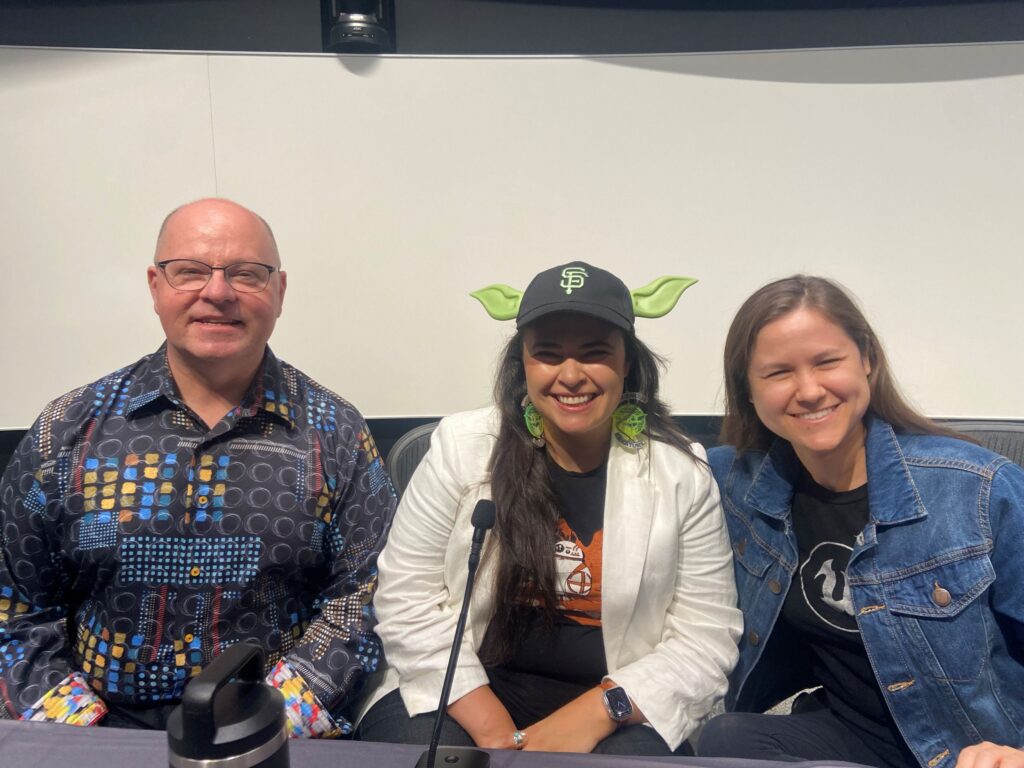
Stanford Law School marked May 4 with a law-meets-lightsabers panel discussion that could only happen when you bring together brilliant legal minds who also happen to be major “Star Wars” nerds.
During “The Law of Star Wars,” professors Mark Lemley and Elizabeth Hidalgo Reese, along with Nari Ely, JD ’16, senior counsel at Epic Games, took a packed room of students through a mini master class on the many legal questions at play in a galaxy far, far away.
“Nari and I have done versions of this talk before at comicons but this is the first time we’ve brought it to Stanford,” said Lemley, the William H. Neukom Professor of Law and director of the Stanford Program in Law, Science and Technology. “We hope was is a useful combination of lighthearted legal issues like tort liability for the lack of guardrails on the Death Star, and more serious issues like the oppression of Ghorman.”
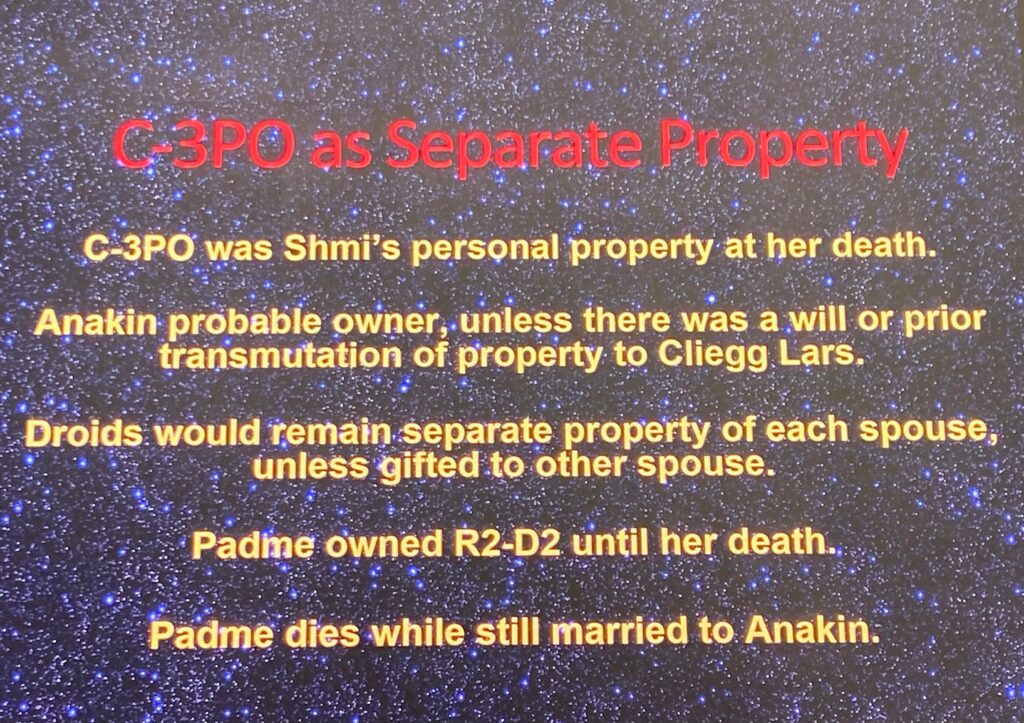
Lemley promised that the presentation would cover “pretty much all of the first-year curriculum,” and the panel delivered that and more: property law, criminal law, constitutional law, federal Indian law, intergalactic species rights, and the surprisingly thorny question of who owns R2-D2 and C-3PO. Also on the docket: Han Solo’s self-defense claim, Death Star liability, and other matters of urgent galactic importance.
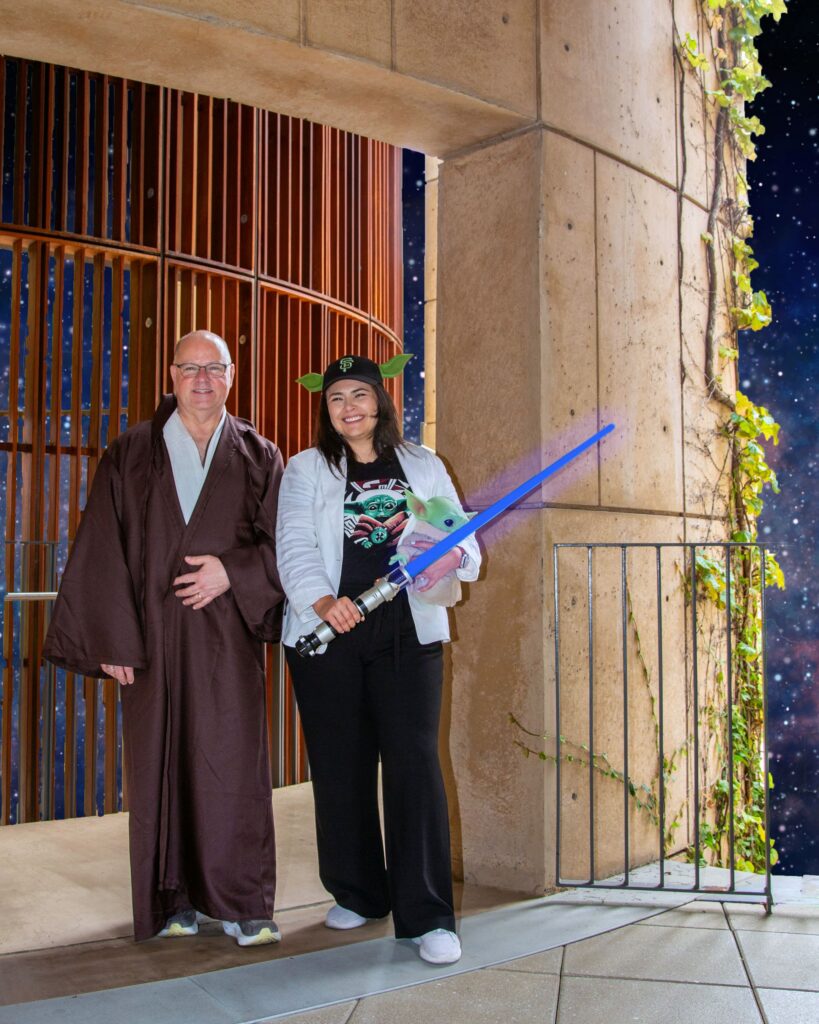
Hidalgo Reese, who teaches federal Indian law, added another layer to the conversation, explaining that Native communities’ appreciation for Star Wars is very much “a thing.” The films’ themes of empire, resistance, oppression, and interconnected spiritual life have made them especially resonant in Indian Country, she said, and even inspired a Navajo-language version of “Episode IV — A New Hope.”
“I am a huge fan of Star Wars, as most of my students notice from the art hanging in my office,” said Hidalgo Reese, associate professor of law. “I’ve always wanted to do something for May the Fourth, and this year one of the 1Ls who noticed the art on my walls asked about it so I finally decided to just make it happen. I know Mark is a fan too and had thought about the legal parallels so it was an obvious collaboration. I hope we make it an annual tradition. It’s fun for the students—and for us—to think about the law in the context of a fictional universe they love. Fiction, especially science fiction, can sometimes cover and provide commentary on important political and legal issues more powerfully and effectively than commentary on reality ever could.”
Ely, a self-described “nerd,” agreed: “Fun, fictional hypotheticals are a great way to think and talk through legal concepts and I hope those who attended had fun and learned something new.”