
Remarks by Richard W. Lyman
“No one accepts the presidency of a major university these days without some profound misgivings both personal and institutional. We all know the reasons – financial problems, the tendency each year for the campus to erupt into a more serious kind of academic civil war than the year before, the consequent loss of public confidence that comes from that, and the embitterment of personal relationships and the atmosphere both on and off the campus.
“But by the same token no one should accept the presidency of a major university without a profound devotion to the university and even to the very idea of the university. To take on this job implies respect for the life of the mind and the love of scholarship and teaching that extends beyond any single time and place.”
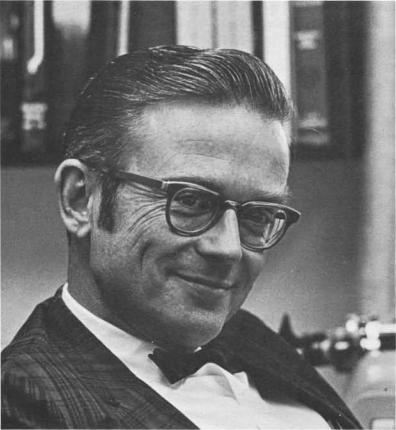
These were the opening remarks of Richard W. Lyman at a press conference on September 25, 1970, the day after Board of Trustees President W. Parmer Fuller III announced his appointment as Stanford”s seventh president. Son of a lawyer and a Phi Beta Kappa graduate of Swarthmore (A.B. 1947), President Lyman holds two advanced degrees from Harvard (M.A. 1948, Ph.D. 1954). He taught at Harvard, Swarthmore, and Washington University, St. Louis, before joining the Stanford faculty as associate professor in 1958. An expert on contemporary British history, he is the author of The First Labour Government, 1924, and has served for many years as a special correspondent for The Economist.
Speaking at the Leadership Conference on campus on October 9, Mr. Lyman called for more cooperation between universities in the area. To implement this sharing he foresaw the possibility of
helicopter service between Berkeley and Stanford (painted blue and gold on one side, Stanford red on the other) “to enable scholars of whatever age and stage in either place to benefit from the special strengths of the other.”
President Lyman ended that speech saying:
Living, learning, and teaching do not remain static. The life of the mind is not an escape from the world, it is the uniquely human opportunity to understand and shape the world…. Let all who would constrain the universities beware, whether they act in the name of patriotism or anti-patriotism, revolution or reaction. Once aroused, we and our friends intend to defend ourselves and the precious heritage of our species. I believe we are at last aroused, and that the results of that awakening will show themselves, sooner rather than later, in this decade of the 1970’s.
Following are the remarks of then Vice-President and Provost Richard W. Lyman to the Law School Board of Visitors on April 16, 1970.
I wasted a fair amount of time, once Bayless had asked me to talk to this distinguished audience, trying to decide which of the multitude of problems besetting universities in general and Stanford in particular I would try to discuss. I say that I wasted this time, because in a terrible way, events nowadays all but dictate what one will talk about in any given set of circumstance . Tonight’s circumstances, as I see them, are these: I am a responsible University official (and also a member of the Stanford faculty), facing an audience of persons who have shown, by their willingness to serve on the Law School Board of Visitors (as well as by many other actions and expressions, variously among you), that they care about Stanford. Given that degree of interest in the institution, and given what has been happening at Stanford for the past fortnight, I would clearly be remiss if I did not try to talk about some of the problems associated with radical protest.
These are not-heaven knows-new subjects, and any hope that I can offer new insights into them must perforce be a slender one. The main themes are by now so well-worn that a genuinely new idea in this field might well be considered a pearl beyond price. Furthermore, I, like hundreds of other people in positions of supposed leadership in higher education across the country and indeed around the world, have been so greatly occupied with the day-to-day conduct of the battle that time and energy for long-range thinking have been about as rare as the aforesaid original ideas. It is perhaps worth emphasizing this point, at risk of sounding apologetic, for it is part of the reason why the response of university administrators to radical protests has not been more effective. We are often charged with an almost masochistic abstention from the initiative; with responding only to pressure, and defensively at that. One reason for this is simply that we are kept on the run to the point where creative response is often rendered impossible by sheer lack of time to sit and think. It i part of the radical strategy to keep the Establishment on the go and to goad it into making mistakes through plain weariness and exasperation. It is only because, contrary to widely held belief, many of the radical revolutionaries are lazy, undisciplined and as chaotic in their conduct of the revolution as they are in their thinking processes that university administrators have fared as well as they have – which isn’t very well, you’ll surely agree.
How to find time to plan or to make sober judgments is just one of many dilemmas we face in trying to cope with campus disruptions. Some of our most profound difficulties I shall not discuss, not because they are unimportant, but because we have little opportunity to resolve them close to home. I refer, of course, to the major causes of our present discontents as a nation: the war and fear of bigger wars, the cruel persistence of poverty amid plenty, the ravaging of our environment, and the inexcusable rashness with which our institutions of government have in some respects been misused of late. We can work for months in the University to persuade people that democracy works and peaceful progress is possible, and have the results undermined by a single episode such a the miraculous conversion of Lt. Duffy’s conviction from premeditated murder to negligent homicide, merely because the Lieutenant’s judges suddenly discovered that the penalties for murder are severe ones, even when the victim of the crime happens to be Viet Namese.
Turning to the more humdrum and less profound, but nonetheless very real problems of the campus being disrupted, the most obvious practical problem is, of course, that of determining the most effective Ievel of response to any particular episode or offender. We seek to respond strongly enough to constitute a deterrent, but not so strongly as to feed the ever-ready flame of martyrdom. The price of martyrdom, unlike the price of just about everything else, has gone down markedly in recent years. That is, it costs less to become a martyr. This is related to the inflation of rhetoric; in a period in which words like “genocide” and “fascism” are thrown around as if they had never had any genuine meaning, it is not surprising that the merest tap on the wrist of a revolutionary nihilist can be converted into persecution and incipient martyrdom, at least to the satisfaction of many who are not themselves revolutionary nihilists. Time after time, here and elsewhere, small campus trouble has exploded into major disruption because of clever and unscrupulous – but effective – exploitation by the radicals of a university disciplinary action.
I’d be the first to admit that too often administrators have used this tactical problem of the appropriate Ievel of response to excuse a limp failure to offer any response whatever. But this does not alter the fact that a genuine dilemma exists. To ask the university president of today to act in relation to organized insurrection by the ground rules used twenty years ago to punish participants in a panty raid is to ignore the realities of our situation. The fact is that the universities are now the scene of a political struggle of great difficulty and intricacy, in which toughness and tenacity are just the first of a long list of qualities needed to prevail.
A second dilemma, closely related to the first, is the sheer difficulty we have in identifying those guilty of carrying protest beyond the rights guaranteed by the United States Constitution, and into the field of violence and coercion of others. This is a very hard thing to get across to anyone who has not confronted the problem at firsthand, although I am sure that you as lawyers will understand it readily enough. Today’s violent dissenter does not identify himself (a point I’ll return to later), and in all conscience we cannot ask University students, faculty, or staff members to mingle in the running, screaming mob of campus and off-campus people that caused the damage at Stanford recently, for purposes of identifying the perpetrators of illegal acts. for the police, they were frustrated by darkness, the fast-moving hit-and-run tactics, and the size of the mob, which, while small by some standards, nevertheless often totaled a couple of hundred. With a very large number of police there could doubtless have been mass arrests, though whether charges would have stood up later is questionable. What is Iess questionable is that mass arrests almost always entail some injury, usually to both sides. And then the whole struggle may well be escalated with no compensating advantage for the cause of good order on the campus. At Harvard and Columbia and Buffalo the lessons have been unpleasant, but cannot simply be overlooked. As long as there is widespread campus sympathy for the alleged objectives of the rioters, even though there is little sympathy for their tactics, the likelihood is very great that an attempt at mass arrests, accompanied by genuine harm to individuals (however much they may, as the saying goes, “have been asking for it”) will only make a bad situation worse.
Another dilemma we face as administrators is this: how can we bring home to our faculties and student bodies that the University is in serious danger of losing its external sources of support because of the general revulsion against campus uproar, and yet not play into the hands of those who would be quick to say, “What did we tell you? The University is not free, but is the slave of the rich and the military-industrial complex.” You and I know that, with rare exceptions, those who support universities are not asking that dissent be stifled; they are only asking that it take forms more compatible with the educational enterprise than the hurling of bricks or the forcible occupation of buildings. But once again, the radical intent is to goad the supporters of universities into demanding curbs on freedom of speech and of assembly, so that the cadres of revolution can then be expanded by recruits from the moderates who will be outraged at such infringements of the hard-won freedoms of a democratic and open society. It is, I submit, equally important for both faculty and students on the one hand, and alumni and other supporters of higher education on the other, to be aware of this crude but effective strategy of polarization, aimed at dividing them from one another, and at seeing the University administration ground to pieces in the ensuing struggle between them.
If the universities are to reverse the disastrous trend towards loss of the public’s confidence, they will do so by a judicious combination of three vital ingredients: effective discipline, including self-discipline; institutional responsiveness; and education.
I’ve already commented on some of the difficulties in establishing discipline. The situation is not entirely grim, however. The use of a court injunction, while of little help in coping with midnight hit-and-run raids, has been effective in stopping the disruption of reading the newspapers, that while these troubles are going on, thousands of students and hundreds of faculty are going about their classes — an even there, the injunction was effective eventually – classes have been held, the library and laboratories have been operating as usual, and even the University administration has managed to do a few normal things such as approving appointments and haggling with each other over fiscal problems (of which we have a great many, and sometime I hope to have an opportunity to talk with you about them…).
Institutional responsiveness can, I know, be the fancy dress costume used to cloak surrender and appeasement to the most outrageous of demands. I, too, grow weary of reading news accounts wherein a complete yielding to pressure is accompanied by hollow administrative croakings about how intolerable were the tactics used by the rioters to produce the capitulation. If one is going to tolerate the intolerable one might at least have the self-respect to pretend otherwise.
But it is painfully true that American universities have stood in need of substantial self-examination and reform. And if they try to undertake those tasks even under conditions of difficulty and disorder, provided they undertake them intelligently and with genuine concern for the fundamentals of the academic enterprise, they are to be commended. As that greatest of British conservatives, Edmund Burke said of 18th Century France, “A state without the means of some change is without the means of its conservation.” The means of change have been greatly improved at Stanford, and while that does not disarm the more extreme radicals, it does make harder their task of radicalizing the uncommitted, or making non-violent radicals collaborate in the use of violence.
Count the achievements of the past three years in this regard. There is now an effective faculty deliberative body, the Senate of the Academic Council, big enough to be representative, small enough to manage a coherent debate. Two years ago there was no such thing.
This year, the entire structure of standing committees in the University has been reformed. They have been streamlined and their purposes clarified. They all include student members – which is no panacea, since the student members of committees have difficulty remaining in close and convincing touch with their constituents, but it is a help. Student committee members have generally given a very good account of themselves; often the very fact that they do come to the committee unburdened by a surfeit of previous experience is an asset. It makes them able to ask important questions about things that jaded faculty members long since took for granted.
The Board of Trustees, as you know, has undertaken revisions and improvements of its own practices and composition. These are certainly far from radical. Most universities have had elected alumni trustees for years, and even the provision that half of these must be 35 years old or less is not likely to convert the Stanford Board of Trustees into a nursery school. There remains much uncertainty and confusion as to the proper functions and purposes of the Board – or even as to its actual functioning today. To the extent that it can still plausibly be maintained that the Trustees “run the University,” the Board remains vulnerable to the attacks of the would-be wreckers. I’m sure that it must be the most unkindest cut of all for a Trustee to hear himself charged with responsibility for the day-to-day administrative management of the place when first of all he isn’t guilty and second his accusers are often those who are doing the most to jeopardize the long-run survival of the University – for which the Trustee does feel a responsibility.
Finally, we have developed new institutional devices to deal with new problems, or new aspects of old problems. A University Ombudsman has been appointed, to provide that independent and unfettered investigation of bureaucratic muddle without which the citizen, be he student or not, so often must flounder in frustration. (The fact that the first Ombudsman happens also to be a Professor of Psychiatry is, I assure you, wholly coincidental.)
Various staff members have been appointed to assist in matters pertaining to disadvantaged minorities; a search is currently underway for a person to devise and administer an external Affirmative Action program.
The Stanford Judicial Council, with a Chairman from the Law faculty and otherwise an even division between faculty and student members, is also less than two years old. While in my judgment it has sometimes been surprisingly lenient in its treatment of those who disrupt the University, it has certainly worked conscientiously, often against formidable odds, and it has imposed more meaningful penalties than most non-campus people realize. Its legislative counterpart, the Student Conduct Legislative Council, was totally frustrated in its first year of operation by internal disagreements and the pressures of last year’s events, but it has now begun to function, and there are grounds for hoping that we may before long emerge from our present state of having to live under interim regulations promulgated by the President, and can have a code of campus conduct that is the more authoritative for having been the product of a formal deliberative body charged with this specific responsibility.
The catalogue could be extended, but only at intolerable risk to your patience. Besides, I cannot in all conscience end on a wholly cheerful note. The unbridled and infantile ferocity of the past two weeks represents too ominous a threat for that. Furthermore it would, I believe be a mistake to imagine that what has happened in this most recent outbreak does not have roots in our not quite so recent past.
Many would argue that a crucial turning point came at Stanford with the forcible occupation of Encina Hall, the rifiling of files there (an subsequent publication of confidential materials from them), and the summoning of massive police power to remove the demonstrators from the building.
Speaking for myself, I wonder if the more crucial shift did not come during the earlier, supposedly peaceful sit-in at the Electronics Labs. True, that was a considerably milder occupation than Encina, and only desks, not confidential files, were rifled, for whatever comfort that is worth. But to me the saddest and most ominous feature of the AEL sit-in was the shift from responsible to irresponsible dissent.
By that I do not mean a change in dissent expressed always within the law, to lawless dissent. Rather, I mean a shift from dissent which, when it transgressed the law, was willing and indeed anxious to bear witness by accepting the consequences, to anonymous, self-protecting, law-evading dissent. The AEL sitters-in refused almost to a man to identify themselves. By now, there seems almost a quaintness about the mere notion that anyone would expect participants in an illegal protest to stand publicly by the convictions that led them to break the law. That, I believe, is a fundamental and tragic deterioration.
It is also fraught with revolutionary implications, as some (though not all) who practice the new style intend. For by refusing to take any consequence of your misdeeds, you are indeed saying that the society and the institutions that would provide those consequences are corrupt beyond redemption. You are saying that the system must be subverted, eroded, terrorized, and coerced, if justice is ever to prevail. And in so saying, you are subverting and eroding your own capacity to live a constructive life in a free society.
And this is where my third point – education – comes in. To those old enough to remember totalitarianism at its most virulent, in Hitlerite Germany; to those informed enough to perceive the world of difference between the individual’s lot in China or the Soviet Union or the South African Republic and in the United States, whatever our shortcomings; to those possessed of enough perspective to know that freedom begins in the willingness of each individual to recognize the right of others to differ from him, over things that matter, and that this willingness has been a rare phenomenon in the long sweep of man’s history; to all such, the dreary, doctrinaire fanaticism of the hard core revolutionary Left is really more frightening than their rocks or their dynamite tragedies or their toying with terrorist tactics.
One of the most depressing experiences of the past couple of years has been to listen to those interminable radical meetings, full of atavistic crudity, of mind and expression alike. The intellectual poverty of their arguments has been more than a match for the unimaginative arrogance of their subsequent behavior. it is food for thought, not only for lawyers but for all of us, that anyone can do well enough in American schools and universities to constitute part of the supposed intellectual elite of this nation, yet have such manifest and shocking shortcomings as thinking men and women. Thank heaven they are few; pray heaven they remain so.
If that prayer is to be answered, we may have to return once again to the America of which Burke said:
In no country perhaps in the world is the law so general a study… This study renders men acute, inquisitive, dexterous, prompt in attack, ready in defence, full of resources.. They augur misgovernment at a distance, and snuff the approach of tyranny in every tainted breeze.
The American Law School has no higher duty than to help protect the American University from the tainted breezes of the new totalitarianism. In this, the Stanford Law School has performed prodigies. These include the devoted service, in jobs that are thankless if ever a job was, of law professors as chairmen of the Stanford Judicial Council – Jack Friedenthal last year and Marc Franklin now. They also include advice, freely proferred, gladly listened to, often taken , from a number of other Law School faculty members. They include the eloquently successful mission of a young member of the Law faculty last year at the height of the Encina occupation, a wholly voluntary mission, I hasten to add, which helped persuade demonstrators not to take on the police in combat that ugly morning.
But they include something more: namely every effective effort that is made by Law School people, whether faculty, administrators, or students, to make the law a living, adaptable, socially responsive instrument. There is an anti-legalism that marches hand-in-hand with the anti-intellectualism I have been decrying. Those who wish to discredit the law these days, enjoy no lack of ammunition. It is all the more important that able members of a prominent law faculty be alert to opportunities-not to defend the courts and the law as they are, but to point out right directions for their improvement and reform. When Herb Packer, with characteristic force and clarity, attacks the obsoleteness of many contemporary uses of the criminal sanction; when Tony Amsterdam takes on the Establishment, including the legal Establishment, on behalf of defendants who, whatever their sins and provocations, appear to have received unequal treatment under the law; when Paul Brest works to keep the law a constructive force in the long struggle for racial justice, these men are not, as some would argue, threatening the foundations of law and order. They are shoring up those foundations, and providing the basis for renewed faith in the capacity of “the system” to renew itself without resort to the barricades. That faith is in acutely short supply in many sectors of American society. To rely on the majesty of the law is not and never was enough; to buttress its humanity is always and never more so than now the task of the hour.