The Stanford Law Friends Who Are Reimagining Higher Education
Through nonprofit Reach University, four alumni are helping working adults turn their jobs into degrees
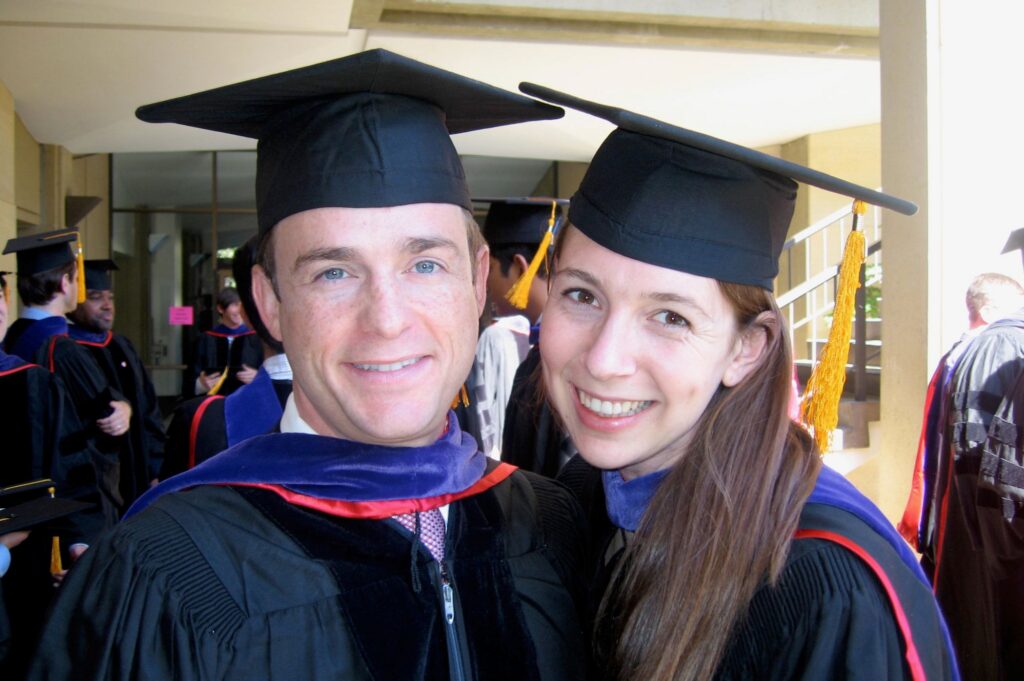
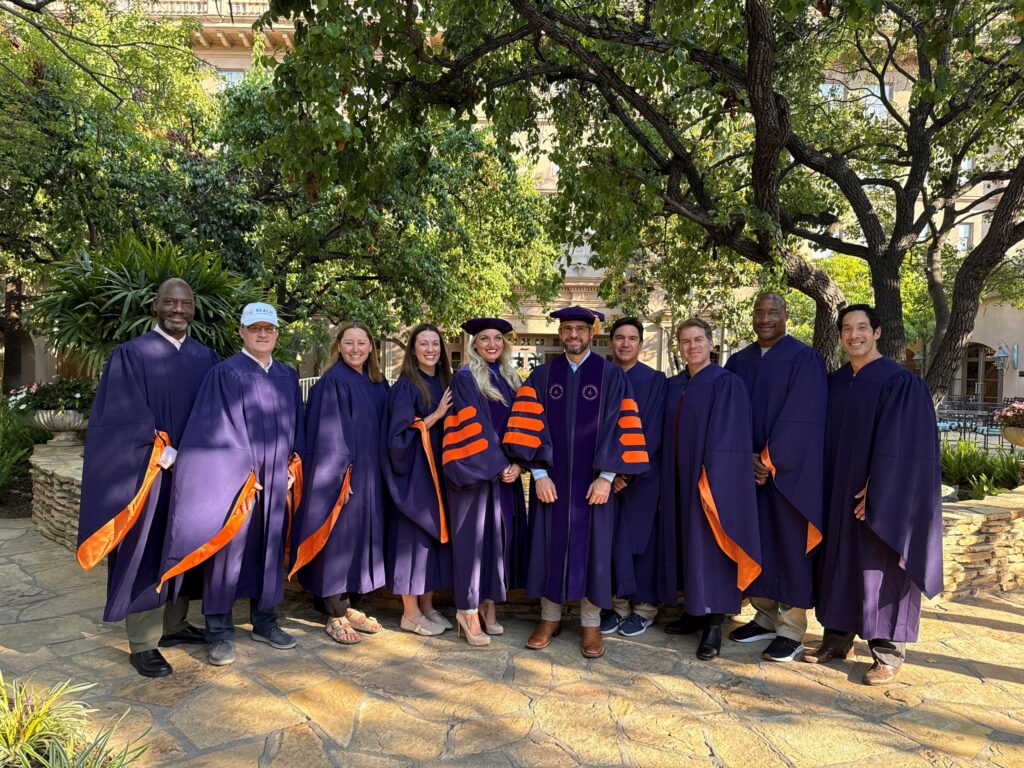
By the time they graduated from Stanford Law School in 2007, Joe E. Ross, Afam Onyema, Ari Simon, and Melanie Wachtell Stinnett had formed a close bond. Ross and Onyema met in their 1L section. Three of the four worked together on the Stanford Law Review. All were drawn to mission-driven work. Wachtell Stinnett even babysat for Ross’ children.
Nearly two decades later, the friends who found one another in academia have reunited to push higher education in a radically new direction, borrowing from an age-old model of workforce training: apprenticeship. Through Reach University, the accredited nonprofit Ross helped launch in 2020, they are building not just a new kind of college, but a broader movement at a moment of growing debate about the future of higher education.
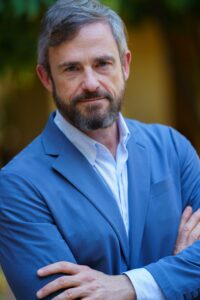
Ross leads Reach University as president and CEO, Simon and Onyema serve on the board, and Wachtell Stinnett advises the university as a strategic consultant.
Reach’s premise is simple: for many working adults, especially those already serving schools and hospitals, a college degree—and the career advancement it brings—should not require leaving work, taking on debt, or trying to fit into an on-campus model that was never built for them. It should, Ross says, “meet them where they are,” count workplace experience as for-credit learning, and create rigorous, affordable pathways into professions communities urgently need.
In practice, that means students stay in paid jobs while earning credit for the work they are already doing, then join online, discussion-based seminars a few nights a week. The workplace functions as a kind of campus. Colleagues become classmates. And the curriculum, Ross says, is designed to be rigorous, with liberal arts at its core rather than treated as an afterthought.

Reach’s tagline is “turn jobs into degrees,” and its leaders say the idea enjoys broad cross-partisan appeal. “People across the political spectrum support the idea of apprenticeship,” Ross says.
Reach started in 2020 with 68 candidates in rural Louisiana. It now serves more than 3,400 students across more than nine states, with especially strong roots in Louisiana, Alabama, Arkansas, Texas, and California. It began with teacher credentialing, and it is now expanding into healthcare, another field with pressing labor shortages and blocked pathways into stable, community-serving careers.
“This is not just ‘college online,’” stresses Ross. “When you think of an online degree, you think of an asynchronous message-board experience. That’s not what we’re doing. The workplace is actually a campus. In many ways, we try to make it more rigorous than traditional higher education is.”
“Sweat, not Debt”
Perhaps most remarkable: Reach was designed around a student cost of about $75 a month out of pocket with the rest covered through Pell Grants, workforce dollars, and other forms of support.
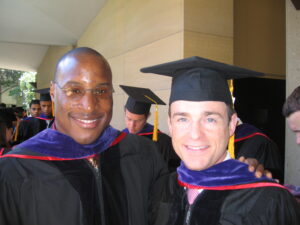
“Apprenticeship is supposed to come with sweat, not debt,” says board member Onyema who co-founded and leads the GEANCO Foundation, a Nigeria-focused nonprofit working in health care and girls’ education.
The payoff seems clear in the stories of Reach’s students. Ross points to Nichole Menard in rural Louisiana, a school aide and single mother whose husband had died of cancer. Her principal urged her to look at Reach, though at first she assumed it sounded too good to be true. She enrolled, found the work challenging, and graduated. She then became a fifth grade teacher, tripled her salary, and is now on a path toward school leadership. Similarly, Arlie Price in Russellville, Arkansas, who had left college 22 years earlier to care for her family, was able to finish her degree through Reach, become a teacher, and double her salary.
“This is not a small project,” Wachtell Stinnett stresses. “This is a movement. And if the model spreads like we envision, it could begin to change the face of higher education in the United States.”
In other words, Reach doesn’t want to corner a market. It wants to create one by building a network of early adopters. That is where its National Center for the Apprenticeship Degree (NCAD) comes in. The center provides assistance to other colleges, universities, and other entities seeking to build similar programs, and Reach is already working with a growing network of institutions in different stages of adoption.
Stanford Law Roots
After law school, Ross moved through startups, education technology, nonprofit leadership, and public service, including a seat on the San Mateo County Board of Education. He jokes that his career began as a stubborn effort to avoid practicing law. But education kept pulling him back. Running afterschool programs in the Bay Area, he saw firsthand how hard it was to recruit people who not only loved children but could teach them well.
That’s when the idea for Reach started percolating. But arguably, Ross says, the foundations were built in law school. The four friends say Stanford Law gave them not just lasting ties, but the confidence, standards, and imagination to try something ambitious.
“Nobody was shuttling us into big law,” says Wachtell Stinnett. “If it wasn’t what you wanted, it wasn’t pushed on you.” Just as important, she adds, the school’s “extremely high standards of excellence and quality” left her feeling well prepared.
And then there is the friendship itself. “It is a big part of why this works,” Onyema says. “I wouldn’t have done this if it was with anyone else.”