
Top of Their Game
Class of 2015 Sports Fans Now Share in the Thrill as Team Counsel
January 5, 2025. It’s icy and the wind is gusting at Lambeau Field in Green Bay, Wisconsin, home of the National Football League’s Green Bay Packers. The score is Chicago Bears 21, Packers 22, with two seconds left in the game. The Bears haven’t won in Green Bay since 2015, but they have the ball. Their kicker trots out, his breath steaming. His 51-yard boot is up … and it’s good—and the Bears snap the streak!
It’s a classic Big Moment—the kind athletes and fans dream about. Bears executive Krista Whitaker, JD ’15, watched from the press box, screaming on the inside but dutifully observing the no-cheering rule. Back at her desk Monday morning, as the organization happily buzzed around her, she already was focused on her to-do list. Then it hit her: “I went, ‘Wait, I should be celebrating. This is why I chose sports. This is the fun part!’”
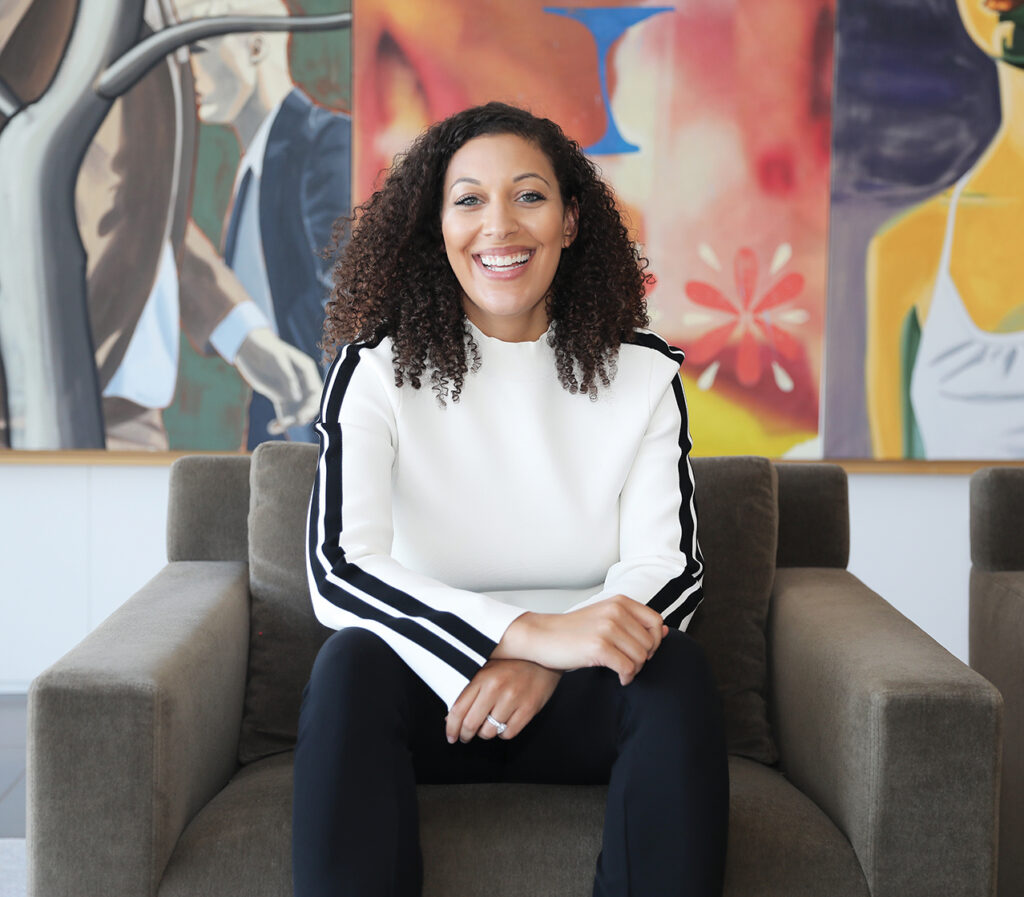
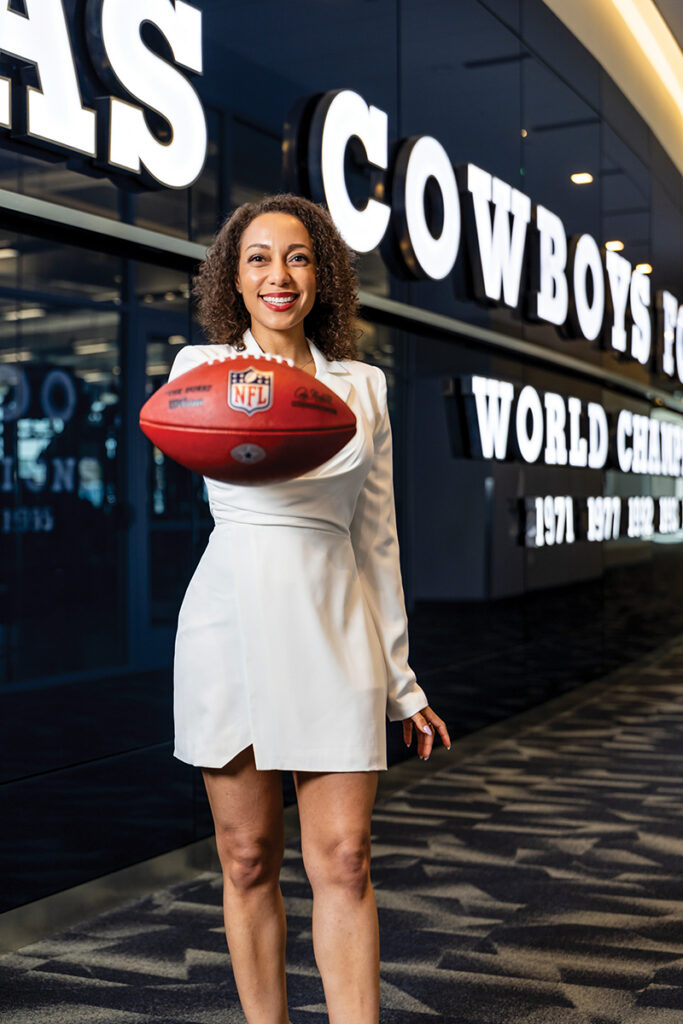
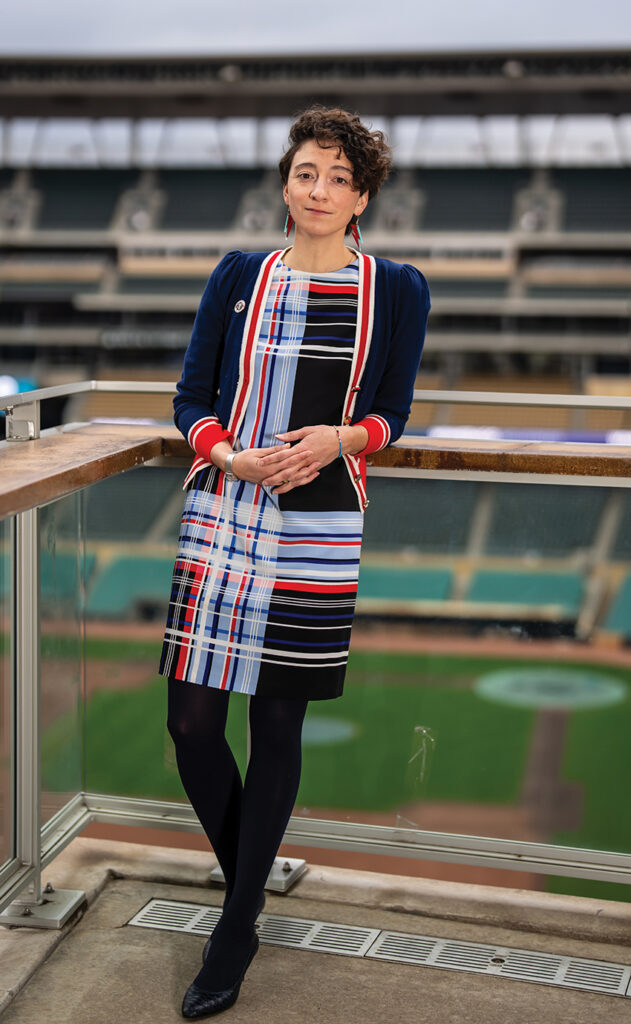
Whitaker is chief legal officer and executive vice president of legal and business affairs for the Bears, and she is one of more than half a dozen Stanford Law alumni who play offense and defense as senior legal officers for professional sports teams. Remarkably, she’s one of three women from the same class who have this role. Whitaker; Mari Guttman, JD ’15, senior vice president and general counsel for Major League Baseball’s Minnesota Twins; and Kaleisha Stuart, JD ’15, deputy general counsel of the NFL’s Dallas Cowboys, were friends in law school and remain close to this day. All say the collaborative ethos of Stanford Law, its innovative sports law classes, and the Organizations and Transactions Clinic that they took together have helped them thrive in what has become a booming field.
Team counsel’s big wins don’t tend to involve victory dances or Gatorade showers. Mostly, it is classic general counsel work: drafting and negotiating contracts, licensing rights for events or stadium giveaways, resolving sticky personnel matters, and tending to increasingly complex facilities issues. In the case of the Cowboys’ Stuart, who’s been with the team for 10 years, her office also handles all the legal work for the businesses of Jerry Jones and family, who own the team. “Some days I’m a real estate lawyer. Some days I focus on energy and oil and gas work,” Stuart says. The Cowboys also host concerts by major performers, such as Taylor Swift and Bad Bunny, and have a gym business and a co-working space. Stuart also works on contracts for the team’s high-profile cheerleaders, who, for example, have appeared on the Netflix series America’s Sweethearts.
These lawyers agree that when it comes to huge challenges like negotiating a new stadium, as Whitaker is doing now, or defending their team from all manner of controversies that can result passionate players and fans heavily invested in a game’s outcome, they possess a bring-it-on tenacity.
The one thing these lawyers don’t do much is negotiate player agreements. Guttman says she’s often asked this question but explains that player contracts in major American professional sports leagues are pre-negotiated and governed under each league’s collective bargaining agreement (CBA), which dictates player and team rights and responsibilities. Important items such as player salary, bonus, and contract duration are typically negotiated between the team’s general manager and baseball operations staff and the player’s agent.
However, team counsel enter the virtual locker room when an issue morphs into one that impacts the team brand. That might involve not only players but also coaches or other employees. For example, the Houston Astros fired two managers after MLB exposed an elaborate sign-stealing system some Astro players admitted using during the 2017 and 2018 baseball seasons. Or it could be contract conflicts, such as when a highly coveted college draft pick arrives in the pros with an active name, image, and likeness (NIL) licensing deal with provisions that conflict with the league CBA or the pro team’s partnerships.
The three lawyers say they arrived at Stanford Law as hardcore sports fans. Ashlee Pinto Zurita, JD ’15, senior counsel for Builders Vision, knew them all and recalls, “They demonstrated a level of grit and commitment to sports that I found remarkable.”
Whitaker hails from Fort Worth, Texas, where she played basketball in high school and narrowly missed walking on to the team at Texas A&M. Stuart’s love for the Cowboys and the NBA Spurs began in her hometown of San Antonio (she also attended Texas A&M but didn’t know Whitaker there). Guttman, a Chicago native, grew up rooting for the Twins’ divisional rival, the Chicago White Sox, and Michael Jordan’s Bulls. She attended Grinnell College in Iowa, and she swam and played water polo.
Laying the groundwork
Stanford law alums have long worked at the highest level of sports, including three who served as presidents of the United States Golf Association. And in the 1980s, sports became part of the law school curriculum. Students flocked to courses by William B. Gould IV, Charles A. Beardsley Professor of Law, emeritus, who brought his labor law expertise to the idiosyncrasies of athletics. Hannah Gordon, JD ’08, was a student of Gould’s who became general counsel for the San Francisco 49ers before launching a boutique sports and entertainment consultancy. Gordon, who also taught Advanced Legal Writing: Drafting and Negotiating Sports Law Transactions as a lecturer in law, remembers Whitaker and Guttman: “They were star students, and their success is absolutely no surprise.” Gordon met Stuart after a friend at Nike, where Stuart had an externship, told Gordon, “You have to look out for this woman.”
Stuart was working in the Dallas office of Jones Day in 2016, when the Cowboys began expanding their legal team, and she joined as associate counsel. She says she benefited from Professor Jay Mitchell’s (BA ’80) Organizations and Transactions Clinic. “We were doing contract drafting, creating tools that nonprofit organizations can use to enhance their operations, meeting with boards,” she recalls. “It was a way for us to learn about being business lawyers, which is what we are.”
Both Whitaker and Guttman began their legal careers at major firms. Whitaker spent more than five years at Proskauer Rose, where one of her clients was the National Basketball Association. In 2021, she joined the NBA’s Miami Heat team and eventually rose to vice president and associate general counsel. Several years later, she jumped to the NFL and the Chicago Bears, as chief legal officer.
Guttman was a mid-level associate at Skadden, Arps, Slate, Meagher & Flom when Whitaker, then at Proskauer Rose, passed along the news that the NBA’s Memphis Grizzlies were hiring. A few months later, she moved to Tennessee to become the team’s associate counsel and special advisor to business operations. Two early experiences stand out for her. First, the Grizzlies supported a voter registration effort. “You’re going to have the attention of a lot of people, and you can do good with it,” Guttman says.
The second was when she helped develop the team’s first “City Edition” Nike jersey, which required extensive negotiations with multiple parties, including obtaining licensing rights from the estate of Memphis music legend Isaac Hayes as well as the iconic Stax Records. Guttman ushered it through a gauntlet of sign-offs from the team, Nike, and the NBA.
Like Whitaker, Guttman changed not only teams but sports when she joined the Minnesota Twins in 2021. One immediate difference? In baseball there are a large number of foreign-born players and staff; Guttman notes that all MLB teams, the league, and their respective outside immigration counsel, have had to stay abreast of changes in federal policies that impact holders of P-1A visas, designed specifically for pro athletes and support staff.
Whitaker notes the NFL centralizes its revenue streams by negotiating all media rights, while NBA teams (and MLB teams) typically secure their own regional media deals and rely more heavily on local marketing and community engagement to drive ticket sales and local revenue. Also, Whitaker adds that when she first joined the Bears she was amazed at the sheer number of people and amount of gear and supplies that travel with an NFL team.
Gould says he’s pleased to see Stanford alumni snapping up prominent legal positions as the sports industry continues to expand. Among the growth drivers: more women’s professional sports teams; an increase in litigation involving college athletics; complex sponsorship and media deals at the professional and college levels; and NIL contracts for college athletes—projected to total more than $1.6 billion in 2024-25, according to industry analyst Opendorse. “We used to call college sports the ‘amateur side,’” Gould says with a laugh. “You can’t look at it that way anymore.”
Gordon also points out that “even just in the last five years, you’ve had an explosion in sports as an asset class, which has driven up work for lawyers.” As Stuart can attest, many teams today develop stadium and adjacent properties not only as home fields or arenas but as destinations with hotels, shopping, restaurants, and other branded businesses. “Well-known firms are now claiming they have a sports practice,” says Mitchell.
A changing field
The explosive growth in sports law has also spurred a need for attention to sports betting. In 2018, the U.S. Supreme Court decision in Murphy v. NCAA overturned a 1992 federal law that prohibited states (except for Nevada) from authorizing or regulating sports betting. As a result, most states now allow sports betting—with much of it taking place online to the tune of tens of billions of dollars annually.
Gambling can reinforce fan loyalty and drive media consumption, but it can also threaten a game’s integrity. All major professional leagues prohibit players from betting on their own team, and some go further. The NFL bans players from betting on any sport in team facilities or during team travel. Several highprofile cases in 2025 sent shivers through every pro sports legal office. In October, Miami Heat guard Terry Rozier was arrested along with other individuals for allegedly taking part in illegal sports betting and even faking injuries to limit his playing time and benefit gamblers who wager on specific scenarios called proposition or prop betting. He has pleaded not guilty. In another case, two MLB pitchers are facing criminal charges for allegedly agreeing to throw a specific kind of pitch in certain situations, also to benefit prop bettors.
Despite the job’s challenges, Whitaker says she values the opportunity to play a role that is almost like a small-town lawyer, a generalist but also a trusted advisor and the conscience of a team. When concerns that could impact team employees arise, she says, “It’s important to ask: Are we checking on our people?”
Within the Cowboys organization, Stuart has been a driving force in creating the company’s first employee resource group, focused on supporting Black employees while offering educational opportunities for all employees. The effort has been so successful, she says, that the Cowboys are adding similar resources for women and Latino employees. For her role, Stuart won the 2024 DFW Association of Corporate Counsel Award for Achievement in Diversity and Inclusion. When she was hired in 2016, Stuart was the only Black female legal executive at an NFL team. Today, she leads an informal network of 14 such women who have a quarterly call and who get together at the Sports Lawyers Association (SLA) Annual Conference.
Guttman, Stuart, and Whitaker have a chance to catch up at least once a year at the SLA meetings. When they do, they’re likely to run into other Stanford Law alums, including David Koeninger, JD ’98, chief legal officer of the NFL’s Arizona Cardinals; Amy Tovar, JD ’03 (BA ’99), chief legal officer of the MLB’s San Francisco Giants; and Hewan Teshome, JD ’08, SVP and general counsel of the National Hockey League’s Seattle Kraken.
Ed Policy, JD ’96, used to attend SLA as the Green Bay Packers’ COO and general counsel, but he became the Packers’ president and CEO in July 2025. Was that January game result at Lambeau easier to take knowing his legal counterpart for the Bears was a fellow Stanford Law grad? “Highly doubtful,” Whitaker says, laughing. SL