
Birthright Citizenship and the Future of the Fourteenth Amendment
Stanford’s Fred Smith examines the Supreme Court’s birthright citizenship decision, its historical roots in the Fourteenth Amendment, and the questions the Court leaves unresolved.
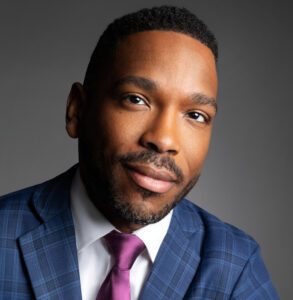
The Fourteenth Amendment opens with a simple constitutional promise: that anyone born in the United States is a citizen. In a closely divided Supreme Court decision, that understanding of birthright citizenship is once again tested through competing readings of text, history, and precedent.
In this episode of Stanford Legal, Professor Fred Smith, a leading scholar of the federal courts, joins Pam Karlan to examine the Court’s ruling in Trump v. Barbara and the history behind the Citizenship Clause. The discussion traces the Clause to Dred Scott v. Sandford, which denied citizenship to Black Americans, and to the Reconstruction-era effort to overturn it, as well as United States v. Wong Kim Ark, long understood to affirm birthright citizenship for those born on U.S. soil.
The discussion highlights deeper disagreements over how that history should shape constitutional meaning today. Smith and Karlan explore tensions between originalist approaches, reliance on precedent, and questions about congressional authority over citizenship. At stake is not only the meaning of the Fourteenth Amendment, but the broader question of who the Constitution recognizes as part of the American political community—and who gets to decide.
This episode originally aired on July 6, 2026.
Fred Smith: This would have been a moment and should have been a moment, in my opinion, of a full-throated endorsement of, well, just frankly, of the Constitution. This is, when it comes to text, when it comes to original public meaning, this seems like one of the clearest cases that one could conceive of.
Pam Karlan: This is Stanford Legal, where we look at the cases, questions, conflicts, and legal stories that affect us all every day. I’m Pam Karlan. Please subscribe or follow this feed on your favorite podcast app. That way you’ll have access to all our new episodes as soon as they’re available.
Well, I think throughout this term at the Supreme Court, we’ve been waiting for the decision that came down today that I’m going to discuss with my colleague, Fred Smith.
Fred is a professor here at the law school. He focuses on issues of federal courts and issues of civil rights more generally, and also focuses on the kind of historical context behind a lot of the most important constitutional law decisions and the like. So welcome to the show, Fred.
Fred Smith: It’s an absolute pleasure to be here.
Pam Karlan: So today the Supreme Court came down with its decision in the Trump against Barbara case. This is a case that started out in a sense as a fed courts case about nationwide injunctions, but then turned into a case really about what the first sentence of the Fourteenth Amendment means. That first sentence reads that all persons born or naturalized in the United States and subject to the jurisdiction thereof are citizens of the United States and citizens of the state where they resided.
And I think maybe the place for us to start, Fred, is with why we have that sentence in the Fourteenth Amendment in the first place.
Fred Smith: Sure, and all of the justices seem to agree on how it got there, which is Dred Scott, right? Likely the most notorious decision in the history of the Supreme Court, and in particular, Dred Scott’s ruling that because the African race had no rights that the white man was bound to respect, at the founding, that people of African heritage categorically could not be citizens.
And so when it came to the post-Civil War era, it was important not only to eradicate chattel slavery through the Thirteenth Amendment, and it was important not only to note that people had equal protection under the law, but the very first line of the amendment is birthright citizenship attempting to overturn Dred Scott.
Pam Karlan: Right, and I think the assumption since then has been that people who were born in the United States were citizens from birth unless they fell into one of a couple of very small categories.
So for example, children of diplomats who are born in the United States, if your father is the ambassador from, you know, Great Britain and you’re born here, you’re not a citizen. Children of invaders were not citizens. And then there was this kind of controversial question about whether people born in the United States who were also members of Indian tribes were citizens or not.
But other than that, the assumption was if you were born here, you were a citizen, and I think that’s been the assumption really until quite recently when Donald Trump issued an executive order that purported to say that from that date forward, anyone born in the United States who, who did not have a parent who was either a U.S. citizen or a legal permanent resident, that is, a kind of green card holder, was not a citizen.
So if you were born in the United States and your parents were undocumented, you’re not a citizen. If you were born in the United States and your parents were graduate students, say, at Stanford who were here on visas, student visas, you are not a citizen or the like. Where did that idea come from?
Fred Smith: So the court today, the majority tells a quite compelling historical story.
Part of that story goes back actually all the way to the early 1600s, an English case, called Calvin’s Case, which was about an individual who was born in Scotland, and the question was whether or not he was a subject of the English crown and entitled to the benefits that flowed from being said subject.
And this idea that one is a citizen of the place where they are born in, is part of the English common law tradition that’s picked up by the United States later. And we know this in part because of an opinion from the attorney general during the Civil War, which is cited by today’s majority opinion.
It relies in part on Calvin’s Case for the proposition that this is just, this has long been the common law rule, both in England and in the United States. And the majority cites to a number of senators when it came to the adoption of the Fourteenth Amendment who expressly stated that they were attempting to simply ratify what was already the law before Dred Scott, right?
And so this has long been a deep tradition, and I agree that until quite recently, not only was this the widely shared legal understanding in the most conventional sense, but it’s kind of become a part of our constitutional character.
Pam Karlan: Yes, and this kind of English common law tradition stands in some contrast to the continental tradition, which was one of what was called jus sanguinis, that is citizenship came by blood.
And earlier when you were talking about the notorious Dred Scott case—Dred Scott was essentially trying to take a jus sanguinis view of citizenship, right? If you had to have white blood to be a citizen, otherwise you couldn’t be a citizen. The Fourteenth Amendment really is a kind of repudiation of that idea and a kind of resuscitation isn’t quite right, but a kind of recommitment to the idea of jus soli.
Where you’re born determines your citizenship. If you’re born here, you’re a U.S. citizen. And I guess one of the things I thought was really quite striking about today’s decision was essentially on the constitutional question, it was five to four.
Fred Smith: Yes, that is very striking. So I mean, part of Kavanaugh’s point, which I’m sympathetic to, is the idea that if you can resolve it on the statutory grounds, why approach the…why go to the Constitution?
But this would have been a moment, and should have been a moment in my opinion of a full-throated endorsement, of, well just frankly, of the Constitution. I mean, this is, when it comes to text, when it comes to original public meaning, this seems like one of the clearest cases that one could conceive of, and it’s backed, of course, by precedent, right?
So even if one even had some questions about…
Pam Karlan: Yes, so…
Fred Smith: …about the text.
Pam Karlan: Yes, so I mean, there the precedent, I think, you know, obviously the biggest precedent in U.S. law is Wong Kim Ark, which was about a young man who was born in the United States to Chinese parents who were subjects of the Emperor of China, who were ineligible because of racist immigration laws ever to become citizens, and yet the Supreme Court held he was a citizen of the United States because he was born here.
But the precedent in Wong Kim Ark is he’s a citizen of the United States regardless of whether his parents could be citizens of the United States because he was born here. And Justice Kavanaugh’s concurrence and dissent essentially says, “Well, in 1940, when Congress passed a statute, which uses the same words that the Fourteenth Amendment uses, they understood Wong Kim Ark to mean somebody would be a citizen if they were born here.”
And he says, “But, you know, times have changed.” And the times have changed thing, also in Justice Alito’s opinion, seems to be, well now we have a lot of people who are in the country who are undocumented, and they shouldn’t be here at all, so why should children born to them be citizens of the United States?
And I just find that a kind of puzzling argument.
Fred Smith: Yes, no…it’s quite a tricky opinion, right? Because… all right, so firstly, as noted, he begins with this, this can be resolved on statutory grounds. It should have ended there, right? So he could have ended his opinion there, too for that exact same reason, right?
Pam Karlan: Yes.
Fred Smith: And then he moves on to say, well, but I don’t think that Wong Kim got the Fourteenth Amendment right? And that this was a closed set as such. And then to your point, right, but the other… His opinion about the statutory point depends on what the longstanding understanding of Wong Kim Ark was.
So there’s quite a number of moves, and it probably would’ve been wiser if he believed that the statutory opinion resolved it for him to have simply said that.
Pam Karlan: He almost seems to be inviting Congress…almost seems to be inviting there to be a political battle over who should be a U.S. citizen, because obviously if you kind of add him to the three dissenters, Justice Alito, Justice Thomas, and Justice Gorsuch, you’re like right on the precipice of arguments about whether the Constitution actually provides for birthright citizenship, or whether Congress or it, for the dissenters, seemingly even the president, can just kind of decide.
Fred Smith: Yes, that’s right.
I mean, and he says that he thinks that this is something that Congress could overturn. Whether or not he could get enough votes on that question. Well, we know he couldn’t today because the…
Pam Karlan: Right. But if it’s five to four, it starts to look Roe versus Wade-ish.
Fred Smith: Sure, right, where just with one change.
Pam Karlan: This should be a litmus test for judges or, you know, nominations. It turns something that I think would’ve been thought really outside the box. You know…I think the old, Jack Balkan line is this has gone from something that’s off the wall to on the wall, as they say.
Fred Smith: Sure. That has certainly happened. You know, I think if there’s an opinion that surprises me at least as much, if not more, than Justice Kavanaugh’s… actually multiple of these opinions surprise me. But I’m going to go to Gorsuch. I’ll go to Gorsuch because he says… he essentially, he doesn’t doubt the correctness of Wong Kim Ark.
He notes that if this were a case that was brought as an as-applied challenge instead of being brought as a facial challenge, then maybe this comes out differently. He suggests that it’s kind of inconceivable that under Wong Kim Ark, that there should be people who what about people who wouldn’t be domiciled anywhere, right?
And that’s a conclusion that would flow from the government’s position, and it doesn’t make sense. And yet despite saying all of that, he simultaneously agrees with Justice Thomas about the original public meaning of the Fourteenth Amendment, right? So there’s this way in which his view of what Wong Kim Ark requires and his view of original public meaning, they conflict, and usually when that happens, you resolve them in some way, you pick.
And his opinions don’t land on a clear resolution.
Pam Karlan: Yes. I mean, I think maybe we should step back one step and sort of lay out how many opinions there were here.
Fred Smith: Sure.
Pam Karlan: So there’s the chief justice’s opinion, which is an opinion for the court. It’s got five votes behind it. Then there’s a concurrence from Justice Jackson, part of which Justice Sotomayor joins, that’s a response to Justice Thomas’s dissent.
Fred Smith: Right.
Pam Karlan: Then there’s Justice Kavanaugh’s opinion concurring in the judgment, but on statutory grounds and suggesting that as a constitutional matter, Congress might be free to restrict birthright citizenship beyond the kind of Wong Kim Ark categories of diplomats, invaders, and tribal members. Then there are three dissents…Justice Thomas’s dissent I think is joined by Justice Alito…
Fred Smith: …joined by Justice Gorsuch.
Pam Karlan: Justice Gorsuch. Justice Alito has a dissent, and then Justice Gorsuch has a dissent. So there’s a lot of writing here to kind of wade through, although the bottom line for now is quite clear.
One of the things that’s always kind of puzzled me, and I wonder what you think about this, is the executive order, which is what’s actually being challenged here, had three pieces to it that I thought were sort of interesting and tricky in a way, right? One was that it was just prospective.
It was direct. It was not saying that people who had been born in the United States to undocumented parents or to parents who were temporarily here were not citizens, but just going forward from a point in the future. A second thing about it was that it purported to deal with two groups of people, right?
One was people whose parents were not legally present in the United States at all—undocumented people. But the other was people who were legally present in the United States. Some of them, for example, graduate students or people who are here on the specialized visas that often go to technical workers or to other folks who are in the United States for labor market reasons, might be here for years.
Fred Smith: Right.
Pam Karlan: I mean, if you’re doing a PhD at Stanford, you might be, or even worse, you’re doing a humanities PhD somewhere in the United States, you might be here for seven or eight years, and those are your prime childbearing years for a lot of folks as well. You’re legally present in the United States, and I just kind of wondered, what do you make of…how those complexities feed into this question about birthright citizenship.
Fred Smith: Well, one thing that’s actually striking about Justice Gorsuch is that Gorsuch’s position…it seems to… between the category two and category three, there’s ways in which it’s more sympathetic to category two, because he says that, the mere fact that someone’s unlawfully present doesn’t mean they’re not domiciled here, right?
Pam Karlan: Well, some people who have been unlawfully present have been here for 20 or 30 years.
Fred Smith: Exactly. Exactly, right? It’s just a striking consequence because when you hear the three categories, you might think that the lawfully present one is the one where maybe the court or maybe the justices might be more sympathetic.
But interestingly, Justice Gorsuch lands on particularly singling out the possibility that people could be domiciled here and not…and not lawfully present.
Pam Karlan: Yes, which I thought was interesting. I sort of had wondered when the administration put out this executive order whether they were kind of hoping to get a split the baby sort of decision out of the court.
On the other hand, Justice Alito seems not to understand at all that lots of people who are quote unquote, “visitors to the United States” are actually people who’ve been invited here…
Fred Smith: Sure.
Pam Karlan: …with the approval of the government. I mean, he seems to have this image that what this is is a whole lot of people who are, you know, eight and two-thirds months pregnant flying to the United States, having a baby, then taking the baby back to some other country.
And then he has this whole kind of fear of a fifth column, right? That people will have their babies in the United States, and these babies are going to have obligations to another country and be our enemies. But that’s true even of people who are born to citizens in the United States if their parents are dual nationals.
Fred Smith: Sure. Yes, it certainly proves too much. And the fact that, I think it’s birth tourist is the term, that it appears…as I recall, it appeared in the first paragraph of the opinion and so it gives you a clue of where you’re going and what he is concerned about.
But he raised that question at oral argument as well.
Pam Karlan: Yes.
Fred Smith: And, you know, and he gave an example of someone from Iran who has a child here, et cetera. But it was such a..the problem with the question and the point is that it’s hard to know what the animating principle is and where it applies and where it doesn’t, right?
So it doesn’t just apply to the Iranian. It applies, as you put it, to other including American citizens.
Pam Karlan: It would apply, right…it would apply to anybody whose mother, say, is a U.S. citizen, and their father…
Fred Smith: Right.
Pam Karlan: … is an Iranian citizen.
Fred Smith: That’s true.
Pam Karlan: Iran might take the position that child is Iranian and owes a duty of serving in the Iranian military and the like.
And that would be true even for somebody that I think he would concede has to be a birthright citizen. So it struck me as a tremendously kind of xenophobic way of talking about children.
Fred Smith: Yes. On that, I mean, Justice Alito has a particular sensitivity to being called anything that resembles bigotry, et cetera, but it’s…
Pam Karlan: Well, yes, I mean, we had earlier in the…last week we had the immigration case involving temporary protected status.
Fred Smith: Right.
Pam Karlan: And the question of whether the president’s incredibly incendiary remarks about Haitians, who have temporary protected status, was relevant to whether the president acted constitutionally, and Justice Alito said, “Oh, we shouldn’t be talking at all about…in this way.”
Fred Smith: Yes.
Pam Karlan: “This is just, this is just ordinary politics.”
And then he almost does the same thing here with the, you know, this idea of this fifth column of birth tourists coming…
Fred Smith: Yes.
Pam Karlan: … to the United States to have their babies here so their babies could come back to the United States as a fifth column at some later date, and there’s just no empirical support for that.
Fred Smith: Yes. No, it’s striking and, you know, he wrote alone, so maybe there’s some comfort in that.
Pam Karlan: So what did you make of the Justice Jackson concurrence, which is a response to Justice Thomas’s dissent, joined in part, her concurrence by Justice Sotomayor, what you made of that decision?
Fred Smith: Yes, right. And so as you noted, right, kind of because of the order of the opinions, hers comes before Justice Thomas’s, right? But you read it and you’re like, “Oh, something very interesting is about to happen.”
Pam Karlan: Yes…something is happening here.
Fred Smith: Right, and it’s really kind of a debate of sorts between the two Black justices on the Supreme Court about what the Fourteenth Amendment is about.
And one of the point…one of the kind of the earlier point to that. I guess actually it’s impossible to do this without starting with Justice Thomas, even though…
Pam Karlan: Yes.
Fred Smith: Justice…the first.
Pam Karlan: Yes, it’s hard to say, “Let me tell you what my response to you is without the rest of the response.”
Fred Smith: Right. So Justice Thomas says that the first provision of the Fourteenth Amendment was about freedmen specifically. It was about overturning Dred Scott, and therefore because it was about overturning Dred Scott, it was about making freedmen citizens, that’s it, and that it shouldn’t be repurposed for something else.
It’s quite striking in that it’s not this kind of race neutral way of viewing what the…or color blind…
Pam Karlan: Yes, he was like two weeks ago it was, “Our Constitution is color blind,” and now he’s saying, “No, no, this provision of the Constitution is not color blind at all. This provision is about Black freedmen, and that’s it.”
Fred Smith: Right. And so, you know, I think that was surprising to Justice Jackson, who has kind of really staked out a space as being a justice who understands the Fourteenth Amendment to be an anti-caste, anti-subordination provision…one that could allow for some degree of race consciousness in order to stamp out racial caste and racial subordination.
And so I think she was surprised that a colleague who has embraced the notion of a color blind, Constitution would take this very much not color blind way of understanding the first provision of the Fourteenth Amendment. So she begins there and then she makes the case through contemporaneous statements around the passage of the Fourteenth Amendment that show that it wasn’t understood to be simply about that.
The nature of subordination, it wasn’t sort of a once we…once we climb up the ladder, we’re going to pull it up and no one can come behind us. It…
Pam Karlan: Yes, this, that kind of Swiss Family Robinson theory… Swiss Family Robinson theory of constitutional law.
Yes, and I mean, she does point to some of those contemporary statements about, you know, well, are we really going to allow what they referred to as gypsies.
Fred Smith: Right.
Pam Karlan: Are their children going to become citizens? And people said, “Yeah. Of course they are.” And Wong Kim Ark himself obviously is not Black.
He’s of Asian descent, and so I thought, a really interesting back and forth…
Fred Smith: Sure.
Pam Karlan: …and her decision to call him out on this.
Fred Smith: And one of her strongest points too was that there was a version of either the 1866 Act or of the Fourteenth Amendment, I can’t recall, that would have actually made clear that it was specifically about freedmen, and that was not rejected in favor of this broader language, right?
Pam Karlan: Right.
Fred Smith: And so I think she has a really compelling response to Justice Thomas. All that said, you know, it seems like Justice Thomas may have persuaded Justice Gorsuch, right? So I mean, Justice Gorsuch joins Justice Thomas’s opinion, does not join Justice Alito’s opinion for moral argument. I think that after oral argument it was predictable where Alito would land and where Thomas would land.
I think it was less predictable that Gorsuch would land where he did.
Pam Karlan: Yes, I mean I had assumed in part because of his concern about the rights of Native Americans that he would not want to have an expansive view of the exceptions…
Fred Smith: Right.
Pam Karlan: …to the right to citizenship, which of course raised this question of how do we explain, leaving aside the 1924 Act for a moment, how do we explain the birthright citizenship of kids born inside the United States today, but not born on Indian territory who are tribal members? Are they citizens of the United States from birth because they’re born in the United States and subject to the jurisdiction thereof? Or is it only statutory? I mean, you kind of wonder whether if you really take the view that the dissenters are taking, could a later Congress just decide we’re not going allow kids who are tribal members to be U.S. citizens?
Fred Smith: Yes, I wonder this too. I mean, I think the answer’s clear from the majority opinion, but in terms of some of the dissenters, I don’t know exactly where they would land on that, which, to your point, is surprising, because one of the most memorable questions from oral argument was Justice Gorsuch’s question to the solicitor general about whether or not Native Americans were natural-born citizens within the meaning of the Constitution, and the manner in which the solicitor general fumbled through an answer.
Pam Karlan: Yes. So I was kind of surprised about that. If you’re Justice Alito, one of the things I don’t understand there is he talks about almost grandfathering in the people who’ve already been born in the United States who are…whose parents are not citizens, not legal permanent residents or the like, because they have a moral claim to citizenship.
That also struck me as kind of an odd thing to say, that they would have a moral claim to citizenship even though the Constitution doesn’t give them that right at all. But a child born three days after the court’s decision, in his mind, wouldn’t have that.
Fred Smith: Yes. I’ll say this…this is slightly personal, but it is my observation that Justice Alito…he used to reason with more precision than I’ve seen in recent years.
I would’ve said 10 years ago that he was the sharpest questioner, for example. He would ask the question that you had to work to get out of.
Pam Karlan: Yes. I thought he used to be an amazing questioner, and he’s just gotten angrier and angrier and more and more sort of MAGA-ish almost.
Fred Smith: And that’s what you kind of see, I think, on this opinion that he writes for himself.
And I also sort of wonder, so he didn’t join the Justice Thomas opinion. He sort of kind of…he has his own view in this case that he alone shares, it appears.
Pam Karlan: So one question going forward that I have for you is it’s now clear if you’re born in the United States and your parents are neither invaders nor diplomats, you are a citizen of the United States.
So if you had a concern over birth tourism, and at least empirically, it’s something less than, I think it’s like three-tenths of 1% of children born in the United States are born to people who are visitors to the United States, and I don’t even know from that empirics how they’re defining visitors.
That is, it might be people who are here for a year as a student or the like. But it’s a very small percentage of children are born to visitors. Could Congress, do you think, pass a statute that makes it a crime to come to the United States for the purpose of having a baby on U.S. soil?
Fred Smith: Well, so assume in this hypothetical that…
Pam Karlan: Yes.
Fred Smith: That it…would it be some sort of form of fraud? I mean, that is to say…
Pam Karlan: Yes.
Fred Smith: … I’m assuming that they had some sort of legal visa.
Pam Karlan: Well, I guess one of the things you could do is you could simply deny…the United States could deny visas to women who are pregnant.
Fred Smith: Sure, so if that happened, if the United States denied…
Why are we giving people ideas?
Pam Karlan: No, it’s just the idea that you can punish the child…
Fred Smith: Sure.
Pam Karlan: … seems to me off limits, and it was quite distressing that the Supreme Court only thought five to four that it’s off limits.
Fred Smith: Sure.
Pam Karlan: The question whether the United States can use its immigration laws to prevent people from entering the country for the purpose of having children here, that seems to me to be a different question, and the way in which the dissenters seemed to think that what you could do is punish a child because of the parents. I mean, this goes back a little bit to one of your other areas of real expertise, which is, you know, when you think about, like, dead people and the rights of the dead, that’s part of this whole idea of the lineal…lineage stuff, right?
And we don’t allow bills of attainder.
Fred Smith: Sure.
Pam Karlan: We don’t allow corruption of the blood, and it seems…
Fred Smith: Sure.
Pam Karlan: … almost like it would violate the prohibition on corruption of the blood to say that because your parents did something illegal, you can’t be a citizen.
Fred Smith: Sure. I think that it would be…It’s certainly in grave tension with that tradition, and I think that is an important American tradition. And that’s a place where there’s a break, actually, from the British common law tradition that there was much more skepticism of inheriting, whether inheriting privileges or such as nobility or inheriting disadvantages like via corruption of blood for felons and the like.
But if there was a law that conditioned visas on not being pregnant, and someone…
Pam Karlan: Well, especially given how bad the Court has been this term on immigration stuff more generally.
Fred Smith: Sure, right. They have a wide latitude.
Pam Karlan: Yes, the government has wide latitude to say you can’t come to the country because you’re eight months pregnant.
Fred Smith: Right.
Pam Karlan: But it just kind of struck me as odd that you’ve got four justices who actually seem to think it’s perfectly okay to punish a child because…and to deny the child some rights even if the parents have not violated any law, because there are an awful lot of people in the country who are entitled to be here who are not citizens and have children while they’re here.
Fred Smith: Sure. One thing that was sort of interesting about Alito’s opinion that I still haven’t fully wrapped my arms around is he says that the Fourteenth Amendment does not require the country to be inhumane, and he uses that word. And I think what he means is that to the extent that there are gaps, that Congress can fix them, that the Constitution doesn’t require an outcome that leaves people in the shadows, but that Congress has a great degree of latitude here.
That’s my best understanding of what he meant. But it was an interesting line.
Pam Karlan: Yes, I saw that too, and I kind of wondered whether what he was saying was, “Look, if what you’re worried about is that there would be some stateless children, Congress can fix that.” So that’s one way of reading it.
Fred Smith: Right.
Pam Karlan: The other one…I wondered whether it was almost a kind of double entendre in a way, as he was saying, “It’s not inhumane to be denying citizenship to people who are born here to undocumented parents or to student visa-holding parents or the like.” So the Constitution isn’t requiring any kind of inhumanity. It’s perfectly okay to do that.
Fred Smith: Yes, it’s not a self-defining sentence, in part because the sentence is the paragraph, and I’ll just read it. “For these reasons, the original meaning of the Fourteenth Amendment does not require inhumane results, and we should not adopt an erroneous interpretation of the Fourteenth Amendment simply out of fear of the consequences of “rocking the boat,” or as a reaction to current immigration policy.”
And just sort of…what he had in mind by what was inhumane, I agree, it’s not fully apparent to me.
Pam Karlan: Well, what, what will turn out to be fully apparent to us will only will only turn out to... will only become fully apparent as this all plays out because I don’t think…although the Supreme Court has given a definitive holding, I’m not sure that we’ve seen the last of these arguments.
So I want to thank you, Fred, for coming on the show and talking about Trump against Barbara with me.
This is Stanford Legal. If you’re enjoying the show, please tell a friend and leave us a rating or review on your favorite podcast app. Your feedback improves the show, and it helps new listeners to discover us. I’m Pam Karlan. See you next time.