
Inside the ACLU’s Docket: Anthony Romero on the Front Lines of Civil Rights
The ACLU’s Anthony Romero unpacks a sweeping docket—from a Supreme Court showdown over birthright citizenship to voting rights and free speech—as the rule of law is tested.
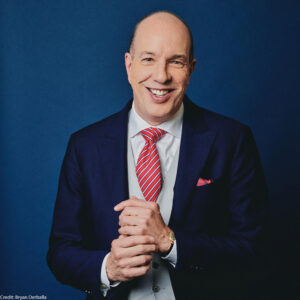
In a timely conversation about the ACLU’s massive docket of cases, Pam Karlan speaks with Anthony Romero, JD ’90, executive director of the ACLU, about the surge of civil rights and civil liberties battles facing the country right now.
Romero discusses major pieces of litigation spanning immigration, free speech, voting rights, and government accountability. A key focus is the Supreme Court showdown over birthright citizenship, where the Trump administration is attempting to deny citizenship to certain children born in the U.S., a move Romero calls an attack on one of the core promises of the Fourteenth Amendment. They also explore what happens when the government pushes the boundaries of compliance with court rulings and what that means for the rule of law.
Tune in for a compelling conversation about the cases that could help define the next chapter of civil liberties law in the United States.
This episode originally aired on February 19, 2026.
Transcript
Anthony Romero: Birthright citizenship, for me, is like a holy book for civil rights and civil liberties.
Pam Karlan: This is Stanford Legal, where we look at the cases, questions, conflicts, and legal stories that affect us all every day. I’m Pam Karlan. Please subscribe or follow this feed on your favorite podcast app. That way you’ll have access to all our new episodes as soon as they’re available. Today I’m going to be talking with Stanford alum—and that’s the least of his many qualifications— Anthony Romero. Anthony has been the executive director of the American Civil Liberties Union since the week before the 9/11 attacks on the World Trade Center. Anthony, I feel like in talking about the ACLU right now, the thing that it reminds me of the most, is the name of that movie from about three years ago, “Everything Everywhere All at Once,” because it is just astonishing the range of stuff that you are working on at the ACLU. And I thought maybe you could start by telling me a little bit about just the huge range of stuff that the ACLU is now facing.
Anthony Romero: Wow, we always had a full plate. Hi Pam, it’s great to be with you. It’s great to be with Stanford Legal. It’s great to be part of the Stanford community. I’m just delighted to be a part of this. To be clear, the day before Donald Trump became president, we had a full plate. We had a lot going on. We had a burgeoning docket. We had agendas and clients we needed to move, and so it’s not like we were lacking for work or for direction of where we wanted our work to go. And yet with the election of Donald Trump and with the kind of advent of Trump into the Oval Office: oh my God, that workload has just more than burgeoned on us.
We have now 239 different legal actions. About 130 of that are full on federal class action lawsuits, and they are across the range of civil liberties and civil rights issues. Some of them are cases on behalf of individuals. Some of them are in cases on behalf of large groups of individuals and class actions. Some of them are at the highest levels of government. Some of them are just dealing with some of the injustices that we see playing out on the ground. And this is a real challenging moment. You mentioned that I started the week before 9/11 and the “War on Terror,” I thought was going to be the toughest time in my tenure.
Those were hard eight years. I don’t want to under-sell the impact on civil liberties and civil rights from that moment. And yet the impact we’re now experiencing is so much greater, is so much more significant across many civil liberties and civil rights issues.
Pam Karlan: Yes, one of the things just I think … for some of our listeners who think of the ACLU primarily as about free speech, I think one of the things is that ACLU has expanded into so many different areas. So, you have an immigrants rights project, you have a LGBTQ project, there’s reproductive justice…
Anthony Romero: A voting rights project…
Pam Karlan: There’s voting rights. Yes, we must never forget my favorite, the voting rights project.
Anthony Romero: Exactly.
Pam Karlan: And then you have just a huge number of different projects right now, and I wanted to ask you one question before we get into a couple of cases, which is: Over its years, the ACLU both has had a national organization, it has state and local affiliate, or state affiliate organizations, and then it also relies a lot on volunteer attorneys who work with the ACLU on cases. And one of the things I’ve been hearing is that a lot of the law firms that traditionally have been involved, have pulled back or scaled back on their work out of fear that the Trump administration will challenge them too. Is that causing problems across the board or just in particular areas?
Anthony Romero: I think it’s playing out in real time and so I am still hopeful. I am assiduous, as you know me, in my advocacy. I don’t give up the ghost easily, but we are definitely seeing a retrenchment among some law firms. We’re seeing some law firms who won’t take on certain types of cases, some of the most challenging, high-profile cases that might be either at the federal level or against the Trump administration.
We see some law firms who are reluctant to put their names onto documents. And that may be okay if we’re working on an appellate brief, it doesn’t really help you much when you’re at trial because you can’t really share any of the attorney-client information with parties who are not part of the case. It’s not like you can just kibitz with a lawyer on the street and say, “Hey, can you help a guy out with this lawsuit,” right? So, if they’re not willing to join officially in this litigation, it makes it very hard to partner with them. We’re tracking it pretty closely. We monitor the engagement of law firms across issues and across different levels.
We monetize it, we publish that in our 990s donated legal services. I haven’t seen a massive fall off yet in donated legal services, but I haven’t seen the numbers for the full year of the Trump administration. That will become apparent in my next tax return. That will be the full year of the Trump administration, and we’re just wrapping up the fiscal year, so I’ll have a much better sense of that in coming weeks. But there are definitely anecdotes where I’ve been disappointed, and then there are firms who’ve stepped in.
Pam Karlan: Yes. It’s just the Trump administration … I think for those of us who are lawyers like you and me, the law turns out to be very slow at responding to what is an across the board, “let’s just break it and see whether anybody will come after us.”
Anthony Romero: And that’s the thing. And to fix any of these unlawful actions will take us years often on appeal.
Pam Karlan: Yes And I, I remember when I was at the Justice Department that, we did several cases in which we were co-counseling with the ALCU, the North Carolina Omnibus attack on North Carolina Omnibus voting rights bill involved.
Anthony Romero: I remember that one. I was a…
Pam Karlan: So now it’s so frustrating to see that you can’t rely on the Justice Department. That Big Law may be backing off a little bit because I know in the first Trump administration, they stepped up quite a bit, and in the war on terror, they stepped up really quite … they did across the board.
Anthony Romero: They stepped into the Guantanamo litigation. You remember that?
Pam Karlan: Yeah, yeah. They…
Anthony Romero: … and I think what’s also disconcerting is also the financing of public interest law. You find …. the ACLU, our membership, is robust, they’re devoted. We probably have fewer number of members that we have this time around than we had at the end of the Trump administration.
So that for me means that some people are tuning out. We hear that all the … I hear that all the time. “I just can’t bear to watch. I can’t pay attention.” And so that, I think, is reflected in the overall membership numbers. Contributions—it’s complicated because there’s so much that’s under that one rubric.
But there were many Silicon Valley philanthropists who, in Trump 1.0, were falling over themselves to write large checks to the ACLU and other groups. And I can name six—I won’t name because that’s not a good trait in a lawyer to kiss and tell. But there are at least six or seven who were contributors of the ACLU. These are big names, writing large checks who are not … who are MIA today.
Pam Karlan: Yes.
Anthony Romero: And so that also shows you that some of them … some of the more frank ones, say “well, this is not a bear I want to poke.” And that’s really unfortunate, the lack of courage in institutions. So, it’s not just law firms sometimes shirking …
Pam Karlan: Right.
Anthony Romero: … their responsibility, it is also individuals.
Pam Karlan: Yes. And of course, the ACLU has been in the forefront of “poking the bear,” if you will. Back to the…
Anthony Romero: Well, the bear needs to…
Pam Karlan: With the to the Palmer Raids.
Anthony Romero: The bear needs to be caged. That’s right. We have been born out of the Palmer Raids. This is…
Pam Karlan: Yes. And …
Anthony Romero: This is something we were born for.
Pam Karlan: Does this remind you of the Palmer Raids era?
Anthony Romero: Very much. Look, the ACLU, founded out of the Palmer Raids, a burgeoning immigration community that was very controversial in national politics. It was even more extreme at that point.
You had a lot more violence. You had, remember the 33 bombs that went off across the country, the one at the doorstep of the attorney General Mitchell Palmer. That’s why, yes, he unleashed the Justice Department, the Palmer Raids. We don’t see quite that level of violence, of anarchy, if you will, but I think that the undoing of a system of checks and balances, of the violation of due process, of a government targeting individuals because they see them as the enemy within, is very reminiscent. And that’s why, in many respects, an institution of 106 years who understands its history and makes sure that its current staff live and understand the history, has the muscle memory built in of the Palmer Raids or HUAC, or the time when we stood up against Japanese-American internment. You just do the right thing because it’s necessary, not because it’s popular or easy.
Pam Karlan: Speaking of immigrants, one of the things that is an ACLU case, it’s going to be argued at the Supreme Court in the … it’s going to be argued actually on April 1st, which seems like a kind of …
Anthony Romero: I’m sure I’ll see you there. I’m sure I’ll see you there…
Pam Karlan: Yes. I’m not sure exactly what to make of that, but it’s a case that involves a Trump administration executive order that is trying to deprive people born in the United States to parents who are not themselves either citizens or legal permanent residents, deny those babies born in the United States United States citizenship, which they have had really since the ratification of the 14th Amendment. And one thing I think our listeners should know about this is that this would deny citizenship not just to babies born in the United States to undocumented parents, but it would also deny citizenship to babies born in the United States … I think about this on the Stanford campus to all of those graduate students who are here on student visas, all of the engineers who are here on work visas and the like. And the Trump administration just announced, “We don’t think birthright citizenship still exists.” Can you tell us a little bit about how the ACLU has been working on that case?
Anthony Romero: Yes, we’ve been working on it from before Trump became president. This was one of the cases that we had developed right after the election. We had mapped out this strategy around birthright citizenship because it has been not a secret that they’ve been trying to go after birthright citizenship. We heard that even from the first Trump administration. It was part of Project 2025, and then in the lead up to the election, we mapped out: What are the different legal theories? What are the types of clients? Where would you file? What would be the proper venues? And all of that was largely worked through.
And then, when he was elected in November, we just went into action mode. So, part of what we had to do, and you know this better than I—you teach this in your class, I learn it from people like you—but when the executive order first came down, two hours after he became president, we filed our first challenge to [the executive order regarding] birthright citizenship, which was on behalf of an Indonesian immigrants group that we had identified in New Hampshire, whose members included pregnant women whose kids would be born and who be subject to the executive order, and whose citizenship would be denied. So, we had to work through: where do you want to file? In the First Circuit? So therefore, you’re up in the northeast, New Hampshire. You had to find an organization and individuals. So, you had to find individuals who would have standing: pregnant women whose kids who be born afterwards.
Then the case went up, you remember, first to the Supreme Court on the kind of more procedural issue, on the universal injunction issue. And then when that came down saying that you couldn’t just grant a nationwide injunction, we had to regroup and then file a class case, which we did. It’s largely with the same groups of individuals and some of the same theories, but a different approach, filing for a class certification.
And I am confident … I’m almost afraid to say that because I don’t have a heart anymore, but it couldn’t be broken again… I believe though, nonetheless, we will win 7-2 is what I predict. The real lawyers at the place. I just keep my law degree above my desk here and I keep my Bar license paid for, but I let the real lawyers argue these cases. I’ll be in the well of the court, not arguing in the well of the court, but being the in the audience. But I think that it’s almost inconceivable to me … I was there for the birthright citizenship procedural argument, it’s almost hard for me to imagine that we don’t win 7-2. I think they all … They feel to me like they’re all aligning. Kavanaugh, Amy Coney Barrett. I think the chief, I doing know… I’d be interested in your thoughts. I think only Alito and Thomas will probably be in the minority. But it’s a really important case because, as you say, it’s not just the kids of undocumented immigrants. Like you said, it was anyone whose father was not a U.S. citizen or lawful permanent resident—so it could be the mother, but the father, the paternity issues are complicating—and then if they lack … if they were lawful, but temporary, like you said, the graduate students, and that could undo all of the way in which we have thought about citizenship.
And if you just take a step back for a second and think about … Birthright citizenship, for me, is it’s like a holy book for civil rights and civil liberties, and you have, I want to be careful, you have the two texts, if you will. You have the 14th Amendment text …
Pam Karlan: Right.
Anthony Romero: That allowed … that’s what turned the children of enslaved people into full citizens, only after a bloody civil war. It is what corrected America’s original sin, That’s the first text. The second text is in a nation of immigrants, the only way that you ensure that we are all equal under the law, is if you grant that citizenship at birth. Because if you don’t grant it at birth, you will create different tiers of citizenship or involvement in the body politic and we won’t be equal. So, a nation of immigrants—out of many one—only happens with birthright citizenship. Otherwise, you’re in a place like Germany where Turkish families can live there for generations and they’re never German citizens, or in Japan where Korean families for generations are never Japanese. So, these are the two “holy texts” around 14th Amendment and a nation of immigrants—out of many one—that they’re trying to undo, and it’s just…
Pam Karlan: Can I ask you a question about this, which is: when I read the executive order … it just says, “From this day forward, I am ordering that…”
Anthony Romero: February 19th…
Pam Karlan: …. does not provide these people with documents.” But I don’t understand in some sense how it is that it doesn’t also apply retrospectively. Because if…
Anthony Romero: I don’t know either.
Pam Karlan: If I—and I asked my class this last year when I was teaching the 14th amendment—I said to the students, “How many of you can prove you’re a U.S. citizen?”
Anthony Romero: Yeah.
Pam Karlan: And a number of them raise their hands and they say, “Well, I have a passport.” And I said can you prove that your parents were U.S. citizens when you were born?” Because if the Trump administration is right, don’t we all have to go and find some ancestor’s naturalization papers to turn us into citizens?
Anthony Romero: And think about the chaos. Who actually registers us? I don’t have kids, but I have two god kids who I’ve been very close to at the day they were born. What I remember is at NYU Hospital down the street, it was the nurses who came in and registered the birth of my god kids. Okay, who’s the father? That’s the guy. Who’s the mother? She’s the one on the bed. Where were they born? Manhattan. Done. What are you going to do when all of a sudden you have an executive order that says they have to check on the paternity of the guy in the corner, who’s the father? Or the citizenship of the mother? It’s just going to be completely chaos. It’s just … and part of what we’re anticipating, I think we win this case, I think we win this case, but I don’t only plan for winning cases. I’m a kind of a neurotic type A lawyer. We’re planning for what if we lose? And part of what we’re organizing is to think about, okay, how do we organize the hospital workers to resist any effort to enact birthright citizenship. How do blue states enact firewalls from being forced to implement birthright?
Pam Karlan: Yes, I would think there’d be a fair amount of what will turn out to be commandeering and 10th Amendment issues if they start telling states you have to determine the citizenship of the parents, of any child that’s born in your state.
Anthony Romero: The unfunded mandates, remember those words from like the Reagan era? It’s just all of this. So…
Pam Karlan: Yeah. And you’ll, and you and of course Nina Perales at MALDEF really well. Her husband, who does a lot of immigration work, talks about just how difficult it is to deal with getting birth certificates or proof that people were born in the United States who were born at home in Latino communities along the border.
And I don’t know how you deal with all of this, and birthright citizenship is such a clean…
Anthony Romero: Paternity.
Pam Karlan: Direct way…
Anthony Romero: Paternity. Paternity. If you’re just born here, you can leave the father blank, all sorts of stuff … this will open up a whole conundrum.
I was on a stage at Aspen Institute with the Governor of Georgia, and I was tweaking him a little bit because it’s like, “How are you going to pay for this? How are you going to implement this? What does this mean for kind of the ability for your registrars, for your city halls?”
They had not thought it through. They’re all championing this change in policy. I’m like, “Careful what you wish for Governor, because this could be a complete debacle for your folks.” Not to mention for the spirit and heart of the American democratic experiment.
Pam Karlan: Yeah, I’m just … and I’m staggered that they went as far in the executive order as they did, and now they’re making these arguments that Wong Kim Ark was wrongly decided.
Anthony Romero: Oh, I know, crazy. What was stunning to me is that the week before the election, the week before the inauguration, I was in touch with someone in that orbit who I have a relationship with, and it was clear from that conversation that they were going to run this play. I didn’t think so. We got ready for birthright citizenship because we must, but I put the phone down and I’m like, “Wow.”
I went back to the office and I called Lee Gelernt and Cecillia Wang, who are two of my colleagues, and Omar Jadwat—we all do immigrants’ rights work. I’m like, “We’ve got to get birthright citizenship ready from day one.” And none of us really believed that they would play that play in the first few hours of their administration. This is clearly … that was something that is central to their mission of undoing the strong history and contributions of immigrants. And that’s why I think there’s probably no more consequential case we’ll argue this term.
Pam Karlan: It’s certainly … and I do, I share your optimism that the Court is going to recognize both that the 14th Amendment does this and that the 1941 Immigration Act…
Anthony Romero: Right.
Pam Karlan: … does this as well.
Anthony Romero: You’re wearing belts and suspenders. It’s in the Constitution and it’s in the statute. You bet.
Pam Karlan: Yes. And I don’t see any prospect of Congress passing a statute that eliminates birthright citizenship.
Anthony Romero: Yeah. I think it’s also got to be a rallying point because I think we have to demonstrate that they have fought this all the way up to the Supreme Court, twice, this will be the second time. This one on the merits, the first one on procedural grounds. But to demonstrate to the American people just how serious and how damaging is this line of advocacy from the Trump administration, that it really strikes at the heart. So that’s why we’re going to use it hopefully as a moment to rally the American people. We were planning big efforts around organizing, around public education, celebrities, ordinary people, immigrant stories. Tapping into the best of what is the American experiment from all walks of life. And I think that will become easier for us given the horror and the atrocities that we’ve witnessed in Minneapolis recently.
Pam Karlan: Yeah. So, I want to turn to that aspect of the ACLU’s work, which is, you’re not just trying to defend birthright citizenship, but you’re trying to defend huge numbers of people in the United States right now who are being swept up in a variety of ways. And I wonder if you might talk a little bit about just the range of stuff the ACLU is doing there, from challenges to police practice, ICE and CPB practices, to dealing with the people who are actually being locked up and trying to get them out.
Anthony Romero: Habeas … we have dozens of habeas cases that we have filed. And many that…
Pam Karlan: You’ve been forced into the habeas business because of the courts getting rid of nationwide injunctions …
Anthony Romero: … and because it’s a way then to challenge the underlying constitutionality of the actual statute. That’s how many of the habeas cases are, how we’ve gone after the Alien Enemies Act case. So, to make it easier for us, although your viewership is super smart, I think about three buckets of work for the ACLU is … one is the targeting of institutions, individuals who disagree with the government. So, it’s like the modern-day McCarthy moment. The stuff around our clients like Mahmoud Khalil, or the targeting of law firms of Jenner & Block or Wilmer Hale, or the targeting of Harvard.
They’re the idea that “I’ll go after my enemies and shut them down.” And that’s core, central mission, central work for the ACLU: The freedom of speech/freedom of association bucket.
The second is this kind of targeting of politically weak groups to score cheap political points with the MAGA base, and I put the immigrants’ rights work, and I put some of the transgender rights work into that. And the immigrants’ rights work is burgeoning because of that.
And then the third is this question around defending the rule of law in a system of checks and balances. The idea that they shouldn’t be able to just skirt the rules of the road, to judicial contempt litigation we’re doing and in Boasberg’s case, in the Alien Enemies Act case in Washington. Some of the targeting of the press, for instance, also making sure the, there’s an open and free press.
So yes, and the work you’re describing in Minnesota, for instance, we have filed two cases. Both of them filed before the recent riots, but both of them incredibly relevant to the challenges following the murder of Ms. Good and Mr. Pretti. There’s one case that was talking about the DHS inappropriate use of excessive force in dealing with protestors, right? And that’s kind of bread and butter, First Amendment police practices case. And frankly, if they had enacted that…we had one a preliminary injunction and then the Eight Circuits stated question about whether Mr. Pretti would be alive, right? Because that was exactly what was at play. Just the way they overused the force against Mr. Pretti. The second one is more about the targeting of individuals because they believe them to be undocumented. So, this is the racial profiling piece that you were saying, that you were referencing. And that’s very case-by-case, jurisdiction by jurisdiction. I feel here, like I, we’re playing Whack-a-Mole and I need a lot more than one hammer to go after it.
Pam Karlan: Yes, I was going ask you about that, which is: this the first time really in the ACLU’s history that there’s some doubt about whether, even if you get an injunction, it’s going to be obeyed by the federal government?
Anthony Romero: Yes.
Pam Karlan: That seems to me to be new.
Anthony Romero: We used to be able to rely upon the word of the government in court, right? In the Bush administration, where it was no walk in the park, we didn’t really question when they said they were going to do something in court, you could walk out and say, okay, that’s what they’re going to do.
That’s not the case here. There is such kind of … “oops-a-daisy” is the most benign way to describe it and then there’s complete impunity on the other end of the, of the spectrum. But there is often a disregard for the rules of the road that have been established or that are agreed to, and the idea then you have to litigate compliance on top of that in the middle of the litigation, makes it often very complicated at such a scale.
It’s not entirely new, but what’s new is the scale that we’re dealing with this.
Pam Karlan: I think some of our listeners may have followed the debacles, one after the next, in the District of Minnesota. Having a judge, like Chief Judge Schiltz, who is quite conservative, say that he thinks that the folks from ICE have violated more orders in January in Minnesota than some federal agencies have violated in their history.
Anthony Romero: Yeah. We’ve litigated contempt cases like Sheriff Joe Arpaio, remember this one, of course?
Pam Karlan: Yeah, oh yeah.
Anthony Romero: And so we’ve done individual contempt cases, but it’s not usually such a pattern of practice of what we’re doing generally across all these issue areas. And then monitoring compliance is another part of it, because that means you have to have people on the ground being able to monitor what the hell is going on. And that’s why we’re lucky we have an office in Minnesota where we’re able then to track their compliance. We have a great office in Minnesota and so they’re on the ground. I don’t have to fly in to Minneapolis. I just allow them to tell me what’s playing out and what’s going on.
Pam Karlan: I mean that that’s one of the strengths really of the ACLU as compared to a lot of its kind of sister organizations, which are really centered in New York or centered in Washington or centered in Los Angeles. You actually have people … is it all 50 states that you’ve got in?
Anthony Romero: And Puerto Rico, District of Columbia. We have about … 700 people in headquarters with me, and then we have another 1,600 staff in the state offices on payroll. We have volunteers and we have chapters, but people on payroll, who are full-time employees of the organization, going into the office or working where they are to defend the rights and liberties of all people. It’s incredible. It’s an infrastructure I inherited but I’ve tried to make it stronger in my tenure. I think it’s a much more robust network of staff because ultimately, what do I know sitting here in Manhattan in New York about what’s playing out in Minneapolis? But my colleague Deepinder, who is there and living in Minnesota and whose staff is there, they know best, and so it’s a great setup.
Pam Karlan: So what do you think is going to be … we’re in month 15, month14 of what’s going to be a four-year, 48 month process.
Anthony Romero: I got a countdown clock that I used to have.
Pam Karlan: What do you think? Do you think the tide is turning on some of this stuff or is there going to be another round of…
Anthony Romero: So, there are two parts of this. You’ve always known me to be a “real talk” guy. I do think that we’re going to have … we’re seeing an inflection point. I think that what’s playing out in Minneapolis and across the country with the murders of Ms. Good and Mr. Pretti, do signal that the American public is paying attention again, and don’t like what they’re seeing and I do think that looks to be a moment. And I think … I’m hoping that the types of cases, including ours, that will be decided in this term in June, the end of June, will be another kind of momentum for pushing the pendulum in a different direction, saying, “Nope, going too far.” This is a real rebuttal to the president’s agenda and you know … it’s really for the parties to figure out whether or not they can capitalize on that. We are the ACLU, we’re nonpartisan, we do not endorse a candidate. We do not oppose a candidate. We don’t give our money to candidates. The elections have consequences, but we do not tell people who to vote for. That’s someone else’s job. And so let’s see if the Democrats decide that they can use this moment to rally their base. What I worry about regardless, even if the Democrats were to take the House and there’s a kind of more balance coming out of at least one house of Congress, is you still have an executive branch that has been on massive rounds of steroids. Congress is inconsequential on some level. Most of the damage that has been done has been by the executive branch …
Pam Karlan: Yes, that steroids image is actually a really good one because it’s not just that they’ve enhanced everything, but the “roid rage…”
Anthony Romero: Oh my god.
Pam Karlan: … that we’re seeing out of this administration … It’s not just that they’re muscular in the way that, for example…
Anthony Romero: They’re angry.
Pam Karlan: … Franklin Roosevelt was muscular during the Great Depression or Abraham Lincoln was muscular during the Civil War. They seem to be enraged at much of the country.
Anthony Romero: Enraged. Angry. And what I am most worried about, and this is where the real talk comes in, is that even if this one half of Congress kicks into some oversight gear, the money that we have already appropriated to the Department of Homeland Security under the “Big Beautiful Bill,” $170 billion for immigration—that means that department really is scaling at a way that we have yet not seen the worst of it. And there is not one lawsuit, as you pointed out, there is not one lawsuit where it can bring … that stops down the raids or the deportation efforts. That is literally retail. Raid by raid, site by site.
There isn’t “Birthright Citizenship is an executive order. One lawsuit will knock it out. I hope it’s ours. If not not ours, then someone’s gotta bring another one to knock it out.”
Alien Enemies Act, I think one piece of litigation can knock it out. On the kind of the scaling of border and enforcement efforts and the raids and the deportations, it’s all retail. And that’s where they’re going to kick our butts, that’s what I’m afraid of is just because there’s very little, we will do our best … we are still very small. People say, “oh, the ACLU is so well funded. It’s a great organization.” I am fortunate to have resources. I have great colleagues. I have offices on the ground in every state. I got 500 litigators, right? Full-time. The Justice Department has 9,000 lawyers. The idea to configure…
Pam Karlan: …they had 9,000 yesterday, but at this rate they may be maybe they…
Anthony Romero: …resign.
Pam Karlan: I do understand that regardless of that, the ACLU is compared to the federal government, small but mighty and…
Anthony Romero: David to the Goliath, is the way I use …
Pam Karlan: Yes. But remember with David and Goliath …
Anthony Romero: I have a slingshot.
Pam Karlan: David, David was there. David was there.
I want to thank you Anthony, so much for coming on the show and talking with us. I’m sure we’ll be coming back to you many times over the next couple of years.
This is Stanford Legal. If you’re enjoying the show, please tell a friend and leave us a rating or review on your favorite podcast app. Your feedback improves the show and it helps new listeners to discover us. I’m Pam Karlan. See you next time.