
Leveraging Technology to Improve Access to LA Courts
Stanford researchers help bring innovative solutions to high-volume court, enhancing the self-represented litigant experience and its dedication to leading in justice innovation.
The LA Superior Court is the largest single unified trial court in the United States, serving the approximately 10 million residents of Los Angeles County—the cases it handles spanning a wide range of legal matters, from civil cases to criminal cases, family law, and juvenile matters.
As the state and county have grown, so has the demand on the legal system. A lack of access to justice—the difficulty many Americans face in finding or affording legal representation—has been called a crisis. What does that mean in practice? And what can be done to address it?
Stanford Law School’s Deborah L. Rhode Center on the Legal Profession and Legal Design Lab released a groundbreaking diagnostic report in April that outlines a blueprint for creating more innovative, modern, and accessible courts.
The report marks a significant milestone in the unique partnership established in January 2024 between the Superior Court of Los Angeles County (the Court – SCLAC) and Stanford Law School. Created in collaboration with court leadership, frontline court staff, and community partners, the findings of the Stanford report demonstrate the Court’s commitment to enhancing the self-represented litigant experience and its dedication to leading in justice innovation.
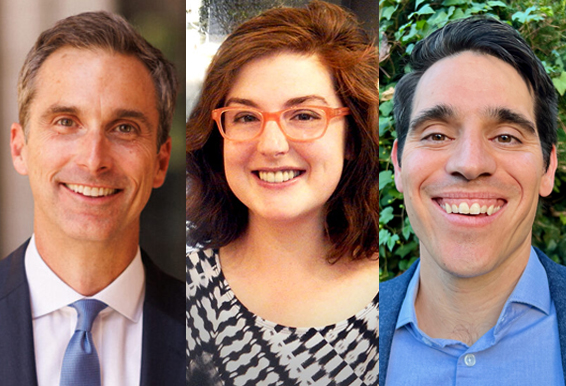
Our guests joining Pam Karlan for this episode include Stanford Law Professor David Freeman Engstrom, the co-director of the Rhode Center whose work focuses on access to justice in the millions of low-dollar but highly consequential cases, including debt collection, eviction, foreclosure, and child support actions, that shape the lives of Americans each year; Margaret Hagan, the executive director of the Legal Design Lab at Stanford Law School whose researches, designs, and develops new ways to make the U.S. civil justice system work better for people; and Daniel Bernal, associate director of research at the Rhode Center whose work explores the intersection of civil procedure and access to justice, with a focus on designing and testing innovations to make state courts work better for people.
This episode originally aired on June 12, 2025.
Transcript
David Freeman Engstrom: The best evidence says that in roughly 75% of the 20 million civil cases filed in American courts each year, at least one side lacks a lawyer.
Pam Karlan: This is Stanford Legal, where we look at the cases, questions, conflicts, and legal stories that affect us all every day. I’m Pam Karlan. Please subscribe or follow this feed on your favorite podcast app. That way you’ll have access to all our new episodes as soon as they’re available.
Los Angeles is an absolutely vast place. It has a population that’s greater than the population of the majority of American states combined, and its superior court system is the largest single unified trial court in the United States. That court is responsible for handling a wide range of legal matters, from civil cases to criminal cases, family law cases, juvenile matters, all sorts of litigation. And as the state and the county have grown, the demands on the legal system there have grown as well. And access to justice is a critical problem. The inability for most Americans to find or afford legal representation, even when they need that kind of representation to vindicate their rights.
Stanford Law School’s Deborah Rhode Center on the Legal Profession and the Legal Design Lab just recently released a groundbreaking diagnostic report on the LA Superior Court system that creates a blueprint for more innovative, modern, and accessible courts. So, we’re so lucky today that our guests on this episode are going to help us understand those challenges and also talk about what can be done to help solve them.
So, we have three of our colleagues here today. David Freeman Engstrom is the LSVF Professor of Law and he’s a co-director of the Rhode Center, which focuses on the future of legal services and access to the legal system. David’s current work focuses mostly on access to justice in the millions of what are called low-dollar cases. These involve things like debt collection, eviction, foreclosure, child support actions. These are the kinds of cases that affect millions of Americans every year.
Margaret Hagen, who’s a graduate of the law school is also the executive director of the Legal Design Lab at Stanford. She’s a lecturer at Stanford Law School and in the Stanford Institute of Design, which most people call the d.school. Margaret researches designs and develops new ways to make the U.S. civil justice system work better.
And Daniel Bernal is Associate Director of Research at the Rhode Center. His work also centers on improving access to civil justice, and he focuses on how civil procedure affects case outcomes, affects litigant participation, and affects perceptions of justice.
So, I want to thank you all so much for being here and ask you to start off by just explaining what people mean when they talk about the crisis in legal access.
David Freeman Engstrom: Okay, thanks Pam. I’ll take that one. I think a really good starting point is a very bracing statistic and here it is: the best evidence says that in roughly 75% of the 20 million civil cases filed in American courts, each year at least one side lacks a lawyer.
And these are really consequential cases. I think you already named some of them. They tend to be evictions and debt collection actions and home foreclosures and also certain types of family law. And then if you look beneath the hood of these cases, you can see a couple of further features that I think help round out the account of what we think of as the access crisis in American courts.
First, if you look at these cases, they tend to pit an institutional plaintiff, so a bank, a credit card company, corporate landlord, maybe the government, always with a lawyer, against an individual defendant without a lawyer. These cases also tend to end in default judgments, the statistics certainly vary by jurisdiction, but many, and even most of these cases go out of the system on a default judgment where the defendant has failed to show up. So I think that’s a really basic account of the problem of access to justice in the American justice system and the core of the problem that we’re focused on in this project.
Pam Karlan: So one thing is that … do you have a sense of like in the cases where people actually are represented, I assume they win a lot more often than in the cases that they’re not. Do you have a sense of the magnitude of the difference that a lawyer makes?
David Freeman Engstrom: The magnitude of the difference I think is significant. There’s academic literature on that. As you can imagine, Pam, that varies a lot by jurisdiction. It varies a lot by case types, so I can’t put a particular number on it. But yes, having counsel makes it much more likely that you’ll win your case, that you’ll be able to vindicate your rights to some extent, that you’ll be able to reach a beneficial settlement with the other side.
Pam Karlan: Yeah, so we have this huge number of people who are unrepresented and is the cost of lawyers that makes them unrepresented or is it that they don’t understand how to get a lawyer? What causes that crisis?
David Freeman Engstrom: I think there are lots of reasons. I think in a lot of instances Americans don’t even know that their problem is a legal one in the first place, and in the academic literature at least, this is described as a failure of legal capacity. But obviously maybe the bigger problem, I’m not sure, I can’t really put weights on these things, a big part of the problem is the fact that most Americans, even surprisingly far up the socioeconomic ladder, are priced out of the market for legal services. Lawyers tend to cost something like $300 an hour and that, with the meter running, that adds up very quickly. And so again, most Americans, even Americans, you would think of as having fairly significant means, simply can’t afford legal representation from actual lawyers.
Pam Karlan: So the access to justice problem is they don’t have the means to get a lawyer., they may not understand the need to get a lawyer, and the upshot of this is that there’ll be a court order ordering them to pay more child support than they can afford, evicting them from their house, getting a default judgment on medical debt that then allows them to go and garnish somebody’s wages, things like that, right?
David Freeman Engstrom: Yeah, that’s right. And that’s the important thing to know about default judgments. Once one of these institutional plaintiffs has a default judgment in hand, then they can seek from the court, say the garnishment of someone’s wages, or they can seek an eviction from their home. They can seize whatever bank assets they might have, subject to certain limits. But the point is that they can execute on that judgment. And with a no-show defendant who might have some kind of a meritorious counterclaim or defense, that’s obviously a basic problem of fundamental fairness.
Pam Karlan: I guess another question is to what extent is all of this a problem of the requirement that if you want to be represented by anybody in one of these proceedings, you have to have an actual licensed lawyer as opposed to having a paralegal show up and do this, or being able to get forms online that would help you answer a complaint? Or is that part of the crisis?
Margaret Hagan: So I think definitely because of that licensure requirement, we have that kind of huge access to justice gap with so many people calling in for legal aid lawyers, if you are in a civil justice crisis, that would be the free service that hopefully if you qualify for, you could get access to. But because of that licensure requirement, there aren’t the capacity from the legal aid groups to serve that huge need. The people calling into the hotlines, the people writing in for help, or the people that they encounter in the hallways. There’s just not enough licensed lawyers in legal aid jobs to handle the line of people who want that help. The forms online is another interesting offering. Over the past 20 years, there’s been some fair amount of investment in putting more informational tools online. Always worried about unauthorized practice of law requirements. Nobody in the legal aid or the kind of public interest sector wants to overstep that bound and go into legal advice.
So, there is a lot more information online. Guidance about if you get this kind of document in the mail, here is what that’s called in normal people’s words. Or the key steps that you should take, the phases of the lawsuit. But that kind of informational guidance only goes so far. Yes, it might help a person who actually does go to that website or finds that form online to understand a little bit, but when we interview people, in the hallways of the court, a lot of them are in that stressed out phase. They feel overwhelmed. It’s hard for them to do a lot of complicated tasks like filling in a form in this time crunch with this amount of stress and in this formal legal language.
So those kind of online tools that are like strictly informational, kind of hands off, can only really go so far in helping people actually make their deadlines, file the correct forms. So, there is a missing gap. There needs to be a lot more, I think, human services to really make those actionable for people.
Pam Karlan: And it’s striking just how different this is from what would happen if you were accused of a crime, right? Because if you’re accused of a crime, you have a constitutional right to a lawyer for virtually every kind of case. And if you can’t afford a lawyer, the government provides you with one.
But that’s just not true, even for civil cases where the consequences might be far worse than the consequences of a criminal case. That is, you know a criminal misdemeanor case, you get a lawyer, but a case that’s going to cause you to lose your home in foreclosure or a case that’s going to cause you to lose your home in an eviction or like–you don’t get a lawyer for that.
Margaret Hagan: We’ve seen a lot of right to council movements around evictions spring up over the past 10 years and get more momentum, but there’s still a funding issue about who’s actually going to pay for lawyers, even if the city council or a county or a state mandates that everyone facing eviction should have a lawyer. It’s a tall order to get enough actual lawyers in the system to do that.
Pam Karlan: So, I want to turn now to the partnership that you all have developed with a Los Angeles County Superior Court. Can you tell us a little bit about how that court runs and how you guys became involved with them?
Daniel Bernal: As you noted, the Superior Court of Los Angeles is the largest trial court in the country. There are 36 courthouses that serve a population of over 10 million in a jurisdiction that includes 88 cities and 140 unincorporated areas. So, this is just a huge organization. There’s over 550 judicial officers and 4,600 employees.
Pam Karlan: So that’s actually larger than the entire appellate court system of the federal judiciary, by about double, maybe treble.
Daniel Bernal: And I think that the caseload also bears that. There’s 1.2 million cases filed each year in that court. So this ranges from routine traffic cases to custody disputes, to eviction, to murder trials. And the people that are involved in these cases are really diverse too. As just one indicator, the court actually offers interpretation services in over 200 different languages. So we are talking about a very complex…
Pam Karlan: I didn’t even know there were 200 languages.
Daniel Bernal: I think there’s a several indigenous lang languages included on that, but the court is very proud of offering all the services. But perhaps, David, you wanna kick us off to where the … how we got involved with this court?
David Freeman Engstrom: Sure. Like so many good things in life and in maybe in academe in particular, this project was a mix of like careful relationship building and kind of luck and happenstance. So a few years ago, Margaret and I, and also Mark Chandler, who’s a terrific SLS alum who served as a longtime general counsel of Cisco, we started working with about a half dozen states to help them rethink their technology systems to make courts more accessible, something we call the Filing Fairness project.
And one of the states we worked with at the time was Texas and it had this rockstar chief court administrator named David Slayton. And then David moved to LA he took his talents to Hollywood, as I like to say. And we kept talking and then I gave a speech at the California Judges Association and had a really great exchange with LA’s then-presiding Judge Sam Jessner. And so within a few weeks we were laying plans for this collaboration.
Pam Karlan: Yeah. And what’s the collaboration designed to do?
David Freeman Engstrom: It’s designed to try to help the court work better. We think it’s a really unique, first-of-its-kind thing. It’s a collaboration between a major court system and a major research university.
They’ve asked us to help them rethink how they handle their high-volume dockets, especially those docket-dominating cases I mentioned previously. So, eviction debt, certain types of family law. Because we’re Stanford, they also asked us to help them to think in particular about the digital pathways that they’ve built over time, or that they’re building to better serve self-represented litigants within the system.
Pam Karlan: Yeah, so you have technology problems and knowledge problems. I guess maybe let’s start by talking about some of the technology problems that the courts are facing.
Margaret Hagan: Yes. We don’t usually think of courts as hotbeds of innovation. They’re big, traditional institutions upholding the rule of law, but tech and innovation perhaps are not central. But I think we’re increasingly seeing courts, especially under leaders like David Slayton and the presiding judges in LA, really prioritizing and focusing on how technology can augment or automate or otherwise improve operations in the backend and services to the public. So, it’s interesting to see this kind of key change, and it’s been brewing over the past few decades of developing better websites, better case management systems, more data capacity.
And that’s why we’re really excited with the partnership to work with a court like LA that already has a substantial IT team, and a great collection of technology, infrastructure, and tools, to see what we could build on top of it. Especially with all of the new and exciting technologies that we all read about in the newspapers. Can we leverage some of that ambitious new emerging technology, either for better services on the front end to tackle some of those knowledge challenges, or other challenges that the litigants face, but also give better tools to the court staff members who also have to deal with this huge amount of caseload and a huge amount of processing in their day to day.
So, I think LA is uniquely positioned to be really at the forefront of technology development in the courts.
Pam Karlan: That’s super interesting that it’s both a kind of front end thing, developing the technology that’s public facing, and then also developing the technology that’ll enable the court system to operate more efficiently and the like.
You guys just published a major report on the eviction dockets in the Los Angeles Superior Court system. What are the eviction cases like, and how do you, how did you research this? I think … I’d just be fascinated in knowing how you found out what you found out.
Daniel Bernal: Great. I’m happy to jump in here. Over the past year we, we conducted both quantitative and qualitative analysis on this. And all told, we analyzed almost 150,000 eviction cases through a data sharing agreement that gave our research team access to the court data as research contractors. We supplemented this by conducting more than a hundred hours of interviews, six different focus groups with court staff and community stakeholders, and evaluating these court hosted digital self-help tools.
We are really just trying to get at understanding this lived experience of litigants experiencing eviction in Los Angeles, and the court staff and the service providers who help them to navigate their case. And we had a lot of students help us. We had students from two different policy labs that did a lot of that on-the-ground interviewing with us as well.
And the picture that emerged was an eviction process that it moves very rapidly that involves low rates of participation. We found about 57% of tenants did not answer their case and therefore, went ultimately … many of those went the default judgment process. And we found that tenants, as they jump into this process, they have to navigate this really complex landscape because as we mentioned before, LA is huge. And so of those 88 different cities, some of them have special protections for tenants. For example, if you’re evicted in the city of Los Angeles, you cannot be evicted for nonpayment of rent if the amount you owe is less than fair market value, and even amidst all of those different…
Pam Karlan: So that means like for example, if the apartment rents for $700 a month and you’re behind by $500, you can’t be evicted. Is that…
Daniel Bernal: Exactly. But there, there are some … So one of the issues in these high-volume dockets, as we is just this problem of unjust outcomes. And the fact is, so in that case, in that hypothetical case, a tenant should not have an eviction on their record if they have an amount less than his fair market value.
But what happens? There’s good evidence … there was one study of the comp trollers in the city of Los Angeles that found that 17% of eviction notices that were sent were for an amount less than fair market value rent. And so when a tenant doesn’t show up and isn’t there to raise that affirmative defense, courts need to develop other safeguards to make sure that we can really make sure that an ultimate judgment coming out of the court reflects the underlying substantive law here.
Pam Karlan: So, if you had the kind of technology of your dreams, how would it deal with that problem?
Daniel Bernal: So, I’m happy to stay with this one. This is that project that we are working on. I don’t think we’re at the point of a technology of our dreams, but we do have some technology that is, is in process. And so let me let me like play this out a little bit more. So, we’ve mentioned before that lots of cases have very low participation rates and let’s particularly talk about consumer debt collection cases. In Los Angeles, 95% of debtors do not show up or file an answer for their debt collection case.
Pam Karlan: And these are mostly debt collections by credit card companies or…?
Daniel Bernal: Totally.
Pam Karlan: So this is people that buy debt or the like?
Daniel Bernal: Exactly. This is mostly debt buyers and a lot of credit card debt. So imagine then that you’re a court clerk, you’re a research attorney in Los Angeles Superior Court, and for every case that involves a debt buyer, as you mentioned, someone who has purchased this from the original seller of the debt, is that the Rosenthal Fair Debt Collection Practices Act requires a plaintiff’s complaint to include some key allegations that put the defendant on notice that this is a legitimate debt.
So allegations like when the debt was incurred, how much is owed, when the debt or last paid. If the debt defendant doesn’t respond and the plaintiff files for a default judgment, the act further requires them to attach business records and a sworn declaration that is sufficient to prove these allegations.
The act actually clarifies that “no default,” I’m quoting here, “or other judgment may be entered against the debtor.” So it’s very rigid, like this must be done or you cannot enter default judgment. But if a research attorney or a clerk wants to verify this today, they have to do it manually. They check for all the allegations in the complaint. They locate the declaration. They cross-reference the allegation against the evidence. Now this task is very hard. I know because I’ve been working with a team of law students to do it over the last several months. The declarations are lengthy. They attach multiple credit card statements, for example, multiple bills of sale, which themselves have spreadsheets attached often, sometimes with data running vertically down the page.
On average, it took our team about a half hour to do every default judgment. Now, those time costs make this kind of rigorous human review just impractical at scale. I don’t know if I mentioned that the court staff have to process as many as 30,000 of these cases every year in Los Angeles County, and at 30 minutes a pop, that is just not going happen.
And so we really think that AI can help. We’re building this default system, which would be an AI decision support tool that clerks and research attorneys can consult when entering a clerk judgment or issuing a recommendation to a judge. So, what we did is we identified the binary and semi-discretionary variables that the tool would need to review, and then we conducted an audit with law students to provide this sort of ground truth and not only a ground truth like is this compliant or not? But a very robust documentation of where evidence supporting those decisions can be found. So, we’re now working with this very talented tech team across Stanford’s campus to develop the tool, and within a few months we hope to have a version ready for testing. Ultimately, we really believe that this tool is a way to enhance the great work that the court is already doing, both in eviction and debt collection.
Pam Karlan: So, Margaret, you had said earlier … you were talking about the use of technology, both at the backend, ie inside the court system, and Daniel just gave us a phenomenal account of some of the work that’s being done there. But there’s also, as you said, the front end, and a bunch of stuff that you guys are doing at the front end to try to make it easier for the unrepresented litigants in particular, the 75% that David talked about earlier, to handle their cases and to get their rights vindicated. Could you tell us a little bit about that?
Margaret Hagan: Sure. So, this really came out when we were on the ground in downtown Los Angeles at a courthouse called Stanley Mosk, a huge courthouse, and there were two main pain points that we heard over and over again.
First is from that litigant. They come to the court as a kind of first port of call after they get that scary document served on them or in the mail. They’re coming to the court building to try to figure out what can I do? What are my rights? But the problem inside the court building is court staff have these duties of neutrality and not to give legal advice. So they’re coming up to the clerk’s office, to the self-help office, to the bailiffs in the hallway, to court staff members and saying, “I got this notice. What can I do? Is there anyone that can help me?” So they are really looking for some service or some tool in that short 10-day window they have after getting an eviction lawsuit served on them for help.
So they’re in the hallway searching for someone to help. Then if we look at it from the staff member: They want to help. They see these people who are stressed out, who are doing their best, but they don’t know who to send them to because LA, as we’re going to return to, is huge and complicated, and that includes what service providers actually can help you.
It will depend on where your property is located. What your income level is, what language you speak. There are all kinds of different legal aid and community organizations that help different tenants and the court staff members don’t have that up-to-date list of where to send a given tenant or litigant for someone that will actually be able to help them and not turn them away.
We don’t want those kind of cold handoffs. So that’s where we’re using a new, exciting kind of application of AI, which is to give a tool to the court staff, but also to the users on the website where we can ask a handful of pretty straightforward questions about whether you do actually have a case in LA, what the status of that case is, where you live, what language you speak, and then give you a curated list of organizations that are likely to be a good match for you. No guarantees that you’ll be able to get served by them, but instead of what happens right now, which is someone saying, “I don’t know, I’m sorry, I can’t help.” Or maybe giving you a flyer with a laundry list of 40 organizations you could possibly call, can we give you a top three with a good match, the right phone number to call or address to go to, and some details about what to expect, to really set the person off and hopefully help them make that next step to actually get a service to help them meet that 10-day deadline. So we’re really excited to work on this tool with the court.
Pam Karlan: So how did you figure out which places to hand people off to? Especially given that David earlier was talking and you were talking earlier about how there’s not enough help for everyone.
Margaret Hagan: So that’s where we’re taking this multi-stakeholder approach and why the court can be such a great collaboration hub. The court already has partnerships with legal aid, who come in and run clinics and self-help access centers in the courts. So, we’ve been convening legal aid leaders as well as court self-help leaders and community organizations to ask them exactly what you were asking: who does what, for whom, and how do you get that help?
And we are helping the court make this comprehensive database that can then inform the tool. We’re going to need to keep it updated because those rules change, because there is a mandate around more help for people facing eviction. The county government has funded this group, called Stay Housed, that already brings a lot of the organizations together and has this kind of real push to get legal help to everyone, every tenant facing eviction in LA County.
So we’re trying to help make the court make sure that it knows how to tap into this growing, more resourced network and make those handoffs in a smarter way.
Pam Karlan: And does the tool require people to actually show up physically at the courthouse, or are there ways people can use the tool without having to do the travel?
Margaret Hagan: So, we’re building it so it can be either, both because we know some people are more digital natives. They might do a Google search or Ask ChatGPT, and we want to have something for them on the website that’s 24-7, access it from wherever you are. But we also know many people don’t go online, they want to go to the authority, they want to go to the court building. So also having it present in the hands of staff members or on the kiosks in the court. So our approach is to try to serve the different kinds of users by having the tool present at multiple touch points.
Pam Karlan: Oh, that, that’s great. One question I have for you is is it possible to also tell people on the summonses and the like that there’s this tool?
Margaret Hagan: You’ve read our mind. Yeah. So, we’ve been working with the court on what paper they send to people. They send a notice after a lawsuit has been filed to the defendant to really reinforce what’s happening and tell them about services. So, we’re trying to connect that paper that we’re helping the court redesign to be more plain language, actionable, and empowering, and give that handoff from that piece of paper to the digital tool.
Pam Karlan: I know this is a little bit outside the scope of what we’ve been talking about so far, but I want to turn to the kind of national implications of this. And David, you’re not just running this project, you’re also running a project for the American Law Institute that deals with these high-volume, low- amount lawsuits. So how are you thinking about working this out across the country?
David Freeman Engstrom: So yeah, thanks for asking that, Pam. The ALI project is something I’m very proud to lead, and it’s going to do a pretty full survey of the things that courts can do to try to make these high-volume dockets work better.
That includes things like refashioning, the civil procedure rules in these high-volume dockets, because frankly, the civil procedure rules were written for an adversarial process where there’s a lawyer on both sides of the V. And so that’s an example of this sort of thing we’re doing. But we’re also going to have to provide some principles for thinking about how to incorporate technology, and in particular AI, into the system.
In some ways I love working on these projects together because, the ALI is the high level national level overview of what courts can do and then being embedded in an actual court that is in a really innovative and committed way, wrestling with these problems, I think is a really potent combination.
I can say something a little more about this, which is, one of the things that makes the LA Superior Court such an incredible partner, is that the court’s senior leadership, while for sure laser focused on improving their own operations, are also quite committed to sharing anything that we develop with other courts, and even better, that they’re also committed to rigorous evaluation of everything we do together to help build that store of knowledge about what works and what doesn’t in this space. And we hope and expect that the tools that we develop with the LA Superior Court and the evidence base that we help to build with them is going to travel to other places and will maybe help inform some of the courts who maybe would also be consuming the ALI project and some of its outputs at the same time.
Pam Karlan: Yeah, it’s really interesting to think about how you scale up things in a place like Los Angeles, which is distinctive in some ways, but presumably is typical in others, that the kinds of issues that come up for people who are facing evictions or for people who are facing debt collection, presumably those experiences for the pro se litigant are quite similar in an awful lot of different places.
David Freeman Engstrom: Yeah. I think that’s right. I think the litigant experience is quite similar. What’s interesting, of course, is that there, the court jurisdictions across the country, I think there are roughly 15,000 local court jurisdictions across the country. And of course, they’re all various shapes and sizes and they have different degrees of technical capacity. And so I think that’s an important thing to think about. For a long time, LASC the LA Superior Court, has done that default prove up process that Daniel described in a kind of human, eyes-on way. Because they had the resources to do it, they were able to have a dedicated staff member who just did this to the tune of tens of thousands of these per year.
Other courts don’t have that luxury. And so I think one of the things we love about this default prove up AI assistant is that maybe it permits a smaller court without technical capacity and without even the kind of flesh and blood staff necessary to do it, to maybe start to do this very valuable prove up process to ensure that these default judgments are legally warranted before they’re entered.
Pam Karlan: Yeah. So do you have a sense … obviously California has a huge range of different county superior court systems. If you compare Los Angeles to someplace like Alpine County, which I think has like maybe 5,000 people in it, or 8,000 people and the like. Is it your sense that in those places they probably aren’t doing the prove up even if the prove up is something that they really required to do, that they just don’t have the resources to do that, so they’re handing out default judgements that are unwarranted. Is there a worry about that?
David Freeman Engstrom: Actually, I frankly just don’t know. You could imagine it could be better in a small place like that where you have a clerk who, who be, because the throughput is relatively lower there actually is like a practice of doing this sort of thing. But you can imagine it being a lot worse just because of sheer lack of resources. So, I think it’s interesting. I guess I would go back to what I said before, which is courts of all different shapes of sizes with all different needs and capacities. And I’m guessing it’s just a sort of checkerboard of practice and challenges.
Pam Karlan: Yeah I think, you’ve talked a couple of times about things that are the various frontiers of judicial innovation and Margaret, I wonder if you could just summarize the work you’ve done on that, on the kinds of places the courts should be focused.
Margaret Hagan: Yeah, I think, and it hearkens back to many of our examples. One, I think we see courts needing and really benefiting from becoming learning organizations. And I think many courts, especially LA, have already set this up but could build even further upon it, which means really understanding what’s happening to different litigants. What is that full journey people are going on? What’s happening in their different cases, where they’re ending up, but connecting all the different data points they might have in different parts of the system. Also inviting information back from users to really get that follow up through surveys or other things about whether and how and why they’re able to participate or not.
So really getting better handle on data capture and tracing cases and people throughout the system. So that’s the frontier number one is that learning organization. The other three are really about the court playing a central role, which I think it already does by default, but really amplifying that as a hub for legal problem solving, resolution of conflicts.
One is about information–to really address that knowledge challenge that you were talking about before. So providing information in that clear, usable, actionable way. So even if a person doesn’t have a lawyer, they’re still able to understand what this case or lawsuit is all about and how to participate, so a better information hub.
Second, being a great collaboration hub for all those legal aid partners, local government partners, community-based organizations. There’s actually a lot of groups out there who want to make sure people get just outcomes and can participate in their case and get services. The court can be a steward and bring groups together and make sure that those services all get to the person who needs them. So really playing that collaboration role.
And the third, kind of hub role is about being a digital hub, and this is where we’re so excited, leveraging all of the great technical work that’s possible to do at Stanford. So being that kind of front facing one-stop digital hub for a person with a legal problem. They can come to the LA Courts website, understand where to go, understand what’s happening, fill in forms, file them, but do that all in a great digital site. Giving those tools on the backend to clerks, court staff, research attorneys through things like the default judgment assistant, and then even possibly helping resolution of conflicts through things like online dispute resolution. So helping bring people to agreement and not have to go through a full trial. But I think LA Court could be a real kind of shining star in being a digital hub.
Pam Karlan: This is just tremendously exciting work, and I really look forward to having you guys back on again to tell us about the next stage of this, because this is going make such a difference in real people’s lives.
So I want to thank our guests David Freeman Engstrom, Daniel Bernal, and Margaret Hagen. This is Stanford Legal. If you’re enjoying the show, please tell a friend and leave us a rating or review on your favorite podcast app. Your feedback improves the show and helps new listeners to discover us. I’m Pam Karlan.
See you next time.