
The Declaration of Independence as Obligation
Where does the duty to resist tyranny come from—and who does it bind?
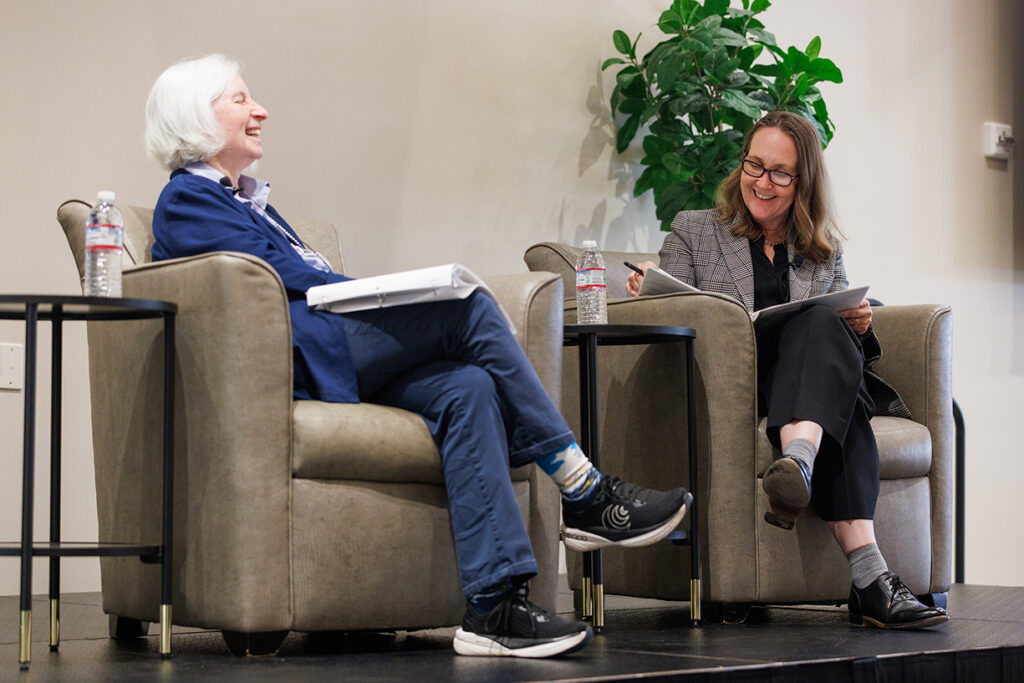
This Stanford Legal discussion spotlights a striking—and often overlooked—line in the Declaration of Independence: when despotism becomes systematic, “it is their right, it is their duty” to throw off such government. Martha Minow probes why the text escalates from permission to obligation, arguing that the “duty” language radically reframes political resistance as a moral demand, not merely a justified option. The episode asks what that duty requires, who must act, and what it means for citizens facing injustice today.
Minow traces possible roots of this obligation in natural law and the “law of nations,” social contract ideas, and religious traditions that shaped the founders’ moral vocabulary—where obedience to rulers was often understood as conditional on legitimacy and higher law. She also raises the thorny question of who counted as “the people” at the founding (noting exclusions such as enslaved people and many Native persons), and how later movements—from abolition to global self-determination struggles—have invoked the Declaration’s language to justify resistance. Jenny Martinez extends the inquiry by emphasizing the Declaration’s closing mutual pledge—“our lives, our fortunes, and our sacred honor”—as a concrete act that binds a community and helps explain how the document generates enduring civic obligations, not only to oppose tyranny but to carry forward the promise of equality across generations.
This episode originally aired on June 30, 2026.
Pam Karlan: This is a special episode of Stanford Legal, a recording from one of the many special discussions that take place here at Stanford. Keep following the feed for our regular programming.
Michael McConnell: Welcome to the Declaration at 250, a special series from the Stanford Constitutional Law Center, presented by Stanford Legal. I’m Michael McConnell. The Declaration of Independence is famous for asserting that people have the right to abolish despotic government. But buried in its fourth sentence is a more demanding claim, that people have not merely the right, but the duty to throw off tyranny.
This is a remarkable assertion. Where does such an obligation come from, and what does it demand of us? In this episode, Martha Minow, former dean of the Harvard Law School and one of America’s most distinguished legal scholars, traces this concept through natural law theory and the law of nations. While the intellectual tradition clearly justifies resistance to oppression, the basis for a duty to resist is far more complex and less examined.
Professor Minow argues that this duty may arise from the very nature of rights themselves, from parallels between individual and collective obligations, and from the expectation that free peoples should inspire and even assist movements for self-determination around the world. With her is another leading figure in American legal education, Professor Jenny Martinez, former dean of the Stanford Law School and now provost of the university.
It’s a provocative argument with profound implications. Let’s explore it together.
I hope everyone else had as stimulating a lunch conversation as we h- did at our table. Often I think lunch causes me to get sleepy, but this time I think l- lunch brings me back energized because of the conversation. The next the next duo to speak are two of the leading figures in legal education both of whom I’ve known quite some time.
Martha Minow, the former dean of the Harvard Law School and continuing, of course, on the faculty there. She and I go back to 1980 I think it is, when when we clerked for justices on the Supreme Court with adjoining chambers. And she and I have been good friends ever since. And Jenny Martinez was my dean for however many years it was until her talents caused her to be become provost of of Stanford University.
They are going to be speaking about… And I don’t actually– it’s hard for me to guess quite what this means but they’re gonna be talking about the concept of duty and obligation within the Declaration of Independence. So please join me in welcoming Martha Minow and Jenny Martinez.
Martha Minow: Good afternoon. When Michael invited me to do this, it’s very hard to say no to anything Michael asks. I was tempted, however, because I thought I have nothing new to say about the Declaration of Independence, and therefore the title of this conference is so especially appropriate. What is there new to say?
So I dutifully sat down to try to figure out, is there anything I have to say? And a word popped out for me, and the word is duty. I’m so delighted and honored that your provost is here to tell me what I’m getting wrong, but I will t-try to share with you some meditations on what is the meaning of the word duty in the Declaration of Independence.
It appears in the fourth sentence. It appears in the sen- in the sentence that follows statements about the necessity of dissolving political ties when a government fails to secure the natural rights it is meant to secure. The declaration itself acknowledges that prudence and the demonstrated willingness of people to suffer rather than to change their government may argue against any kind of rebellion, and nonetheless asserts, and I quote, “But when a long train of abuses and usurpations, pursuing invariably the same object, evinces a design to reduce them under absolute despotism, it is their right,” comma, “it is their duty to throw off such government and to provide new guards for their future security.”
So why duty? Perhaps the drafters were simply assuming that a duty is like a synonym for a right. But actually, rights and duties carry very different meanings and implications, and I’m gonna give you some reflections about that. The pioneering statement of a people’s rights to resist tyranny and form a separate nation, as we discussed this morning the Declaration of Independence in many ways was unprecedented.
It drew support, however, from the secession by the Netherlands from Spain, as well as from na- some natural law theories about sovereign governments. Law of nations theorists grounded government on the consent of the governed. John Locke was mentioned this morning, but he ought to be mentioned as someone who emphasized that it would be unsurprising for people experiencing, and here are his words, “A long train of abuses, prevarications, and artifices to exercise a right of self-determination,” or in his words, “To rouse themselves and endeavor to put the rule into such hands which may secure to them the ends for which government was first elected.”
It’s pretty close to the language in the declaration. But where the duty part comes is really not clear. Perhaps it derives some mutual promises people make behind the establishment of a government or from a more general notion of a social contract. Perhaps it comes from some idea that a right of resistance implies an obligation.
But a- again, moving from legitimacy of rebellion to necessity is a puzzle I do think that the immediate context of armed confrontations experienced by strongly religious communities offers some explanation for why the North American colonists in the 18th century inferred a duty to rebel. Tyranny departs from duty to a divine authority.
In a sermon delivered on May 31st, 1775, Harvard’s Col- College President Samuel Langdon described how the king’s soldiers killed inhabitants of Lexington and Concord and plundered local houses. He drew parallels to the corruption, disregard of law, and destruction prophesied by the prophet Isaiah, as well as to the dictatorship of Julius Caesar, and how such behavior undermined legality and legitimacy.
Presuming divine authority to be supreme, President Langdon directed this question of obligation to the people living in a corrupted state. He asked, “Ought they not rather to think it high time to restore the corrupted, dying state to its original perfection?” That ought is as close as I have found to a contemporaneous text using anything that sounds like a duty.
It assumes that resistance to tyranny is a right and that success in resistance demonstrates the will of the sublime, the supreme authority But alignment doesn’t quite give a source for a duty or the scope of the duty. Maybe because the declaration for its drafters reflected a social contract, it indicates a collective will as well as an individual duty, that the collective group of people have duties perhaps to one another.
Maybe it is these interpersonal relationships that matter, not just one-on-one, but a collective quality. The declaration’s authors, in fact, envisioned a people beyond– in separate individuals coming together to create a government. And here’s another puzzle. Who exactly is that people? At the time, there were global empires composed of many different kinds of people, groups that we today would probably describe by reference to their language or their racial identity or other kinds of distinctions that frankly didn’t exist at that time.
But the empires reflected conquest and struggle with long stretches of war and violent conflicts. One of my colleagues, historian David Armitage, stresses that membership in the people asserted by the declaration did not include those who were loyal to the British King George III, nor native persons, nor people who were enslaved.
So it is a puzzle, who exactly is the people? The adult white men left after subtracting those other groups would have a duty to throw off the tyrannical hold, and perhaps a duty also to those women and children associated with them, again, in light of religious sources I wonder if the summons is not just interpersonal and not just about a collective idea, but something about law of nations, international ideas that were circulating about the last hundred years before the declaration.
And so maybe the drafters were thinking that they were in some ways part of a larger community, a community of people who thought that there was a law of nations. The jurists in ancient Rome, the medieval Christian theologian Thomas Aquinas, seventeenth century theorist Samuel von Pufendorf, all advanced that there was some idea of a universal law, a law common to all human beings, and that coming together to form a government, people sought their collective security and welfare.
Maybe the drafters of the declaration imagined a community of people who know- knew these authors and imagined that they’re looking at each other. If they’re obeying and bowing down to tyranny, then they’re not actually standing up for their rights. A duty to rebel if those entrusted with authority produces abuse and indignities could lead to a logical conclusion, maybe an expectation to rebel.
Since the World– since World War II, the United Nations Universal Declaration asserts, whereas it is essential if man is not to be compelled to have recourse as a last resort to rebellion against tyranny and oppression, that human rights should be protected by the rule of law. So at least from the vantage point after World War II, this idea of a right to rebel as itself a kind of correlate to human rights is widely circulating, and maybe the Declaration of Independence was a foundation block for that I actually, in the midst of working on this, thought the topic of duties is much discussed in law and particularly legal theorists, and I went down a rabbit hole that I’m not gonna bore you with.
But Wesley Hohfeld and others in the turn of the 20th century explored the relationship between rights and duties, said that they’re not exactly one for one. It’s more complicated. I concluded it doesn’t help me with the Declaration of Independence. But if you wanna read my chapter, I talk about it more.
I do think the declaration, whether it has legal status or not, we’ll hear more about that before the conference ends has a psychological dimension. So another way to understand the meaning of a duty in the context of the declaration is something about the subjective experiences that are influenced by thinking of oneself as being observed and judged by others.
Imagining themselves as being observed by others, individuals may come to believe that they’re not only justified by others to act to preserve their rights, but that they actually should do these internalized expectations of parents, teachers, peers. One of the dominant theories of human development stresses that the internalized expectations of others is how people develop their moral sensibility.
Psychological experiences could convert a right into a duty, at least that’s a possibility, or anticipating the watchfulness of others could propel the conclusion that tyranny should be thrown off because any self-respecting people would do so. Something like that appears in the work of nineteenth century leader and author Frederick Douglass in his arguments for abolishing slavery and advancing rights for those who’ve been enslaved.
And similarly, people in abusive intimate relationships often are in– called upon to leave, not only for their own sake, but for the sake of others, including children, others who care about them, victims in similar circumstances, the duty to rebel. Someone who bears rights may be thinking not only about others in their own community, but others in other communities, and maybe even thinking we have a duty to rebel, if only to set an example for people who also experience tyranny in other countries.
And here I do think maybe, it’s another speculation, that cultural narratives have a role in why people develop an expectation that they have not only a right, but maybe a duty to rebel. For those signing the declaration, those who drafted it, they really had religious narratives much in their mind. They knew the biblical stories of Noah, the exodus from oppressive rule in Egypt, the exhortations of the prophet Isa-Isaiah.
There– These traditions included repeated exhortations to stand firm against evil. The duty to dissolve political bonds finds a striking antecedent in Jewish legal and biblical traditions, which the founders knew. In Jewish law, a king’s authority is conditioned upon compliance with the Torah, the Jewish sacred book, and the Torah requires a king to write and study the Torah daily, to carry around a pocket to remind him of his royal power, that it’s restricted by a covenantal obligation.
Similarly, the commentaries by scholars and rabbis for hundreds of years has elaborated about how a king who violates the Torah’s statutes forfeits the legitimacy of rule. Again, the drafters of the declaration would have known these rules. Citizens, therefore, may have a duty to ignore a king who violates the law
Here too, there’s a contrast in the Bible between King Saul and King David. King Saul violated the divine command repeatedly and was unrepentant and lost his power. David was not perfect, but he demonstrated humility and continued to communicate with the divine authority and repented, and therefore he deserved the obedience of the people.
At least that’s a narrative that those two stories tell. The declaration’s enumerations of abuses echoes the biblical accounts of the story of Saul. Both talk about a king, not– who not merely made a mistake, but who chose a posture untethered to the people, who continued to disobey the people’s desires and needs, and on that basis, lost authority.
More recently than at least that text, Dr. Martin Luther King Jr. drew from prophets like Isaiah in quoting, “Each human being has an inescapable obligation to denounce evil when he sees it.” There’s duty front and center. Religious texts also support a duty to save not just oneself, but also other human beings, and the Universal Declaration of Human Rights, adopted by the UN Assembly in nineteen forty-eight, reflecting many different traditions, specifies a duty to c- to community as well as to human rights Biblical narratives informed the drafters of the Declaration of Independence, and that includes even Thomas Jefferson, who said he wasn’t so sure about this Bible thing.
He spent a fair amount of his time as president editing the Bible. He produced his own version of the Bible ’cause he cut out the parts that he didn’t like. The one thing that I would say about that is that means this is someone who really knew the Bible. He spent a lot of time reading it, and that’s true of the other four members of the committee that was assigned to support Jefferson in the drafting of the Declaration.
John Adams wrote to Thomas Jefferson, “I’ve examined all religions, and the result is that the Bible is the best book in the world.” Roger Sherman, another member of the drafting committee, consulted the Bible more than any other vol- volume. Robert Livingston, yet another member, he administered the oath of office to George Washington at the first inauguration, after which Livingston kissed the Bible and added, “So help me God.”
The final member of the committee, Ben Franklin, claimed that he had rejected his Puritan upbringing in his independent search for reason and social unity, but he also spent a lifelong engagement with Christianity. Sor- shortly after issuing the declaration, Franklin presided over the Constitutional Convention in Philadelphia, where he signed the oath required by Pennsylvania for its legislators, and in that oath avowed a belief in God, the creator of the universe, and the divine inspiration for the Old and New Testaments.
So even the most rationalist, non-religious members of this drafting committee actually spent a lot of time studying and knowing the Bible. If the declaration is understood as coming from a society having pervasive discussions of divine authority, those drafters and those around them would take for granted that in such a world, leaders and ordinary humans hold duties to obey divine authority, and in such a world, tyrants violating the r- rights of people could not be agents of a divine being and therefore should not be tolerated by those who adhere to divine teachings.
Disobeying a tyrant thus reflects obedience to God and hence is not only a right but a duty After World War II, Christian theologian Reinhold Niebuhr observed, and I quote, “The most effective opponents of tyrannical governments are today, as they have been in the past, men who can say, ‘We must obey God rather than men.'”
Becomes much more explicit is interestingly after World War II, this notion of an appeal to higher rationale. And indeed, following the Nuremberg trials after the war, US law and international law both embraced a duty of those in the military to disobey unlawful orders, be responsible to a higher authority The leaders of the American Revolution, the drafters of the Declaration of Independence not only knew these religious norms, they knew, as I mentioned before, about the Dutch Revolt against Spanish tyranny, but even that had a religious dimension.
There were followers of Calvinist theory that were part of that Dutch Revolt. They also pointed to Greek and Roman sources to support natural rights. And in many ways, the Dutch Revolt and the Declaration of Independence built precedents for what emerged as an international law body governing the use of legitimate force or the legitimate use of force in asserting group self-determination.
The UN Charter includes a right of self-determination in its statement of purposes, although there’s a lot of debate about what does it mean to have such a right and when is it operational. One more guess about duties, again, with some drawing on sources beyond law, beyond even psychology, beyond religion, is just this: A right to overthrow tyranny could be a duty that people owe to themselves, a duty they owe to their compatriots, a duty owed to posterity, a duty owed to any people anywhere in the world.
This notion of duty asks a duty to whom? And I think by really pressing hard on that, these different audiences underscore, the membership in humanity. And the language of duty offers an impetus to act, and a failure to do so implies partial responsibility for oppression that persists. I am not clear that any of the things that I’ve offered to you have any…
hold any water. I am clear that there’s a set of legacies of the Declaration of Independence that include this notion of a duty. The duty to rebel against tyranny. It’s that has been cited by leaders in Hungary, in Vietnam, in Quebec, in Estonia Native American tribes. Questions endure about who are the people, who is eligible for self-determination, how is that to be reconciled with stability?
But this notion of a duty to stand up for rights for oneself and one’s people is now familiar. It’s familiar around the world And it, I think this Declaration of Independence, the precedent that it’s helped to build, has emboldened other individuals and groups to protest abuses and to seek self-governance.
It has helped to build a framework for asserting rights and claiming authority. It has treated offenses as fuel for obligations to oneself and to others. The Declaration has inspired, for example, decades of movements by women in this country and elsewhere the movement against slavery, the movement to pursue civil rights in this country and elsewhere.
It foreshadowed and paved the way for President Abraham Lincoln’s Emancipation Proclamation. Dr. Martin Luther King Jr. explained the Emancipation Proclamation was the offspring of the Declaration of Independence. There was a constructive use of the force of law to uproot a social order which sought to separate liberty from a segment of humanity.
Close quote. In this light, perhaps the duty to overthrow tyranny stems simply again from the duty individuals owe to one another. And thinking about this duty that we owe to one another, I find myself remembering one more text. This is a teaching, a Talmudic teaching by Rabbi Hillel, who said, “In a place where there are no men, strive to be a man.”
Collected and preserved in the ethics of the fathers early third century collection of teachings by rabbis, this teaching directs that precisely when others do not take responsibility, each of us are obligated to do take responsibility, show integrity, stand up and lead, and do so because other people are watching, and do so even when other people are not watching.
The personal duty to maintain independence and respect for others mirrors respect for oneself, and it is a duty to stand up for oneself, for human rights, and for other people. The duty to be an exemplar, to bear witness would remain even if resistance seems or proves to be unsuccessful. In the wake of the Declaration of Independence, resisting tyranny, thus does seem to involve a duty to oneself and one’s others.
In twenty twenty-six, that duty could mean speak out against the raids by ICE. Just as the Declaration of Independence reflected philosophic and religious traditions, it now contributes to the stream of obligations to protest injustice. Thank you.
Jenny Martinez: So it’s such a pleasure and an honor to be here with you. I’ve told you this story before, I think, but when I was in law school, you were the first person to tell me that I should think about being a law professor. And so-
Martha Minow: I knew that. I knew you should be a law professor.
Jenny Martinez: And so I’m forever grateful for that.
I had never thought about this part of the declaration before, and so I found it really interesting to read your reflections and explore what it might mean. And I think one of the things that I came away with was that it can be read in a lot of different ways, and that’s the beauty of it, as with the rest of the document.
In its very short and simple frame it sparks a lot of conversations and has for the last two hundred and fifty years. So I have some sort of more concrete observations or thoughts that I’ll walk through, and then I think you might have, you might have reactions, and I’m sure people have questions.
Just to reflect back, you– in, in this essay, you explore the distinction between and the relationship between a right, a necessity, and a duty to rebel against tyrannical government, asking what the concept of duty adds to the declaration’s meaning and impact. And you began with a close reading of the passage, and I’ll read it again just because I’ll use the language of it as I consider it.
“When a train of long abuses and usurpations, pursuing invariably the same object, evinces a design to reduce them under absolute despotism, it is their right, it is their duty to throw off such government and to provide new guards for their future security.” You’ve covered just beautifully the many religious, legal, philosophical sources from the Bible and Torah to social contract theory, early modern writers in the law of nations where this idea of duty might have found its way into the minds of those who drafted the declaration.
And then discussing the legacy arguing that by treating resistance to tyranny as a duty, it has emboldened other individuals and groups to protest abuses and seek self-governance from the American Revolution through to abolitionists, to Lincoln, women suffragists, Martin Luther King, and around the world with potential implications for how contemporary citizens should respond to tyranny and oppression.
And in that sense, you suggest the Declaration of Independence as a continuing demand to rebel against unjust authority. And this is a more radical conception of duty than is common, at least in legal sources. For in many cases, duties are pairs- paired with rights as a more stabilizing or even conservative anchor.
So in seventeen ninety-five, the French Declaration of the Rights and Duties of Man and Citizen ushered in the end of the Terror and revised the seventeen eighty-nine Declaration of the Rights of Man from France to add a list of duties. And the 1795 version, the section on duties explains, “All the duties of man and citizen spring from these two principles graven by nature in every heart: not to do to others that which you would not that they should do to you.
Do continually for others the good that you would wish to receive from them.” This echoes cla- religious and classical texts the golden rule but also more approximately Pufendorf’s On the Duties of Man and Citizen from 1673, in which sociability naturally binds men to one another, as you’ve discussed.
Following some of Pufendorf’s framing, the 1795 French declaration circumscribes duty within civic boundaries, and even the family. It goes on to say in the 1795 text, “No one is a good citizen unless he is a good son, good father, good brother, good friend, good husband,” as well as duties to obey the law.
“No one is a virtuous man unless he is unreservedly and religiously an observer of the laws. The one who violates the laws openly declares himself in a state of war with society.” This restatement of the Golden Rule grounds the rights of citizenship within the bonds of mutual obligation and civic virtue, and in so doing, it, in a sense, I think, rescues Rousseau’s conception of the social contract from its more dangerous implications that were manifest in the terror that the general will can justify anything does in– done in its name.
And it does so by centering more civic republican ideas of mutual obligation, and it highlights a recurring question: What are the limits of revolution, and how do we prevent a righteous fervor from becoming dangerously self-righteous and burning out of control? And it implicitly concedes maybe Burke had a point about the French Revolution.
Modern texts like the American Declaration of the Rights and Duties of Man, the 1948 human rights text from the Organization of American States, the intergovernmental organization of North and South America, including the United States, that came into effect the same year as the Universal Declaration of Human Rights, similarly lays out a list of duties, echoing even some of the language of the 1795 French Declaration almost verbatim.
In 1948, the OAS document, the American Declaration, reflected the more Catholic and civic republican traditions manifest in the countries that were represented at its drafting, while in the drafting of the Universal Declaration of Human Rights, liberal the more liberal universalist tradition came to the fore.
The Universal Declaration’s reference to duties is brief. Article 29, as you alluded to simply says that everyone has duties to the community in which alone the free and full development of his personality is possible. But the United States delegation, among others, resisted the push to include more about duties in the context of the Cold War conflict between the Soviet and communist nations and and the West out of concern that duties, particularly in the communist framework, could be used to override individual rights and had a more radical a radical effect.
So within this broader context, I wanna focus on a set of questions that you ask in the paper that I think are quite important to unpacking the origins and consequences of a duty to resist tyranny. By whom and to whom is this duty owed? So you write in the essay, addressing to whom the duty is owed can bring the meaning of a duty into focus.
The duty to overthrow tyranny could be a duty individuals owe to themselves, as you’ve just said, a duty they owe to their compatriots, a duty owed to posterity in the nation, or a duty owed to any or all people in other places. These versions of the duty embody elements of self-respect, loyalty to fellow countrymen, devotion to future generations, and regard for all humanity.
The one hand, these invoke familiar questions about liberal and universalistic versus more civic republican ideas of of what we were constituting. But some broader issues are also potentially at stake. A narrow answer, I think, constitutes the United States or tends towards constituting the United States as a particular set of people with obligations to one another.
The broader universalizing answer evokes the creedal nation conception of the United States as a polity bound primarily by an idea, and actually a very specific idea, the one in the Declaration’s most famous passage, that we hold these truths to be self-evident that all men are created equal and endowed by their creator with certain inalienable rights.
These debates are still significant today. Is the United States, as some have said, a creedal nation grounded in these principles or ideas? Or is it grounded in something less universal and more concrete? As our vice president has argued, a group of people with a shared history and a common future rather than an idea or abstraction.
The Declaration itself contains both universal and more specific language, but reading this language with attention to these passages implications for the duty described in the document, I think is interesting. In one of the passages in the declaration, the authors address their British brethren with a hint of chastisement, perhaps implying that those brethren have failed in their own duties without explicitly saying so.
In that passage, the f– the Declaration says, “Nor have, n-nor have we been wanting in attentions to our British brethren. We have warned them from time to time of attempts by their legislature to extend an unwarrantable jurisdiction over us. We’ve reminded them of the circumstances of our emigration and settlement we’re here.
We have appealed to their native justice and mag– magnanimity, and we’ve conjured them by the ties of our common kindred to disavow these usurpations, which would inevitably interrupt our connections and correspondence. They too have been deaf to the voice of justice and of consanguinity. We must therefore acquiesce in the necessity which denounces our separation and hold them, as we hold the rest of mankind, enemies in war and in peace, friends.”
If there is a universal duty to resist tyranny or a re– duty to resist tyranny to those with whom one is bound in some b– sense of brotherhood or community, are not the British brethren addressed in this passage even more bound to this duty than the colonists? Honestly, I think they let them off a little light.
Duty here is implicit rather than explicit. The final sentence of the declaration also hints at bonds that are more mu-mutual than universal. It says, “And for the support of this declaration, with a firm reliance on the protection of divine providence, we mutually pledge to each other our lives, our fortunes, and our sacred honor.”
Is this fairly read as an explication of an existing duty, or is it better read as the creation of a new one? I tend to think more of the latter, that the signatories are in the act of signing this document forming a new obligation with the pledge they make with their signatures. And this new obligation to the Declaration, I submit may be the more important duty in the document. So what is this pledge that they make in the last sentence?
We pledge it ins– for, and for the support of this Declaration, we pledge our lives, our fortunes, and our sacred honor. And it is this declaration and its commitment that all men are created equal, and they’re endowed by their creator with certain in-inalienable rights that forms the most important commitment to upholding that Declaration.
This language helps us understand, at least from my perspective, why the dichotomy between America as an idea and as America as a group of people with a shared history is not so distinct. America is not an abstract idea. It’s a concrete idea grounded in time and spla-place, and it’s precisely an idea forged through shared history of the people that have lived and died here for the past two hundred and fifty years.
Because our shared history as a people has largely been about refinement and realization of the ideals of the declaration. From Lincoln’s Gettysburg Address, which regrounds America in the moment of the declaration and its commitment in that pledge, to language used by presidents from FDR to Ronald Reagan and George W. Bush, it is the fulfillment of that commitment at the end of the declaration that forms so much of our shared history. You can he-read our shared history well outside the sort of formal bounds of government. Langston Hughes in nineteen thirty-five, the poet writing, “O let America be America again, the land that has never been yet and yet must be the land where every man is free.”
Hughes’ poem evokes a sense of duty when he says that this is what we, the people, must redeem. In that sense, to me, what matters more is the duty that’s developed over time in this country that was founded on the Declaration of Independence, the duty to fulfill its promise in the way that generation after generation of Americans have tried following that original commitment by its signatories.
Burke famously said that Englishmen claim their rights as an entailed inheritance derived to us from our forefathers and to be transmitted to our posterity. In its universalist register that all men are created equal, duties are owed to all humanity, the Declaration may sound more Lockean and Kantian.
But in its particularist register, the accumulated weight of American self-understanding, the promise made at the founding and renewed through abolition, reconstruction, and the civil rights movement, now part of the inherited moral identity of this specific people, the duty to fulfill the declaration’s promise is not a duty owed to abstract humanity.
It’s a duty owed to ourselves as Americans, to the tradition we’ve received and are obligated to transmit, and that is inheritance and not abstraction after these 250 years. So those are my reflections.
Martha Minow: Oh, wow.
That was really beautiful. You are now truly my teacher. What I can say is that you’ve put your finger on this tension between particularism and universalism which, in some ways is distinctly an American preoccupation. And that’s ironic, right? How can i- we have as particularly our tradition, our preoccupation with how universalist is our tradition, and yet that is our tradition.
And in some ways the very fact that this was a colonial sta- state displacing people who lived here the claim that it was empty lands that appears in the jingles that were taught to my daughter in her fifth grade class notwithstanding allowed for the creation of a myth that we are creating a people.
And that myth, in many ways we’re still working on realizing, including ensuring respect for the people that the co- colonial people displaced. I think that your comment about the language in the declaration about the Brits, I also thought about writing about that too, but it’s just so elusive.
There… you put your finger on that, too. There’s chiding them, but not quite calling them out. It’s they have a duty, but it doesn’t say that. I think it’s even apologetic. We’re rebelling against you even though you’re our brethren, but you were abandoning us. It’s tit for tat.
It’s a weird passage, for sure. As to the very last sentence, that’s so interesting. Sacred honor. There’s the religious dimension. It’s interpersonal. It’s a commitment to each other. And there’s a even a quality of we are linking arms because we are s- in such danger. We have to do that with some imagination of the future.
I do think that the the sense of mortality was so present for the authors of this declaration. I’ve just come from a celebration in Lexington, Massachusetts, where there’s still a sense people were shot right here on this green. It’s very palpable. That sense of mortal danger is the concreteness behind the universal commitment, I think.
So I’ll leave it there.
Pam Karlan: This has been a special presentation from Stanford Legal. I’m Pam Karlan. See you next time.