
The Politics and Promise of a Billionaire Tax
Stanford Law Alum Darien Shanske on Wealth, Fairness, and California’s Proposed Billionaire Tax
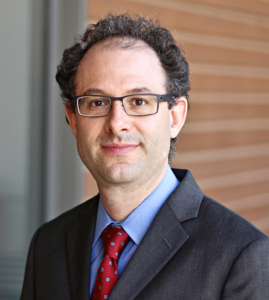
On this episode of Stanford Legal, host Professor Richard Thompson Ford talks taxes with Darien Shanske, JD ’06, a UC Davis law professor and visiting professor at Stanford Law, who helped draft California’s proposed Billionaire Tax Act, which supporters hope to place on the November 2026 ballot. Shanske explains why he believes critics have often attacked a distorted version of the proposal, not the measure itself: a one-time 5% tax on net worth above $1 billion, payable over five years, aimed at helping California respond to widening wealth inequality and cuts to the social safety net. The conversation explores the legal design of the measure, the politics surrounding it, and the larger questions it raises about tax fairness, concentrated wealth, and what tools states should have when public needs are acute.
This episode originally aired on April 2, 2025.
Transcript
Darien Shanske: Certainly, the great wealth that’s accumulated here—as well as the great inequality—is a precondition, to a certain extent, for a tax like this, in terms of it both being supported and it being productive. I also think that California is a state where there is at least some commitment to a level of social safety net functioning that resonates with people.
Rich Ford: This is Stanford Legal, where we look at the cases, questions, conflicts, and legal stories that affect us all every day. I’m Rich Ford. Please subscribe or follow this feed on your favorite podcast app, and that way you’ll have access to all of our new episodes as soon as they’re available.
In 1989, the richest 0.1% of Americans held about 8.7% of the wealth in the country. But in 2004, that same top 0.1% held 13.9% of the wealth. Are billionaires paying their fair share to allow our society to continue to thrive? Some people in California think they aren’t, and they proposed a way to remedy that. The proposed Billionaire Tax Act is slated for the November 3rd, 2026 general election, assuming proponents gather enough signatures by the June 2026 deadline to get the measure on the ballot. If qualified in the past, it would propose a one-time 5% tax on the net worth of the individuals in California exceeding $1 billion.
Here to discuss this proposal is Darien Shanske. Darien is a Stanford law alum and a professor at UC Davis School of Law, where he writes and teaches about taxation, public finance, local government law, and political theory.
Before starting teaching, he worked as a financial consultant to California local governments and practiced public finance law at Sidley Austin in San Francisco. Darien’s been deeply engaged in the debate over California’s proposed billionaire tax, and in a series of papers, he’s argued that much of the criticism of the proposed tax is directed at a misdescription of the measure rather than the proposal as it is actually written.
He emphasizes that the proposal is a one time 5% tax payable over five years, not a permanent annual wealth tax, and he’s pushed back on some claims that it would force fire sales of companies or prompt a mass exodus of billionaires from the state. At the same time, his work opens up bigger conversations about state taxing power, extreme wealth concentration, and what fiscal tools states should have when they face major public needs.
Darien, thanks so much for joining us.
Darien Shanske: It’s a great honor and pleasure to be here. Thanks so much for having me.
Rich Ford: So why don’t we just start with some background? What exactly is the billionaire tax? How did you and the others involved in developing it, develop it, and why do you think we need it?
Darien Shanske: Great question. So, the other developers are Brian Galle at Berkeley, Emmanuel Saez at Berkeley, and David Gamage, who’s at Missouri. And so we started working on versions of this tax during the pandemic, and the idea was that there was great emergency in that case, the pandemic, not being handled well by the federal government. And certainly, before we understood that there’d be this strange, K-shaped recovery, such that, in fact, state revenues would not be of severely hit, it looked like there’d be a, a major hit to state and local revenues at the worst possible time. And the question was, “what should we do?” And so that emergency was paired with the fact, as your introduction pointed out, this explosion of income inequality.
So, a relatively small tax could yield quite a large sum of money very quickly on an emergency basis. And so, our first version of this tax was drafted in 2020. We then worked on updated versions of it. We wrote very long and probably tedious law review articles developing some of the ideas as to the mechanics of these kinds of taxes. And we worked on, again, including a proposal, a legislative proposal, for a wealth tax here in California that really went nowhere. The big thing that changed was the so-called Big Beautiful Bill Act, OBBBA, which is passed in July of 2025, that combines large and spectacularly regressive and poorly designed tax cuts which are generally unpaid for, except for cutting healthcare to the very poor through and the working poor through Medicaid.
So this combination of an urgent need created by poor federal policy with even further explosion of wealth inequality, such that the wealth of billionaires had doubled again since we had first articulated our initial proposal, meant that a small tax, so 1% and change a year, temporary for five years, so about what people pay on their real property, that tax would yield enough money to fill the gigantic hole created by this poor federal policy.
Rich Ford: So, in one sense, it’s an emergency measure designed to counteract the regressive tax policy of the Trump administration. So why a wealth tax?
Because some people may think, “why not just raise the income tax or raise the property tax,” or there are a lot of ways to raise revenue and a wealth tax seemed somewhat unusual.
Darien Shanske: Great question. I’ll answer firstly by making a couple of analogies and I apologize, it’s just a professional hazard.
So, imagine there’s a spectacularly successful IPO. If there’s a spectacularly successful IPO, imagine there’s a lawyer involved and that lawyer did good work. That lawyer earns $10 million—a California lawyer. Most of that $10 million will be taxed at the highest personal income tax rate in California. Let’s simplify to 13%. If there’s a banker involved, same thing. If there’s an engineer involved, maybe a little bit more complicated, probably also pay 13%. But the founder, who’s now a billionaire, will pay nothing in income tax, and the reason for that is that they just have shares that are suddenly worth a $1 billion dollars or $10 billion, and unless they sell them, there’s no income to be taxed because the income tax is a realization based system, so it’s based on actually selling stuff. But you might say to be a billionaire and enjoy yourself, you have to sell stuff. You do not. You can borrow, and in fact, borrowing, again, under the income tax doesn’t have to be this way, but under the income tax is currently designed, borrowing is not itself a realization event. So you can borrow all you want and never pay anything. And so it doesn’t make … so in terms of basic fairness and efficiency, for similarly situated taxpayers not to pay the same amount and for the most affluent to pay the least, something similar to a property taxes. Most Californians pay about 1% and change in … if they have any wealth on their wealth in the form of real property. And the question is why, just because it’s real property versus intangible property, the people who have the most property shouldn’t pay about the same 1%. And, in fact, the general property tax, which was in place in most of the country in different ways, obviously from between 1830 and the 1930s, did include intangible property as part of the property tax base.
And so the idea this is wholly new or different is not true, as well as, again, the basic fairness and efficiency intuition of why go to the middle class or even merely affluent who are paying their 1%-plus on their real property, when the most affluent, who have a huge amount of intangible property, are paying little or nothing.
Rich Ford: So, in a way you could see this then as closing a loophole in effect.
Darien Shanske: Yes.
Rich Ford: Okay, interesting. So, some people would say California already taxes people at a very high rate, and it’s got a huge economy. Why do we need more money? Is this not a case where the state has just mismanaged its budget and now has to go back to the well in a different form?
Darien Shanske: It’s worth taking a step back here, I think, and just considering the fact that this country doesn’t spend very much on its social safety net. And as … up until say, 2010, there’s a great quote from Ronald Dworkin pointing out that a country this rich, to have this many people without health insurance is a disgrace. And I agree with that and we’ve made progress on that disgrace since the passage of Obamacare, the Affordable Care Act, both in terms of premium credits and the Medicaid expansion. And California has been very aggressive and very successful at providing more basic coverage to more people.
And so, this is a response to the federal government not spending money on this basic social safety net programs that it had been spending. It’s not an example of California having made some terrible mistake or terrible mismanagement. Furthermore, Medicaid is a relatively efficient program in terms of providing basic social insurance to the poor.
Is there fraud? Sure. But keep in mind that what the one Big Beautiful Bill Act, I keep having a hard time saying it, does, is adds a work requirement. It doesn’t add any fraud protection measures and the work requirements are designed to throw people off the rolls. That’s why it’s the CBO thought it would save a trillion dollars.
So it’s nothing about saving money. It’s nothing about making government more efficient. It’s just a mean-spirited way of spending less on the people who need it most. And in a way, the healthcare system’s, the system. So if all emergency rooms, have to close in the Central Valley because of this measure, what will the emergency room look like at Stanford? And so the idea that we’re all in this together, I would’ve thought was pretty clear, but apparently is not as clear as it might be.
Rich Ford: Okay. So in one sense then, this is a reaction to a crisis that’s been generated by the decision to cut medical care and forcing that down to the state level, and states like California are trying to take up the slack, but it’s a big lift for a state this size.
Darien Shanske: That’s right. It’s a big lift even for a state this size. And if we did increase, say, the income tax, then going back to our IPO example, that means the lawyer and the bankers, the people already paying, maybe not enough.
We can have an argument about whether it’s the right rate, but a reasonable rate. They’d be paying more and the person making the most would still be paying virtually nothing. And that doesn’t sound like the right answer, that we … that at the very least we should go to the people most able to pay first.
Rich Ford: Oh.
Darien Shanske: And if in correcting that loophole, we didn’t have enough money to provide basic social safety net services, then we should have a further discussion. But we’re nowhere near having that discussion because we can’t even have the utmost affluent pay. And furthermore, because of the explosion of wealth inequality, there’s very … it is just a coincidence, that this 1% five year tax is enough to fill this hole, but it’s a coincidence generated by this explosion in wealth inequality.
Rich Ford: Let’s talk a little bit about some of the potential incentives and consequences of the billionaire tax, because some people argue that this will lead all the billionaires to exit the state, or will in some way squash innovation.
So, for instance Ron Conway, the venture capitalist, said that this is the greatest tragedy the state has ever felt. Earthquakes, floods, wildfires are in second place, the billionaire tax is the worst. And Rob Lapsley of the California Business Roundtable called it one of the worst tax policies ever conceived. Their position seems to be that it’s going to be bad for the economy in some way by forcing the most productive people out of the state. What do you say to those arguments?
Darien Shanske: There’s a lot to be considered there. Certainly, one thing is someday, somebody’s going to study the hyperbolic rhetoric around this tax that seems to be completely untethered to reality and just wonder as to what exactly is going on.
And I speak as a lowly tax professor, it’s beyond my pay grade to know or understand. I think there’s going to be a separate question that I hope we addressed as to the legal effect of some of the billionaire churn that has arguably already occurred or might occur, and we can talk about that and short answer: not likely to be effective.
Then there’s the more fundamental question as to the incentives here. Now, the actual tax that we’re talking about is a 1- and-change temporary tax levied for five years. Common sense and empirical research suggests that the California economy will not collapse over such attacks. A really nice thing about being a billionaire, apparently, I obviously don’t know from experience, is you get to live where you want.
And the idea, and again, research backs this up, that people are suddenly going to uproot their lives when they can live anywhere they want because of this, is improbable. That said, their flip side is that billionaires can afford a lot of tax lawyers, and so if it’s very easy to avoid a tax, then they will—good return on investment.
And so a big part of what we’ve done is tried to create a tax that is a low rate, temporary. So consistent with the literature and common-sense people should not respond to in a large way, while at the same time closing loopholes, so it’s not so easy just not to pay it and just pay a lawyer to avoid it.
And that’s the combination that we’re going for. And I think it’s so clear that people … billionaires are not going to respond to such a low temporary tax, which is why, as you said at the beginning, there’s this great tidal wave of misinformation, that it’s a permanent tax, that it’s 5%, because now if it’s a permanent 5% tax, it still doesn’t sound all that likely to destroy the California economy, but at least you can tell a story that a lot of billionaires might leave a for because of a permanent 5% tax. But even that, but that’s not true, right? That’s simply not what the proposal is.
Furthermore, very important to recognize a few things: One is that consider the unique ecosystem California offers, and you’re offered the chance to come here and have an AI startup. It might not work out, but part of what’s so attractive about California is that you can then have another AI startup and nobody cares that you’ve failed the first time and you’ll have no problem finding another … new engineers to work with you on your project. And if you’re lucky, you’re going to become a billionaire. And if somebody said, yeah, and it’s possible that at some point in the future, there might be another 1% tax on your $10 billion, who said, therefore I’m not coming? It doesn’t make any sense, so thinking about the future effects of the economy is, and that’ll be severe, is also not a sensible position, as well as the fact that the handful of billionaires are not … we just talked about how they don’t really pay the income tax. What they pay in income tax is very small. It is true our income tax is progressive and is dependent on relatively affluent taxpayers, but there are hundreds of thousands of those. Those are the lawyers and doctors who are paying the 13%, not the founders who are billionaires, who are paying very little. And the doctors, lawyers, and engineers … there’s no clear argument as to why, if a handful of billionaires decide to move to Miami, that they’re going to follow them there. And so it’s an argument loaded with non sequiturs, which again is why there’s been such a desire to characterize attack as something other than it is because attacks on its face, wouldn’t have kinds of effects.
Rich Ford: I’ve heard some, here’s one other to be billionaire’s advocate. Not that they don’t have enough, but some people have said that the tax will require them to dump stock or entirely liquidate their businesses because it’s taxing illiquid assets. And they don’t have the money apparently to pay the tax without having to sell something. Any responses to that?
Darien Shanske: So many. The first point is it’s a … you can defer the 5% tax for five years with a small interest charge, so 1% a year. So, we’ve specifically designed this as a low tax. The idea that a billionaire doesn’t have liquidity to that extent, again, is for the most part, highly implausible. Number two, most billionaires have publicly valued assets, that’s why they’re billionaires. They had IPOs. Their stock is publicly valued. Either selling some of those shares or getting a loan against those shares because they’re publicly valued, won’t be difficult and won’t require them selling.
As for the handful of people who might … billionaires who might truly be liquidity constrained, our proposal includes a deferral option, which basically allows them defer taxation until there’s liquidity event. And that was a big thing, we’ve worked on through multiple drafts and one of our long law review articles is all about that. But it basically says: you owe us again, say 5%. You don’t have to pay it now, but when there’s liquidity event, then give us our 5%.
And so we’ve spent a lot of time thinking about this. Our goal was not to be onerous or require fire sales. That’s why the rate is what it is. That’s why there’s deferral option and, so we think that those … that’s just scare mongering.
Rich Ford: Let’s talk a little bit about some of the larger politics surrounding the billionaire tax. Obviously, it’s gotten an enormous amount of press and an enormous amount of attention. Do you know how close you are to gathering the requisite number of signatures? Is this likely to be on the ballot?
Darien Shanske: I, the truth is I don’t. They keep me in the basement drafting. They don’t tell me how they’re doing with signature gathering. So, I don’t know the answer, although I will… this does touch on … the fact that there’s a question that it might get on the ballot goes through this really, another common theme about whether this is a temporary or permanent tax.
People say in this kind of world weary, cynical way, “oh, there’s no such thing as a temporary tax.” There is such a thing in California. Californians, didn’t … re-up the sales tax increase that was part in 2012, it was a four-year tax increase and they didn’t re-up that. Californias don’t approve all taxes, they rejected a millionaires’ taxed a few years ago. They were rejected split roll in 2020, which was a big surprise. That was with … everybody by everybody, all the unions, Governor Newsom, Mark Zuckerberg supported, still lost. So the idea that these things are all permanent is, I think, dubious.
And when it comes to the signature-gathering, the billionaires have put five, what we are calling “revengements,” on the ballot or gotten them through the process. These are ballot measures like the Budget Stability Act that sounds totally reasonable, but in you have some poison pill inside that would affect our measure of how it would and what the courts would say is another question, but they definitely … that’s the goal.
And they paid signature gatherers… a lot to get signatures more than the unions are. And so there’s a real question whether the union will be able to get the signatures it needs because of the power of the billionaires to pay more per signature. And that just goes to this question of whether or not this is going to be a … there’s such thing as a temporary tax. If this measure gets on the ballot, if it passes, despite clearly going to be outspent many times over, that unions or other groups will look at this adventure and think, this is great, this is something we want to do again, I think that’s a questionable assumption.
Rich Ford: So Darien, I suspect that if this tax passes, there’ll be some legal challenges, and some people have claimed that it’s unconstitutional or it’s a taking of property. What do you think the legal challenges will look like and how vulnerable would this tax be to legal challenge?
Darien Shanske: Great question. There’s no doubt that there’ll be a lot of legal challenges, ranging from the somewhat plausible to the completely implausible. And we try to channel them in the bill by having an expedited review of facial challenges that will go to a Superior Court and then the California Supreme Court as quickly as possible, because we understand that there will be these meritless challenges and we want them to be resolved as quickly as possible.
There will obviously also be some “as apply” challenges, which people will have to pay taxes first and then go through the regular process, and those will take longer. Now, there are a lot of different kinds of challenges. I had promised before to talk a little bit more about residency, so we’re taking a second to talk about how it works and why it’s normal science—there’s nothing novel. So, California has had that income tax since 1935, and the billionaire tax proposal builds on the rules basically set in 1935. It’s been a little bit cha changed since then for establishing California residents that has analogies in other states. And the basic idea is that you’re presumed to still be domiciled in California unless you can be shown, unless you show, that you are not in California, and for more than a temporary reason.
Now, for a lot of people, that’s not going to be hard. I move, I’m going to sell my house. I have a job in another state, I’m going to move there. And so that’ll be done. But for people in this particular billionaire class who decided to move by reincorporating the LLCs on December 24th, it’s going to be a lot harder.
And in fact, there is a big and developed body of law about this. So, for example, a California couple wanted to sell their business, expected to make $20 billion. They wanted to not pay California income tax, so they moved to Nevada. They got their Nevada driver’s license; they got a Nevada apartment. They sold the company in July, and the question was: as of July, were they Nevada residents or California residents and the courts said they’re still California residents because they haven’t established that their sojourn outside of California was other than temporary, given all of their California connections and history. And so, our position is that these rules indicate that we think, quite reasonably, that deciding to loudly announce in a tweet that one is moving and buying yet another mansion in a different state is not enough to establish residency in another state and rightfully
Rich Ford: Okay. So if the billionaires leave to avoid the text, they’ll have to actually leave. They won’t be able to use some kind of trickery in order to make it look like they’re leaving. Wow, nothing’s, in fact, changed. And that was one of the objections to the tax that, of course, they’ll just find a way around it. They’ll find some loopholes.
Another question that’s come up is: is this a retroactive tax? Because one of the ways to prevent flight, as I understood it, was that the tax would be effective as of the beginning of 2025. Is that correct?
2026. Oh, sorry, 2026.
Darien Shanske: The measurement date is January 1st, 2026. And so, if the tax passes in November, then it is true January is before November, and so I, …but I would resist calling it retroactive, and here’s why. Because in a classic retroactive case, and say the lead Supreme Court case called Carlton from 1992, Congress changes the tax law as of a previous tax year. So, if somebody filed their taxes, got a benefit and Congress said, we never meant to give them that benefit, we want to take that back.” And the court said they could. They basically use a form of rational basis. And so if we did make it 2025, I think we would be on strong grounds.
As it is, the court made clear that going back to the beginning of the calendar year is totally usual. The federal government has done that many times, state governments do it all the time. It makes sense. States don’t legislate on January 1st, right? They’ll often legislate back to the beginning of that year. Nobody’s filed any taxes yet for 2026. It’s not really retroactive or changing anybody’s tax treatment for 2026. So, short answer is yes, there’ll be, there’ll almost certainly be challenges, but they’re frivolous challenges to the extent that by going back to the calendar year and not reopening a previous tax year, which would be permissible as long as it survives rational basis, which I think we could easily do, but we’re not even doing that. We’re just going back to the calendar year.
Rich Ford: So maybe let’s talk a little bit about the national climate in which the billionaire’s tax is coming about there. As I mentioned at the opening of the show, there’s been a lot of talk about disparities of wealth, but there’s been a lot of talk about the increasingly very public role that certain billionaires have played in our national politics, and it’s generated some blow back. Do you have any sense of how the billionaire tax fits into this larger national political environment? Are billionaires worried and would they be right to be worried that this will spread? That California is a bellwether and if we get a wealth tax here, we’ll probably have one in whatever state they might want to move to in the next few years.
Darien Shanske: Not being a political scientist or a soothsayer, I’m not sure what is going to happen. I will say that one of the surprising trends I’ve noticed since introduction of this bill has been many billionaires and their supporters saying things like “We probably need to change the stepped up basis rules so that people can’t inherit assets without paying tax on the built-in gains.”
Or, “I think it will be reasonable for billionaires to pay tax when they borrow against their assets because, in a sense, they really are realizing their income.” And so, it feels like there is an understanding, amidst the magnitude of the inequality, as well as the magnitude of the fiscal imbalance that we had even before the current administration made it so much worse, that there’s going to need to be adjustments and that I think it’s … I don’t know what’s going to happen. And I don’t want to even pretend to know but I do, but I do want to observe that there does seem to be this dawning recognition, even among opponents of the tax, that they’ll often raise other kinds of related reforms as preferable. In many of these cases, I think these reforms would be good ideas. I think our tax would also be a good idea and they can be complements. But it is interesting that the dialogue has shifted because it’s understood that it just cannot be that, given the magnitude of the need and the magnitude of the inequality, that people are amassing this level of economic power without paying essentially any tax at all in many cases.
Rich Ford: So, you’ve studied tax policy in California, in particular, for many years. Do you think there’s a reason that California is an especially good place to test a tax like the billionaires’ tax or a reason that it came about here as opposed to some other states?
Darien Shanske: I think so. I think that certainly the great wealth that’s accumulated here, as well as the great inequality is a precondition, to a certain extent for a tax like this, in terms of it both being supported and it being productive.
I also think that California’s a state where there is a, at least some commitment to a level of a social safety net functioning that resonates with people and just saying, oh, the federal government has stopped providing a basic backstop health insurance to the poor. We’re just going to essentially have the tax fall on them, which is the other option, right? You just … it’s essentially the most regressive kind of tax. And so, I think the combination of the political and economic background of California does go a long way in explaining why this is the first state to propose this particular kind of tax, but Massachusetts passed a billionaires’ tax, Washington just passed a billionaires tax. They’re not the same kind of tax exactly but going to your previous question they do speak to national trends.
Rich Ford: Thanks so much for joining us on the show. I look forward to seeing how the political fight over the billionaires’ tax unfolds over the next months, and perhaps we’ll have you back in November when we have a result.
Darien Shanske: I’ll be here. I would love to.
Rich Ford: This is Stanford Legal. If you’re enjoying the show, please tell a friend and leave us a rating or review on your favorite podcast app. Your feedback improves the show, and it helps new listeners discover us. I’m Rich Ford, see you next time.