
Trump’s Executive Orders, Culture Wars, and Civil Rights
Stanford's Ralph Richard Banks on the Doctrine of Disparate Impact and the Surprising Case for Meritocracy
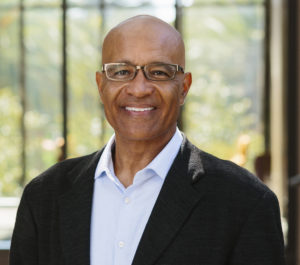
Trump-era executive orders, police hiring standards, and college admissions all converge in a decades-long debate over disparate impact, one of the most misunderstood yet consequential doctrines in civil rights law. In this episode of Stanford Legal, Professor Ralph Richard Banks, faculty director of the Stanford Center for Racial Justice, joins host Professor Pamela Karlan for a deep dive into how the disparate impact doctrine really works, why it matters, and what’s at stake when it’s attacked in the name of “meritocracy.” From the landmark Griggs case to modern college admissions, Banks dissects the arguments on all sides—showing how this sometimes-vilified legal doctrine not only helps root out discrimination, but can also strengthen, rather than undermine, meritocracy.
This episode originally aired on July 25, 2025.
Transcript
Rick Banks: Tests like the SAT or the LSAT or many other standardized tests, they in fact do predict future outcomes. Not perfectly, and not perfectly well for every individual applicant, but they are useful. That’s the bind we’re in, is that we have these tests that produce disparate outcomes, but they also are useful in other ways. Which is why I think, over time, universities that discontinued their testing requirements during Covid, they’re going to bring them back, as many already have started to.
Pam Karlan: This is Stanford Legal where we look at the cases, questions, conflicts, and legal stories that affect us all every day. I’m Pam Karlan. Please subscribe or follow this feed on your favorite podcast app. That way, you’ll have access to all our new episodes as soon as they’re available.
One of the things that has happened over the last couple of months, and we’re now about six months into the Trump administration, is a slew of executive orders, many of them executive orders that repudiate or reverse course on things that have been going on for decades, or even centuries. And there I’m thinking a little bit of, among other things, the executive order on birthright citizenship. But one of the areas of law where there has been the largest number of executive orders, over a long period of time in civil rights, is on: how do we determine whether there’s been discrimination or not and what should we do about it? And so today I’m joined by my colleague Rick Banks, who is the Jackson Eli Reynolds Professor of Law here at Stanford Law School, a professor by courtesy at the Stanford Graduate School of Education, and the founder and faculty director of the Stanford Center for Racial Justice, which aims really to confront and counter the polarization in American society that has infected issues involving race, and where Rick has been, I think for a long time, one of those people who’s a little bit counterintuitive in his thinking on some of these issues and therefore really forces us all, I think, to think more about these things than we might otherwise have done. And that goes back even to the first of your work when you first entered the academy.
And I think it’s been a thorough line of your work ever since. So today what Rick and I are going to discuss is an executive order that the president issued called Restoring Equality of Opportunity and Meritocracy, which rejects a legal theory known as disparate impact, that for more than half a century has been a key piece of anti-discrimination law in the United States.
So, welcome to the podcast, Rick.
Rick Banks: Thank you, Pam. It’s a pleasure to be with you and you are so kind. Whenever I’m feeling bad, I will go to you for some put ups.
Pam Karlan: Oh, I am your biggest fan. Maybe not your biggest fan because you have so many, but a large fan. I’m a very large fan.
Rick Banks: Oh, thank you.
Pam Karlan: Disparate impact theory as a way of thinking about anti-discrimination law traces back to a case called Griggs v. Duke Power that was decided by the Supreme Court, an opinion by conservative Chief Justice Warren Burger in 1971. It was a case litigated by my old mentor and boss at the NAACP Legal Defense Fund, Julius Chambers. But Rick, can you tell us a little bit about the case and what the Supreme Court did there?
Rick Banks: Thank you. And I think we need to try to understand this doctrine in history because so much of the Trump administration, so many of the Trump administration’s executive orders, reject things wholesale that in fact should not be rejected wholesale and that has some virtues.
At the same time, that’s not to say that there are no vices involved in some of these doctrines. And that’s the case with disparate impact. In the Griggs v. Duke Power case from 1971, the Supreme Court issued a landmark ruling that centered on this question of what the plaintiffs have to show in order to make out a claim of discrimination.
The defendant was North Carolina Duke Power Company, which prior to the passage of the law, the 1964 Civil Rights Act, had openly discriminated against African American employees. In short, the policy of the company was that white employees were eligible for the good jobs and black employees were not.
In short, that was the policy. When the law passed, at that time the company had a policy in place where it would then assign people to jobs based on intelligence tests. And the people who scored high could get the good jobs and the people who didn’t were consigned to the bad jobs. As it turned out, perhaps unsurprisingly, given the state of education for African Americans in North Carolina in the 1950s and on into the ’60s, the African American applicants did not score well on these tests. So they filed a lawsuit. The Supreme Court held in that lawsuit that the requirements that the company had implemented, which was the IQ test—and there was also a diploma requirement that the company implemented—that those criteria could be challenged on the basis of the outcomes that they produced. So there didn’t have to be a showing that the company had intentionally discriminated or enacted the policies precisely because they wanted to limit opportunities for black employees. Merely the evidence of disparate outcomes was enough, at the first step, to allow the plaintiffs to get into court.
Pam Karlan: Yeah. So, one of the things that’s interesting about this: In the abstract, that a company would like people to have high school diplomas before they work for them doesn’t seem invidious in any way. But of course, for years and years, the company had hired janitors who didn’t have high school diplomas, had hired secretaries who didn’t have high school diplomas and the like.
And one point that you make in a really great essay that you’ve written that we’re going make available to our readers on Stanford’s website, is you might think that disparate impact is a way of smoking out actual intentional discrimination. That is, you put in place something that looks like a neutral rule, but in fact it’s designed to make it harder for members of minority groups or for women or someone else to get the job or get the benefit. And I think you’re having a high school diploma requirement, if you know that large numbers of black applicants aren’t going to have one and you adopt it, you might be doing it for just that reason. In that sense, it’s a little bit like the old grandfather clause case, right? Which said, yes you can vote if your grandfather could vote as of 1866, and doesn’t say anything about race, but we all know what that’s about.
Rick Banks: Yeah, and this is one of the ironies, frankly, of the Trump executive order because the executive order rejects disparate impact, and it’s written as though the only purpose of disparate impact is to try to mandate equal outcomes across groups. The executive order, it starts and ends with that assumption that’s the only purpose. But of course, there’s another purpose, which in fact is probably the central purpose at least historically, that disparate impacts was used to try to smoke out or redress covert forms of discrimination where we don’t have obvious evidence of intent.
And when you think about it, that sort of discrimination, once the Civil Rights Act was passed in 1954 would probably become the dominant form of discrimination because institutions know they can’t openly discriminate, so they might try to do so covertly.
Pam Karlan: Yeah, you meant 1964, I think.
Rick Banks: 1964. I hope I said that.
Pam Karlan: No, you said 54, but…
Rick Banks: Oh, I’m sorry. No, 1964. 1954 was Brown. 1964, but the…
Pam Karlan: Yeah, but years with fours in them sometimes have good stuff.
Rick Banks: Yes but the irony of the Trump order is that the Trump administration and its attacks on higher education and other institutions has actually resorted to a sort of disparate impact or quasi disparate impact approach whenever the administration says, for example, we think that people are discriminated against based on their ideology or conservatives are being banished from academia and so we want the data, whenever they start to ask for the data and they want to look at the outcomes, they’re actually undertaking a disparate impact-sort of analysis.
Pam Karlan: Yeah, it’s a kind of Dr. Fell “disparate Impact for me, but not for thee” theory.
Rick Banks: That’s right. I don’t know if they … if, it’s unclear to what extent the, administration officials realize this is what they’re doing.
Pam Karlan: Yeah. There’s a whole lot of disparate impact where really it’s a way of saying, “we’re pretty sure that this would … you wouldn’t have this impact unintentionally. And so the fact that you now have this impact suggests that you actually desire to have it.”
Rick Banks: And the one other piece of that, of course, is that in order to make out a disparate impact claim, it has to also be the case that the employer doesn’t have an important, legitimate, actual reason that they have the practice in place that is being challenged.
In other words, if the employer could show that the reason we have this particular testing requirement, say in Griggs, is that the test has been shown to actually predict performance on the job, then the disparate impact claim will fail, right? Because then you might intuit that the employer is using the criterion because it’s related to job success rather than because it eliminates people from the disfavored group.
Pam Karlan: Yes, that’s what’s sometimes referred to as the business necessity difference.
Rick Banks: Exactly.
Pam Karlan: For example: “Yes, I understand that If we require that you have a PhD in physics to work in our physics department there are going to be vastly more men being hired than women because the vast percentage of people who get physics degrees are male.” Yes, there would be a disparate impact, but it wouldn’t be unlawful.
Rick Banks: And then that’s the, that’s one of the ways in which the doctrine is is … the limitations that make it unlikely that the doctrine can be used to pursue equal group outcomes no matter what. Because if the employers or the institution have, if they have a legitimate reason for using the criterion, then the disparate impact, it might be unfortunate, but it’s not illegal.
Pam Karlan: Yeah. And the other thing that I found like super annoying about the executive order is the way that the executive order puts it is they say that disparate impact theory holds that a near insurmountable presumption of unlawful discrimination exists where there are any differences in outcomes in certain circumstances, even if there’s no policy, and even if everyone has an equal opportunity to succeed.
And of course, it’s not a near insurmountable presumption, and it doesn’t even come into play where there are any differences. If you’re talking about employment cases, you have to show a pretty significant disparate impact before the employer’s even required to tell you why it’s using the…
Rick Banks: And that’s frankly why we should have this conversation because there, there are aspects of the order itself, which to put is simply, are misstatements of the law as it currently exists, and … but people who are out in the world, they don’t understand that these are misstatements of the law, and disparate impact can easily be vilified as this “club” that some plaintiffs are using to enforce equal outcomes no matter what. But that’s not in fact the way it has worked in practice and there’s no reason to think it will work that way.
Pam Karlan: Yeah. And to go back to Griggs itself, this idea of a random intelligence test as a criterion for a huge range of jobs—a lot of these tests that were given, not only did they have a disciplinary impact, they actually didn’t measure intelligence. They were measuring some random kind of general idea as opposed to whether people actually had the knowledge to do the particular job they were applying for.
Rick Banks: Right and one of the telling details in the case, of course, perhaps, is that before the intelligence test requirement was implemented, there were lots of white employees who were placed into jobs where … for which they would not have qualified if they had to take the intelligence test. But nonetheless, they were in the jobs, they were performing the jobs well, yet the employer asserted that the intelligence test was used to screen based on ability, but there was no evidence even that the tests measured the abilities which were required for the job.
Pam Karlan: There’s a whole industry, of course, it’s part of industrial organization scholarship about what kind of tests you should give to figure out whether somebody can do a job. A lot of times you want to test the tests for the things that the particular job requires, rather than just some general test of are you a good test taker or not?
Rick Banks: Yeah, no, that’s exactly right. So and this is … let me emphasize though that … we were talking about the equal outcomes point, and this is in defense of the executive order at least, or in trying to understand it, is that there actually are people out there who are advocating the thing that the executive order seeks to attack. So, the executive order is attacking this view that disparate impact is nothing more than a tool of social engineering to promote equal outcomes no matter what. Now, that’s not the way courts have interpreted and applied the doctrine in actual cases. So that’s not an accurate description of the law, but there actually are people out there in the world, commentators and critics, maybe even institutional officials, who do think that all disparate outcomes are categorically impermissible, and that anytime you see a disparate outcome you should strive to change things to avoid the outcome. So, in that sense, there is at least a perception of a problem that the executive order is responding to.
Pam Karlan: I mean it’s interesting because the executive order seems to be, in essence, going after both the law, which is not … which it misstates dramatically, and then going after certain critics.
Rick Banks: Yeah.
Pam Karlan: That are probably far to the left in that sense. I think. Because what you’re saying is administration is to the right.
Rick Banks: Exactly and in other words, and this might be true about many executive orders, that these are culture war …. places where the culture war is fought. And it is couched and framed in terms of legal doctrine, but in fact, the executive order, to say the least, doesn’t accurately track the doctrine. It doesn’t track judicial decision-making and it doesn’t do that, but what it does do is it describes the other side in this cultural battle, right?
And the Trump administration wants to show that it’s against those who are pushing for equity or equal outcomes, or anti-racism, whatever the term is, it wants to attack that group. And it does, in the process of doing so, though, it clearly misstates the law, and I think what’s most unfortunate here is that disparate impact if we really got rid of it, that would sacrifice meritocracy, which is what, and that’s the Trump administration says it wants.
Pam Karlan: Yeah. And that’s the one of … so the first part of your essay kind of talks about disparate impact is a tool for smoking out actual purposeful discrimination. And then you shift gears to point to the other, I think, really big thing that disparate impact theory does, which is it forces us to take a second look when we see a really big disparate impact on the basis of race or sex or religion or age in the age discrimination, employment statute, disability, and the, Americans with disabilities and the like – it forces us to, to kind of look again and ask ourselves, “is this test or is this criterion actually measuring merit or is there a way that we can get to finding the best employees for this job or the best students for this college or whatever, that doesn’t exclude people disproportionately who are members of minority groups, or women, or members of particular religious or the like?” And so for example, I think here, we’ve been talking about paper and pencil tests up to now, but I think here a little bit about some of the tests that used to be used to pick police officers or firefighters. So one of the things for police officers: a number of departments had a kind of minimum height and weight requirement for police officers. Like you had to be at least 5 foot 10, let’s say, to be a police officer. And these criteria disproportionately screened out women.
Some of the strength tests that were used for firefighters disproportionately screened out women, and they weren’t adopted for those purposes. They were adopted because first order intuition is “bigger and stronger is better than smaller and less strong.” But then it turns out that there are many ways to be a good police officer, and not all of them require being large enough to intimidate civilian population.
Being able to relate to and diffuse tension can be an important one. Having the ability to listen can be an important one. And so departments were forced by disparate impact theory to rethink how they put these criteria in place, and when they rethought them, they came up with ways of making police departments and fire departments that were just as effective, but in which there were many more women, many more men from ethnic groups that tend to be shorter and lighter than the average man and the like. And so that was the second piece, I think, of what you were talking about. And I wonder if we could move into that discussion of … the Trump administration says, “on the one hand you have disparate impact, on the other hand you have meritocracy.” And you’re really saying, “no, those two things are not inherently in tension with one another.”
Rick Banks: This is a really important point and I would even go beyond what you just said. You said that they could change the criteria for employment, which results in a broader mix of employees and the department would be just as good. It may even be that would’ve made the departments better. In fact…
Pam Karlan: No, I think it does make it better, but along the measures that they cared about, those measures didn’t go down.
Rick Banks: Yes. And that was … and this is a problem, especially in public employment, right? Where a lot of the hiring criteria were just based on traditions, or as you alluded to, stereotypical notions of what does a good cop look like? What kind of person is this? And you have imagined what a good cop looks like in 1930 or 1950 very different from what you would then imagine in 1970 or 1980 or 2020, what a good cop should be and what they need to do. So norms have shifted, yet the criteria, for all sorts of reasons you might imagine, they wouldn’t shift as much.
So, what this means in terms of how we should understand disparate impact, is that rather than being a tool to promote equal outcomes no matter what, disparate impact might instead be better understood as a doctrine that nudges employers toward best practices that embody a norm of meritocracy—that help them to hire the best employees when, for a variety of reasons they might not do so on their own. And that’s a good thing.
And this is also a bigger point about the 1964 Civil Rights Act and the whole edifice of anti-discrimination law because, many critics, perhaps in the Trump administration might impugn that law as also taking away employer’s choices and promoting equal outcomes and doing things that are un-American, but the reality is that the 1964 Civil Rights Act was probably a pro-meritocracy development because it opened up opportunities for people from all backgrounds and it nudged employers toward doing things which are good things, and which we now take for granted. Things like posting jobs openly and selecting from a broad pool of applicants—practices weren’t nearly as consistent in the world prior to the 1964 Civil Rights Act.
Pam Karlan: Yeah. One of the first cases that I worked on at LDF was a case that involved a very lucrative blue collar job that was a … it was a union job.
And the union’s position was you could only become a member of the union essentially if you were the son of a member of the union, and that obviously had the effect of reducing the ability of people from other racial groups to get that job.
Rick Banks: This is reminding me of the riverboat case.
Pam Karlan: Oh, yeah, my favorite, Kotch v. Board of River Port Pilot Commissioners.
Rick Banks: This was the case where you could only become the captain of the riverboat if you had a referral or training.
Pam Karlan: Yeah. You had to do an apprenticeship.
Rick Banks: Apprenticeship.
Pam Karlan: The apprenticeships—they only gave them to their sons and their nephews and stuff, and Justice Black, as you may remember, writes this unbelievable opinion that’s like sort of “Mark Twain and the lore of the river,” and of course it’s just sheer nepotism.
Rick Banks: And that’s how things work. And that frankly, just to make it make the point plain, that nepotistic system is anti-meritocratic, right? Yes. That’s not a selection on the basis of who’s going to be the best person for this job. That’s a selection based on, “this is my son or my nephew and I want to pass the job on to them.” And that’s the way lots of jobs have worked over time. And disparate impact is one of the many legal tools that have helped to break up that system.
Pam Karlan: Yeah, so you know, you have a book coming out this year called The Big Sort, which is about colleges and college admissions and the like, among other things. And we have this question of when colleges admit students, is that a meritocratic system? And what would it mean to say it is or it isn’t?
Rick Banks: Yeah. And this is another … this could be an entire … this will be many separate conversations because this is one of the issues that society is struggling with and higher education institutions are struggling with. On the one hand, let me just sort out the issues. Meritocracy, in principle, is a good thing. Sometimes that gets lost in our culture war. The idea of hiring the best people for the job, the idea of recognizing talent and hard work and having that determine one’s outcome in life rather than pedigree or lineage.
That’s a good idea, right? And that’s part of what the modern world is and should be about. So meritocracy as an ideal is a good ideal, but it’s also the case that doesn’t mean every embodiment or instantiation of meritocracy is what we should embrace. We also need to think about what the effects of the system are in a broad sense, both for individual students, institutions, and also for society.
And one of the things I do in the book is sort out these issues in some detail. So I’m very excited about that.
Pam Karlan: Yeah, it is a kind of complicated question when we think about, merit among 17-year-olds and letting them in, for example, to a highly selective university. Is it we should let in the people who are the smartest? Is it we should let in the people who we think will be the best leaders going forward? Should we be thinking about the extent to which letting them into our school rather than letting them go someplace else will make the biggest change?
Rick Banks: Yeah.
Pam Karlan: If you think about merit as a form of dessert or deservingness, should it be the people who’ve overcome the most hurdles? There’s a real question, I think, in a place like Stanford, should it be somebody who runs the 40-yard dash faster than other people. So there are many different forms of merit. And to go back to Kotch, it is not clear that your lineage is a form of merit, and yet huge numbers of universities, including a number of public universities, give preference to children of the faculty, children of alums and the like. How should we be thinking about this when we think about disparate impact?
Rick Banks: This is a big issue. This is again, this could be many conversations. Let me…
Pam Karlan: … and we’ll have you back when you…
Rick Banks: Let me make the big point though that just having this conversation about universities and the role of universities in society is both timely and really important. I don’t think it’s an overstatement to say that the health of our society in the future will depend on the health of its universities, in particular the research universities. We have educational functions that are important. We also have research and knowledge expansion functions that are really central to how our democratic experiment is going to play out long term. So it’s a really important issue. And too often in public debate, the issues are just addressed in a crude, black or white sort of manner, and the nuances completely get lost. And what we need is a discussion that has more nuance, where maybe we recognize that with meritocracy, for example, it has important virtues, but it also has vices. And the principle should be applied in many settings, but there should also be limits to the principle. You mentioned the very contentious issue of legacy preferences and also preferences for other groups, for athletes, for faculty and students, even though that hits pretty close to home here.
But those are all instances when merit, properly defined in terms of the goals of the university, is not being furthered, frankly. And the rationale for those sorts of practices really has nothing to do with merit, it has to do with institutional goals that are non-meritocratic. And a core issue here with legacy admissions is that most private universities, and certainly most of the major ones, most of them have legacy admissions because admissions is very much intertwined with philanthropy.
And the thing that makes American universities unique worldwide is the extent to which we have developed philanthropic practice, which has generated extraordinary riches for some universities, and those riches would not have come about, many would contend, were it not for preferences in the admissions process that prompt potential donors to give large sums of money.
And I think that’s a hard issue to sort out, frankly, harder than many people might. In California right now, we have a law that’s an anti-legacy preferences law that’s been passed, and I’m not sure what Stanford will or should do with respect to that law.
Pam Karlan: In your essay you point out that there is a disparate impact to a lot of the standardized tests that universities use in their admissions process. On the other hand, eliminating those tests might also have a huge disparate impact because, remember a bunch of studies that have been done that show actually that kind of the holistic admissions process often has more of a disparate impact than the tests do because it’s so tied to familial wealth.
If you’ve got two kids who both let’s say, have 1300 on the SATs and one of them also has a foundation that he created that managed to give away 400 bed nets to malaria victims in some country, and the other kid worked in McDonald’s over the summer. Yeah, one of them is going to look much more interesting in that sense. But of course, the reason one kid was able to do that is his parents had the money and the connections and the kind of human capital to help him do that and the other one is doing this because they need to make money to support their family.
Rick Banks: Yeah. This is a point that’s not made enough. There are lots of critics out there of testing, and the assumption that many people have is that if we could just get rid of the admissions test and not make that so central to the process, things would be more fair. But the reality is that if you don’t rely on the admissions test, you’re going to rely on something else.
And the other thing you’ll rely on, as you note, might be more skewed in terms of race or class outcomes than the test result itself. So that’s one big point that needs to be part of the debate. But the other big point that needs to be part of the debate, which is often not defended or recognized, is that test scores, in fact, are predictive. They actually are. I don’t know about your experience, but when I arrived in law school years ago, having taken the LSAT, I thought that the sorts of things we were doing in law school, they were similar to the sorts of things that the LSAT required one to do. There wasn’t…
Pam Karlan: I’m so old, Rick, I don’t remember what was on the LSAT. I remember my score and nothing else.
Rick Banks: …There wasn’t perfect overlap. There wasn’t perfect overlap in tests. They’re not perfectly predictive, but tests like the SAT, which in fact was initially designed from intelligence tests, and there’s a horrible history there, which is racist and very much focuses on looking for inborn differences between people. But that history doesn’t negate the fact that tests like the SAT or the LSAT, or many other standardized tests, they in fact do predict future outcomes. Not perfectly and not perfectly well for every individual applicant, but they are useful. So that’s the bind we’re in, is that we have these tests that produce disparate outcomes, but they also are useful in other ways, which is why I think over time, universities that discontinued their testing requirements during Covid, they’re going to bring them back as many already have started to.
Pam Karlan: Yeah, and we’ll have more opportunities to talk about this later. But there’s so much going on with disparate impact and anti-discrimination law and it’s great to have the chance to talk to you, Rick, because you are somebody who is able to see the arguments on both sides, see what their strengths are, and see what their weaknesses are, So, I want thank you for joining me today.
This is Stanford Legal. If you’re enjoying the show, please tell a friend and leave us a rating or review on your favorite podcast app. Your feedback improves the show and helps new listeners to discover us. I’m Pam Karlan. See you next time.