
Pierce v. Society of Sisters: The 100th Anniversary – The Practical Consequences of Pierce
PANEL 5
This panel will explore Pierce’s practical consequences. How has the opinion supported or undermined home schooling, Hasidic education, especially Orthodox yeshivas, religious charter schools, and school choice in urban communities? What evidence exists about educational quality given the policies that developed because of the opinion and its consequences? And do we have a better understanding of when and how compelled education amounts to governmental indoctrination, and what does indoctrination look like today?
Moderator: Judge Susan P. Graber, U.S. Court of Appeals for the Ninth Circuit
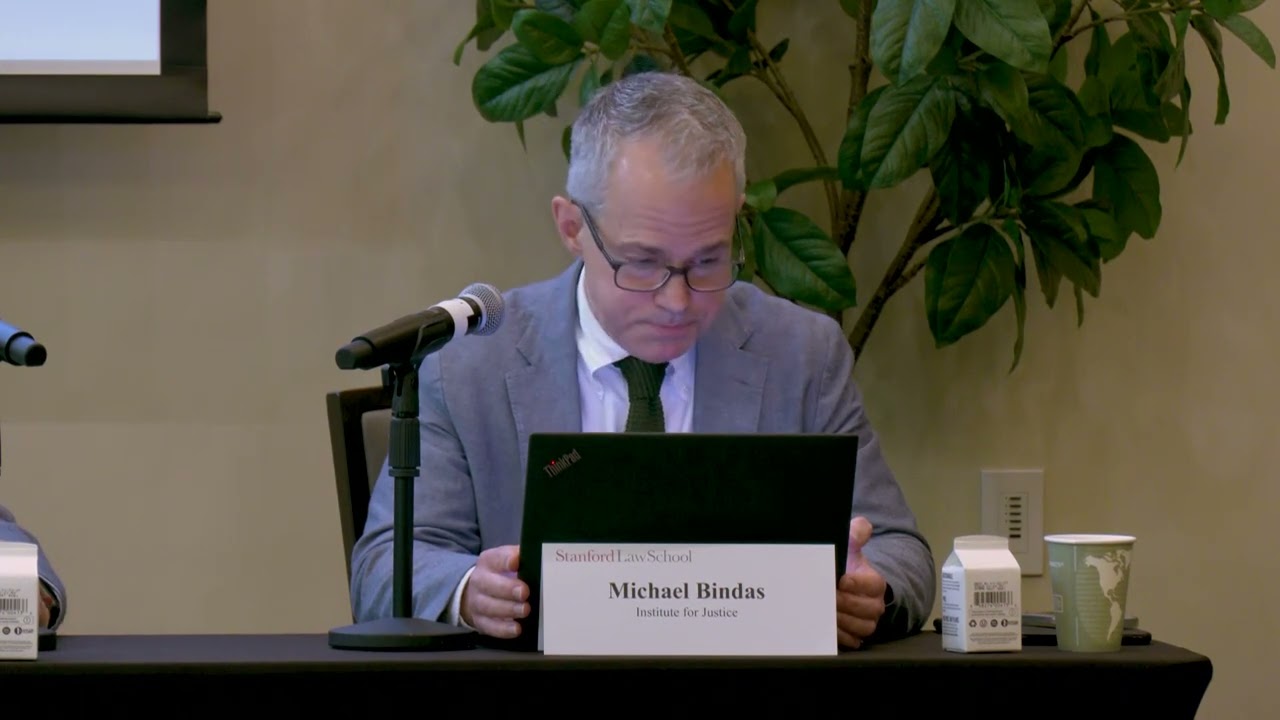
Let’s get started with our our 11 o’clock panel. The topic that we have been assigned is to discuss the present day practical consequences of peers, and before introducing our outstanding speakers, I just wanna make a couple of comments of my own, and that in particular is that there is one practical consequence that we don’t see, and that is we would not see a case like Pierce today.
For one thing, as someone mentioned in the previous panel, I can’t remember the last time the Supreme Court issued an opinion under five pages on anything, let alone something this substitute. And the sort of potential demise of substantive due process was also discussed at some length. But the third thing I wanted to point out is something that has not been mentioned before this, and that is the issue of standing.
It looks to me as if the way this case actually was decided it might be today, kicked out on the basis of standing the school. Both schools, the Catholic school and the military academy brought suit to vindicate the rights of parents, none of whom were parties to the case. And the court used completely non-economic reasons relating to the parents to decide a case that was brought on economic grounds by the schools.
So I think that would not happen today. However, our speakers are gonna be talking about other consequences, and I would like to introduce them briefly. Starting at the far end coming this way. And that’s also the order in which they will make their presentations. Michael Bindas is a senior attorney with the Institute for Justice.
He argued Carson versus Macon at the Supreme Court, securing a ruling that Maine’s exclusion of religious options from its educational choice program violated the free exercise clause. Previously Michael worked at Perkins Coy he attended West Point and the University of Pennsylvania Law School, Eric Hanushek, the Paul and Jean Hanna Senior Fellow at the Hoover Institution here at Stanford approaches the topic from a policy perspective.
A prolific author, he is recognized internationally for his economic analysis of educational issues. Rick is a distinguished graduate of the Air Force Academy and holds a PhD in economics from MIT. Sitting next to me, is an assistant professor of law at the Benjamin Cardozo School of Law.
He holds a JD from Harvard Law School and a PhD in Religion from NYU. Previously, he was a big low fellow at the University of Chicago Law School and a litigator at Paul Weiss. His research focuses on the First Amendment, anti-discrimination law and law, and religion. So Michael, please start us off. Sure.
I just learned that, Eric, you went to the Air Force Academy. So I’ll start off by saying Beat Air Force. Could be worse. He should have gone to Navy. But watch it. Thank you Judge McConnell for inviting me to this. I feel like a bit of a fraud here. I think I’m the. Lone practitioner here.
I’m not an academic. I know Eric has a foot in, in, in both doors or in both fields, but I am a litigator exclusively and I advocate for and defend school choice programs across the country. These are voucher programs, education savings, account programs. I know that there was some discussion of education savings accounts yesterday.
These are simply scholarships, like vouchers that can be used on a broader array of educational expenses. So yes, they can be used for private school tuition, but they can be used to pay tuition to attend an out of district public school or to for expenses incurred in homeschooling your child or to hire private tutors or special education therapies.
So like vouchers, but with a much broader array of permissible education uses. Surprisingly, Pearson Meyer have played very little role in the litigation surrounding these programs, at least to date. Pierce and Meyer certainly discussed in the legislative debates. When legislatures are considering adopting these programs, I think legislature, late legislators correctly, see themselves as adopting these programs to empower parents to exercise the rights recognized in Meer and Pierce.
And it comes up as context in the litigation, but almost never does the litigation turn on Pierce and Meyer. I. Why, that seems odd. If these programs are all about empowering the rights, recognize, why does the litigation not turn on that? And that is because for the 30 years plus that we’ve been litigating school choice cases, the arguments have turned primarily on religion, right?
School choice opponents argued first that school choice programs are unconstitutional under the establishment clause because they allow religious schools to participate. The Supreme Court roundly rejects that argument in 2002 in Zelman v Simmons Harris, and says, look so long as the program is neutral toward religion, meaning religious and non-religious schools alike can participate.
And so long as the program operates on private, independent choice of parents, they’re perfectly permissible. Opponents of school choice don’t pack up and go home. At that point, they retrain their focus to state blame amendments. These are provisions in state constitutions that generally speaking, prohibit public funding of religious schools.
And they argue it doesn’t matter if school choice is permissible under the establishment clause, it’s still violates our state blame amendments. And so they begin attacking school choice programs on that ground. And thankfully, in a pair of opinions in 2020 and 2022, the Supreme Court rejects those arguments.
It says. Basically to apply state law, whether it’s a blame amendment, as was the case in Espinoza versus Montana Department of Revenue or a state statute in the case of Carson v Macon, to apply state law to exclude pa parents and children from an otherwise available education benefit program because they choose religious schools would violate the free exercise clause of the United States Constitution.
So with those decisions from Zelman through Carson, the religion questions have been largely resolved. There’s still some issues there. There’s the charter issue that’s being litigated right now. But for the most part in, in kind of conventional school choice programs, religion is off the table.
Now, the religion wars are for the most part over, but the fight against school choice is not school choice opponents are a dogged bunch. They continue their attacks, but they’re shifting their focus away from the religion issues. One area that I want to speak about today is what I call public private blame amendments.
Several states a fair number have blame amendment variants that turn not on the religiosity of private schools, but on the mere fact that they are private schools. So these provisions can operate in a couple of ways. One is to prohibit public funding of private schools, or in some cases language prohibiting public funding of schools not under the absolute or the exclusive control of the state.
Just by way of example Alaska’s public private blame amendment prohibits the use of public funds for the direct benefit of any religious or other private educational institution. Opponents of school choice are now weaponizing these public private blame amendments, much the same way that they previously weaponized the more conventional religious, non-religious blame amendments.
And in fact, they’re doing that in several states right now. But I’ll talk about Alaska because that’s where this issue is most directly coming up in litigation right now. The legislature in Alaska has adopted what operates similar to an education savings account program. It’s called an allotment program, but basically it gives parents in Alaska an allotment that they can use on a wide variety of educational expenses for their children.
Yes, it can be private school tuition, but it can be homeschool related expenses, textbooks, curricular materials, tutoring services, school supplies, technology, a broad range of educational expenses. In 2023, a group of plaintiffs funded by the State Teachers Union challenged this allotment program under Alaska’s public private blame amendment because one of the permissible uses was private school tuition.
And of course, as I read just a little while ago, Alaska’s Constitution prohibits public funding for the benefit of private educational institutions. Now, Carson and Espinoza doesn’t, or don’t resolve this case, right? ’cause they turn on this religion, non-religion distinction. And here we have a public private distinction.
But this is where Pierce comes in. The US Supreme Court has repeatedly referred to the right in Pierce that is the right to direct the education of your children, including specifically to send your child to a private school as a fundamental, right? Just like the free exercise of religion. So that raises the question, can a state constitution be used to deny an education benefit?
Simply because some parents use that benefit to exercise that very fundamental right to send their child to a private school by barring aid to private school students, these public-private blame amendments condition the availability of education benefits, public education benefits on a parent’s surrender of her fundamental constitutional right to send her child to a private school, much the same way that Montana and Maine and Espino and Carson conditioned the availability of education benefits on the surrender of a parent’s fundamental right to choose a specifically religious school.
The Supreme Court has repeatedly held in many contexts that a state cannot condition the availability of public benefits on a citizen’s surrender of a constitutional right. Nor may it penalize a citizen because she has exercised such a right. But that’s exactly what these public private lane amendments do.
They bar education benefits for children whose parents exercise the very right, recognized in peers. Remember, in Alaska and in other states with education, savings, accounts, programs, the state can fund anything else, right? Homeschooling, tutoring, special education therapies, extracurriculars. But the plaintiffs in Alaska are arguing that while they may be able to do all that.
Parents cannot use these funds for one thing and one thing only. That is to pay tuition for their child to attend a private school. That’s a problem under the Supreme Court’s due process. Specifically, its un unconstitutional conditions jurisprudence, but it’s also an equal protection problem. Remember Romer versus Evans, right?
This is the case where Colorado enacts state constitutional amendment that targets gay and lesbian citizens and prohibits protections and benefits for gay and lesbian citizens. The Supreme Court invalidates that state constitutional provision under the Federal Equal Protection Clause, and it says Central both to the idea of the rule of law and to our own constitution’s guarantee of equal protection is the principle that government and each of its parts remain open on impartial terms to all who seek its assistance.
Thus, a law declaring that in general, it shall be more difficult for one group of citizens than for all others to seek aid from the government. Is itself a denial of equal protection in the most literal sense. Again, this is exactly what these public, private plane amendments do. They make it more difficult, actually impossible for one group of citizens than for all others to seek aid from the government.
And worse, it defines that one group of citizens based on a single characteristic, their exercise of the fundamental right to, to choose a private education for their children. So a group of parents that my firm is representing intervened in this Alaska challenge to defend the program, the allotment program, because they currently use it to pay for tuition for their children to attend private schools.
Now to be clear. They’re not arguing that the federal constitution requires a state to provide aid to families who choose private education for their children. The Supreme Court is al already held in Espinoza that a state need not fund private education. Rather, they’re maintaining that to apply Alaska’s blame amendment to deny benefits that the legislature already, in its discretion has chosen to provide them, including to use this benefit for private school tuition to deny that benefit based on.
Alaska’s public private Blaine Amendment violates their federal constitutional rights. Just as the application of Montana’s Blaine amendment in Espinoza violated the rights of parents to choose a specifically religious private school for their ch their kids, the fundamental right may be different, right?
In Montana, it was the free exercise, right to choose a religious school for your child. In Alaska, it’s the due process to choose a private school for your child. But the problem in either case is the same. A state constitution being applied to bar aid to families because they exercise a fundamental right.
So what’s happened in this case so far? In late 2023 the trial court agreed with the plaintiff’s challenging Alaska’s allotment program and invalidated the program in its entirety under the public private blame. The trial court did not address the federal constitutional questions that my clients raised even though they were squarely presented in the litigation.
But the Alaska Supreme Court reversed the trial court in June of this past year. It held that the trial court was wrong to invalidate the program in its entirety because there were plenty uses of the allotment program that were perfectly permissible under Alaska’s buin amendment, such as homeschooling related expenses and tutoring uses other than private school tuition.
Now, the court did not hold that. Alaska’s Blaine Amendment barred use of private school to use of the allotment for private school tuition. Rather, it remanded the case back to the trial court to address that more limited question, right? Can can the program be used for that particular use? But it also specifically directed the trial court to address the federal constitutional implications of applying Alaska’s Blaine in that way.
So we’re waiting to see what happens with that case. We’re in the midst of of briefing right now. But this is an issue that is coming up in several other states as well that have these less common but still discriminatory public private blame amendments. So that’s one kind of, a pending issue related to Pierce in the school choice context. One other that Al just briefly mention is the extent to which Pierce and Meyer apply to the protect the rights of education entrepreneurs. We’re in a time of incredible innovation in education, right? Things like learning pods, micro schools, hybrid schools.
That developed largely in response to two things. One, the pandemic and parental frustration with the failure of the public school system during the pandemic, and also the proliferation of education savings accounts, which provide much greater flexibility to engage in these types of education innova innovations During the pandemic, these innovations were largely tolerated out of necessity because the public schools were not providing an adequate education.
But were beginning to see, some degree of government governmental suppression of these innovations, whether it’s through private zoning or municipal zoning laws attempts to saddle micro schools that may educate five students with the full regulatory regime that applies to more conventional private schools.
And I think you’re gonna start seeing litigation over these efforts to suppress these education innovations. And I think there’s an open question about what extent, to what extent do Pearson Meyer provide these entrepreneurs, these education entrepreneurs, what, to what extent do they protect their rights?
And judge, I would respectfully disagree with you that, that Pierce and Meyer didn’t concern economic rights or the rights of education providers. They were brought by education providers. That passage at the beginning of Meyer, the Dean post referenced yesterday, that was up on the screen for quite a while spoke extensively of economic rights, the right to contract, the right to engage in a common occupation and the court in both Pearson Meyer, yes, protected the right of parents, but also the economic rights, the contract and property rights of education providers.
Robert Meyer Hill Military Academy, the Holy Name Sisters. In, in Pierce the schools, the court noted have business and property for which they claim protection. And these are threatened with destruction through the unwarranted compulsion, which the state is exercising over present and prospective patrons of their schools.
The successful conduct of the schools, the court explained, requires longtime contracts with teachers and parents. And e even though Oregon’s law was not yet being enforced, the court noted that it had quote already caused the withdrawal of children who would otherwise continue. Thus, the court concluded the protection against this arbitrary, unreasonable and lawful interference with their patrons and the consequent destruction of their business property business and property was warranted.
I think Pierce was very concerned with economic rights as much as it was with parental liberty. And so too in Meyer, in, in resolving that case? Yes. Again, the parents the court focused on the parental rights but also on Robert Meyer’s, to teach as well as the parent, the right of parents to engage him, so to instruct their children.
So I think it’s a mistake to look at Meyer and Pierce exclusively is about parental rights. As I mentioned in my question before, I think the court was much, had a much broader conception of liberty that yes, included the right of parents, but also the right of the Robert Meyers, the Holy Name Sisters, the Hill Military Academies to provide education services to, to families and the right of families to engage them.
So I think that’s gonna be another very interesting question that we’ll see litigation over in the coming years about the extent to which Pearson Meyer might protect the rights of education entrepreneurs. Thank you Eric. That’s a good introduction for what I wanna talk about. I am an economist who comes without any sense of looking at the precedence of cases, the importance of the 14th Amendment or the First Amendment, but in fact come to this looking at issues of educational policy and the way that school choice fits into educational policy is a good policy.
And then in the end, how litigation fits into school choice and educational policy. I’ll give you my tribe is more interested in outcomes of students and the school impacts on distribution of outcomes and performance. And so I’ll talk a little bit about that. And know I have a simple view of the history of education, and that is that the 20th century was extraordinarily important for what happened in schools at the beginning of the 20th century.
We had 130,000 school districts in the us We had 4% of the population was getting a high school degree. And a variety of other measures of performance. But I think that over the 20th century schools did a lot more. They expanded. We had, basically much more completion of schooling. We had consolidation of districts that we’ll come back to.
And I think there was a general good feeling about the way schools operated. We historically had, have had, I think, since the beginning of the country a mixture of public schools, private schools, and homeschooling. And then we get down to what’s the right balance between those and what, how does changing the balance between those affect the outcomes that I think are important in schools.
I what we had, as I understand history or think of history of schools in the 20th century, everybody was pretty happy with what was going on in US schools. In fact, we were the leader in the world of schooling, of making public school available to everybody. And no other country in the world was doing it at the time we were.
And so people were quite pleased with this. But as the 20th century moved along, we started to have questions about the performance of the public schools. Were they doing a good job? And we had some skepticism about how well schools were doing at educating kids. And this, I think, led to the, main discussion about school choice was whether school choice would help us to improve the quality of schools that we thought was many people thought was lagging near the end of the 20th century and into the 21st century.
Let me my simple conclusion that I won’t emphasize here is it serves more of a footnote on how I got into this discussion, is that our schools are in fact, behind, in a very fundamental sense, worldwide, we’re not doing as well as we should, and that this has long run implications for the US economy and that it is important for us to improve our schools.
And that’s how I became a fan of school choice as a potential way of educating a better group of a group of our population. But as I view Pierce I should. Had another footnote here. I didn’t know about Pearson until I was asked to come to this conference. This is not something that is part of the educational policy discussions.
I was missed yesterday because I was at a conference on the economics of education and I queried all of my other res on what they knew about Pierce and its implications for school choice. And I did not find one person who had ever heard of Pierce. That’s the caveat that I come into this with.
But as I understand, and as I’ve not perhaps naively interpreted Pearson with respect to schools, is that Pierce said that, parents and children had a right to school choice and to private schooling. But the state also could have regulations making sure that the schools met what they wanted to get out of the schools.
And so that, my naive interpretation is that it’s a balance between how much regulation we’re going to put on choice schools versus the right to have open schools. My, my fellow people can discuss my naivete as they go on. But. When I look at school choice and where most of my colleagues do, we generally go back to Milton Friedman and his 1955 article about vouchers and basically making the case that while the school, while the state had an interest in what was going on in schools, there was no reason why we had to think of the state running the schools.
You could think of other people providing this interest in his 55 article and in Capitalism and Freedom, where he lays out some of these in a more, in a clearer way. His main thing was just the right. To choose that was the choice option for to parents to find the schools that met their interest.
What’s happened since Milton Friedman and his public book with his wife, free to choose, was all about just individual rights and liberties, which has been the discussion of much of this, but the educational policy. Discussion has taken the other side of Milton Friedman that talked about competition and efficiency and the value of having an alternative to put pressure on the traditional public schools to in fact, do better if there’s competition and they’re gonna lose their students because there are better other options, then this would lead the traditional public schools to do a better job.
And that’s been the, basically the reform argument that’s been made. What’s happened in choice or where does Choice Stand today? I think Paul Peterson talked a little bit about choice options yesterday in education savings accounts. What we had before the pandemic was basically this situation where.
We had consolidation of the 130,000 school districts down to 13,000 school districts, which led to some very large central city school districts that were, have generally been viewed as not being all that high quality on average. And that these central city school districts, in fact had captured a group of poor and disadvantaged parents and students who couldn’t exercise the largest choice option.
And that is choosing where you live, the residential choice option. They’re stuck in these bad schools. And so the argument was largely for offering more choice to people stuck in bad schools largely thinking of urban centers. In 1992, the state of Minnesota invented something called Char Charter Schools, which was to take public schools and set a subset of public schools and give them freedom to do whatever they wanted in some sense, in terms of pedagogy and the way they operated.
Free them from lots of regulation providing public funding, but free them from the regulation in exchange for the, a contract that said that they were gonna do good. And if they didn’t do good, they could in fact lose their contract and would not be able to continue operation so that they had a requirement to educate people in the way that they said.
Charter schools have become one of the largest parts of choice in the us. They went from. Zero in 1992 to about 1% in 2000 to about 7% of all students today go to charter schools matched against that. Charter schools, in fact, took away a little bit from the public, traditional public schools, and they also took away from the traditional private schools so that Catholic school enrollments went down with charter schools.
But you and total private school and enrollments went down. So it’s under 10% today, but around 10% for private schooling. 7% for charter schools, and now about 3% as best we can tell for homeschooling. And so you have a 20% of the school population that has these alternative ways of providing schools.
Now what do we know about them? We know the most about charter schools because they’re public schools. They participate in testing programs, and we know a lot about their outcomes. What we found is that at least in recent years, on average, charter schools do a bit better than their comparable traditional public school.
We know that there’s a wide variation in their performance, in outcomes. There are some really bad charter schools and there’s some really good charter schools. If we look at private schools and what do they do, we know virtually nothing about ’em. Because they essentially don’t participate in any routine testing programs.
We know a little bit about Catholic schools in the, in various places, but not very much. We don’t know anything about and we don’t know anything about homeschooling except that the last panel profess we had a testimonial about own char homeschooling. And we have periodic news reports about how one of the top graduates of Harvard was homeschooled.
But we know nothing essentially about the full 3% of these schools. So let me put that into the, how I would look at that from a pierce standpoint, as I understand Pierce, there are very widely different regulations that apply to charter schools, to private schools in the home schools. If you look across the states, so if I look at charter schools, for example, there’s a set of states out there.
You might even be able to guess at which ones they are. Arizona, Florida, Indiana, Colorado, that try to make it a good deal to run a charter school and to make it available. They make it easy to get approval for charter schools. They really take away regulations about what the curriculum is, the length of the school year and so forth.
They basically have no camp on the number of charter schools. Then contrasting to that is Maryland and Virginia, and Nebraska, Kansas, some and some others that will mention that insists that to get a charter, you have to get the approval of your local school district, your competitor. You, in order to run a charter, you have to certify that you’ll use the state curriculum and state school year and so forth. And your contract is a very short period of time as opposed to the other states. It’s say it’s 10 years. So we have these widely different regulations for charter schools.
We know nothing about their impact on student learning or whether it helps or not. What we do know is it affects the number of. Kids in charter schools, but beyond that, we don’t know much about does it affect performance. I can say the same thing about homeschooling. In homeschooling. We have a number of states that don’t even require home students, the school students to register.
They’re, they can do whatever they want. So we have Texas and Arkansas, and Idaho and some others that have very nominal notification requirements. They have no requirements for any testing. They have limited requirements for whether what might be taught to these kids. They just say. Go do it.
Then we have other states that New York and Pennsylvania and so forth that require annual notification annually reporting on what your curriculum is recording, how many hours you spent on each subject and so forth on down the line. Again, we have these wildly different requirements with no information about whether any of ’em make any difference.
I. Whether anybody learns, and you can go through the same thing with private schools. I, the story is there. And so for speed, I won’t go through them, but, private schools have the same set of varied restrictions that lead to litigation as Michael said. And that’s my, one of my main concerns when I get down to the end.
I have never been involved in litigation on the school choice issues, but I’ve spent a lot of time on a related issue of school finance in litigation and school finance. And from my standpoint, the courts have not. Improved schools through their litigation and through their judgements. And these school finance cases, of which there have been over 200 school finance cases in every state except for Hawaii, which only has one school, district.
District, and in Utah except for them, every state has had school finance litigation, and there’s no evidence that the schools have been helped by the school finance litigation that where the courts try to enter into this. So what I see out of Pierce and as we expand to vouchers and oh, by the way I’m in, 20 minutes. In 20 minutes Texas Governor Greg Abbott will sign a voucher bill of a billion dollars into vouchers in the state of Texas which are open basically to everybody, although the money won’t support everybody. And this is part of a recent expansion that I think Paul talked about yesterday of educational savings accounts, which are specialized vouchers in many ways.
Charter schools are in some sense vouchers of given kind. And we’ve had now I think, five states that have things that are actually called vouchers where we’ve opened this all up. And what I see from and is reinforced by Michael’s introduction is that we’re gonna get all kinds of litigation on how states regulate all of these choice mechanisms.
And we’re going to have an, a new round of huge litigation. Maybe everybody in this room is into litigation and likes the idea. But from my standpoint, I see a little hope that actually improves the quality of schools and that this may in fact meet, versions of what are the rights of students, but I don’t, from a educational policy standpoint, I am most concerned about this.
And we’re into this area where we have all kinds of regulations and have absolutely no idea of what their impact is. Thank you. So I’ll end there, Simon. Thank you. I think it was Oliver Wendell Holmes who said hard cases make great constitutional law conferences, discussions. I think I’m quoting him correctly and I wanna talk about a hard case a contemporary case, a case that is currently pending in the highest court of New York.
A case that’s quite similar to Yoder, which we’ve heard quite a bit about. Wisconsin Yoda in the Amish community. A. Which came down roughly 50 years ago in 1972. So it’s time for maybe an update involving the Hasidic community in New York. And there are lots of Hasidic kids in Hasidic communities in New York.
The estimate is that there’s about a hundred thousand children enrolled in Hasidic schools in New York. And there is a difference I should mention, between the boys schools and the girls schools. And there are boys, schools and girls schools there are segregated in that the boys schools in particular provide, essentially no secular education. It used to be, when I would say this, people would be in disbelief and accuse me of making stuff up and what have you. And then the New York Times did an expose. It was on the front page of the New York Times, and really deep investigative journalism and corroborated my portrayal of the facts.
Some don’t believe the New York Times. I can’t help you there if that’s your position. But this has been corroborated many times over. It’s not just a theory that the Hasidic schools, the, at least the boys schools, provide practically no secular education. Now, what is secular education?
Secular education is anything and everything that is not Jewish education. So that includes math and science and English and composition, et cetera. Some Hasidic schools provide an hour at most, 90 minutes at the very end of the day, taught by a young Hasidic man who himself doesn’t really speak much English.
And the way it’s described by those who have gone through that education system is that it’s essentially recess. Others don’t teach any at all. They don’t even pretend to teach secular education. Girls schools do provide more secular education, ironically because in the Hasidic community girls are not actually permitted to study a lot of the more advanced Jewish studies.
And okay, they, they can get the lowly secular education, which can turn out to help them quite a bit if they eventually do decide to leave the community. So there is a difference between boys and girls schools. There, there isn’t much in the way of precedent and case law on this because the.
Talking about judge mentioned standing. You would’ve a really problematic standing question here as to who would bring to the lawsuit. And also more preliminarily who the law applies to, to whom does the law apply the law of compulsory education? And it applies to the parents.
That would mean that children would have to be bringing a lawsuit against their parents, which wouldn’t happen. You can’t imagine that really happening. The state, of course could let’s say prosecute in some way, and then the parents could defend themselves and it could end up in court.
But the state didn’t do anything for decades and decades. And that changed about 10 years ago. When the state of New York the state the New York State Education Department put out regulations. To give some teeth to the compulsory educational law in New York. And every state has compulsory educational laws.
The language in the New York compulsory education law is very similar to many others, which is that going back to Pierce, that parents must send their child to public school or a school on alternative school where the child is receiving substantially equivalent education, substantially equivalent to the public school in the district.
So New York finally started doing something about this, and then we finally started seeing some cases and a New York Supreme Court, which is the lowest court in New York in 2022 held that these new regulations were unlawful because the Department of Education actually lacked authority to do what the regulation, authorizes the department to do, which is to do an investigation of schools and to determine that some schools are not meeting the standards of compulsory education law, and to declare that those schools don’t qualify as schools. And the regulation goes further, that the parents have to unenroll their children from those schools.
Now, the court held that the agency had no authority to do that because the law doesn’t apply to the schools, the law applies to the parents. Now, of course, it’s gonna be really difficult for the state to make a determination that parents are not complying with the compulsory education law by giving their child a substantially equivalent education.
If the state doesn’t have the authority to determine that the school at which the child is enrolled is not providing. A sufficient education. So that’s a quagmire, but the lower court sided with the parents. In that case, the intermediate appellate court then reversed, and this is now pending at the Court of Appeals, which is the highest court in New York.
More recently advocates on behalf of Hasidic schools filed a complaint with the office of Civil Rights back in January. I haven’t seen any updates that it could be that the Office of Civil Rights no longer exists. I don’t know. But that’s another sort of avenue where the advocates for the schools are claiming that the Department of Education of New York is discriminating against CTIC schools by enforcing their regulations.
Now, the reason I say this is a hard case, and I think also a fascinating case and an important case is because it should, I think, push us to think more critically about this very tidy meat line that Pierce established. The compromise that Pierce reached as I understand it, is that the state can have public schools, in fact perhaps should have public schools, and the state can do what it wishes in the public schools.
It has full control of the public schools and the opt out that parents have the right to is opting out of public schools altogether and they can have, they have the prerogative to have private schools. Not to say that the state then has no control of private schools. The state still has some control of private schools, but not as much control as it would have if we were talking about a public school.
And just two years after Pearson, a decision that gets much less attention. Farrington also decided by McReynolds that dealt with a law out of Hawaii that pertained to schools that teach languages other than English and Hawaiian. And essentially. The regulations, the laws were just so draconian that the Supreme Court held in 1927, that, that’s defacto a public school.
You can’t call it a private, you know that this is, you have the right to go to private school and then regulate the pr, this, the private school to such a degree that you have total control over it. This is a question that’s pending. Of course, the Supreme Court now extend Isador, what is a private school, what is a public school?
But you have this compromise in Pierce that you can send your kids to a private school and the state can’t regulate it too much, but it can regulate it some somewhat. Barnett around 20 years later, is picking up on one half of that ledger, which is this assumption that the state can fully control public schools.
And Barnett justice Jackson and Barnett, which we also discussed quite a bit in the previous panels, said, eh, not so fast. The state can’t have quite total control in public schools. There’s, there are lines to be drawn, and it seems like the line and this is something that, that Michael McConnell talked about and as others have commented on, I think really fascinating.
This idea that the school my words can’t indoctrinate children can’t, to go back to language from peers, can’t standardize children can’t have a unif, a unification agenda to to render all children to uniform. And I don’t think that line is intelligible workable.
I like the principle of it but I don’t really know how it would work. And I think that the Hamud case, which we heard quite a bit about too, Hamud v Taylor is finally about 80 years later, picking up where Barnett left off and. Pushing on some of some of the assumptions in Barnett that you can make these tight distinctions between indoctrination and mere exposure.
And it seems like at least for some of the justices on the court, they’re still clinging onto that distinction. And Justice Barrett in particular was asking a lot about this distinction and seemingly accepting it that there’s some kind of education that you could render indoctrination and some that is mere exposure.
I don’t, again, I don’t think that works. One little piece of evidence is the Colloquy from Mahmud Mahmud’s oral argument between, and it really is a colloquy between the justices themselves, justice Soda, justice Alito, and they are debating how to interpret a child’s picture book for four year olds.
And I don’t know how anybody could assume that statutory texts are just plain meaning of statutory texts if these justices can’t agree on a 4-year-old picture book and what it means and what it’s trying to do. And for Justice Sotomayor, it’s just telling you facts. There’s a fact in Uncle Bobby’s uncle, uncle Bobby’s wedding in that picture book, just the fact that this gay couple is getting married and for Justice Alito, he says, this is sending a clear moral message.
Similarly, justice Barrett and the Advocate on behalf of the school talked about the difference between teaching the sheer facts in the world and trying to educate children to appreciate mutual respect of others. And that distinction seemed to collapse, I think, in that colloquy between Justice Barrett and Alan Schoenfeld.
Okay. In any event. We have that sort of compromise in Barnett. And then you fast forward another 20 years and roughly, and you get to Yoder. And this is now going back to the other side of the ledger in Pierce. So not focusing on public schools, but focusing on private schools. And the idea in Pierce that the state does have some control of private schools some kind of minimum control of private school education.
And Yoder, the Supreme Court says not so fast. At the very least, not with respect to two years of education for ages 14 to 16, not even minimal control of compulsory education. And the reasoning in Yoder is that minimal education for those two years actually consists of indoctrination, at least in the eyes of the Amish community.
For example the language in Yoder is that, the secondary schooling is exposing Amish children. To worldly influences in terms of attitudes, goals, and values, contrary to beliefs.
And Yoder often gets characterized as having been a debate about whether the children will attend public school. As a factual matter, that was true because the Amish community didn’t have its own school. It was sending its kids to elementary public school, and then it pulled the kids outta public school.
But that wasn’t what was at issue. Pierce was still good law. The parents could send their kids to private school. They objected even to private high school education on the grounds that modern high school education teaches these values that conflicted with the Amish community’s beliefs. And finally, and I’ll end with this note, we can fast forward another roughly 50 years to our contemporary example that I started with the Hasidic community.
And the Hasidic community, like the Amish believe that secular modern education even if we’re talking perhaps about things like arithmetic, as factual as you could perhaps get as neutral as you could perhaps get as non indoctrinating as you could perhaps get for the Hasidic community. No, that is contrary to its way of life for a whole host of different reasons, which I won’t get into now.
And so now what the envelope is simply being pushed further. And I’m not saying that I have the solution here, I don’t. But I do think that drawing the line at indoctrination is not really helpful. And I’ll end on that note. Thank you. I’m gonna start by asking the panelists to comment on one question and then we’ll open it up to everyone else.
Pierce does recognize the right and perhaps obligation of the state to have some role in dealing with schools and without using the term indoctrination what yesterday’s panelists, among other things talked about children’s rights. What are the rights of children to receive an education that will allow them to function in the world as it is, and to choose if they want to leave the nest of whether it be Catholic school, Hasidic school, private school whatever the viewpoint is.
What are the minimum topics that a student should be that the government ought to be able to say this is required for citizenship. This is required to give children the education to which they have a right. And we’ll just start down the line again. Sure. I think that is a po at root, a policy question, right?
And different states may address that differently, but Pearson Meyer give us a test for determining whether whatever the state says X, Y, and Z goes too far. We know, number one, if you just look at the test in Meyer, the regulation, what the state is requiring has to be within the competency of the state to effect.
And that was the problem in Pierce. It was not within the comp competency of the state to standardize children. And that’s why the regulations there or the the law there was invalidated in Meyer it was a different problem. It’s gotta be within the competency of the state to effect, but the law must actually advance the interest that the government that motivated its adoption and can’t go further than reasonably necessary to achieve that interest.
That was the problem in Meyer. The court explained it would be perfectly reasonable and perfectly constitutional if rather than prohibiting the teaching of foreign languages. The state instead had required instruction in English, but that’s not what Nebraska did. It took that further step of not just requiring instruction in English, but also of prohibiting instruction in any other language.
So the, I can’t say this is what the state can and can’t require, but Pearson Meyer themselves give us a framework for how to approach the question. And I, the other thing I would say to that is there’s great uncertainty as to what the level of scrutiny is the court should be applying to claims brought under Pearson Meyer.
And unfortunately, the tendency of most lower courts has been to apply mere rational basis review where judges can engage in conjecture and speculation about justifications that the court or that the state might have had for the law. And if it’s reasonably conceivable that the law might advance that conceived justification.
The court’s required to uphold the law. That’s no meaningful review at all. And so at a minimum, I think courts should actually honor what Pierce and Meyer taught and how to approach the question of how much regulation is it go is too much. But again what that is and where those lines are drawn I think just varies case by case.
So I couldn’t say, it’s gotta be X, Y, and Z Eric. So we’re getting into areas that are outside my competence here completely because I, when I look at these questions, I know that having a high quality education means a huge amount to individual students on average. That people who know more, earn more people who know more are in better positions.
I know that. Countries where the population is better educated, grow faster, and there are direct economic implications how you translate that into law. I think I, I worry personally about what homeschooling is doing to children that whose parents are not prepared to get them ready to operate within society.
And most states don’t require that. And then, the sort of trade off of rights is something that’s beyond me to think about. I’m thinking about more from the economic and social value of better education and how the rules and rights regulations we put into effect. Impact on the quality of our schools which need help.
I’m very deeply sympathetic to drawing the line there and saying that the minimum, and maybe also the maximum, is to ensure that children can exit the community into which they’re born and raised. So they have choice. So thinking about the choice of the children, the autonomy of the children, not just the autonomy of the parents or the autonomy of the community.
Very sympathetic. At the same time I don’t think that you can avoid the claim if somebody were to wanna make it, that the state is indoctrinating. Even if it’s indoctrinating into autonomy, which itself is obviously very value added. There’s no way to escape it. I think actually there’s really interesting, I talked about a colloquy in in some in, in Hamud.
There’s a really interesting colo colloquy in Yoder. Between Douglas and Berger, and Douglas gets a lot of attention, but I don’t think Berger’s response to Douglas gets much attention at all. And I think he has a really terrific point. I don’t know how far he would actually take it. Again, in Yoder, we’re talking just about two years of education, not elementary school or middle school.
But at one point in a response to Douglas who says, talking about opting out and opting, perhaps also talking about opting in, Douglas says, the children have to affirmatively opt into Amish life. And that means to say affirmatively opt out of compulsory education secular, modern high school education.
For a court such as ourselves, Douglas is saying to uphold the parents’ rights. And you could also say the community’s right against the state that wants to enforce its compulsory education law. In response, Berger says, and I’ll just read to you it seems clear that if the state is empowered as. Parents patria to save a child from himself or his Amish parents by requiring an additional two years of compulsory formal high school education.
The state will enlarge measure influence, if not determine the religious future of the child. And I don’t know why that wouldn’t extend even to elementary school. And certainly that’s what did it extend to secular private schools? That rationale would seem not the same. Sure. And I think if the problem is to go back to Pierce, is standardization of children uniformity, if that’s the problem?
So long as you have a compulsory education law that applies to all children, you have standardization. Even if we’re talking about secular school, I don’t think it’s. Avoidable. Could I add one little caveat to what I said or reinforcing something that Michael said in his introduction?
And that is when you look at school choice, and I say that I’m in general in favor of more school choice in all kinds of ways, the opposition to school choice is not about what’s happening to the kids. It’s about the teachers unions and other organizations that like the current structure of traditional public schools and want to stop any alternative and competition.
And so that’s not in my world ever phrased in terms of the rights of kids or parents or this balance. It’s that from a policy standpoint, I wanna pay attention to what kids. Can learn and do learn and mo most of these debates about school choice are not about that at all. Yeah, and I think it’s interesting that you’re right, that oftentimes these cases are brought by the state teachers unions, or at least funded by, and I would encourage them to take a look at their own schools.
How do we assign children to public schools in this country? The overwhelming majority of kids are assigned by nothing more than their residents, which is just a proxy for wealth. I think that’s a profoundly dumb way to determine a child’s education. And of course, the wealthy have choice, right?
They can move to a different zip code that has a better performing public school. They might be able to pay tuition out of pocket at a private school, but the vast majority of children in America attend public schools. That they are assigned to by the government based simply on where they live. And so if the public school establishment, the teacher’s unions and such, were truly concerned with ensuring that every child could get access to the best education.
They would not be defending that means of assigning children to public schools, and they wouldn’t send their kids to Yale public schools. We’ll take questions from the audience and I see Robert Post lining up. Thank you. Through this state. They a question in a hall for each of you. Of you. Judge Graber, you commented on a short disappear in Meyer.
The average half court opinion was 6.2 pages. The ab mcbe opinion work three pages, sir. Different word. Now, Michael, to you on your elastic was, hadn’t deal with the decisions of accord and rust. V Celibate, the taxpayers versus re was a clear to me and get around as precedents, Eric, to you. You invoke the name Mario Friedman, which apparently am a policy of people’s a program to invoke e Pearson Byer by its authority.
And my question is, I Monroe is, Friedman is cited for the fact that competition produces effectiveness and excellence and the gene of some kind of deficiency. So what is the metric of success that competition is supposed to produce? Are we measuring success by consumer satisfaction where I understand the concept of competition consumer the child consumer Garrett, or do we measure success by the implication of cardiac capacities testing?
Where do we measure success by performing a social function like citizenship and civic education? How exactly does competition relate to a metric of success? And what is the metric of success? One G do that and it is on the isn’t. Yeah. The answer to that question, what is the criteria of success for public education?
Be a guide to the court, Ks and ear kicks, rather than does the child have rights or does the mayor have rights to ask? What is the function of education Constitution speaking in the state of New York and does the 2006 was Meet that Richard, we’ll stop. Okay. So on the question of cases like Rust and Reagan, those same arguments were made in Carson the United States.
Flip sides during the course of the litigation supported us at the district court and appellate court. And then there was a change in administration argued at the Supreme Court that means justification or that means exclusion of religious schools was permissible. And they raised primarily those two cases.
And the bottom line is that number one, rust, although the court didn’t describe it in rust itself, is subsequently described rust as a government speech case. And I know that’s debatable, but the program in Rust was funding a particular message for a particular purposes purpose to the exclusion of all other messages.
That’s one thing to note about it. And the providers in Rust were free to engage in. Those other things, they just couldn’t use the funds for that purpose in Maine. On the other hand, the government wasn’t funding one particular thing to the exclusion of all others. Maine was saying, here’s a voucher.
You can use it to attend a public school in a neighboring district. You can use it to attend a private school in Maine. You can use it to attend a private school in another state. You can use it to, and kids did use it to attend private schools in another country. The one thing you couldn’t use it for was religions That is very unlike rust.
So I think that’s one way to distinguish it. And of course, a child, unlike the providers in rust, could not simultaneously get the benefit and still exercise the fundamental right. You couldn’t exercise your right to send your child to a religious private school. Then also get the tuitioning benefit, the voucher to send your kid to a non-religious school for, another eight hours a day.
So I think there, there are differences between rust and and Reagan. But those are precisely the two cases that the United States in its amicus brief raised, and the Supreme Court wasn’t convinced. I just suggest that Carson is a little like what we call pre-ex expression land a limit over reform and didn’t, or a description of Alaska didn’t sound like that.
So in, so Correct. In la So limited public forum. The court in, we owned it out to everybody except I see. Yeah, and the form interesting questions about forum analysis. Of course, in Lockford sta the court says a scholarship is not a forum for speech. But yes, in Alaska, I.
If the legislature opened this program up to basically any educational expense whatsoever, and then said all except no, the legislature did o authorize it for use at private school tuition. The plaintiffs the Alaska Education Association, or at least the plaintiffs that they were funding came in and said, whoa, hold on.
Homeschooling might be okay. Tutoring might be okay. Textbooks, curricular materials that might be okay, but not tuition for a private school. And so it was, the legislature in its discretion wanted to provide a benefit that all children could use for any legitimate educational expense. And it was the plaintiffs saying everything except this one thing.
So in that respect, it’s very much like Carson. Okay, Eric. The metric of success is mul. There are multiple metrics of success. The one that would apply most directly to Milton Friedman and competition would be that you get more efficient production of student learning. And so that we know since 1965 till today, expenditures per pupil have over quadrupled in real terms, and by all measures of performance, there’s been no change in performance.
So it would be hopefully that you get a little bit more value out of the added funds that we’ve put into schools. It’s obviously broader than that, but the state also has an interest in the quality of its labor force because states. The growth of economic activities in states and activities depends upon the quality of the labor force.
And so I would hope that competition pushed you in that direction and that policy pushed you in that direction. So test per test performance would be high on my list. I’m not trying to say that’s the only performance. Obviously the civic values and others would be important, but I see no evidence that except for maybe the Hasidic community, that you get dramatically lower civic values out of private schools versus traditional public schools.
So Orthodox, yeah you absolutely could draw from the metrics that you use in a public school setting, but you have to ask what the metric is of the metric, right? To determine what the metric is. And so inputs versus outputs. It might inform that decision. And the Hasidic community is arguing actually, for example, that, wait a second, our children are in school.
Let’s just be clear. In fact, they’re in school for more hours probably than most public schools. And the Hasidic community comes back somewhat on the offense, not just defense by saying, our kids are getting great trainings. Look at all the critical reasoning skills that they develop, et cetera. They are very literate.
They’re learning to read. They’re not really learning to write, but okay, arguably they are to some degree. And so the, these should be the metrics. And then you have a debate about the metrics, which will be informed by the metric of the metrics, which is why the children’s rights might matter if the children’s right is to have the ability to exit.
You can’t exit into nothing. Your exiting also includes entrance. And so to enter into the broader secular world, you probably need certain skills beyond just great critical reasoning skills, including, for example, English, other cultural references, et cetera. Yeah, so I wanna also bring us the pre expression and like Robert, although maybe more, more flu.
I’m a free speech guy, so I take, everything is supremacy free. So I kick that. If you just wise, standard free speech doctor, you get some answers and maybe they’re the wrong answers, but here’s a possible answer. So why is what about the government patching conditions to the spending of money?
We know when the government says fear some money, it could attach conditions. And those conditions set aside the question whether, or whether the Alaska Tech scheme is permissible. Assume it is spending money on on private schools that didn’t say, kiddo, we wanna make sure that you teach certain things.
And it can generally do that even when it’s promoting a wide rate credit speech if it’s reasonable and you reflux. Both, some respects, so vehicles, but when it comes set aside, they put the ations out. Spending, generally speaking, the government aspect shows some very substantial justifications.
And my sense is what we’re really talking about is not so much the duties of private schools, but duties of parents. So the census parents have an obligation under some of ought to have an obligation to teach their children certain things, certain kinds of content, and that obligation it’s something they can discharge through setting them to comply public schools.
Or through homeschooling or perhaps sending them to non blind schools, supplemented with necessary climate school. We saw that as city parents were sending moly the kids to caic schools, but we’re also uniformly providing English language training is out. We might say that’s fine. So another question is what issues are permissible?
You might say something like strict scrutiny, you could imagine a border level. You funnel it through that and get asked what is the government had a compelling interest in. So I think probably has a compelling interest in making sure the children are basically to mirror it and ignore it. And if that’s so then I think that satisfies in large measure the exit concerns.
And also I think that pretty compelling interest looks like a requirements or requirements by the narrow detail values. What about some other things? What about teaching evolution? I think evolution is a tremendously important scientific concept. I think it’s really good for kids to learn it, it to use a compelling government interest to make sure that alerts that, whether you look at it from the perspective of national benefit or you look at it from the perspective of exit.
Because if you do an exit, if a become biologist, you be it or evolution, but you could pick it up, right? There are books that will tell you all about it possibly better than the many plastic teach failure. You really want to let it, so why wouldn’t that be a pretty sensible way that provides considerable value before the government is the things that are really critical.
But at the same time recognized this, that it’s a pretty serious thing to say. Parents, you must speak to your children, either your salts or through a score about a certain thanks, and that’s something we’ll reserve for these that are genuinely necessary as opposed to what we think a good or paying thoughtful, even hide or al.
Anybody wanna comment? Yes I’d say yes. And that I would certainly support the argument that the government has an interest in kids being literate and numerate and that ought to make that, or something that’s high on the list. Nomi. Hi. Thank you all. I might ask about the world that quality is playing as actually questions.
So first of all, this is one you observe that securing public funding from religious education need be any, follow the study in caring pension, maintain that agenda, and fulfilling some principle of equality. But the movement to secure public funding for religious education be in private schools or homeschooling.
Privilege backend color schools has been joined and afraid as an equality of gender. And there’s actually two distinct principles or versions or concept digitality that I think catch. One is this idea that distinguishing between religious as opposed to religious. Anything people lack to disease schools is in and of itself a form of discrimination that violates the principle, equal protection and so forth.
And that’s one of the principles of equality that is being relied on care. And one question I have without that is this one in my two questions is if we accept that. Inception of what constitutes and blissful discrimination, how do you avoid the conclusion that the establishment clause itself is not violated that principle?
So that’s question number one. But my second question has to do with this other principle of equality that I think plays a very powerful role, certainly in lending a lot of moral force and appeal to the parental choice movement. And that has nothing to do with the distinction between religious and non-religious anything.
It’s, it has to do with economic inequality. Many people yesterday and today have adverted to the ways in which this is really an issue of distributive justice and how those who lack the economic. Means to be able to exercise the right established in Pierce are maybe not legally coerced, but are economically coerced, right?
There’s been a lot of that kind of language and I think, I imagine virtually all of us resonate to that concern. But it just strikes me as a, an incredible mismatch of solution to problem. If the problem is a problem of distributive justice, of economic injustice, of economic inequality of the incredible disparities in the quality of education and schools and the way in which those inequities and those differences in the quality of schools perpetuate economic disadvantage, that’s a problem I think many of us would wanna solve.
To think that parental choice is an adequate solution to that seems so questionable to me. It seems at best, a highly, all that you could achieve at best is expanding the circle of parents who can exercise their right to opt outta schools. You’re for all kinds of reasons that I’m not gonna elaborate.
There’s just not, there’s a lot of parents who are gonna be unable to use whatever it is, an education savings account, a voucher, direct funding to pub, to really, that’s just not going to deliver to all or even most parents, the means to be able to exercise the right and even amongst those who are endowed, I.
With the means to exercise their right, as you said Eric it’s a smaller subgroup of them who are gonna end up placing their kids in schools that are actually better. But the bottom line is we’re still gonna have better and worse schools. We’re not gonna be solving the equality problem. And I guess when I think about it, I can’t help but feel like there’s a kind of slight of hand going on in the rhetoric whereby the case for private choice and the case for the constitution.
Not just the constitutionality, but the constitutional necessity of the kinds of programs you’re defending. It’s being rooted in this notion that this is how we’re gonna vindicate or overcome the problem of economic disadvantage when it will not, and arguably actually might make the problem of economic inequity worse.
Does anybody wanna comment? I don’t think that was directed at me, so I’m not, you don’t have to comment. It’s okay to just have a conversation. No, I don’t disagree with you that there are systemic problems that school choice is not gonna solve. I don’t pretend to think that school choice is the panacea that’s going to improve public schools, that’s gonna end economic disparity.
But I look at it through the view of parents, right? I’m not against public schools. The solution from people that see this differently than I do is often. More money, right? We don’t fund schools sufficiently give us more money that will yield better results. I don’t think that’s necessarily true, but I’ll indulge the argument.
You still have to ask the question. When? Two years from now, five years from now, 10 years from now, the problem is there are kids who are trapped in failing schools today. Those kids can’t read today. Those can’t, kids can’t write today. The promise of reform that might yield results at some point in the future does nothing for those kids giving that child a scholarship so that they can get out of a failing environment today and into an environment where they have a shot at success today does do something for that child.
That’s my concern. Yes, we still need to address all of those other things you mentioned, but my concern is ensuring that children today can access. The education that they need. Thank you. We have time for two more questions and I see two people in line. We’ll start with Rebecca. Thanks, judge. I had a question, Michael, about you alluded to unconstitutional conditions doctrine, and I agree with you that’s what’s really doing the work.
And Espinosa and Carson and you said, now of course this doesn’t mean they have to fund private schools, but for me I don’t see where the limits of that logic are. I think that the next step is if you choose to provide public schools, then it’s an unconstitutional. So I’m curious why that next step is now.
Yeah. So I’m curious why you think that’s a tenable line. Sure. The government can operate a public school system and not have private school choice. I don’t think there’s anything unconstitutional about that. The government can’t do a couple of things though the government can’t fund any and every educational expense, whether it’s homeschooling, tutoring, et cetera.
Then single out the one thing. I know that’s your, in the case I’m asking you to. Sure. And the other thing is that I don’t think the, a state can do is enshrine a prohibition against a particular type of education in its state constitution. So yes, Alaska could just operate a public school system and not fund private alternatives.
But Alaska has enshrined. Okay. I’m that you’re just asserting, you keep asserting, they, of course they can’t. And then you try to go back to your case about vouchers. But I’m just trying to say, why do you say of course? Because if you extend the logic, public schools could also be considered government choosing not to do.
Sure. I just use a different government choosing not to do something from government saying under no circumstance may the legislature in its discretion do the something particularly when under no circumstance, when the thing that under no circumstance may the legislature do is defined by a fundamental.
Of course, we would not count against a state constitution that said, no public benefits for people who exercise the Fourth Amendment or who criticize the government. Like we would never count against that. But that’s precisely what a provision like Alaska’s does. I’m sorry if I’m, I may not be.
Okay. Okay. We’ll leave the last question. If you’re in line, can I say really quickly, Paul Peterson and Rebecca’s point? I agree with you completely. And I think this, St. Isador, which I think we touched on a little bit is getting at exactly that question. And there’s all this formalism in the briefs and or argument.
Is it a public school? Is it a private school? And it has to fit under one of those two. What is a public school? As if there’s some universal objective inherent answer to that question. And of course there isn’t the bottom line. And Justice Kavanaugh or argument, I think be, and I talked about this a little bit yesterday, described what the state is doing.
Oklahoma is doing as ranked discrimination to your point, which is if you have a public school and you’re not having also a public religious school call, whatever you want, that ostensibly is ranked discrimination. Okay. Last but not least. Okay. I don’t like this courtroom atmosphere. This idea that you gotta speak to the high court all the time and the rest of the people out here don’t count for anything.
I reject court is not in session. Yeah. My view of it is as the Declaration of Independence says that America is about life, liberty, and the pursuit of happiness. And I think we’ve forgotten that. And for me, liberty is at the center, not only in that phrase, but at the center of the American political tradition.
And so you really have to ask the question, is Liberty really seriously interfering with all of the other good things that people are concerned about? Equality. Economic prosperity, economic growth, higher test scores. Is Liberty really interfering with that? And yes, the hard case from New York is really an interesting case ’cause it’s a very hard case.
But I ask myself, okay, so if we’re going to have liberty, we have to allow the Amish to do what they want to do, even though we think that maybe it’s foolish to do that. And maybe the same is true for the people who live in Queens or and attend Yiddish schools. So it’s, there will be foolish choices made.
When I look at the fact of that there are many children going to absolutely horrible public schools that are suffering very badly. From that. I wonder whether or not those. Hasidic kids are suffering anymore. So I think you can find these horror cases or take homeschooling. You can find some horrific examples of homeschooling.
But if you look at the practice of homeschooling in general, does it produce outcomes that are systematically inferior to what you find in our public school system? And if you look at the adults who say that they had to homeschooled, they had been homeschooled as a child, and you get a random sample of them from across the country, you find they pretty much look like everybody else.
They have about the same income, same education, same tendency to socialize in public and have friends and neighbors and have happy lives and so forth. They’re not any better. It’s not homeschooling is gonna be the solution to the problem or take charter schools. It’s very hard to show that kids who go to charter schools are doing much worse than kids going to public schools about the same.
Really. Maybe a little better, but it’s not all that clear. Or you take the kids that go to private schools and you adjust for how much the family brings in terms of family background, and you don’t see that the private schools are doing that much better. So in the end, it’s not about how do we create best educational system, it’s about liberty.
Let people choose. To me, that’s the fundamental question. Thank you. But I wanna turn this over to the panel because they may have a different view. Okay. I’ll just say at the end of our time. But I’d like to give everybody a one, one very briefly, that I think you can be relativistic about education just as you can be relativistic about anything normative.
That much I agree with. But to say that liberty is the answer, I don’t think does much for the problem because you’re focusing on a particular group’s liberty. You’re focusing on the parents’ liberty. Maybe you’re focusing on the community’s liberty. You’re not focusing on the children’s liberty, or at least let’s say their future liberty, which would require a very sort of robust understanding of liberty, which itself is quite indeterminate.
So I don’t think liberty helps much.
We spend $900 billion a year on K to 12 education, public K to 12 education. Us. I would like it to be spent well in terms of providing opportunities for students and for the nation. And I view many of these questions of school choice, not as in terms of liberty or in terms of rights, but in terms of is it providing better education, the possibility of better education for a certain subset of students.
And by providing that education, could it also help the other $900 billion to be used? More effectively. And that’s the, so it’s mine is not, probably, shouldn’t be discussed in a legal constitutional forum. But that’s my concern that we’re not doing very well with our public schools. No matter what, Michael, last word.
Last word. I would just echo what Professor Peterson was just saying about the kind of courtroom atmosphere near I, all of us, I think, want the same thing, which is children to have access to the education that is going to be best for their children. Obviously, we disagree very vehemently about how best to achieve that.
But I appreciate you all hearing me out. And for those who don’t disagree I at least hope you understand that, I want the same thing that I presume you do as well. So thank you for many thanks to our panelists. I.