
Status Update on our Plans for a New Year
As we move into a new calendar year, I want to provide our stakeholders, subscribers and followers with a brief update on the plans and activities of the Stanford Center for Racial Justice.
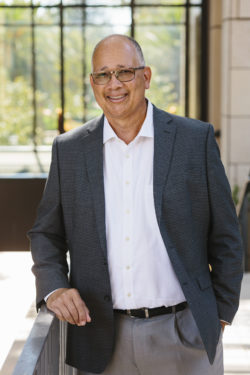
We’re based in the Law School, serve the entire University, and have been enthusiastically and energetically organizing SCRJ to vigorously pursue our mission.
SCRJ is hiring staff, developing a strategic plan, and meeting with many supporters about opportunities for new research and policy initiatives.
Our starting point is the recognition that racism not only creates intractable harms and challenges for Black and other people of color, but has also undermined the well-being of all people in our country, through exacerbating economic insecurity, entrenching a lack of educational opportunities required for people to thrive in our 21st Century economy, and allowing for mass incarceration and violence, including by those sworn to serve and protect. Consequently, our initial subject matter focus areas are economic insecurity, educational opportunity and reimagining public safety.
SCRJ aims to make Stanford more central to the work of countering racism and its effects, and to make that work more central to Stanford.
Foundational Operating Concepts
We embrace several foundational operating concepts as we continuously evaluate new program ideas and research initiatives:
Democratizing knowledge. We will broadly share with our stakeholders and the public, in meaningful and accessible ways, objective and truthful information about racial equity, the history of racism, and its current effects on our society.
Democratizing knowledge also includes making accessible to many more stakeholders the work that Stanford faculty and researchers create that’s relevant to racial equity. We’ll also work with policymakers, grassroots organizations, marginalized communities, government officials and private sector actors on issues relating to our mission and help share their ideas and experiences. We aim to identify and share new innovations and policy initiatives that address our society’s most difficult challenges rooted in historical or present-day racism in all of its forms.
Improving Public Dialogue. Our present state of social and political polarization and the decline of respectful and civil public discourse inhibit our society’s ability to address our biggest problems. We will work to improve the state of public discourse as another foundational concept for SCRJ. The Center will model the practices we encourage others to use. We will seek and deploy methods to address both ignorance (lack of evidence and facts) and certainty (the unwillingness to consider alternative views) in public dialogue.
Seeking innovative ideas with practical applications. SCRJ is in constant pursuit of innovative ideas and practical solutions to address our most challenging societal problems. Our efforts to pursue deep engagement with a wide range of individuals, groups and organizations will have multiple objectives, but at its core, we believe the ongoing discussion of ideas across multiple domains will help lead to innovation. We will serve as a key hub of activity and connect people in different ways to learn new perspectives which may lead to further opportunities for innovation and action.
Catalyzing new research and knowledge production. A final foundational concept is that we will catalyze new research and knowledge production. The engagement activities described above will lead to novel areas of inquiry and research. We aim to connect Stanford researchers and other scholars to new sources for research projects, and help our external stakeholders find and connect to the University concerning their needs for expertise and research. The Center will also engage in projects that will produce new knowledge by pursuing a variety of areas of inquiry to find and evaluate data and report on it in meaningful and accessible ways.
Ongoing Projects
We also have several exciting projects underway and we will be reporting on them periodically as we make progress:
Model Use of Force Policy (MUOF Policy).
We are developing a model policy concerning the use of force by law enforcement agencies with the assistance of volunteer lawyers from a national law firm. The MUOF Policy will provide a turn-key model document for small and mid-size city police departments who want to update their policies to reflect fair, safe and equitable approaches to the use of force. We are in the qualification phase and expect to have a pilot project ready for implementation by mid-year 2022. The Center is collaborating with Stanford SPARQ researchers on this project who will help develop the MUOF Policy implementation procedures, training, and evaluation tools.
Corporate Governance and Racial Equity.
Additionally, we are in the planning phase for various initiatives relating to the private sector. We plan to collect data from a broad swath of the largest companies in the United States relating to their commitments and activities concerning racial equity. The Center will report on that data, promote dialogue between corporate leaders and racial equity thought leaders, and evaluate various attempts to measure corporate efforts and to benchmark those efforts for comparative purposes. We also plan to engage with thought leaders and catalyze new scholarship on the proper role of corporations in pursuing racial equity in society. The Center is collaborating with The Rock Center for Corporate Governance on this project.
We are also in preliminary discussions to engage in place-based research involving a variety of stakeholder-identified challenges in a U.S. city. We will be updating our stakeholders from time to time as this initiative unfolds.
Beyond these projects, there are numerous activities we are involved in to advance our mission. Before long, we will be seeking to engage students at all levels across the University in our efforts.
Stay updated on our progress by joining our mailing list. As always, if you have thoughts and ideas for the Center for Racial Justice, please reach out to us at scrj@law.stanford.edu.
SCRJ Leadership
Professor Ralph Richard Banks, SCRJ Faculty Director and Co-Founder, teaches about and researches in the areas of race and the law, education, and family law. He has a forthcoming book on education and democracy.
George Brown, SCRJ Executive Director, worked as a lawyer for three decades representing clients in high stakes, complex litigation. He was also involved in numerous public interest initiatives and non-profits supporting racial equity and social justice.