
After Affirmative Action: An Alumni Weekend Talk with Ralph Richard Banks
For decades, affirmative action policies in college admissions have provided educational opportunities to underrepresented groups in an effort to counteract historical discrimination. On June 29, 2023, the U.S. Supreme Court struck down race-based affirmative action admissions plans at Harvard University and the University of North Carolina, effectively erasing affirmative action policies for colleges and universities across the nation. In the wake of this decision, our country is now grappling with its impact on admissions policies, diversity and inclusion, and the pipeline to post-graduate success. Where did this decision come from, and where do we go from here?
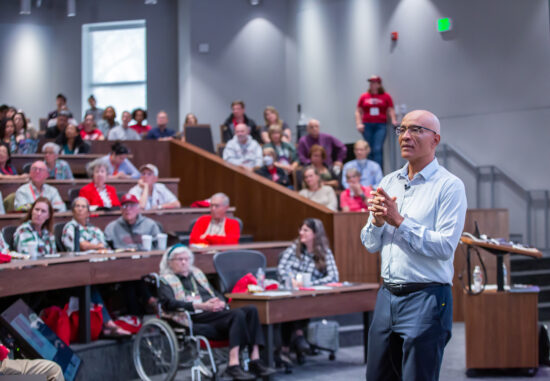
During Stanford’s Alumni Reunion Weekend, Stanford Center for Racial Justice Faculty Director Ralph Richard Banks held a “Classes Without Quizzes” session to address the many pressing questions of a post-affirmative action world. In a packed room of alumni and other Stanford affiliates, Banks outlined three reasons underlying the Supreme Court’s decision. First, he explained that the Court has gradually become more conservative in recent years, which has left consequential decisions in the hands of a right-leaning supermajority that seeks to undo progressive decisions from the past. Second, the relationship between race and disadvantage has become weaker over time, perhaps signaling more prosperity for people of color and a diminished need for race-based policies and programs. Finally, he suggested that the significance of college has changed, forcing students into a highly competitive application process that puts admissions factors, such as race, under public scrutiny. This attention ultimately placed affirmative action policies back in front of the Supreme Court.
Banks explained that each of these factors point to the main conflict in American society with regard to race: should Americans be colorblind or anti-racist? Where anti-racism seeks to actively combat racial prejudice, colorblindness chooses not to take race into account; both, however, can have the ultimate goal of promoting racial equality, depending on the context in which they are applied. In the Supreme Court, the clash between these ideals was striking. Justice Clarence Thomas defended the Students for Fair Admissions decision through an originalist interpretation of the Constitution, claiming that the Equal Protection Clause was written with colorblind intent in his concurring opinion. On the other hand, Justice Ketanji Brown Jackson wrote an anti-racist dissent rooted in history by arguing that “our country has never been colorblind.” Instead, she suggested that race-based disparities in opportunity persist, and striking down affirmative action is antithetical to the Equal Protection Clause’s promise.

While the controversy surrounding these approaches to race and the law is ever-present, Banks advises us to resist the urge to pick sides. Colorblindness has its benefits, according to Banks, but the value of the anti-racist approach in a nation with a long history of racism cannot be overstated. Instead of approaching the problem of racial equality from two competing angles, Banks invites us to answer a question together: how do we create opportunities to thrive for everyone? Through this lens, we are all implicated in finding a solution.
Currently, institutions are still grappling with the fallout of the Supreme Court’s decision, which arguably casts a wider net than higher education. Banks highlights that the decision could impact diversity, equity, and inclusion policies and programs that support the success of people of color, such as those that give grants to Black-owned businesses. Today, race-based scholarships, educational programs for underrepresented students, and diversity-driven employment policies all stand on shaky ground. Military academies previously excluded from the Students for Fair Admissions decision have also recently come under fire. West Point, for example, is now facing a lawsuit that claims the Supreme Court decision striking down affirmative action in civilian colleges should also apply to military academies.
While most discussions focus on what the decision prohibits, equally important is what the decision does not prohibit. Banks highlights that the Court’s decision does not bar students from writing about their racial background in their personal statements, for example. He also notes that nothing precludes universities from considering the tribal membership of Native American applicants, which is a political status and not a racial category. In the future, other factors in admissions—like legacy and athlete status—may eventually reach the chopping block, but as of now this switch seems unlikely. All in all, many possibilities are being considered to ensure that diversity and equal opportunity remain objectives in the system of higher education.
Banks ended the discussion by moving beyond admissions to more critical questions regarding our education system altogether. According to Banks, the Court’s decision reveals a much broader issue: higher education in the U.S. is more stratified now in terms of race and class than at any other point in the history of our nation. This system has created unequal outcomes for students that significantly harm their wellbeing. Freshmen arrive on campus “overjoyed and depleted” from the battle they fought to simply gain admission, and the consequences of this battle negatively impacts student mental health and access to equal opportunity. Banks closed by calling on the audience to imagine better ways to approach higher education, which must involve everyone, because the future of our nation depends on it.