
Stanford Center for Racial Justice Launches Policy Lab to Elevate the Voices of Marginalized Students in San José Unified
Despite decades of efforts to remediate racial disparities in education, low-income schools serving predominantly students of color continue to face significant challenges that perpetuate unequal educational outcomes. While no single solution can solve these complex issues, insights from the most marginalized students offer an underutilized source of knowledge that can drive more effective policies and practices.
This winter we launched Roses Talk: Elevating At-Promise Student Voices in San José Unified, a Stanford Law and Policy Lab co-led by Dr. Subini Annamma and Hoang Pham that seeks to directly address persistent disparities in education by elevating at-promise student voices in school and district decision making, reshaping our thinking around and approaches to advancing educational equity.
With over 25,000 students, San José Unified School District (SJUSD) is the largest school district in Santa Clara County, the county where Stanford University is located. District leaders and administrators at Gunderson High School—a Title I high school in South San José—identified a collective need to better understand how to support “at-promise” students (a positive reframing of “at-risk” that is reflected in California education law), those who may fail to earn a high school diploma for a variety of reasons, including but not limited to low scores on standardized tests, disengagement from school, English language learner status, previous suspension or expulsion, involvement in the foster care system, houselessness, and special education. The COVID-19 pandemic has only exacerbated challenges for these students, with metrics of achievement and well-being worsening each year since 2020.
Coined by Tupac Shakur and applied to education by Dr. Jeff Duncan-Andrade, the “rose that grew from concrete” is a metaphor for young people who often experience the most challenging environments but nonetheless show unmatched resilience and determination to overcome their circumstances. If these “roses” are given opportunities to talk, what would they tell us about what they need from school to succeed? Reaching this student demographic is critical for several reasons. Being the most marginalized, improving their outcomes can often improve outcomes for all students, school quality, and a district’s overall health. These students also bring unique perspectives on schooling because they have benefited the least from it, which may challenge ignorance and certainty around what approaches and programs are most effective in working with them. Most importantly, at-promise students have an exceptionally high potential to make a difference in the world—an ideal that is at the core of the U.S. education system. Our society has a responsibility to help them reach that potential.
This project, supported by a 2025 Community Engagement Impact Fund award from the Stanford Office of Community Engagement and a Cardinal Course Grant from the Haas Center for Public Service, will engage Stanford students in conducting interviews and focus groups with Gunderson’s at-promise students. Using this data, students will develop policy recommendations that inform school and district decision making, particularly on how to engage and improve outcomes for the most marginalized students in SJUSD. The course offers a unique opportunity for Stanford students to participate in community-engaged learning and research, apply technical skills and academic knowledge to real-world challenges, and contribute to positive educational outcomes for underserved students. It embodies the principle that higher education institutions can and should play a pivotal role in enhancing the quality of K-12 public education for all students.
We are thrilled to welcome an exceptional cohort of Stanford students to this project. Each brings a diverse and impressive blend of academic and professional experience, united by a shared commitment to transforming education and empowering students who are often the hardest to reach.
Winter & Spring 2025 Policy Lab Students

Andrea Akinola | Andrea is a 1L at Stanford Law School from Irvine, California. Her interests include civil rights law and education equity. Before coming to the law school, Andrea was an English Teaching Assistant in Las Palmas de Gran Canaria, Spain where she worked with her students and her community on a research project on Canarian history, identity, and belonging. Andrea graduated cum laude from Columbia University with a Bachelor of Arts in Political Science and a minor in Education Studies. While at Columbia, Andrea was a Diversity, Equity, and Inclusion facilitator at the Office of Multicultural Affairs, the Vice President of Columbia Women in Law and Politics, and a member of the Holder Initiative for Civil and Political Rights. In her free time, Andrea enjoys working out, baking gluten-free desserts, and watching reality TV.
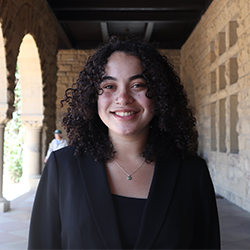
Zoe Edelman | Zoe (she/her) is a senior from Washington, DC interested in Black history and education. At Stanford, she studies History with a minor in Political Science, and aims to use her academic background to contribute to radically supportive and de-colonial educational experiences for students. Over the past six months, Zoe has worked at two public charter schools—in New York City and DC—assisting students in English and Math classes. She will be teaching full time in her hometown of DC beginning in Fall 2025. On campus, Zoe has participated in journalism, student divestment organizing, and various history research projects. In her free time, she enjoys walking/running, hanging out with her dogs Jack and Kona, and drinking an iced coffee.
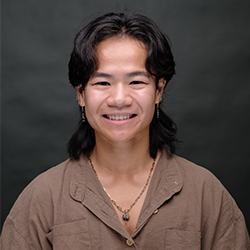
Ev Gilbert | Ev (they/he) is a community organizer and youth worker from Brookline, MA, dedicated to uplifting and centering the voices of multiply marginalized youth. They are a Master’s student at the Stanford Graduate School of Education in the Policy, Organization, and Leadership Studies Program and hold a Bachelor of Arts in Sociology from Boston University with a Minor in Public Health. Currently, Ev is a Research Assistant for the National Student Support Accelerator working on a qualitative research project studying master schedule creation in K-12 schools using AI. Previously, Ev served as Youth Programs Coordinator for the Massachusetts Safe Schools Program for LGBTQ Students. In this role, they managed all direct youth programming and supported high school student activists to create and inform policy, promote inclusive learning environments for all students, and foster statewide collaboration among LGBTQ students and allies. Ev is passionate about educational equity for all students and the power of student voice in bringing about transformative change in local and statewide school policy.

Kimberly Gonzalez-Zelaya | Kimberly is an undergraduate senior from the San Ysidro/Tijuana borderlands, double majoring in Urban Studies and Comparative Studies in Race and Ethnicity with a minor in Education. Her academic interests aspire to connect critical geographies of capital, incarceration, and race to the system-impacted experiences of marginalized communities across urban and rural America. At Stanford, Kimberly is a member of the Central American Student Association (CASA) and two-year Ethnic Theme Associate (ETA) of Casa Zapata. Outside of academics, Kimberly enjoys going to the movie theatre, DJing, and going to concerts.
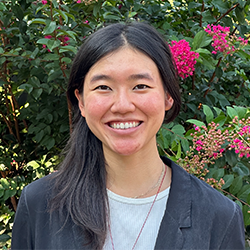
Rebecca Han | Rebecca is a 2L from Tuscaloosa, Alabama. She is a co-president of APILSA, Stanford Law’s AAPI affinity group, and is also involved with the Law School Musical, the Women of Color Collective, and research positions. Before law school, she taught English in Taiwan through Fulbright, through which she developed an interest in education advocacy. Her legal interests include civil-side plaintiffs’ law as well as the intersection of criminal defense, immigration, and family law. She also hopes to be an art teacher somewhere down the line.

Antonio Cruz Preciado | Antonio Cruz Preciado was born and raised in Inglewood, California. He grew up across borders and as a Mexican and American citizen, he also calls the small pueblo, Tecolotlan, Jalisco in Mexico home. He is a fourth year at Stanford University majoring in Comparative Studies in Race and Ethnicity with a double minor in Human Rights and Education. Upon completing his undergraduate degree, Antonio intends to go to law school. He hopes to work at the cornerstone of incarceration and education, specifically in prevention and reintegration programs for systems-impacted youth to pursue higher education opportunities. In his free time he enjoys collecting fitted hats, going to the gym, and playing with his dog Paloma.
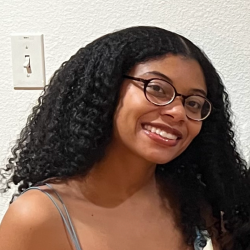
Chaelyn Rigmaiden-Anderson | Chaelyn is a senior from Berkeley, California pursuing a Bachelor’s degree in Sociology. Her academic interests center around eviction and housing policy, education reform, and legal representation. In addition, she is currently working on her honors thesis surrounding how gentrification affects public school education. She has experience with social research involving the court and legal system as a research assistant in Stanford’s Sociology department. She has also participated in Alternative Spring Break, where she traveled to Anchorage, Alaska to do volunteer work, discuss housing affordability, and learn about the Alaskan legal system. She hopes to attend law school in the future, with a goal to extend her service to the underrepresented and unheard. Beyond her academic pursuits, she is a member of Stanford’s Black Student Union (BSU) and is always looking for a new book to read. She’s also an avid music listener, serving as an executive director of Stanford Concert Network where she helps to plan Stanford’s annual Frost Fest.
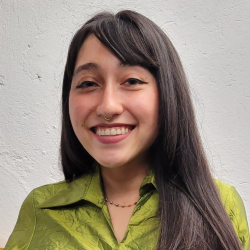
Sara Sarmiento | Sara is a 1L at Stanford Law School. Originally from Bogotá, Colombia, and growing up in Miami, FL, she is a proud first-generation immigrant and first-generation college/law student. Their academic interests are broadly within the intersections of race, immigration, law, youth and education. They were a Posse Foundation Scholar at Mount Holyoke College, graduating in 2021 with B.A. degrees in International Relations and Critical Social Thought. Prior to SLS, Sara was an elementary school ELA teacher in her hometown, Miami, FL, working primarily with English as a Second Language (ESL) and special education students. At Stanford, she is a member of the Education Defense Pro-Bono Project. In her free time, you can find them crocheting or taking long walks with her cat, Dorita.