
Stanford Law’s David Sklansky on the Special Counsel’s Election Interference Report, Prosecutorial Power, and His New Book
On a recent episode of Stanford Legal, podcast co-host Pam Karlan was joined by Stanford Law School Professor David Sklansky, a criminal law expert, for a wide-ranging discussion of the election interference report from Special Counsel Jack Smith, which was released a few days before Trump was inaugurated. (The second part of the report, focusing on President Trump’s handling of classified material, is not planned to be released to the public in light of pending cases against co-defendants. On January 21, 2025, U.S. District Judge Aileen Cannon granted a request from Trump’s co-defendants to keep the second report from the heads of the House and Senate Judiciary Committees.)
The conversation between Karlan and Sklansky about the election interference report also touched on Sklansky’s new book, Criminal Justice in Divided America, Police, Punishment, and the Future of Our Democracy. Read more about the book here.
The following is a shortened and edited version of the full podcast transcript, which can be found here.
Tell us a little bit about special prosecutors and how they fit into the Department of Justice.
We used to have an institution called the “independent counsel,” which was a lawyer who was appointed by a federal court when the Justice Department decided that their impartiality could be fairly questioned. An independent counsel, for example, investigated scandals associated with the Reagan and Clinton administrations. But that law expired, and in its place the Department of Justice has pursued a policy of itself appointing special counsels when there’s reason to worry that if the Department of Justice handled something on its own, its impartiality could be called into question.
So, the Department of Justice appointed a special counsel to investigate Hunter Biden because, since Hunter Biden’s father was the president, it might fairly be wondered whether the Department of Justice would be impartial in investigating and prosecuting him. And the Department of Justice also appointed a special counsel, Jack Smith, to handle various investigations into Donald Trump, including the investigation into the efforts that he made to overturn the results of the 2020 election.
Listen to the Podcast with David Sklansky
Is it the general practice at the end of these investigations, even if people don’t get prosecuted, to release a report?
It has been. The special counsel who investigated President Biden released a report, and the special counsel who handled the investigation and prosecution of Hunter Biden released his report a day or two ago.
What struck you about this report? Was there anything different about this report?
I think what’s different about this report is all the controversy about whether there should be a report at all. Trump’s lawyers tried to block the release of the report, and the judge overseeing the separate prosecution that the special counsel had brought against President Trump related to his illegal retention of documents at Mar-a-Lago briefly ordered that no part of Jack Smith’s report could be released. She relented, and the report was released. It’s prefaced by a four-page letter from Jack Smith defending the integrity of his investigation and describing what he did. It’s followed by a letter from Todd Blanche who will soon be overseeing the day-to-day operation of the Department of Justice, but figures here because he’s Trump’s lawyer in this case. This letter objects to the release of the report. Then there’s a response to that letter from Jack Smith. The letter from Todd Blanche is there because Blanche and his associates were given an opportunity to review the report and raise objections before it was released.
They seem to be saying “you shouldn’t release the report,” not “you say things in the report that are untrue,” correct?
That’s right. It’s all about whether the report should be released, and it’s an argument that the report shouldn’t be released, and Smith responds to that. I think that for anybody who hasn’t been reading earlier filings by Jack Smith’s office, it’s very informative to read the evidence that Smith has assembled. It explains why these charges were brought against President Trump and why Smith and his lawyers were confident that they would prevail at trial. For people who have read that earlier material, I think what’s really interesting here is the debate about whether the report should even be released and the tenor of Blanche’s letter attacking the idea of releasing the report.
One of the things that I have wondered about is why it took till 2022 to appoint a special counsel when much of the material was known on January 6th, 2021.
That’s a fair question. And it’s a question lots of people have asked. People have asked not just why it took so long to appoint a special counsel, but why the investigation up to that point was so slow. The reason that the Department of Justice gave for appointing a special counsel at that point was that it had become clear that Trump was running for reelection.
When Jack Smith was appointed, things started to move much faster because Smith just worked in a more disciplined and aggressive way than the investigation had been working beforehand. And we don’t know why that was. We don’t know to what degree it reflected ambivalence within the Department of Justice about whether these prosecutions should be aggressively pursued, or how to think about them. But it does sit a little oddly with the aggressive efforts that the Department was making from the outset to prosecute other people for activities in connection with January 6th.
Yes, they’ve prosecuted hundreds of folks who were there on the ground at the Capitol. They prosecuted a couple of people who weren’t at the Capitol, but who were involved in whipping up the crowds that stormed the Capitol.
Yes, and convicted well over a thousand of those people. So, the fate of those convictions is now in question. Trump has said that he intends to pardon many, if not all, of the January 6th defendants. [Trump issued an executive order on January 21, 2025 pardoning or commuting the sentences of nearly all of the 1,600 people involved in the events of January 6, 2021.] The criminal prosecution of Trump for his involvement is now at an end.
One of the things that I thought was very interesting in the report was the discussion about the decision not to charge Donald Trump with insurrection. The charges against him involve fraud and the attempted denial of individuals’ rights to vote and like. What interested me is that the denial of the right to vote count of the indictment was also very innovative. And they decided to go forward with that and not with an insurrection charge.
Yes, one of the oddities of this prosecution is that although it’s built around the events of January 6th, it really is a fraud case. And the allegations are all about defrauding the United States, depriving voters of their rights, conspiracy against the United States, and obstruction of justice.
You’re absolutely right that none of the actual accounts are about the violence, which makes the pictures that they included in the final report interesting because they are pictures of the violence.
Yes, and from the time that these charges were filed, the special counsel’s office has tried to have the violence of that day be part of the case. The main theory that the indictment used for this purpose was to suggest that Trump made use of the violence of January 6th to further his efforts to fraudulently overturn the election. As the case proceeded, the special counsel’s office talked more and more about the violence. There clearly were many discussions within the special counsel’s office that continued throughout the case about how much to make of the violence in the case because, for many people, I think the worst thing Trump arguably did was to try to incite a violent insurrection to overturn the results of a lawful election. And he was never charged criminally with that.
It was interesting reading that part of the report about whether it’s actually an insurrection to try to stop the transfer of power, because insurrection requires going against the existing legitimate government. That struck me as a really interesting and tricky issue.
It is an interesting and tricky issue. There are also interesting and tricky issues associated with the use of the statutes that the special counsel’s office did decide to rely on in this case. I think Jack Smith is right that if this case proceeded to trial, he very likely would have obtained a conviction. The uncertainties associated with the case have to do with what would happen on appeal, particularly in the Supreme Court.
In addition to the delay at the front end of the case with getting the special prosecutor up and running, there was a huge delay at the back end caused by the Supreme Court. The Supreme Court could have taken this case and resolved the question of presidential immunity much earlier than it did. By the time the Supreme Court decided its decision on presidential immunity—a decision that we’ve talked about and that I think clearly got things wrong—it was so late that it was virtually guaranteed that if Donald Trump managed to get elected, there would be no prosecution.
I think that’s right and if Donald Trump hadn’t been elected, if this case had proceeded the way in which the Supreme Court decided the immunity issue, would have created additional delays.
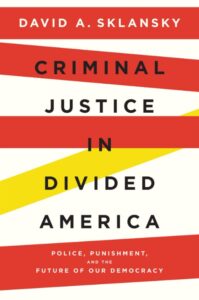
I’d like to step back a little bit now from the special counsel’s final report and talk about the other important publication from today, which is your book, Criminal Justice in Divided America, Police Punishment and the Future of Our Democracy, and ask how the themes and issues you focus on there play out in the various prosecutions of Donald Trump?
It’s easy to look at the prosecutions of Donald Trump and think criminal justice has nothing to do with saving American democracy. People who put their hope in the criminal justice system as a way to protect America against further sliding toward authoritarianism were mistaken and disappointed. It’s certainly true that there are people who are concerned about democracy now have lots of things to attend to other than criminal justice. But I do think that failures of criminal justice have a lot to do with the crisis of democracy in the United States today. And the book is an effort to talk about why that is.
Do you think the prosecutions of Donald Trump will lead to even more distrust in the criminal justice system? He keeps claiming the criminal justice system is weaponized, but he also claims he wants to weaponize the criminal justice system against his political opponents. The person he’s nominated for the head of the FBI has a list of people he’s already announced he wants to go after. Where does this leave criminal justice in our democracy?
There are two paths that lead from here. One leads to further unraveling of trust in institutions and in the rule of law. For example, the Trump Department of Justice takes the position that “since the Democrats didn’t seem to care about following rules, we need to fight fire with fire and all these nice-sounding principles are really just masks for liberals to exert their will, and we need to stand up for what we believe in and that means using prosecutorial power to do what we want to do and unleashing the police to do what we want to do.” And if we go down that path, there will be a spiral of escalating disillusionment and cynicism about government and the rule of law.
The other path that could proceed from here is people on the right who believe that the justice system has been unfairly politicized join with people on the left who are concerned for their own reasons about the misuse of prosecutorial power and police power, and work together to build new systems, procedures and rules to rein in prosecutorial power and to revive the community policing movement.
Robert Jackson [a federal prosecutor and Supreme Court Justice] gave a very famous speech, which he then published, on the role of the federal prosecutor in 1940. And I highly recommend that everybody read the speech. The Robert Jackson center has it on its website. He warned us about the power of federal prosecutors, their ability to comb the law books and find at least a technical violation of some act on the part of just about everyone. And I think that warning is something that really we ought to be looking at again as we move into the second Trump administration.
I completely agree. And Jack Smith quotes that speech in his letter prefacing the report as well. And that’s not surprising because that’s a speech that most federal prosecutors read and I think most federal prosecutors try to take to heart. And I do think it contains ideas that it’d be good for all of us to take to heart.
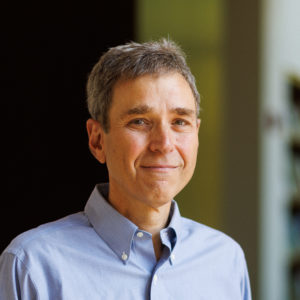
David Sklansky teaches and writes about policing, prosecution, criminal law and the law of evidence, and he serves as faculty co-director of the Stanford Criminal Justice Center. Before becoming a law professor he was a federal prosecutor in Los Angeles. His newest book, “Criminal Justice in Divided America: Police, Punishment, and the Future of Our Democracy,” was published earlier this month by Harvard University Press.