
Amplifying the Wisdom of Students in San José
Roses Talk: Elevating At-Promise Student Voices in San José Unified is a Stanford Center for Racial Justice Law and Policy Lab (LAW 809X/EDUC 309X) co-led by Dr. Subini Annamma and Hoang Pham that seeks to directly address persistent disparities in education by centering “at-promise” student voices in education policy and practice. In the course, Stanford students conduct interviews and focus groups with the most marginalized students at Gunderson High School, a Title I school in San José Unified School District (SJUSD). Using this data, students will develop policy recommendations that inform school and district decision making, particularly on how to engage and improve outcomes for at-promise students across the district. As part of their coursework, students author a series of independent blog posts that offer insight into their experiences. These reflections not only document their learning but also contribute to an ongoing dialogue about education in the U.S., particularly by amplifying the voices of the young people they work with.
Students as the Heart of Educational Justice | Antonio Cruz Preciado
When I first walked into Gunderson High School, I was instantly transported back to the hallways of my own high school in Inglewood, CA. The buzz of students between classes, the subtle glances exchanged across hallways, and the palpable energy of young people navigating their academic journeys felt familiar. Yet, standing there as a researcher—not a student—I was acutely aware of the responsibility I carried: to listen deeply, learn humbly, and amplify voices often excluded from conversations about educational policy.

My passion for education is deeply personal. As the first in my family to pursue higher education, the first English speaker in my household, and the son of immigrant parents who sacrificed so much for the mere possibility of a better future, I know firsthand the barriers that exist within our educational system. I grew up translating legal and medical documents for my parents, navigating school enrollment forms on my own, and struggling to reconcile the pressures of academia with my family’s expectations. These experiences shaped my commitment to ensuring that students, particularly those from immigrant and low-income backgrounds, are not left to navigate these systems alone.
Conducting interviews with students at Gunderson has been both enlightening and humbling. They speak with clarity and conviction about the need for culturally responsive teaching, more mental health resources, and spaces that feel safe for authentic self-expression. Their insights align with the core of my academic work, which focuses on the carceral logics embedded in educational settings. In many ways, their reflections reaffirm the importance of dismantling these punitive structures and reimagining schools as sites of liberation, not control. This experience has also challenged me to reflect on my positionality. As a Latino male from Los Angeles with firsthand experiences of navigating under-resourced schools, I relate to many of these students’ stories. Yet, I also recognize the privilege that comes with being a Stanford student and the responsibility it entails. Our goal is not just to gather data, but to ensure that the insights we collect are returned to the community in ways that drive meaningful change.
Looking ahead, I am hopeful. The students’ voices are clear: they want schools that reflect, respect, and respond to their realities. And I am committed to doing my part in ensuring that those voices are heard, not just in academic circles but in the very policy decisions that shape their futures. Educational justice, after all, starts with listening. And in these classrooms, I have learned that students already possess the wisdom we need to move forward.
The Wisdom of Gunderson High School Students | Kimberly González-Zelaya

As a first-generation Latinx student, the decision to work on a project with an explicit mission to connect education policy and equity through student voice was a no-brainer. Aligning deeply with my experiences across Title I public schools, I found that the Roses Talk policy lab provided an opportunity to contribute to an initiative with a unique appreciation for stakeholder input that goes above and beyond most. There is no one better to make astute observations and offer suggestions for improving our schooling system than the brilliant youth themselves, whose experiences have too often been overlooked. This is especially true for the students we interviewed at Gunderson High School, whose identities intersect multiple marginal statuses.
Similar to my own California high school alma mater, Gunderson reflects the rich character and culture of public majority-minority schools across the state. These students are frequently ignored in the creation of effective educational policy and typically excluded from reaping the benefits of those changes. Yet, the sharp analyses of their conditions are key to improving the state of their classrooms and the policies that govern their experiences in school. As researchers committed to the deep ethics and principles of justice-oriented and community-based investigation, this project is grounded in acknowledging the wisdom already available through these students. Our responsibility at Gunderson is to ultimately learn how to be humble in the ways we listen and connect to youth, navigating dynamics of privilege, power, and the personal. Across the two weeks of school visits and interviews that my classmates and I engaged in, the intention and care behind every approach shined through from the construction of our interview protocol to the small interactions with students in our initially awkward but endearing introductory meeting.
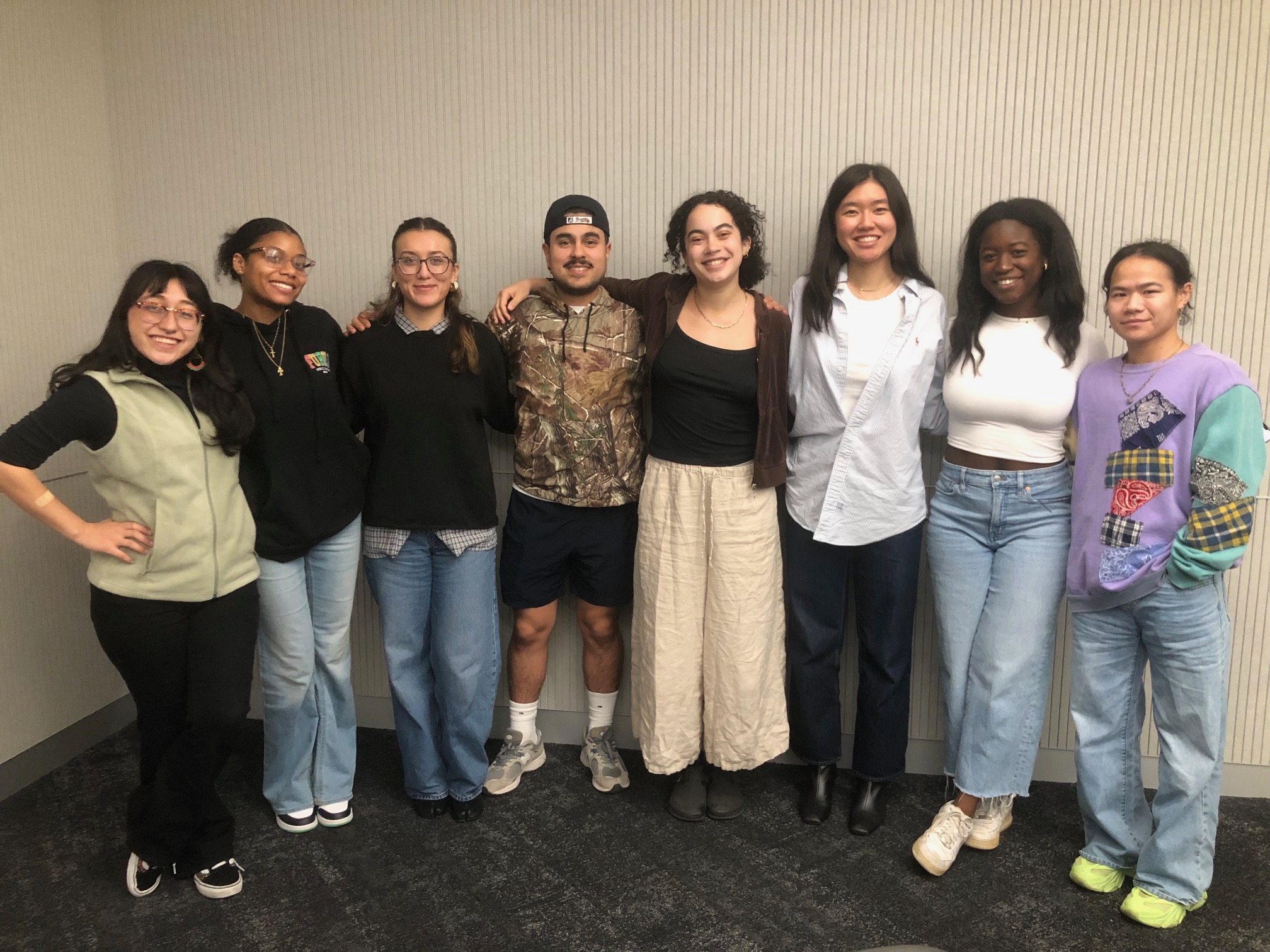
Within the interviews I conducted, what became increasingly meaningful to me was every student’s graceful optimism when reflecting on their schooling experiences. Where students expressed frustration for a lack of equitable access to resources, they also mentioned the unique ways they engineered resilience to these challenges, becoming adaptable, resourceful, and joyous despite the obstacles they faced. I related deeply to these students’ determined resolve to persevere and empathized with the ways such perseverance often goes ignored or even punished. Their suggestions for improving teacher-student relationships, classroom activities, and school culture, among other topics, pointed us to fresh perspectives on advancing education for the future.
The hope Gunderson High School students expressed for themselves, their futures, and their communities reflects the importance of elevating youth voices. Connecting with and establishing the value of students who are the most marginalized within a school is a crucial strategy for meaningful change. I’m invigorated by this work and it gives me hope for the future of education research!
Antonio Cruz Preciado (BA ‘25) was born and raised in Inglewood, California. He grew up across borders and as a Mexican and American citizen, he also calls the small pueblo, Tecolotlan, Jalisco in Mexico home. He is a fourth year at Stanford University majoring in Comparative Studies in Race and Ethnicity with a double minor in Human Rights and Education. Upon completing his undergraduate degree, Antonio intends to go to law school. He hopes to work at the cornerstone of incarceration and education, specifically in prevention and reintegration programs for systems-impacted youth to pursue higher education opportunities. In his free time he enjoys collecting fitted hats, going to the gym, and playing with his dog Paloma.
Kimberly González-Zelaya (BA ‘25) is an undergraduate senior from the San Ysidro/Tijuana borderlands, double majoring in Urban Studies and Comparative Studies in Race and Ethnicity with a minor in Education. Her academic interests aspire to connect critical geographies of capital, incarceration, and race to the system-impacted experiences of marginalized communities across urban and rural America. At Stanford, Kimberly is a member of the Central American Student Association (CASA) and two-year Ethnic Theme Associate (ETA) of Casa Zapata. Outside of academics, Kimberly enjoys going to the movie theatre, DJing, and going to concerts.
Follow the Stanford Center for Racial Justice on LinkedIn and Instagram and subscribe to our newsletter.