
Teaching, Researching, and Transforming Education through Student Voice
Roses Talk: Elevating At-Promise Student Voices in San José Unified is a Stanford Center for Racial Justice Law and Policy Lab (LAW 809X/EDUC 309X) co-led by Dr. Subini Annamma and Hoang Pham that seeks to directly address persistent disparities in education by centering “at-promise” student voices in education policy and practice. In the course, Stanford students conduct interviews and focus groups with the most marginalized students at Gunderson High School, a Title I school in San José Unified School District (SJUSD). Using this data, students will develop policy recommendations that inform school and district decision making, particularly on how to engage and improve outcomes for at-promise students across the district. As part of their coursework, students author a series of independent blog posts that offer insight into their experiences. These reflections not only document their learning but also contribute to an ongoing dialogue about education in the U.S., particularly by amplifying the voices of the young people they work with.
Changing the Rules: How Student Stories Can Transform Education | Chaélyn Anderson
For a long time, I’ve made a conscious effort to avoid teaching. I grew up surrounded by lesson plans, boring math worksheets over the summer, and piles of early childhood education books scattered around the house. My mother, my aunts, my grandmother, even my great-grandmother—all educators, all women who have dedicated their lives to shaping the minds of the youngest members of our society. Whether principals, Head Start teachers, special education instructors, or a college professor, they all had one thing in common—they understood that education is the key to opportunity. Volunteering in their classrooms and helping to prepare lesson plans, I inherited a curiosity about the education system itself. What makes a good teacher? Why do some kids fall behind and others don’t? How is it that something as simple as my grandma enrolling me in reading classes before kindergarten end up shaping my entire educational journey? Watching my family of teachers, I picked up on the unspoken and hidden advantages that could impact one’s educational outcomes. I learned about which classes to take and which ones would take me to certain places. I could pick up on the difference between my aunt’s Title I elementary school in Deep East Oakland and my mixed-income public school in an increasingly gentrifying Berkeley. Even before I fully grasped what I was doing, I learned to navigate the system. I learned to advocate for myself, ask questions when needed, and assert my presence in the classroom. I learned to play the game.
Education has increasingly become more like a long and difficult board game—where only a select few know the rules, and even fewer have a real chance of winning. This needs to change. So, despite my resistance to teaching, improving the education system has become a very important part of my life’s work. This is how I found my way to Roses Talk. I was inspired that this practicum would address disparities in the education system, this rigged game, head on. But more importantly, I was drawn to its commitment to elevate the voices of students themselves, allowing them to reimagine what education could look like for them. Too often, students are seen as passive players in their own education—mere game pieces. This practicum breaks that mold, exposing students to the agency they have in shaping their educational experience and catering to their needs. By listening to their stories we not only learn about the challenges they face, but also the solutions they have. In this way, the practicum isn’t just about fixing the education system, but transforming it into a space where students are central to its development.
Our work has now transitioned from collecting data to using that data to engage in composite storytelling. After hours and hours of listening to interviews and combing through quotes to identify themes, we are finally detailing what the students have shared about how they want to see their education improved. We are doing this through composite storytelling, a critical race methodological tool developed by scholars Daniella Cook Sumpter and Michelle L. Bryan. This method allows researchers to empirically recount the experiences of individuals in vulnerable political positions, thereby illuminating systems of oppression while maintaining their confidentiality. Composite storytelling is a crucial tool for this project as it allows us to deepen our understanding of the needs of Gunderson students by shifting the focus from individual students to the broader issues faced by all participants. Since this is a community-facing research project—produced by and for the community—composite storytelling also ensures our research remains accessible in non-academic environments, particularly for our collaborators in SJUSD.
Composite storytelling is a new methodological tool for me, and upon first exposure, the task of creating counternarratives felt daunting. How could I trust myself to craft a narrative that reflected and honored the voices of Gunderson’s students well? But I soon realized that the students were already speaking for themselves. I wasn’t creating their stories—I was simply the paper on which their words made an impression. These students know exactly what it is that they need to succeed and aren’t afraid to ask for it, they just need people willing to listen. Through them, I found a new role for myself as a researcher—one defined by advocacy for the changes the students have identified. Throughout this course, my role has become less about providing answers and solutions and more about creating the space for student stories, making sure they are disseminated and acted upon. I am so grateful for the gift that this class has given me in the opportunity to work and learn from such wonderful students.
For a long time, I resisted the idea of teaching, associating it with the long summers of boring workbooks my grandmother made me do. However, through Roses Talk I can now see why my family chooses to go to work everyday and can recognize the love they have for their students and the self-determination they are witnesses to. I’ve come to realize that education isn’t just a difficult game everyone must succumb to, it’s a space where students can and will change the rules to make it more fair and equitable. The students at Gunderson have shown me that the real power lies in their experiences and the truth they speak. Now more than ever, I find myself committed to reshaping the educational sphere to center the voices of those most impacted by it.
From Being a Better Teacher to Being a Better Researcher | Rebecca Han
I joined this policy practicum to learn how to translate my skills in law and policy to being a better educator and advocate—for young people, for my communities past, present and future, and for anyone in need of someone in their corner, as we all are. I didn’t always want to be a teacher, but I was always surrounded by them. My parents are lifelong educators, as are many others in my extended family. Growing up in Tuscaloosa, Alabama (roll tide!), I was accustomed to always feeling alarmingly conspicuous in any given room or at any given table I pulled a seat up to. Years of being a displaced country girl turned some of my student memories into caricatures, colored with Southern stereotypes and classist narratives about rednecks and an overall lack of education. So I blanketly assumed, regardless of its school profile, that Gunderson, a Bay Area high school, would be materially opposite. Yet, I was struck and surprised by how much Gunderson reminded me of my own high school, from the gray brick walls to the classroom arrangements to the chart paper Spirit Week advertisements. And I was struck most of all by the clarity and strength of the student voices—and the difficulty in translating their very concrete concerns and suggestions for improvements into policy tools.

One of our very first readings by Jeff Duncan-Andrade stressed the labor-intensive nature of teaching, for better or for worse. That the most memorable teachers are those whose presence is felt—whose level of “self-sacrifice, love, and support,” in accompaniment with “material hope” (after school tutoring, endless “prodding and cajoling,” etc.) was what led to the development of trusting relationships with students. The act of becoming a better teacher boils down not to the perfectly curated lesson plan or optimized classroom, but to repetition—to showing up, over and over again, even when it’s not easy. I saw this briefly in action as an English Teaching Assistant in Taitung, Taiwan, where it seemed like I was spending weeks on end to wrangle a single classroom together.
The act of becoming a better researcher is similar, but it can be much more methodical. Indeed, this class has been an ongoing and collaborative effort in producing and improving research that is repetitive (e.g. multiple visits with students, listening to student voices and transcripts over and over again) and methodical (e.g. clustering themes, creating composite stories out of student experiences), but far from clinical. The stories the students shared span a spectrum of experiences and emotions, from simple acts of resistance or self-assertion, to joy and community, to disappointment and reconciliation, to dreams and future plans, sometimes despite a lack of resources. Our method of creating composite characters—informed by the work of Dr. Daniella Cook Sumpter and Michelle L. Bryan—seeks to rigorously communicate the enormity of these experiences in a way that gives a “collective insight,” as Dr. Cook Sumpter told us in class, into “where we lost and got right and what we can do.” Just as collective insight begs a collective solution, one in which we all have a stake in and are responsible for, so too are we reminded in this process of the responsibility we have to protect and faithfully communicate individual student voices.
Insights abound in the experiences that Gunderson students have shared with us. So many of the solutions are common among the students—a suggestion that a program be advertised in ninth instead of tenth grade, adding more counselors, or making improvements to facilities like adding more water fountains. I am imperfectly learning and have far to go in becoming a world-class teacher or researcher. But I am grateful for the tremendous shoes I have to fill and the student voices I’m privileged to hear regardless of where my career takes me.
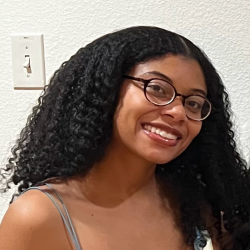
Chaélyn Anderson (BA ‘25) (she/her) is a senior from Berkeley, California pursuing a Bachelor’s degree in Sociology. Her academic interests center around eviction and housing policy, education reform, and legal representation. In addition, she is currently working on her honors thesis surrounding how gentrification affects public school education. She has experience with social research involving the court and legal system as a research assistant in Stanford’s Sociology department. She has also participated in Alternative Spring Break, where she traveled to Anchorage, Alaska to do volunteer work, discuss housing affordability, and learn about the Alaskan legal system. She hopes to attend law school in the future, with a goal to extend her service to the underrepresented and unheard. Beyond her academic pursuits, she is a member of Stanford’s Black Student Union (BSU) and is always looking for a new book to read. She’s also an avid music listener, serving as an executive director of Stanford Concert Network where she helps to plan Stanford’s annual Frost Fest.
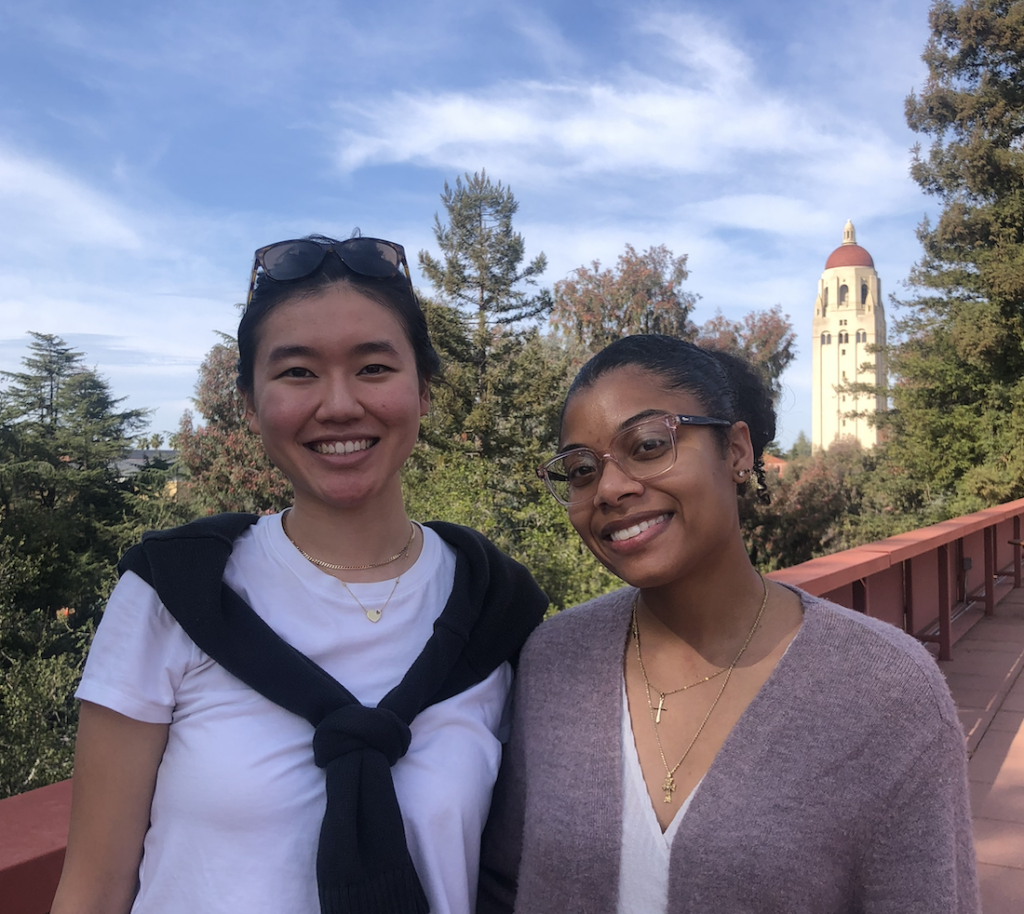
Rebecca Han (JD ‘26) (she/her) is a 2L at Stanford Law School from Tuscaloosa, AL. She is interested in public defense, particularly at the intersection of criminal, immigration, and family law, and plaintiffs’ side civil litigation. At SLS, she is the co-president of the Asian Pacific Islander Law Students Association (APILSA) and a passionate producer for the MuSLSical, SLS’s annual musical. Before law school, Rebecca was an English Teaching Assistant in Taitung, Taiwan, where she taught junior high schoolers using, among other things, theater dialogues. She graduated from Princeton University with a Bachelor of Arts in Politics and a minor in Journalism. At Princeton, she was a student leader and leader trainer with Outdoor Action, an outdoor education and leadership orientation program, and a member of a few political organizations. In her free time, Rebecca enjoys painting and drawing, cooking, and trying to do skate tricks without breaking something. She hopes to be an art teacher one day.
Follow the Stanford Center for Racial Justice on LinkedIn and Instagram and subscribe to our newsletter.