
PSYCH 188 Practicum Students Address Pressing Questions on Race, Bias, and the Law
Co-taught by Dr. Jordan Starck, assistant professor of psychology at Stanford University, and Hoang Pham, Director of Education and Opportunity at the Stanford Center for Racial Justice, PSYCH 188: Practicum on Racial Bias and Structural Inequality in the Law is an innovative, interdisciplinary course that invites students to think critically about how race and bias operate within the legal system.
At its core, this practicum explores one central question: What role does race and bias play in creating, maintaining, and magnifying inequalities in how the law is made, applied, and enforced? Students will investigate how racialized perceptions and systemic patterns of inequality become entrenched in legal institutions and cultural customs—often in subtle but consequential ways.
The course is unique in structure and scope. It’s designed as a dual-component practicum split across two weekly class meetings, with each component offering a different disciplinary lens:
-
PSYCH: Led by Dr. Starck, students will explore the social psychology of race and bias—unpacking key research, testing assumptions, and developing their own hypotheses about how “myths” around race shape legal and quasi-legal outcomes.
-
LAW: Led by Hoang, students will turn their attention to constitutional law, legal advocacy, and legislation within the context of racial justice. Through rigorous analysis, they’ll trace the rise and fall of major debates over race, discrimination, and concepts of equality in law and policy.
The course culminates in two distinct capstone assignments, allowing students to apply what they’ve learned through different analytical processes. In the PSYCH component, students will write a proposal paper presenting their own hypothesis about the impact of a myth discussed in class—how it might shape real-world outcomes, and how they would scientifically test it. A short presentation on the last day of class brings their ideas to life.
In the LAW component, students have two options for a capstone assignment. For one, they can choose to submit a comprehensive issue brief offering an objective, legal and policy analysis of a controversial DEI-related issue. Alternatively, students may opt to co-author a report for university leaders outlining how different institutions have responded to federal pressure to eliminate DEI programs—highlighting ideal pathways, legal options, and tradeoffs that would inform administrative decision-making. Like the PSYCH component, students will also present their work to the class at the end of the quarter.
During a time when racial justice is once again at the center of legal and policy debates, this practicum offers students the chance to not only study the system by unpacking competing perspectives on complex issues—but to actively engage in shaping it by producing rigorous research for real-world impact. Learn more about our terrific cohort of spring practicum students below.
PSYCH 188 | Spring 2025 Practicum Students

Abby Copeland | Abby is a junior from Lander, Wyoming majoring in Psychology and co-terming in Public Policy. Abby is interested in racial justice, specifically regarding the legal system. She has interned at the San Mateo Criminal Court, working to reduce racial disparities in felony sentencing and bail. Additionally this coming summer, she will again return to the Court to develop an AI tool to help unrepresented litigants navigate the family law system as a Public Interest Law Fellow. She enjoys the outdoors and can always be found hiking and exploring with friends!
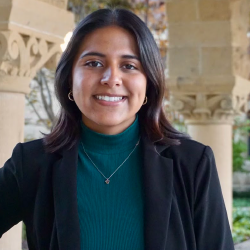
Crystal Jauregui | Crystal is a senior majoring in International Relations with a minor in Feminist, Gender, and Sexuality Studies, Crystal grew up in California’s Central Valley. At Stanford, she has been involved in student organizations including Students for Workers’ Rights, Derechos, and Hermanas. Her academic and career interests center on international social development and human well-being, with a focus on the health of both people and the environment. She has interned at Landesa, worked with Accountability Counsel, and contributed to an NGO in Spain. Through these roles, she has written research memos and analyzed legal frameworks that both perpetuate and seek to prevent injustice. Crystal is especially drawn to policy and legal work that addresses systemic inequities and the challenges faced by marginalized communities. She hopes to attend law school and ultimately work in the legal sector to advance reforms that promote justice for underrepresented groups.
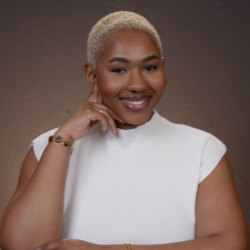
Michelle Kalu | Michelle is a senior from Dallas, Texas Michelle is studying African and African American Studies and International Relations. Her research and art practice focuses on transnational liberation movements across the African diaspora, using photography and sartorial practices from this time period as a medium to understand identity formation in post-colonial contexts. Michelle’s interests lie in human rights advocacy and social justice as well as creative expression and community building in African diasporic communities. She has previously served as the co-president for the Stanford African Students Association (SASA) and the executive director of Shaku African dance team. She is a student staff member at the First Generation Low-Income Student Success Center (FLISSC) and has previously supported students through her role as the Equity Community and Leadership Liaison role at the Black Community Services Center (BCSC). This year she is a fellow with the Institute for Diversity in the Arts (IDA). In her free time, Michelle enjoys cooking, dancing, and snapping photos on her film camera. Her creative pursuits are a reflection of her broader commitment to community building and cultural expression. Looking ahead, Michelle aspires to continue her advocacy work, aiming to impact policy and drive change on a global scale.
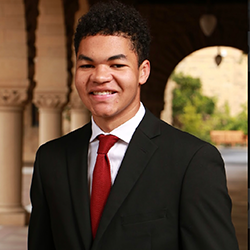
Michael Malone | Michael is a junior majoring in Psychology with a minor in Communications from Columbus, Georgia. His passions lie in sports entertainment, racial justice, and special education. On campus, Michael is actively involved in the Starck Lab, Kappa Alpha Psi Fraternity, Inc., the Sports Business Club, the Pre-Law Society, the Sports Analytics Club, Black Voices, and InterVarsity. He also serves as a mentor for Black first-year students through the Ernest Houston Johnson Scholars Program. Michael is also an advocate for the special needs community, inspired by his four quadruplet brothers with autism. In high school, he founded a nonprofit to support siblings of individuals with disabilities by connecting special needs families with resources. In the future, Michael plans to attend law school and pursue a career in sports and entertainment law. His goal is to become a sports agent, representing and advocating for talent in various industries.
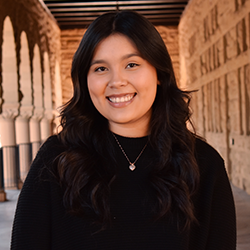
Alondra Martinez | Alondra is a junior from Los Angeles, California majoring in Political Science and pursuing a co-term in Communications on the Media Studies track. Her academic interests include U.S. elections and representation, justice and law, democracy, and political communication. At Stanford, Alondra has been a writer for the Stanford Daily, the Communications chair for Stanford Women in Politics, and a Research Assistant for the Social Media Lab. During the spring of her sophomore year, she studied in D.C. for the Stanford in Washington program, where she interned for Congresswoman Sydney Kamlager-Dove.
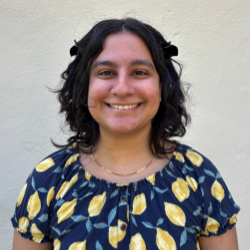
Sarina Rye | Sarina is a senior from Sacramento, California, Sarina is majoring in Sociology with a concentration in Data Science, Markets, and Management and a minor in Computer Science. She is passionate about public service, civic engagement, and local government. Sarina served on the Sacramento Youth Commission for two years, focusing on outreach measures for city programming. At Stanford, Sarina has interned with the Women’s Community Center and worked as a research assistant for The Structure of Sad Narratives project. In her free time, Sarina enjoys listening to audiobooks, writing poetry, and talking with her family.
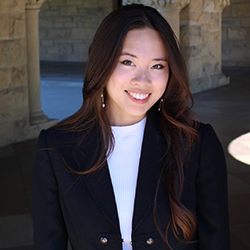
Kimberly Shirai | Kimberly is a senior from San Ramon, California majoring in Sociology and double minoring in Political Science and Creative Writing. She also plans on finishing her Sociology co-terminal Master’s in Fall 2025 and is a Sociology Department Peer Advisor. She is the co-Artistic Director of Stanford Taiko, the Japanese American ensemble drumming group on campus. This past summer, the group toured internationally in Thailand and the Philippines. She is writing her Sociology Honors Thesis with the working title of, “Japanese American Identity and Collegiate Taiko: Reconnection and Artistic Advancement,” with advisors, Professor Stephan Sano and Dr. Linda Uyechi from the Department of Music. She has served as a research assistant under Professor Grusky at the Center for Poverty and Inequality, Professor David Engstrom and PhD Candidate Austin Peters at Stanford Law School on litigation transparency, and is currently working under Professor Matthew Clair from the Department of Sociology. Last summer, she interned at the San Mateo Superior Court Family Law Facilitator’s Office and assisted in their family law clinic. This is her second year as co-President of Stanford Women in Law and Kimberly intends on applying to law school this Fall. In her free time, Kimberly loves to go to cafes with friends and to walk around campus after class.
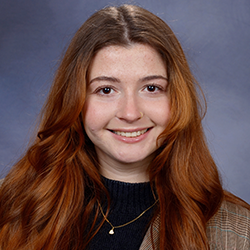
Skylar Volman | Skylar is a senior from the Boston area majoring in Sociology and Political Science with a minor in Spanish. Skylar is passionate about civil rights and criminal legal system reform, having spent each of her summers working on these issues in various capacities including policy advocacy, academic research, public defense work, and civil legal aid. This past summer in particular, Skylar interned as a Yale Liman Fellow at Lawyers for Civil Rights, a legal aid non profit in her home state of Massachusetts, aiding in the provision of direct legal services on cases ranging from voters’ rights to educational justice. On campus, she serves as a Judicial Panelist for the Office of Community Standards and as an editor of the Stanford Undergraduate Law Review. Outside of academics, Skylar enjoys taking ballet classes and trying new restaurants and cuisines with her friends. After she graduates, she will be attending NYU School of Law in the fall, intent on pursuing a career serving those directly impacted by mass incarceration, whether that be as a civil rights lawyer or public defender.
Follow the Stanford Center for Racial Justice on LinkedIn and Instagram and subscribe to our newsletter.