
Supportive Structures for Healthcare AI Innovation and Adoption
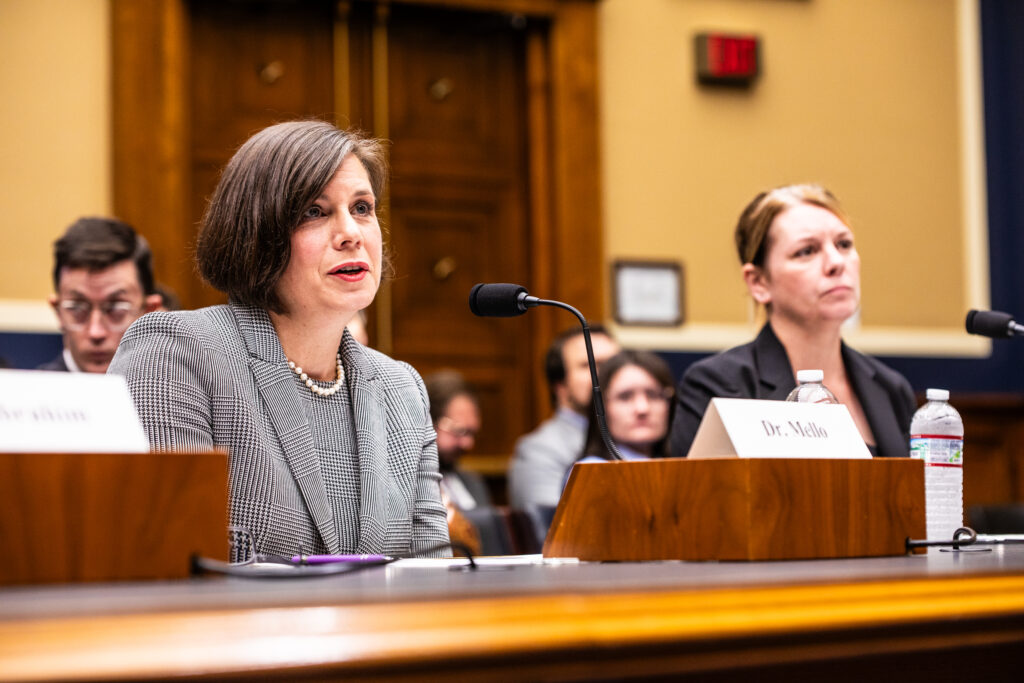
Testimony presented to the U.S. House Committee on Energy and Commerce, Subcommittee on Health, September 3, 2025.
Executive Summary
Although poorly designed regulation can hinder innovation, the government has a critical role to play in ensuring the conditions for innovation to translate into actual adoption of healthcare AI. In the U.S. market today, the key challenge isn’t stunted innovation—it’s low uptake of AI innovation. A major reason why adoption lags behind innovation and interest in AI is a foundational trust deficit. There are four areas where experts agree policy changes could promote AI adoption by building confidence in its performance:
- Ensure that the entities that develop and use AI adequately assess, disclose, and mitigate the risks of these tools. Healthcare organizations and health insurers should be required to show that they have an AI governance process in place that meets certain standards. AI developers should be required to document and disclose key pieces of information about their products’ design and performance.
- Support independent research on how AI tools perform in practice. Such research can help healthcare organizations and insurers answer important questions about where investments in AI solutions can generate the most benefit and to minimize risks. It also ensures that this knowledge is disseminated broadly.
- Modify healthcare reimbursement policies to better support adoption and monitoring of effective AI tools. Many AI tools will not save healthcare organizations money, and monitoring them properly can be costly.
- Address shortcomings in the Food and Drug Administration’s statutory framework to make the agency a more constructive partner in AI development and adoption. In some areas, the agency’s authority doesn’t go far enough; in others, it burdens developers with an antiquated regulatory framework that did not anticipate the AI revolution.
Read the full witness testimony