
Law, Politics, and the Power to Prosecute
Pamela Karlan and Robert Weisberg unpack recent federal indictments, and what they reveal about the rule of law in a politicized justice system
When politics drives prosecutions, what happens to the rule of law? On a recent episode of Stanford Legal, host Professor Pamela Karlan sat down with her colleague, criminal justice expert Robert Weisberg, JD ’79, to unpack the extraordinary federal indictments of former FBI director James Comey and New York Attorney General Letitia James. The conversation anticipated the indictment of former National Security Adviser John Bolton, which came days after the podcast was recorded.
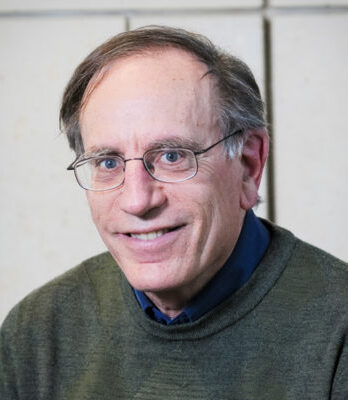
Weisberg, the Edwin E. Huddleson, Jr. Professor of Law and co-director of the Stanford Criminal Justice Center, explained how grand jury indictments normally work, why these cases are unusual, and how selective and vindictive prosecution claims might play out when the evidence of political motivation is broadcast via social media. The conversation also covered how Justice Department norms separating the White House from individual charging decisions have been systematically broken—and why these indictments, built on shaky legal ground and thin narratives, could face serious challenges.
The following is a shortened and edited version of the full podcast, which can be found here.
Pam Karlan: Let’s start with how the government goes about getting an indictment.
Robert Weisberg: A prosecutor—a U.S. attorney or an assistant U.S. attorney—starts by going to a grand jury. In theory, the grand jury is convened by a federal judge, but it will always be done at the behest of the prosecutor. And the prosecutor will put on witnesses who will, if things work out the way the prosecutor wants, convince the grand jurors that there is probable cause that a particular person has committed a crime. It’s not an adversarial hearing; it’s one-sided. But if the grand jury does indict, then the person is formally charged, and the case can proceed to pretrial or trial.
Pam Karlan: Normally, a grand jury doesn’t have to be unanimous to indict, and jurors don’t necessarily hear both sides. Should prosecutors give the grand jury a fuller picture of the case, or is it really just about putting forward their best shot?

Robert Weisberg: There’s no law that requires the prosecutor to present counterarguments that would come from the defense. In fact, the Supreme Court has clarified that that is not necessary. The DOJ guidelines, which are not binding as matters of law, but are administratively binding on federal prosecutors, would suggest that no prosecutor should try to win an indictment unless the prosecutor is, in all good faith, convinced that guilt can be proved beyond a reasonable doubt. But that still leaves open the possibility of pro-defense arguments that the grand jury will never hear. In some states, there is an opportunity for the person who ultimately becomes indicted to raise counterarguments.
Pam Karlan: There are often several grand juries sitting in a district at the same time. In the Letitia James case, there have been reports that prosecutors presented some evidence to a grand jury in Norfolk and other evidence to one in Alexandria.
Robert Weisberg: Yes. It’s a question of venue. In the James case—which involves some fairly obscure mortgage issues—there are at least two different properties at issue. That makes it legitimate for prosecutors to go to a grand jury in any district where part of the alleged crime took place. But it also gives the U.S. attorney some room for what’s sometimes called forum shopping, essentially looking for a friendlier grand jury.
Pam Karlan: Usually, when a case goes to a grand jury, it’s presented by an assistant U.S. attorney who’s been working on it for a while and knows it inside out. But with these two cases—the Comey and James indictments—things seem different. What’s going on here?
Robert Weisberg: What’s different is a lawyer named Lindsey Halligan. In recent years, we’ve seen situations where the Attorney General—or, in this case, the president—has pushed for an indictment even when career prosecutors have said there’s no case. Here, they reportedly concluded there was no probable cause, let alone a realistic chance of proving guilt beyond a reasonable doubt.
When the longtime U.S. attorney in the Eastern District, Earl Seibert, refused to file charges, Halligan was brought in to replace him. She apparently couldn’t find anyone on her staff willing to take the case—so she put her own name on the indictment and appeared before the grand jury herself.
Pam Karlan: That’s pretty unusual for the U.S. attorney.
Robert Weisberg: People experienced in federal law say it basically never happens. The U.S. attorney is a manager, not a line prosecutor—they don’t typically have the time or familiarity with the case to handle the presentation themselves. It may have been a dramatic move by Halligan, but it comes off as a rather feckless one.
Pam Karlan: Then she went to present the indictment to the magistrate judge — and she had two indictments with her in the Comey case. One charged him with two counts, the other with three. She seemed to hand in both and didn’t really seem to understand what was going on.
Robert Weisberg: Yes. Ultimately, we’re talking about the version with two charges. And it’s been criticized—quite fairly—as one of the thinnest and most obscure indictments anyone’s seen in a case like this.
Pam Karlan: Usually, in a major case—and I remember this from my time at the Department of Justice—the indictment tells a story: what happened and what the government is charging. That was true in the George Floyd and Ahmaud Arbery prosecutions, for example. By contrast, the Comey indictment is incredibly bare-bones, one of the shortest I’ve ever seen outside of a routine bank robbery or drug case.
Robert Weisberg: Exactly. The two charges, and how they relate to each other, are murky. One alleges that he lied when he testified before the Senate in 2020, but it doesn’t say much about the lie.
Pam Karlan: It doesn’t tell you what the lie was.
Robert Weisberg: It doesn’t actually say what the lie was. We can infer it indirectly, but there was a clear narrative to tell — and it simply wasn’t told. As you said, prosecutors aren’t legally required to lay out their whole case in an indictment, but they usually do offer enough factual detail to frame the story they intend to prove at trial and to make a persuasive presentation to the grand jury.
The second charge is for obstruction of a congressional proceeding, and its relationship to the perjury charge is murky. Obstruction can mean many different things — it’s an extremely complicated legal concept, and the obstruction statutes themselves are notoriously tangled. It’s entirely possible that the government is treating the same alleged lie as both perjury and obstruction. If that’s the case, it’s essentially a double charge based on the same act — supposedly, his testimony in 2020.
Pam Karlan: Comey’s testimony at issue was given in 2020, during COVID, when he appeared over Zoom from his home in the Virginia suburbs. That gave prosecutors a basis to bring the case there. And from the administration’s perspective, that was probably a bit of good fortune as they’ve had a hard time getting grand juries in the District of Columbia to indict lately.
Robert Weisberg: The U.S. attorney in D.C., Jeanine Pirro — a Fox News pundit and prosecutor — does have experience from her time as district attorney in Westchester County, but she and her office have repeatedly failed to secure indictments in Washington. Grand jurors there, ordinary D.C. residents, have simply refused to go along. At one point, she even tried a workaround by taking a case to the local Superior Court, technically a quasi–state court but still under federal authority, in an effort to get an indictment.
By contrast, the Eastern District of Virginia looked like a more favorable venue. And it turned out to be only just favorable enough: Halligan reportedly secured the Comey indictment with 14 votes out of 23 grand jurors.
Pam Karlan: Before we get to the trial, there are a couple of motions people think may be filed here, in addition to the ones asking the government to spell out exactly what Mr. Comey is alleged to have done. One involves selective prosecution and the other vindictive prosecution. Can you explain what those are, how they differ, and how courts typically handle them?
Robert Weisberg: “Selective prosecution” is a bit of a misleading term because all prosecution is selective in some sense. Prosecutors can’t charge everyone who technically meets the probable cause standard. The legal issue arises when the basis for that selection is impermissible.
The clearest example involves equal protection. In the landmark case U.S. v. Armstrong, a defendant argued that Black defendants were being prosecuted for a cocaine offense while similarly situated white defendants were not. The Court didn’t ultimately side with him, but the case set out the basic framework: if a defendant can prove that the government intentionally discriminated and that others who committed the same offense weren’t charged, that can amount to unconstitutional selective prosecution. The first hurdle is usually getting discovery, which is difficult because you need evidence about how prosecutors treated other, similarly situated people.
There’s also a line of cases involving free speech. For example, during the Vietnam War, some draft resisters were prosecuted while others who committed the same offense but stayed quiet were not. It is not exactly equal protection, but it’s like it in the sense that you have to prove the “similarly situated” and therefore the real motive for the prosecution is allegedly to punish someone’s exercise of free speech. In both those situations, in a sense, you are getting into the mind of the prosecutor, which is hard to do. It’s a subjective phenomenon. The defendant has to establish certain objective circumstances from which an inference could be drawn about this bad motive by the prosecutor.
The difference here may be that President Trump has, shall we say, provided a good deal of public evidence about what’s motivating these prosecutions, and that could make this a stronger claim than usual.
Pam Karlan: There was this remarkable post he made on Truth Social — maybe also on the platform formerly known as Twitter. It was apparently meant as a private message to Pam Bondi, but instead he broadcast it to the world. He essentially said, “It’s time for you to go after these people. You ought to make Lindsey Halligan, who likes you a lot, the person to do this…” That alone might make it easier to get discovery here than in a typical case.
Robert Weisberg: It’s almost as if that post itself is a piece of discovery that came free, and it could open the door to more.
Now, “vindictive prosecution” is a term in case law, not in statute. It’s related to selective prosecution but slightly different. Think of it as spite: you can’t prosecute someone out of spite. The classic example is when a defendant exercises a constitutional right — say, by filing a motion to dismiss or suppress evidence — and the prosecutor responds by bringing new or more serious charges.
The idea is that it violates due process if the prosecution is motivated by retaliation rather than legitimate legal grounds. In Comey’s case, the relevant right involves his ability to speak and act in his role as FBI director. Proving that kind of motive is usually difficult because it requires drawing inferences from objective facts. But here, much of that subjective intent is already out in the open.
Pam Karlan: I think it’s worth explaining something about how the Justice Department has traditionally operated. From the end of the Nixon administration until the second Trump administration, there was a standing rule inside DOJ: the president could set broad enforcement priorities—for example, pushing for more fraud prosecutions and fewer drug prosecutions, or deciding whether to defend a particular statute—but the White House did not interfere in decisions about individual criminal cases. The president might be notified in advance of a high-profile indictment, but there was no back-and-forth with the prosecutors handling the case. Those decisions were left to career civil servants and their supervising U.S. attorneys or assistant attorneys general.
That norm has been completely upended in the current administration, which has openly embraced the idea, reinforced by the Trump v. United States immunity decision, that the president can directly direct the Department of Justice. There’s a famous speech by Robert Jackson, delivered when he was Attorney General before becoming the chief prosecutor at Nuremberg and later a Supreme Court justice. He warned that prosecutors should look for crimes and then find the perpetrators, not start with a person and search for a crime to pin on them. In the Letitia James case, it looks very much like the latter.

Robert Weisberg: Oh, absolutely. That indictment is a stretch. You’d practically need to be a real estate finance expert to parse its nuances, and I’m not one. But what’s clear is that it has nothing to do with her public role as New York’s attorney general, except for the obvious fact that she brought actions against Trump. The apparent motive is, “Let’s find something on her.”
They couldn’t find anything connected to her official duties, so they dug into her personal financial records. She purchased several properties — one in New York and at least two in Virginia — and the alleged issue involves very technical questions about whether she properly indicated when or if a property would be her primary residence. The details are mind-numbing: multiple properties, multiple documents, and a lot of ambiguity in the relevant Freddie Mac and Fannie Mae rules.
Career prosecutors reportedly concluded there was no case. It’s not even clear the statements were false. And even if they were, proving fraud here would be extremely difficult. The charges are essentially bank fraud, with wire and mail fraud tacked on. Those offenses require a high level of intent: a deliberate scheme to defraud for material gain, causing material harm to the victim — in this case, the bank.
Here, her applications actually included information consistent with the properties not being her primary residence. If this was supposed to be a fraud, she did a remarkably bad job of covering it up. Anyone who’s taken out a mortgage knows you’re rushed through stacks of paperwork, and the standard for proving fraudulent intent is very high. Among U.S. attorneys, the consensus is that this case is even weaker than the one against Comey.
And then there’s the question of Halligan’s appointment. This issue has come up most sharply in the Comey case, where the statute of limitations is already a serious problem. If the indictment were dismissed, the case would be over because that statute has now run. The government filed the indictment at the last possible moment after waiting a very long time.
Here’s where the appointment question matters. Earl Seibert, the longtime U.S. attorney in the Eastern District of Virginia, stayed on as acting U.S. attorney. Under a statute that few people paid much attention to until recently, an acting U.S. attorney can serve for only 120 days. After that, if no permanent appointment is made, the judges of the district court must appoint someone to the position. That happened for Seibert. But then Halligan was brought in and appointed directly by the president.
The legal argument, reportedly to be raised by Patrick Fitzgerald, is that the 120-day clock can’t be restarted with a new acting appointment. Once it runs out, the only valid appointment would be through the district court, which didn’t happen here. It may seem like a technicality, but in this case it’s not a minor one: Halligan’s name is the only one on the indictment, which leads to a blunt but simple argument: if she wasn’t legally authorized to serve as U.S. attorney, the indictment can’t stand.
Pam Karlan: A judge in New Jersey has already held that Alina Habba, another Trump appointee, wasn’t validly serving as U.S. attorney in a similar situation.
Robert Weisberg: Exactly. We haven’t had a Supreme Court ruling on this obscure provision, but there’s a bit of piquant irony here. Back in the 1980s, a then–DOJ official named Samuel Alito offered an interpretation of the statute taking the same view Fitzgerald is pressing now: once the 120 days run, the clock can’t be restarted. That’s not binding precedent, but it’s a striking historical echo.
Pam Karlan: In both of these cases, there’s a question whether these cases will ever go to trial. And I’m assuming that having obtained these two indictments, the president is going to continue down this path, so we should expect more of these to come.
Robert Weisberg: One case that was said to be imminent is against John Bolton, a staunch foreign policy hawk who served as Trump’s National Security Advisor but later became a sharp critic, particularly over Ukraine. [Bolton was indicted shortly after this conversation was recorded.]
Several months earlier, federal agents had executed searches at his home and office. The expected charge involved alleged unlawful possession of classified documents, a category that itself is riddled with ambiguities, some of the material was reportedly labeled “secret,” some merely “confidential,” and the legal meaning of “classified” can be anything but straightforward.
Next up, at least in theory, could be Adam Schiff, now a senator from California. Trump has openly said he’d like to target Schiff, potentially over issues similar to those raised in the Letitia James case involving questions about principal residence.
Robert Weisberg, JD ’79, works primarily in the field of criminal justice, writing and teaching in the areas of criminal law, criminal procedure, white collar crime, and sentencing policy. He also founded and now serves as faculty co-director of the Stanford Criminal Justice Center (SCJC), which promotes and coordinates research and public policy programs on criminal law and the criminal justice system, including institutional examination of the police and correctional systems. In 1979, Professor Weisberg received his JD from Stanford Law School, where he served as President of the Stanford Law Review. He then served as a law clerk to Chief Judge J. Skelly Wright of the U.S. Court of Appeals for the District of Columbia Circuit and Justice Potter Stewart of the U.S. Supreme Court. After joining the Stanford law faculty, he served as a consulting attorney for the NAACP Legal Defense Fund and the California Appellate Project on death penalty cases, and he continues to consult on criminal appeals in the state and federal courts. Professor Weisberg is a three-time winner of the law school’s John Bingham Hurlbut Award for Excellence in Teaching.